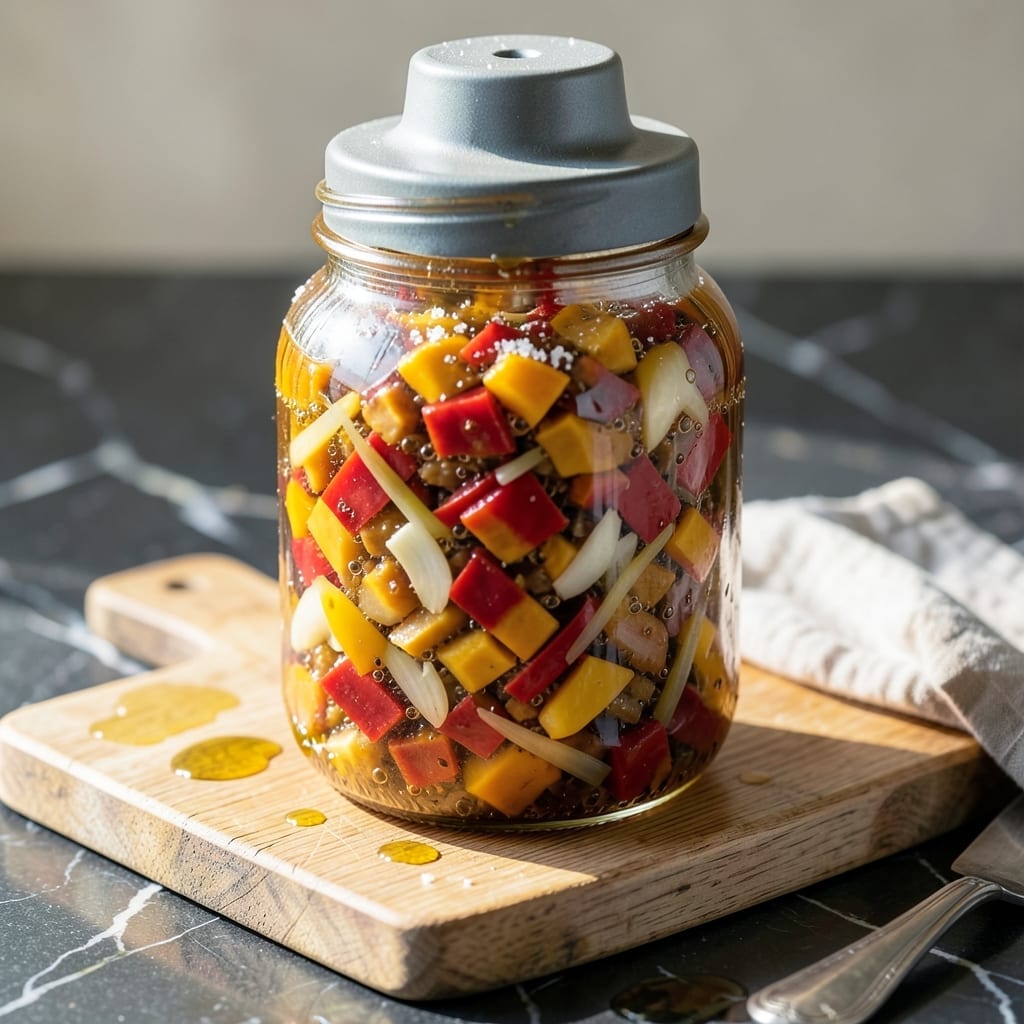
This homemade fermented hot sauce brings together the heat of peppers with the natural sweetness of fruit. The fermentation process develops complex flavors that store-bought versions simply can’t match.
With just a few simple ingredients and patience, you’ll create a bold, tangy sauce that elevates any dish. The fruit adds a surprising depth that balances the spice perfectly.
Ingredients for Fermented Hot Sauce Recipe with Fruit
Nine simple ingredients transform into a complex, fiery, and fruity fermented sauce.
| Ingredient | Amount | Notes |
|---|---|---|
| Fresh Hot Peppers 🌶️ | 2 cups | Stems removed, any variety |
| Fresh Fruit 🍍 | 1 ½ cups | Mango or pineapple preferred |
| Garlic Cloves 🧄 | 6 cloves | Peeled, smashed |
| Yellow Onion 🧅 | ½ whole | Roughly chopped |
| Non-Iodized Salt 🧂 | 2 tbsp | For fermentation brine |
| Filtered Water 💧 | 2 cups | Chlorine-free for best results |
| Apple Cider Vinegar 🍏 | ½ cup | Raw, unfiltered preferred |
| Lime Juice 🍈 | 2 tbsp | Freshly squeezed |
| Honey Alternative 🍯 | 1 tbsp | Agave or maple syrup |
[recipe_ingredient_scaler]
The peppers are the foundation here. Habaneros or jalapeños work beautifully, but any hot pepper will do—just adjust for heat preference. Whole Foods or local farmers markets often have the best selection. For fruit, ripe mango or pineapple adds natural sweetness that balances the heat perfectly. Organic isn’t mandatory, but it does ensure no unwanted additives in your fermentation.
No fresh peppers? Frozen works in a pinch (thaw first). Swap mango for peaches or apricots if that’s what’s available. The salt must be non-iodized—iodine inhibits fermentation. If you’re out of apple cider vinegar, white vinegar at the same amount gets you close. For the honey alternative, agave and maple syrup both work, but agave has a more neutral flavor.
This sauce keeps fermenting in the fridge—flavor develops for up to 6 months. Store in a glass jar with a tight lid. The brine should always cover the solids (add more if needed). Once opened, use within 1 month for best quality.
Why You’ll Love This Recipe
- 5-Minute Prep: I just chop peppers, fruit, and onion, toss with salt, and let time do the rest.
- Sweet Heat Balance: The fruit’s natural sugar tempers the peppers’ fire while garlic and onion add depth.
- Endless Pairing Potential: Honestly, it’s my go-to for tacos, eggs, or even a bloody mary kick.
- Pantry Staple: One batch yields months of sauce—no cooking, just ferment and forget.
Step-by-Step Instructions for Fermented Hot Sauce With Fruit
This fermentation process requires patience but yields a complex, layered hot sauce with balanced heat and sweetness.
Step 1: Prepare and Combine Fermentation Ingredients
Begin by processing the 2 cups Fresh Hot Peppers (stems removed) and 1.5 cups Fresh Fruit (mango or pineapple) in a food processor until finely chopped. You want a chunky consistency, not a puree—this texture allows for better fermentation and a more interesting final product.
Transfer the mixture to a clean fermentation vessel or large jar. Add the 6 cloves Garlic Cloves (peeled and smashed), 0.5 whole Yellow Onion (roughly chopped), 2 tbsp Non-Iodized Salt, and 2 cups Filtered Water. Stir thoroughly to dissolve the salt completely. The brine should fully submerge all the solids—this prevents mold growth and ensures even fermentation.
The salt is crucial here. It inhibits harmful bacteria while allowing lactic acid bacteria to thrive, creating that signature tangy flavor. Make sure your water is chlorine-free, as chlorine can inhibit fermentation.
Step 2: Ferment the Mixture for Optimal Flavor Development
Cover the vessel with a fermentation lid or a loose-fitting lid that allows gases to escape. Store at room temperature, away from direct sunlight, for 5 to 7 days. I recommend placing it on a tray or in a shallow dish to catch any overflow as the mixture bubbles.
Check the fermentation daily. You should see bubbles forming within the first 24 to 48 hours, a sign that the process is active. Stir the mixture gently each day to redistribute the ingredients and prevent mold formation on the surface. The aroma will start pungent and sulfuric but should mellow into a tangy, fruity scent as fermentation progresses.
Taste the mixture starting on day 5. The peppers should soften, and the flavors should begin to meld. The ideal fermentation time depends on your preference—shorter for a brighter, fresher taste, or longer for a deeper, funkier profile. Stop fermenting when the flavor pleases you.
Step 3: Blend and Strain the Fermented Mixture
Once fermentation is complete, transfer the contents of your vessel to a blender. Add the 0.5 cup Apple Cider Vinegar, 2 tbsp Lime Juice, and 1 tbsp Honey Alternative (agave or maple syrup). Blend until smooth, about 1 to 2 minutes. The vinegar stops the fermentation process while adding acidity, and the honey alternative balances the heat with subtle sweetness.
Strain the blended mixture through a fine-mesh sieve into a clean bowl, pressing down with a spoon or spatula to extract as much liquid as possible. Discard the solids—they’ve given up all their flavor to the sauce. The resulting liquid should be vibrant in color and have a smooth, pourable consistency.
Step 4: Bottle and Store Your Hot Sauce
Carefully pour the strained hot sauce into clean, sterilized bottles. Use a funnel for precision and to minimize spills. Leave about ½ inch of headspace at the top of each bottle to allow for any expansion.
Store the bottles in the refrigerator, where the sauce will keep for up to 6 months. The flavors will continue to develop and mellow over time. For the best experience, let the sauce sit for at least 24 hours before using to allow the flavors to fully integrate.
Shake well before each use, as natural separation may occur. This hot sauce is ready to add a fiery, fruity kick to any dish.
Pro Tips For Making Fermented Hot Sauce Recipe With Fruit
- Use 2-3% Salt: Measure salt by weight—2-3% of the total vegetable/fruit weight keeps the brine safe while letting flavors develop. I learned this the hard way after a batch went moldy from under-salting.
- Remove Pepper Stems: Skip the lazy chop and take 2 minutes to fully remove stems and white pith from peppers—those bits can introduce bitter or off flavors during fermentation.
- Submerge Everything: Press all solids below the brine daily to prevent Kahm yeast. A zip-top bag filled with water works as a weight—I was skeptical until I tried it.
- Ferment 7-14 Days: Taste at day 7, but let it go the full 14 for deeper fruit flavor. Sounds weird, but the pineapple or mango taste actually changes the most in that second week.
Wine and Beer Pairings for This fermented hot sauce recipe with fruit
Beer Pairings
Fermented hot sauce with fruit has a vibrant mix of heat, tang, and sweetness, making it a fantastic companion for certain beers. A Wheat Beer like Hoegaarden or Blue Moon complements the fruity notes with its citrusy, slightly spicy profile, while the effervescence cuts through the heat. For a bolder choice, try an IPA—hoppy brews like Stone IPA or Dogfish Head 60 Minute balance the sauce’s acidity with their bitter, piney flavors. 🍺
Wine Pairings
When pairing wine, opt for something with enough body and sweetness to stand up to the hot sauce. A Riesling, such as Dr. Loosen Blue Slate, offers a crisp, honeyed contrast that tames the spice while enhancing the fruitiness. For red lovers, a Zinfandel like Ravenswood Old Vine brings jammy, peppery notes that harmonize beautifully with the sauce’s complexity. 🍷
Non-Alcoholic Options
If you prefer non-alcoholic pairings, a ginger beer like Fever-Tree adds a spicy kick that mirrors the heat while its sweetness rounds out the flavors. For a refreshing twist, try a sparkling fruit juice, such as Martinelli’s Sparkling Apple Cider, which highlights the fruity elements of the sauce with its bubbly, crisp finish. 🥤
Nutrition Facts

Trained in classic French technique but raised on slow-cooked ribs and spicy rubs, she blends culinary skill with smoke and soul.
- Recipe for Boneless Pork Chops in Cast Iron Skillet: Sear and Baste to Juicy Perfection - October 3, 2026
- Recipe for Boneless Cross Rib Roast: Slow-Roasted Beef with Herb Crust - October 3, 2026
- Hamburgers in Sauce Recipe Crock Pot: Slow-Cooked Savory Delight - October 3, 2026