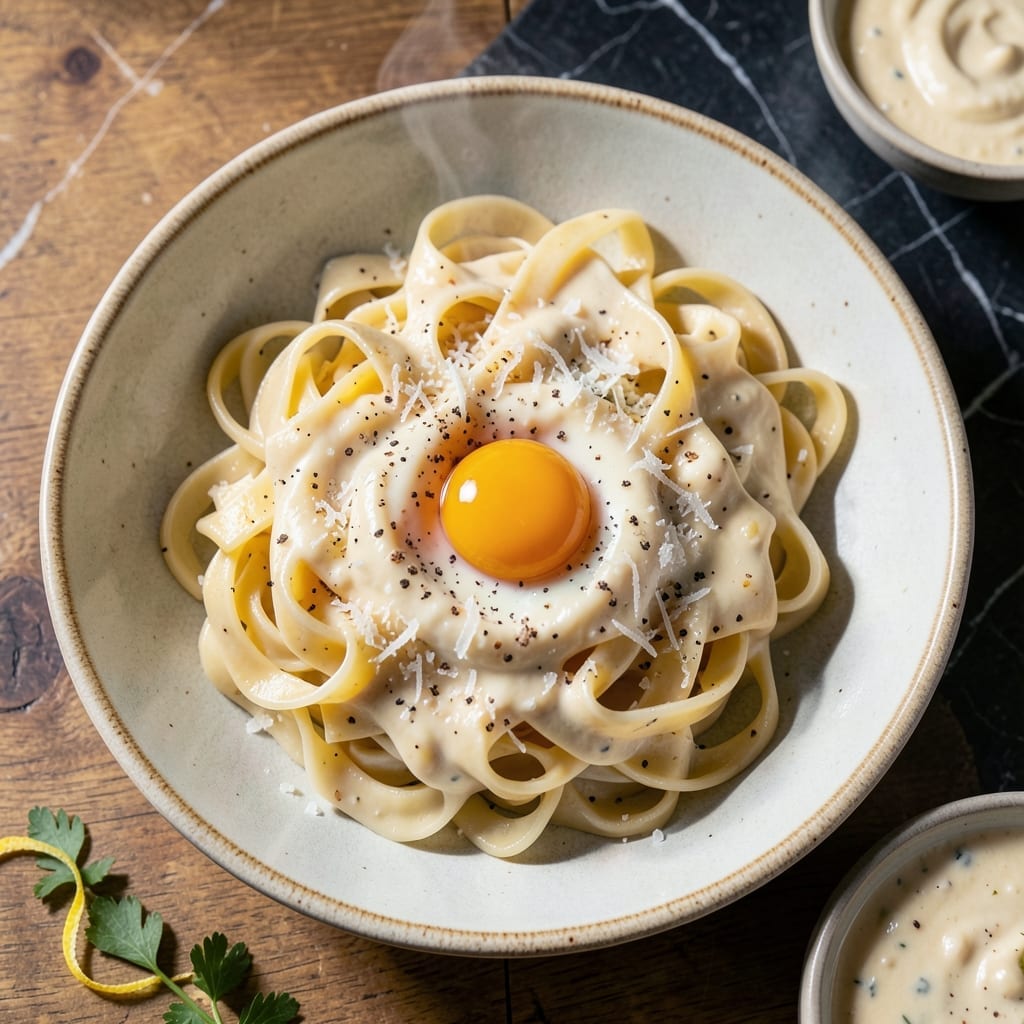
This egg-enriched alfredo sauce transforms simple ingredients into a velvety, restaurant-quality topping for pasta. The fresh yolks create an unmatched richness that sets this version apart.
With just 10 minutes of cooking time and a few pantry staples, you can achieve a creamy, decadent sauce that clings perfectly to fettuccine. No heavy cream required.
Ingredients for Fettuccine Alfredo Sauce Recipe with Egg
Nine ingredients create this velvety, restaurant-quality sauce with unmatched richness from fresh yolks.
| Ingredient | Amount | Notes |
|---|---|---|
| Unsalted Butter 🧈 | ½ cup | High-fat content preferred |
| Large Egg Yolks 🥚 | 3 whole | Fresh, room temperature |
| Parmesan Cheese 🧀 | ¾ cup | Freshly grated, aged 12 months |
| Heavy Cream 🥛 | ½ cup | Full-fat for creaminess |
| Garlic Cloves 🧄 | 2 cloves | Finely minced for even distribution |
| Freshly Ground Black Pepper 🌶️ | ½ tsp | Coarse grind preferred |
| Sea Salt 🧂 | ½ tsp | Fine grain for solubility |
| Nutmeg 🌰 | 0.125 tsp | Freshly grated for aroma |
| Pasta Water 💧 | ½ cup | Starchy, reserved from cooking |
[recipe_ingredient_scaler]
The Parmigiano-Reggiano is non-negotiable here. Aged 12-18 months from Whole Foods or a specialty cheese shop delivers the nutty complexity this sauce demands. The butter should be European-style (82% fat) for superior mouthfeel—Plugrá or Kerrygold are excellent choices. Fresh egg yolks are critical; opt for pasture-raised for deeper color and flavor. Garlic should be minced finely to distribute evenly without overpowering.
No fresh nutmeg? Pre-ground at half the amount works, though it lacks aromatic punch. Short on pasta water? Use warm water with a pinch of cornstarch to mimic the starch content. For a lighter version, half-and-half can replace heavy cream, but texture won’t be as luscious. The pepper must be freshly ground—pre-ground loses volatility quickly. If avoiding dairy, cashew cream can substitute, but this is a vegetarian (not vegan) recipe.
Sauce is best served immediately but keeps 2-3 days refrigerated in an airtight container. Reheat gently over low heat, adding a splash of milk or cream to restore consistency. Do not boil. Freezing is not recommended as it causes separation. The egg yolks mean this must be consumed within 2 days for optimal safety and quality.
Why You’ll Love This Recipe
- I’ll be real: this sauce thickens up beautifully overnight, so tomorrow’s lunch tastes even better. A rare win for leftovers.
- One Pot Wonder: I love that I can make this rich alfredo sauce in a single pan while the pasta boils—no extra dishes, just creamy perfection.
- Velvety Richness: The egg yolks and heavy cream create a sauce so silky, it clings to every strand of fettuccine. Honestly, it’s restaurant-quality at home.
- Impresses Every Time: Between us, this feels fancy enough for date night but is simple enough for a Tuesday. The garlic and parmesan do all the heavy lifting.
Step-by-Step Instructions for Fettuccine Alfredo Sauce With Egg
Master this velvety sauce through precise technique and careful temperature control for restaurant-quality results.
Step 1: Create the Aromatic Butter Base
In a large, heavy-bottomed saucepan, melt the 0.5 cup Unsalted Butter over medium-low heat. The low temperature prevents the butter from browning, which would impart unwanted color and nuttiness to your sauce.
Add the 2 cloves Garlic Cloves, finely minced as specified. Cook for exactly 1-2 minutes until just fragrant but not browned. You should see tiny bubbles forming at the edges of the butter, but the garlic must remain pale. Remove from heat immediately if it starts to color—burnt garlic will ruin the sauce’s delicate flavor profile.
Step 2: Temper the Egg Yolks for Creamy Emulsion
In a separate bowl, whisk together the 3 whole Large Egg Yolks, 0.5 cup Heavy Cream, 0.75 cup Parmesan Cheese, 0.5 tsp Sea Salt, 0.5 tsp Freshly Ground Black Pepper, and 0.125 tsp Nutmeg until smooth. The mixture should be pale yellow and slightly thick.
Slowly pour about ¼ cup of the warm butter-garlic mixture into the egg yolk mixture while whisking constantly. This tempering step brings the egg yolks up to temperature gradually, preventing them from scrambling when added to the hot saucepan. The tempered mixture should feel warm to the touch but not hot.
Step 3: Create the Silky Sauce Base
Return the saucepan with remaining butter to low heat. Slowly pour in the tempered egg yolk mixture while whisking continuously. The sauce will begin to thicken immediately—this is the egg yolks coagulating to create the signature creamy texture.
Cook for 2-3 minutes while whisking constantly until the sauce thickens enough to coat the back of a spoon. The sauce should be smooth and velvety, with no visible egg streaks. If it appears too thick, reduce the heat slightly—the residual heat will continue to cook the eggs.
Step 4: Finish with Pasta Water for Perfect Consistency
Gradually whisk in the 0.5 cup Pasta Water, about 2 tablespoons at a time. The starchy water helps emulsify the sauce and creates that characteristic silky texture that clings perfectly to fettuccine. The sauce should become glossy and slightly more fluid, but still thick enough to coat pasta thoroughly.
Taste and adjust seasoning if needed, though the Parmesan Cheese and Sea Salt should provide sufficient saltiness. The final sauce should be rich and creamy with a subtle nutmeg warmth and peppery finish. Use immediately—this sauce waits for no one.
Pro Tips For Making Fettuccine Alfredo Sauce Recipe With Egg
- Temper the yolks: Slowly whisk about 1/4 cup of the hot cream mixture into the egg yolks before combining everything—this prevents scrambled eggs in your sauce, a mistake I made my first three tries.
- Grate fresh parmesan: Pre-shredded cheese has anti-caking agents that make the sauce grainy; take the extra 5 minutes to grate a block of Parmigiano-Reggiano yourself.
- Low and slow: Keep the heat at medium-low when thickening the sauce—high heat will cause the dairy to separate, and you’ll end up with a greasy, broken mess instead of a silky finish.
- Use pasta water: Add 2-3 tablespoons of starchy fettuccine cooking water to the sauce at the end to help it cling to the noodles better; it’s the easiest way to fix a sauce that’s too thick.
Serving Suggestions for Leftovers
🥘 Plating Styles
For a casual setting, serve your fettuccine alfredo sauce with egg in a shallow pasta bowl, allowing the creamy strands to sit in a slight pool of sauce. For a formal presentation, use a white plate and twirl the fettuccine into a neat nest with tongs, placing it at the center and drizzling extra sauce artistically. In a buffet style, keep the pasta and sauce in a large chafing dish with a serving spoon for easy access.
🌿 Garnishing Techniques
Enhance the dish with freshly chopped parsley or basil for a pop of color and freshness. A sprinkle of grated Parmesan cheese adds richness, while a touch of cracked black pepper or red pepper flakes introduces subtle heat. For an elegant finish, add a drizzle of olive oil or a few edible flowers.
🍽️ Portion Sizes
For individual servings, aim for 2-3 oz of pasta per person, paired with ¼ to ½ cup of alfredo sauce. For family-style dining, serve the fettuccine in a large platter, allowing guests to help themselves, and provide extra sauce on the side for those who prefer a saucier dish.
🌡️ Serving Temperature
Serve the fettuccine alfredo sauce with egg immediately after preparation for the best texture and warmth. If resting, keep it covered in a warm oven (around 170°F) for no more than 15 minutes. Avoid refrigerating before serving, as the sauce may thicken and lose its silky consistency. Use a pasta server or tongs for easy plating.
Nutrition Facts

Trained in classic French technique but raised on slow-cooked ribs and spicy rubs, she blends culinary skill with smoke and soul.
- Recipe for Boneless Pork Chops in Cast Iron Skillet: Sear and Baste to Juicy Perfection - October 3, 2026
- Recipe for Boneless Cross Rib Roast: Slow-Roasted Beef with Herb Crust - October 3, 2026
- Hamburgers in Sauce Recipe Crock Pot: Slow-Cooked Savory Delight - October 3, 2026