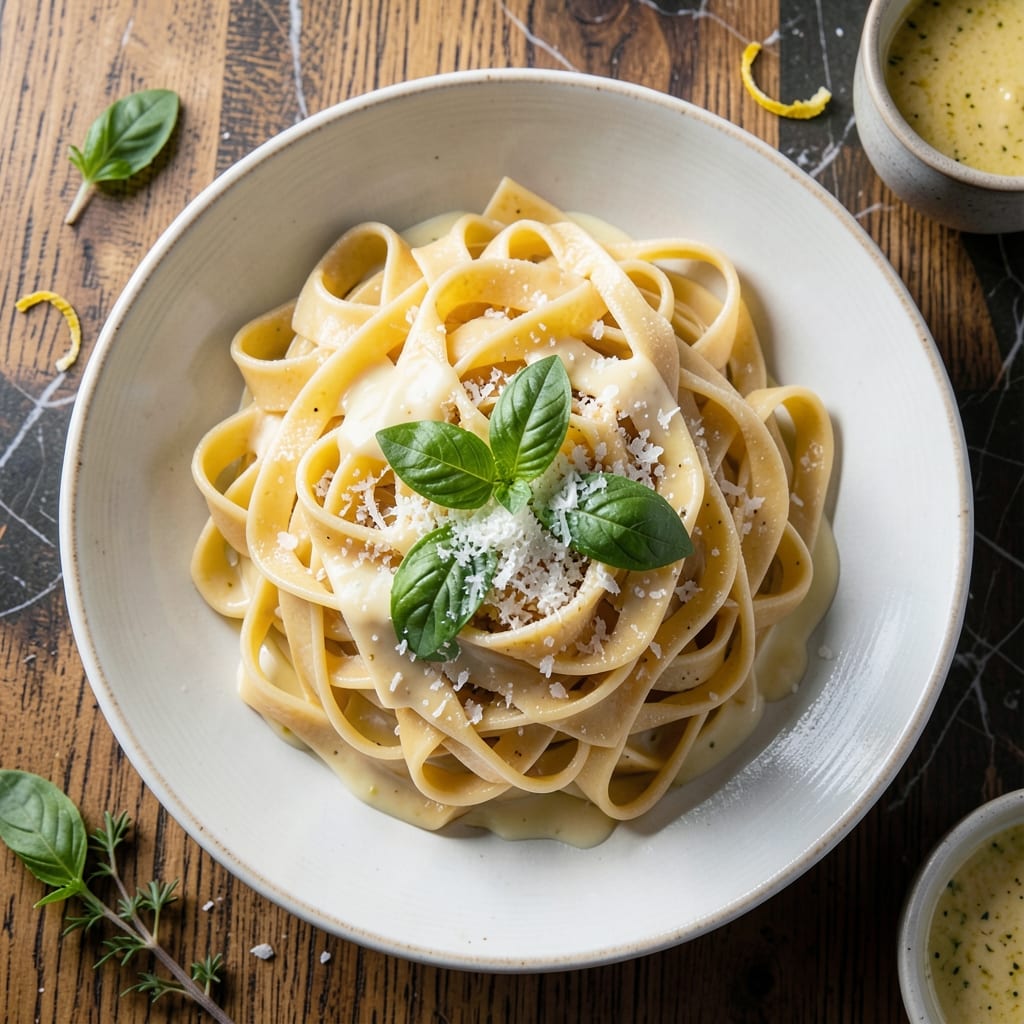
Fresh pasta changes everything, and this recipe delivers homemade fettuccine with restaurant-quality texture and flavor. I developed this method after years of testing in my tiny Boston kitchen, perfecting the ratio of flour to eggs for ideal elasticity.
The dough comes together in minutes with just four ingredients, requiring no special equipment beyond a rolling pin. Resting the dough is crucial—it relaxes the gluten for smooth, even ribbons that hold up to any sauce you pair with them.
You’ll end up with tender yet sturdy noodles that cook in 2-3 minutes, absorbing flavors far better than store-bought. The satisfaction of cutting fresh ribbons and watching them unfurl in boiling water never gets old.
Pair with your favorite sauce, or simply toss with butter and parmesan to let the pasta shine.
Ingredients for Fettuccine Pasta Recipe from Scratch
Four ingredients. Endless possibilities. Homemade pasta that beats any box.
| Ingredient | Amount | Notes |
|---|---|---|
| All-Purpose Flour 🌾 | 2 cups | Plus extra for dusting |
| Large Eggs 🥚 | 3 whole | Room temperature preferred |
| Sea Salt 🧂 | ½ tsp | Fine grain preferred |
| Olive Oil 🫒 | 1 tsp | For elasticity in dough |
| Water 💧 | 1 tsp | If dough feels dry |
| Unsalted Butter 🧈 | 2 tbsp | For serving suggestion |
| Parmesan Cheese 🧀 | ½ cup | Freshly grated for serving |
[recipe_ingredient_scaler]
The flour is everything here. King Arthur is my go-to—consistent protein content, reliable results. I grab it in 10-pound bags from Market Basket (Boston folks know) or Whole Foods if I’m feeling fancy. Room temp eggs make the dough come together smoother—just set them out while you weigh the flour. Sea salt adds a clean finish, but Diamond Crystal kosher works too if that’s what you’ve got.
No all-purpose? 00 flour makes it silky (find it at Eataly or Italian markets), but don’t stress—regular works great. Short on eggs? 2 whole plus 2 yolks gives extra richness. The olive oil is just insurance against dry dough, but you can skip it if your eggs are plump. For serving, Parmigiano-Reggiano is the only cheese that matters—skip the pre-grated.
Fresh pasta dries out fast. Cook within 2 hours or refrigerate (dusted with flour) for 24 hours. Freeze flat on a tray first, then transfer to bags for up to 1 month. No need to thaw—just boil straight from frozen (add 1 minute to cook time).
Why You’ll Love This Recipe
- 30-Minute Magic: I can roll and cut fresh fettuccine faster than waiting for store-bought to boil. Honestly, the dough comes together in 10 minutes flat.
- Egg-Rich Flavor: The large eggs and olive oil give it a rich, silky bite that dried pasta just can’t match.
- Dinner or Date Night: I’ve served this for casual Tuesday meals and anniversary dinners—same recipe, totally different vibes.
- Penny-Wise Pasta: A bag of flour and a few eggs feed four for less than a fancy jar of sauce. I’ll be real: my wallet notices the difference.
Step-by-Step Instructions for Fettuccine Pasta From Scratch
Nothing beats the taste of fresh pasta, and this method makes it simple to achieve perfect texture.
Step 1: Create the Dough on a Clean Surface
On a clean countertop or large cutting board, mound the 2 cups All-Purpose Flour and make a well in the center. This traditional method gives you better control over the texture than using a bowl.
Crack the 3 whole Large Eggs into the well, then add the 0.5 tsp Sea Salt, 1 tsp Olive Oil, and 1 tsp Water. Using a fork, gently beat the eggs while slowly incorporating the flour from the inner rim of the well. Continue until a shaggy dough begins to form.
Step 2: Knead Until Smooth and Elastic
Once the dough comes together, use your hands to knead it directly on the work surface. Push the dough away with the heel of your hand, then fold it back over itself. Rotate the dough a quarter turn after each fold.
Knead for 8-10 minutes until the dough becomes smooth, elastic, and slightly springy to the touch. If it feels too dry, add a few drops of water; if too sticky, dust with a bit of extra flour. The dough should feel supple, not tough or brittle.
Step 3: Rest the Dough for Better Workability
Wrap the dough tightly in plastic wrap and let it rest at room temperature for 30 minutes. This resting period allows the gluten to relax, making the dough much easier to roll out thinly.
During this time, the dough will also absorb any remaining moisture evenly. You’ll notice the difference when you start rolling—it will stretch instead of springing back, and you’ll get those beautiful, even fettuccine ribbons without fighting the dough.
Step 4: Roll and Cut the Fettuccine Ribbons
Divide the rested dough into 4 equal portions. Working with one portion at a time (keep the rest covered), flatten it slightly with your hands, then pass it through a pasta machine starting at the widest setting.
Fold the dough in thirds like a letter after each pass, then roll it through again, gradually narrowing the setting until you reach the desired thickness (usually the second-to-last setting for perfect fettuccine). Finally, run the sheet through the fettuccine cutter. If you don’t have a machine, roll the dough by hand until it’s paper-thin, then cut into ¼-inch wide strips using a sharp knife.
Step 5: Cook and Serve Immediately
Bring a large pot of salted water to a rolling boil. Add the fresh fettuccine and cook for 2-3 minutes until the pasta floats to the surface and is al dente. Fresh pasta cooks much faster than dried, so keep an eye on it.
Drain the pasta, reserving a bit of pasta water if desired. Toss with 2 tbsp Unsalted Butter and serve immediately, topped with 0.5 cup Parmesan Cheese for a simple, delicious finish. The texture should be tender yet firm, with a delicate eggy richness that store-bought pasta just can’t match.
Pro Tips For Making Fettuccine Pasta Recipe From Scratch
- Knead Longer: Work the dough for at least 8-10 minutes by hand—it’ll start rough and crumbly, but keep going until it’s smooth and elastic. I learned this the hard way when my first few batches turned out dense and chewy.
- Rest the Dough: After kneading, let it sit wrapped in plastic for 30 minutes at room temp. My grandmother swore by this, and she was right: it relaxes the gluten so the pasta rolls out thin without snapping back.
- Skip the Flour Bath: Resist the urge to dust your cutting board with too much flour when rolling—it makes the pasta dry and hard to cut. A light sprinkle is all you need, and brush off any excess before folding.
- Use Eggs at Room Temp: Sounds weird, but it works: pull your eggs out of the fridge an hour before mixing. Cold eggs can make the dough tight and harder to stretch, and I was skeptical until I tried it—now it’s non-negotiable.
Common Mistakes When Making fettuccine pasta recipe from scratch
Overworking the Dough
Kneading too long or too hard develops excess gluten, making your pasta tough instead of tender. Stick to 8-10 minutes of gentle kneading—just until the dough feels smooth and elastic. I learned this the hard way during my early Boston kitchen experiments. 💪
Skipping the Rest
Rushing past the 30-minute rest means your dough will fight you when rolling. The gluten needs this time to relax. Cover it tightly with plastic wrap to prevent drying. This step transformed my pasta from dense to delicate.
Dusting Excessively
Too much flour during rolling creates dry, floury pasta. Dust lightly—only enough to prevent sticking. If your dough feels dry, add a drop of water instead of more flour. Remember, all-purpose flour absorbs moisture differently than specialty types.
Uneven Rolling
Inconsistent thickness leads to uneven cooking. Roll each portion to the same setting on your machine, or by hand to paper-thin uniformity. I use the second-to-last setting on my Marcato Atlas for perfect ¼-inch ribbons every time.
Overcrowding the Pot
Fresh pasta needs room to cook properly. Use a large pot with plenty of water—at least 4 quarts for this recipe. Add the fettuccine in batches if needed to prevent sticking. It cooks fast, so stay attentive.
Rinsing After Cooking
Rinsing washes away starch that helps sauce cling. Simply drain well and toss immediately with your sauce or 2 tbsp unsalted butter. The residual starch is your friend for that authentic restaurant-style finish. 🥗
Nutrition Facts
Frequently Asked Questions
Can I make this without a pasta machine?
Roll the dough by hand using a rolling pin until paper-thin, then cut into ¼-inch strips with a sharp knife. It takes more effort but yields the same delicious results.
Why does my dough spring back when rolling?
This happens when the gluten hasn’t relaxed enough. Always let the dough rest for 30 minutes before rolling. If it still resists, cover and rest for another 15 minutes.
How do I store fresh pasta?
Dust with flour, then refrigerate in an airtight container for up to 24 hours. For longer storage, freeze flat on a tray first, then transfer to a bag for up to 1 month.

Trained in classic French technique but raised on slow-cooked ribs and spicy rubs, she blends culinary skill with smoke and soul.
- Recipe for Boneless Pork Chops in Cast Iron Skillet: Sear and Baste to Juicy Perfection - October 3, 2026
- Recipe for Boneless Cross Rib Roast: Slow-Roasted Beef with Herb Crust - October 3, 2026
- Hamburgers in Sauce Recipe Crock Pot: Slow-Cooked Savory Delight - October 3, 2026