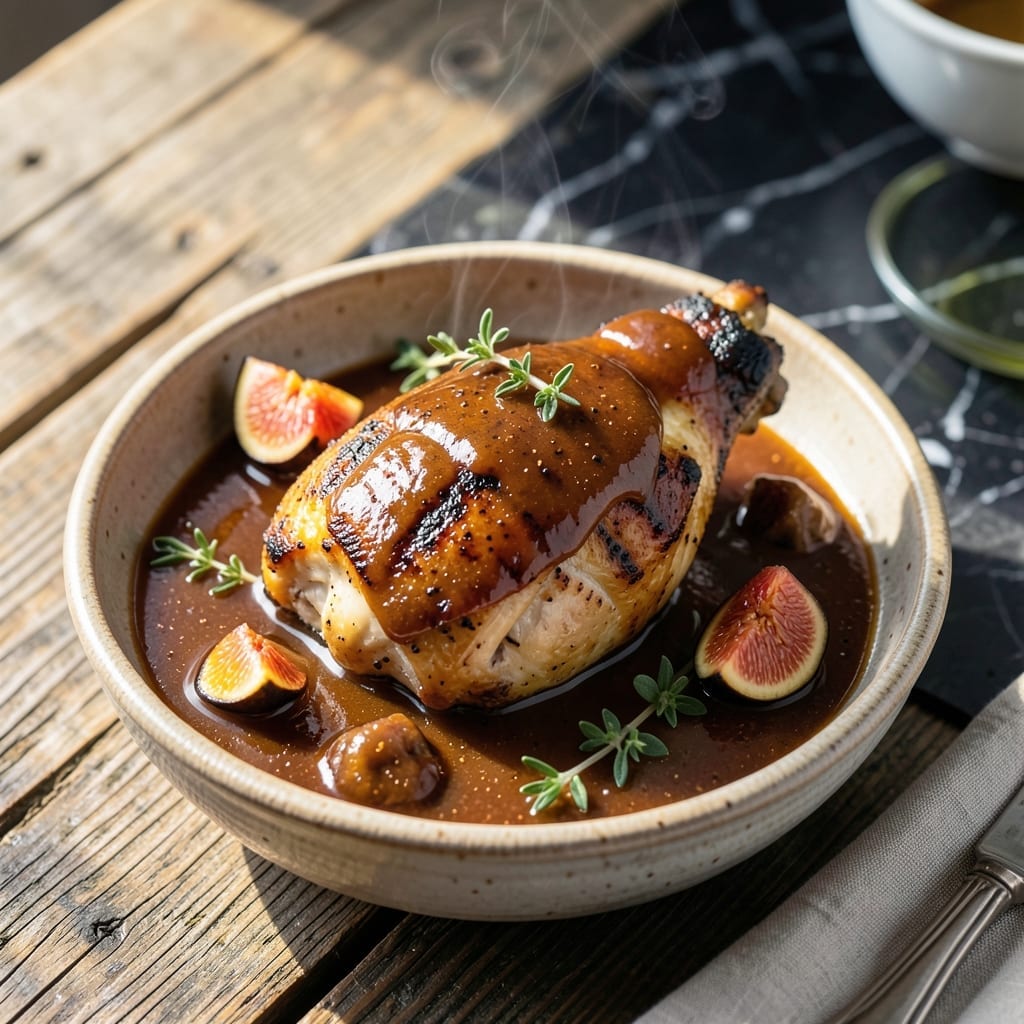
This barbecue sauce redefines grilling with its rich, jammy fig depth and subtle smoky finish. I developed it to bridge sweet and savory, elevating ribs and chicken alike.
With a 15-minute simmer, it thickens into a glossy, restaurant-quality glaze. Store in jars for up to two weeks—flavor intensifies over time.
Ingredients for Fig Barbecue Sauce
Ten ingredients transform into a glossy, jammy barbecue sauce with smoky depth and fig richness.
| Ingredient | Amount | Notes |
|---|---|---|
| Dried Mission Figs 🍈 | 1 ½ cups | Stems removed, finely chopped |
| Tomato Paste 🍅 | ½ cup | Double-concentrated preferred |
| Apple Cider Vinegar 🍏 | ½ cup | Raw unfiltered for tang |
| Molasses 🫙 | ¼ cup | Unsulphured for clean flavor |
| Maple Syrup 🍁 | ¼ cup | Grade A amber preferred |
| Smoked Paprika 🌶️ | 1 tbsp | Sweet or hot variety |
| Garlic Powder 🧄 | 1 tbsp | Not garlic salt |
| Onion Powder 🧅 | 1 tbsp | Freshly ground preferred |
| Liquid Smoke 🔥 | 1 tsp | Hickory flavor recommended |
| Sea Salt 🧂 | 1 tsp | Fine grain for even distribution |
[recipe_ingredient_scaler]
The figs are non-negotiable here—Mission or Black Mission have the deepest jammy flavor. Trader Joe’s and Whole Foods carry them dried in the baking aisle. If you find fresh figs (late summer), use 2 cups chopped and simmer longer. The molasses adds that sticky, caramelized base—unsulphured tastes cleaner than the bitter blackstrap kind (worth the extra dollar).
No molasses? Dark brown sugar at half the volume works, but dissolve it in warm water first. Swap maple syrup for agave or date syrup—just avoid honey. Liquid smoke can be skipped, but half a charred chipotle pepper in adobo adds similar depth. The tomato paste is doing double duty for thickness and umami—San Marzano paste if you’re feeling fancy.
Sauce keeps in the fridge for 2 weeks in a sealed jar, and the flavors actually get better. Freeze for 6 months in ice cube trays for single-serving portions. That glossy sheen? Comes from the natural pectin in the figs (no corn syrup needed).
Why You’ll Love This Recipe
- One Pot Wonder: I just dump everything in a saucepan and let it simmer—no chopping, no fuss.
- Sweet & Tangy: The figs bring this rich depth while the vinegar cuts through with a bright zing.
- Freezer Friendly: I double the batch and freeze half for lazy nights when I need a quick flavor boost.
- Budget Win: Dried figs and pantry staples mean I spend under $10 for a sauce that tastes gourmet.
Step-by-Step Instructions for Fig Barbecue Sauce
This sauce comes together quickly with a few key techniques for perfect balance.
Step 1: Rehydrate and Simmer the Figs
Combine the 1.5 cups dried mission figs with 0.5 cup apple cider vinegar in a medium saucepan. The vinegar’s acidity helps break down the figs while adding a bright tang that cuts through the sweetness.
Add 0.5 cup tomato paste and stir over medium heat for 2 minutes until the mixture begins to bubble. This initial cook softens the figs and mellows the raw edge of the tomato paste, creating a smooth foundation for the sauce.
Step 2: Sweeten and Spice the Base
Stir in the 0.25 cup molasses and 0.25 cup maple syrup. The molasses adds depth with its robust, bittersweet notes, while the maple syrup contributes a cleaner, brighter sweetness that complements the figs beautifully.
Add the 1 tbsp smoked paprika, 1 tbsp garlic powder, 1 tbsp onion powder, 1 tsp liquid smoke, and 1 tsp sea salt. These spices and seasonings build layers of savory, smoky complexity that define the sauce’s character. Stir well to distribute evenly.
Step 3: Simmer to Thicken and Develop Flavor
Reduce the heat to medium-low and let the mixture simmer uncovered for 15-20 minutes. As it cooks, the sauce will darken and thicken slightly, and the figs will soften completely, breaking down into a jammy consistency.
Stir occasionally to prevent sticking, especially as the sauce reduces. You’ll know it’s ready when it coats the back of a spoon and the figs have lost their chewy texture. The flavors should be deeply integrated, with no sharp or raw notes remaining.
Step 4: Blend for a Smooth Finish
Remove the sauce from heat and let it cool for 5 minutes. This brief rest prevents pressure buildup when blending. For a perfectly smooth texture, use an immersion blender directly in the pot, or transfer to a countertop blender in batches.
Blend until completely smooth, ensuring no chunks of fig remain. The final sauce should have a glossy, thick but pourable consistency. If it’s too thick, thin it with a splash of water or additional apple cider vinegar to reach your desired texture.
Pro Tips For Making Fig Barbecue Sauce
- Soak the Figs: Cover dried Mission Figs with hot water for 15-20 minutes before blending—this softens them completely and prevents gritty texture in your sauce. I learned this the hard way after picking fig bits out of my teeth.
- Bloom the Paste: Cook the tomato paste for 2-3 minutes in the pot before adding liquids. It deepens the flavor and removes that raw tinny taste that can overpower the figs’ sweetness.
- Balance the Sweetness: Taste before adding all the maple syrup—molasses already brings strong sweetness, and you can always adjust later. After burning a batch by over-sweetening, I now add it in stages.
- Simmer Low and Slow: Keep the heat at a gentle simmer for 20-25 minutes, stirring occasionally. High heat caramelizes the sugars too fast, turning your sauce into a sticky, burnt mess instead of a smooth glaze.
Flavor Customization for This Recipe
Spice Level Adjustments
For a bolder kick, add ½ tsp cayenne pepper or 1 chopped chipotle in adobo when simmering. I prefer the chipotle—it brings smoky heat that pairs perfectly with the figs’ sweetness. Start with less; you can always add more to taste. 🌶️
Sweetness Variations
Reduce the maple syrup by half if you prefer a tangier sauce. Alternatively, add 2 tbsp brown sugar for extra caramel notes. The molasses already provides deep sweetness, so adjustments should be subtle.
Smoke Intensity
Double the liquid smoke to 2 tsp for a stronger campfire flavor, or omit it entirely if you prefer a milder profile. I often use ½ tsp ground chipotle instead for a more natural smokiness.
Texture Options
Leave the sauce chunky by skipping the blender—just mash the figs with a potato masher. For a rustic touch, stir in ¼ cup finely chopped fresh figs at the end. The texture contrasts beautifully with grilled meats.
Herb Infusions
Add 1 tbsp fresh thyme or rosemary during simmering for an earthy note. I forage wild thyme along my coastal rides—it adds a unique depth. Remove the sprigs before blending.
Citrus Brightness
A splash of orange juice or zest at the end brightens the sauce. The citrus lifts the richness, especially when pairing with pork. Just 1 tbsp does the trick. 💛
Nutrition Facts
Frequently Asked Questions
Can I use fresh figs instead of dried?
Yes! Use 2 cups chopped fresh figs and simmer 5-10 minutes longer to break them down. They’ll create a lighter, brighter sauce. Dried figs offer more concentrated sweetness.
How do I fix a sauce that’s too thin?
Simmer uncovered for 5-10 more minutes to reduce. For instant thickening, mix 1 tsp cornstarch with water and stir in. Avoid over-thickening—it should still pour easily.
What’s the best way to store leftovers?
Keep in an airtight jar in the fridge for up to 2 weeks. For longer storage, freeze in ice cube trays for 6 months. Flavors deepen over time.
Can I make this spicier?
Add ½ tsp cayenne or 1 chopped chipotle in adobo while simmering. The smoky heat complements the figs perfectly. Adjust to taste gradually.

Trained in classic French technique but raised on slow-cooked ribs and spicy rubs, she blends culinary skill with smoke and soul.
- Recipe for Boneless Pork Chops in Cast Iron Skillet: Sear and Baste to Juicy Perfection - October 3, 2026
- Recipe for Boneless Cross Rib Roast: Slow-Roasted Beef with Herb Crust - October 3, 2026
- Hamburgers in Sauce Recipe Crock Pot: Slow-Cooked Savory Delight - October 3, 2026