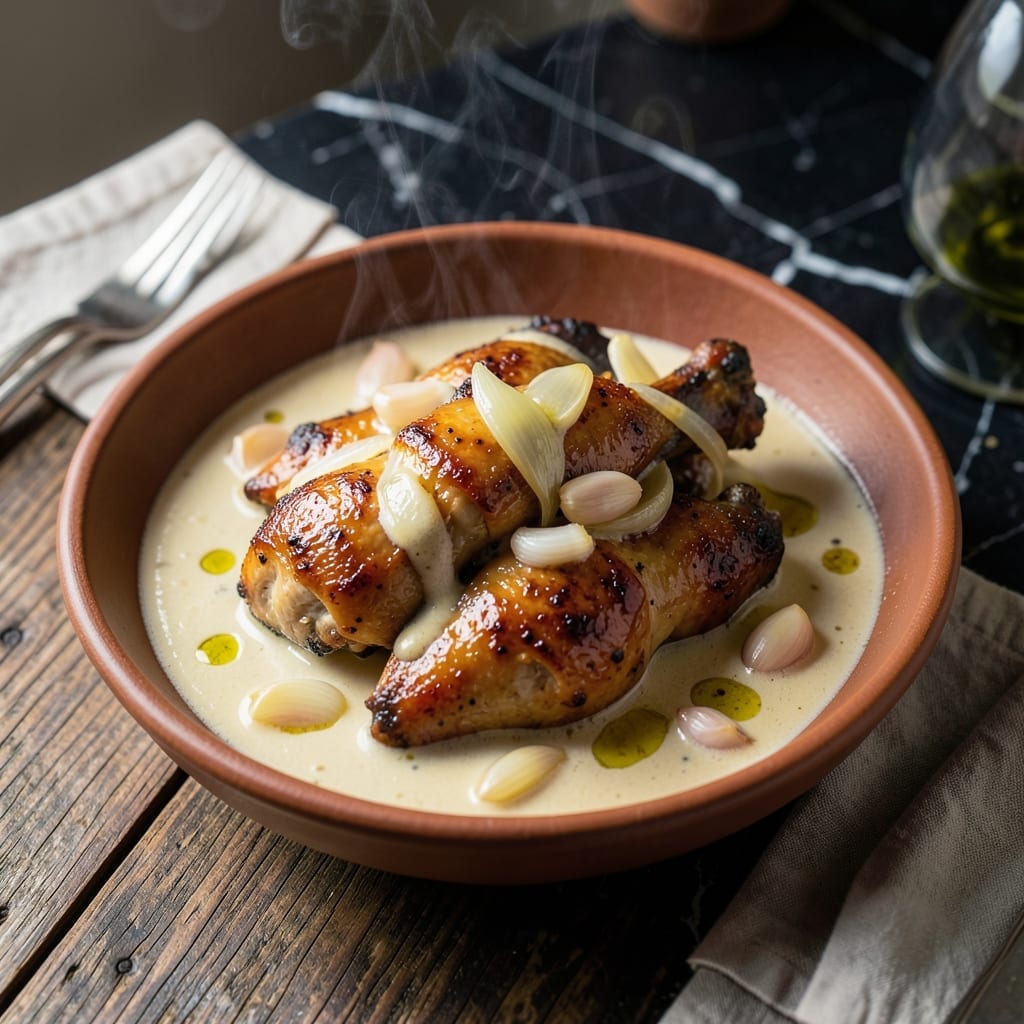
This recipe transforms the classic Filipino adobo with a rich coconut milk twist my grandmother never wrote down. Her version relied on instinct—I’ve decoded it into precise steps anyone can follow.
The coconut milk mellows the vinegar’s sharpness while adding a velvety texture to the braising liquid. Chicken thighs become tender and fall-off-the-bone perfect after simmering in this fragrant blend.
You’ll get the signature adobo tang with an extra layer of complexity from the coconut. The sauce reduces to a glossy finish that clings to every piece of chicken.
Serve over steamed rice to soak up every drop of this perfect braising liquid. The flavors only deepen overnight.
Ingredients for Filipino Chicken Adobo Recipe Coconut Milk
Pantry staples meet bold Filipino flavors in this rich, tangy braising dish.
| Ingredient | Amount | Notes |
|---|---|---|
| Bone-In Chicken Thighs 🍗 | 2 lb | Skin-on for best flavor |
| Coconut Milk 🥥 | 1 can | Full-fat for creaminess |
| White Vinegar 🧪 | ¾ cup | Cane vinegar preferred |
| Soy Sauce 🥢 | ½ cup | Use low-sodium if desired |
| Garlic Cloves 🧄 | 8 cloves | Smashed for robust flavor |
| Yellow Onion 🧅 | 1 whole | Sliced into thin rings |
| Bay Leaves 🌿 | 3 pieces | Dried, whole leaves |
| Black Peppercorns 🌶️ | 1 tbsp | Lightly crushed |
| Brown Sugar 🍚 | 1 tbsp | Balances acidity |
| Vegetable Oil 🫒 | 2 tbsp | For searing chicken |
| Green Onions 🌱 | 4 whole | Thinly sliced for garnish |
| Steamed Rice 🍚 | 2 cups | For serving |
[recipe_ingredient_scaler]
The chicken thighs are key here. Bone-in, skin-on gives you that fall-off-the-bone texture my grandmother swore by. I grab mine from Whole Foods for consistently plump pieces, but any supermarket will do. Look for evenly sized thighs so they cook at the same rate. The coconut milk—full-fat is non-negotiable (the light version separates and ruins the sauce).
No coconut milk? Coconut cream thinned with water works in a pinch. White vinegar can be swapped for apple cider vinegar (adds a fruitier note). If you’re avoiding soy, coconut aminos are a good stand-in. The bay leaves are traditional, but thyme sprigs give a nice alternative earthiness. Don’t skip the brown sugar—it tempers the vinegar’s bite beautifully.
Leftovers taste even better the next day. Stores in the fridge for 4-5 days or freezes for up to 3 months. Reheat gently to keep the sauce velvety. Always serve with extra rice—you’ll want to soak up every last drop of that tangy coconut braising liquid.
Why You’ll Love This Recipe
- One Pot Wonder: I just dump everything in a pot—chicken, coconut milk, soy sauce—and let it simmer while I set the table.
- Creamy Tangy Magic: The coconut milk mellows the vinegar’s bite, and the garlic? It soaks into every bite like a flavor hug.
- Feeds My Crowd: I make a big batch for Sunday dinner, then pack leftovers for lunch all week—no one complains.
- Budget Hero: Bone-in thighs stay juicy and cost half what breasts do, and a can of coconut milk stretches the sauce perfectly.
Step-by-Step Instructions for Filipino Chicken Adobo With Coconut Milk
This method delivers the perfect balance of tangy, savory, and creamy in every bite. Trust the process.
Step 1: Sear the Bone-In Chicken Thighs
Heat the 2 tablespoons vegetable oil in a large pot or Dutch oven over medium-high heat. Pat the 2 lb bone-in chicken thighs dry with paper towels—this ensures a good sear.
Working in batches to avoid crowding, sear the chicken skin-side down first for 5-6 minutes until the skin turns deep golden brown. Flip and sear the other side for 3-4 minutes.
Transfer to a plate and set aside. The fond left in the pot will deepen the flavor of your adobo, so don’t wipe it clean.
Step 2: Sauté Aromatics and Bloom Spices
In the same pot, add the sliced 1 whole yellow onion and cook for 3-4 minutes until softened and translucent. Add the 8 cloves garlic cloves and sauté for 30 seconds until fragrant—don’t let it burn.
Stir in the 3 pieces bay leaves, 1 tablespoon black peppercorns, and 1 tablespoon brown sugar. Toast the spices for 1 minute to release their oils, which will infuse the dish with layers of warmth and depth.
Step 3: Deglaze and Build the Braising Liquid
Pour in the 0.75 cup white vinegar and 0.5 cup soy sauce, scraping up any browned bits from the bottom of the pot. This step is critical—it lifts all the caramelized flavor into the sauce.
Let the mixture simmer for 2-3 minutes until the vinegar aroma mellows slightly. Then, pour in the 1 can coconut milk, stirring to combine. The liquid should look rich and slightly creamy.
Step 4: Braise the Chicken to Tenderness
Return the seared chicken thighs to the pot, along with any accumulated juices. The liquid should just cover the chicken—if it doesn’t, add a splash of water. Bring to a gentle simmer, then reduce the heat to medium-low.
Cover and cook for 35-40 minutes, turning the chicken halfway through, until the meat is fork-tender and nearly falling off the bone. The sauce will thicken slightly and take on a glossy, caramelized sheen.
Step 5: Finish and Serve
Once the chicken is cooked, uncover and simmer for an additional 5-7 minutes to reduce the sauce to your desired consistency. Discard the bay leaves.
Taste and adjust seasoning if needed—though the balance of salty, tangy, and sweet should already be perfect. Garnish with the 4 whole green onions, thinly sliced. Serve hot over 2 cups steamed rice to soak up every last drop of sauce.
Pro Tips For Making Filipino Chicken Adobo Recipe Coconut Milk
- Brown the Chicken First: Sear the bone-in thighs in a hot pan until golden—about 4-5 minutes per side. I learned this the hard way: skipping this step leaves the sauce thin and the meat lacking depth.
- Balance the Vinegar: Use 1/3 cup white vinegar for every 1/2 cup soy sauce to avoid that harsh, puckering taste. My grandmother swore by this ratio, and she was right.
- Simmer, Don’t Boil: Once the coconut milk goes in, keep it at a gentle simmer—boiling makes the sauce split and the chicken tough. Sounds weird, but it works.
- Add Garlic Twice: Crush half the garlic for the marinade and mince the rest for the sauce. I was skeptical until I tried it, but the layers of flavor are worth the extra minute.
Essential Equipment for Perfect Results
Dutch Oven Essentials
A heavy 5-6 quart Dutch oven is my go-to for this recipe—it distributes heat evenly and retains moisture beautifully. I use my Lodge enameled cast iron that I found at a neighborhood garage sale. The deep pot gives the chicken enough room to sear properly without crowding. 💪
Wooden Spoon Magic
My grandmother always used a wooden spoon for stirring adobo, and I’ve never deviated. It won’t scratch your pot and helps release all those browned bits from the bottom. Plus, it’s gentle enough to avoid breaking up the chicken as it cooks.
Sharp Chef’s Knife
A good 8-inch chef’s knife makes quick work of the onions and garlic. I keep mine from Mercer Culinary razor-sharp—it’s the one tool I splurged on after too many struggles with dull blades. Precision matters when slicing those thin onion rings.
Tongs for Turning
Use 12-inch locking tongs to flip the chicken thighs during searing. They give you better control than a fork and won’t pierce the meat, keeping all those precious juices inside. I keep mine right next to the stove for easy access.
Measuring Cups
While my grandmother cooked by feel, I rely on a good set of stainless steel measuring cups for the vinegar, soy sauce, and coconut milk. Accuracy matters with the vinegar-to-coconut ratio to get that perfect balance of tangy and creamy. 💡
Instant-Read Thermometer
Though not strictly necessary, I love using my ThermoWorks Instant Read to check the chicken reaches 165°F internally. It takes the guesswork out of knowing when your adobo is perfectly cooked, especially for larger batches.
Nutrition Facts
Frequently Asked Questions
Can I use chicken breast instead of thighs?
You can, but thighs stay juicier during the 35-40 minutes braising time. Breast may dry out—reduce cooking to 25-30 minutes and check often.
Why does the vinegar smell so strong at first?
The sharp aroma mellows as it cooks. Simmering for 2-3 minutes before adding coconut milk helps balance the tang with creamy richness.
How do I fix sauce that’s too thin?
Uncover and simmer for 5-7 minutes to reduce. If still thin, mix 1 tablespoon cornstarch with water, stir in, and cook for 2 minutes.
Can I make this in a slow cooker?
Yes! Sear chicken first, then cook on low for 4-5 hours or high for 2-3 hours. Add coconut milk in the last 30 minutes.

Trained in classic French technique but raised on slow-cooked ribs and spicy rubs, she blends culinary skill with smoke and soul.
- Recipe for Boneless Pork Chops in Cast Iron Skillet: Sear and Baste to Juicy Perfection - October 3, 2026
- Recipe for Boneless Cross Rib Roast: Slow-Roasted Beef with Herb Crust - October 3, 2026
- Hamburgers in Sauce Recipe Crock Pot: Slow-Cooked Savory Delight - October 3, 2026