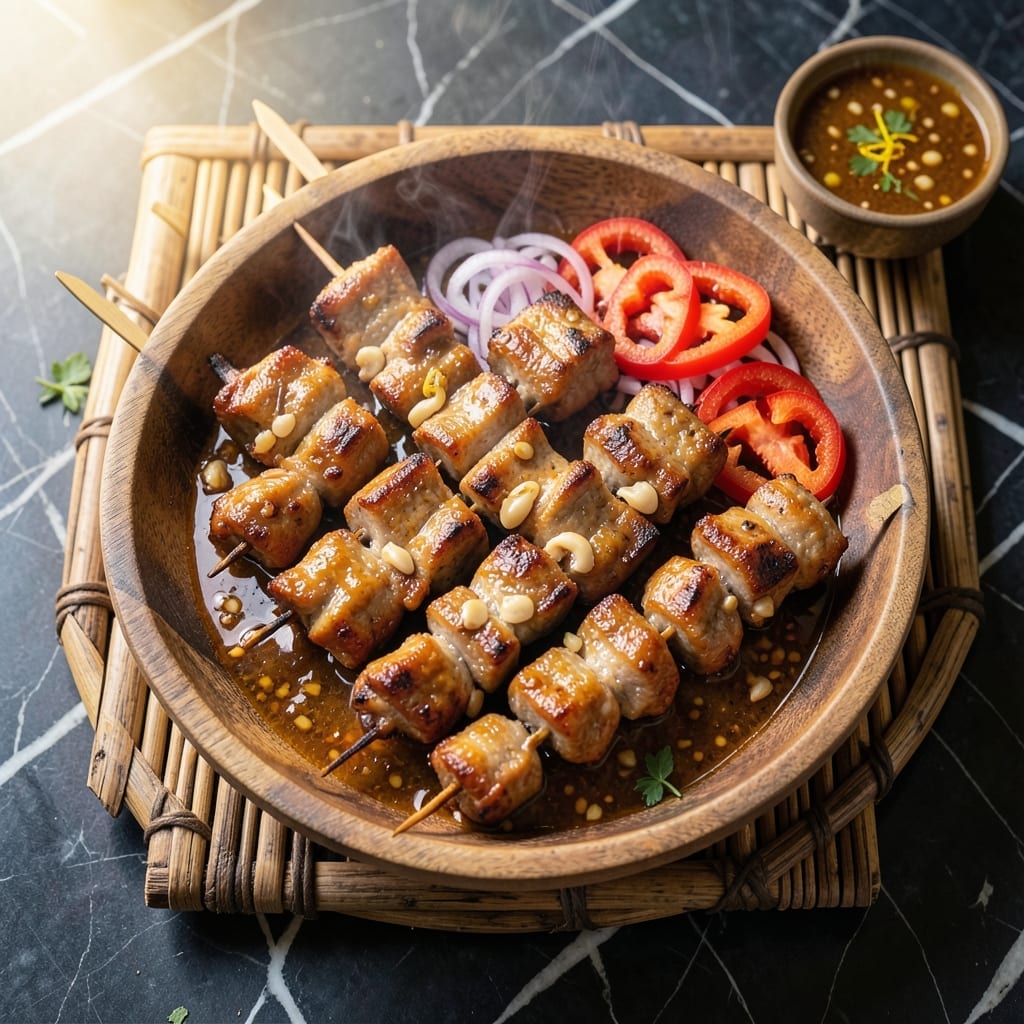
This dish brings authentic Filipino flavors to your grill with a marinade-infused twist. The secret lies in a balance of tangy, sweet, and savory notes.
Expect charred edges and juicy pork that captures the essence of traditional street food. Simple ingredients, professional results.
Ingredients for Filipino Pork Barbecue Skewer
Simple ingredients deliver authentic Filipino street food flavor at home with professional results.
| Ingredient | Amount | Notes |
|---|---|---|
| Pork Shoulder 🐖 | 2 lb | Cut into 1-inch cubes |
| Soy Sauce 🥫 | ½ cup | Low-sodium preferred for balance |
| Calamansi Juice 🍋 | ¼ cup | Or substitute lime juice |
| Brown Sugar 🍚 | ¼ cup | Packed, for caramelization |
| Garlic Cloves 🧄 | 8 cloves | Minced finely for even flavor |
| Banana Ketchup 🍌 | ¼ cup | Filipino brand preferred |
| White Vinegar 💧 | 2 tbsp | For acidity and tenderizing |
| Black Pepper 🌶️ | 1 tsp | Freshly ground for best results |
| Onion 🧅 | 1 whole | Finely minced for marinade |
| Bay Leaves 🍃 | 2 whole | Dried, for aromatic depth |
| Vegetable Oil 🫒 | 2 tbsp | For brushing skewers |
| Wooden Skewers 🪵 | 12 pieces | Soaked in water 30 minutes |
| Salt 🧂 | 1 tsp | Kosher or sea salt preferred |
[recipe_ingredient_scaler]
The pork shoulder is non-negotiable—look for well-marbled cuts at your butcher or the meat counter at Whole Foods. The fat renders down during grilling, keeping the meat juicy. Calamansi juice is traditional, but imex brand lime juice from the Asian aisle works if you can’t find fresh. Banana ketchup (Jufran or Mama Sita’s brands) adds that signature sweet-tangy Filipino note you can’t replicate with regular ketchup.
No banana ketchup? Mix half regular ketchup and half apricot jam for a close approximation. Out of calamansi? Lime or lemon juice gets you 90% there. The brown sugar can be swapped for coconut sugar if you want a deeper caramel flavor. Don’t skip the marinating time—overnight is ideal, but at least 4 hours if you’re in a rush. The bay leaves are subtle but worth it.
Marinated pork keeps 2 days in the fridge before cooking. Skewers can be prepped 8 hours ahead and stored covered. Leftovers? They reheat surprisingly well—3-4 days in the fridge. Freeze uncooked marinated pork for up to 3 months for your next grill session.
Why You’ll Love This Recipe
- 5-Minute Marinade: I mix soy sauce, calamansi juice, brown sugar, and garlic in one bowl—no fancy steps, just let the pork shoulder soak up all that flavor.
- Sticky Sweet Char: The brown sugar caramelizes on the grill, giving each skewer that irresistible glossy, slightly crisp edge.
- Weekend BBQ Star: I serve these at every gathering, and they’re always the first to disappear—great for feeding a crowd without breaking the bank.
- Leftovers? No Problem: Honestly, they taste even better the next day. I toss the extras in a fried rice or sandwich for a quick lunch.
Step-by-Step Instructions for Filipino Pork Barbecue Skewers
Master the technique behind this iconic dish with precise timing and sensory cues.
Step 1: Prepare the Marinade and Marinate the Pork
In a large bowl, whisk together the 0.5 cup soy sauce, 0.25 cup calamansi juice, 0.25 cup brown sugar, 8 cloves minced garlic, 0.25 cup banana ketchup, 2 tbsp white vinegar, 1 tsp black pepper, and 1 tsp salt until the brown sugar dissolves completely. The mixture should be smooth with no grainy texture.
Add the 2 lb pork shoulder cut into 1-inch cubes and the finely minced onion to the marinade. Stir to coat every piece evenly. The pork should glisten with marinade, with no dry spots. Cover and refrigerate for at least 4 hours, or preferably overnight. This extended marinating time allows the flavors to penetrate deeply and tenderize the meat.
Step 2: Skewer the Pork and Prepare for Grilling
Soak the 12 pieces wooden skewers in water for 30 minutes to prevent them from burning on the grill. Drain the pork, reserving the marinade for basting. Thread 4-5 cubes of pork onto each skewer, leaving a small gap between each piece to ensure even cooking.
This arrangement allows heat to circulate around each cube, promoting uniform charring. The skewers should feel sturdy with the pork securely in place, not sliding around. Brush the skewers lightly with 2 tbsp vegetable oil to help create a beautiful char when grilling.
Step 3: Grill the Skewers to Charred Perfection
Preheat your grill to medium-high heat. Place the skewers on the grill and cook for 12-15 minutes, turning occasionally. Baste frequently with the reserved marinade during the first 8 minutes of cooking. Stop basting after this point to allow the pork to develop a proper char.
You’ll know they’re ready when the edges are deeply caramelized and slightly charred, with the pork cooked through and no longer pink in the center. The internal temperature should reach 145°F, and the surface should have a glossy, sticky glaze from the marinade.
Step 4: Rest and Serve the Skewers
Transfer the skewers to a serving platter and let them rest for 5 minutes. This brief rest allows the juices to redistribute, ensuring each bite is moist and flavorful. The pork should pull away slightly from the skewers when gently tugged.
Serve immediately while still hot. The ideal serving temperature is just off the grill, when the glaze is still tacky and the char is at its freshest. Arrange the skewers on a platter with any remaining marinade reduced to a sauce for dipping, if desired.
Pro Tips For Making Filipino Pork Barbecue Skewer
- Marinate Overnight: I learned this the hard way—pork shoulder needs at least 4 hours (but 12 is better) in the calamansi-soy mixture to tenderize and absorb the flavors. Anything less and the skewers taste flat.
- Double Skewer Trick: Use two parallel skewers for each piece instead of one to keep the pork from spinning while grilling. Sounds fussy, but it saves you from unevenly charred meat.
- Watch the Sugar: Brown sugar burns fast over direct heat. Start grilling over medium-high, then move to indirect heat once the marinade starts caramelizing to avoid bitter, blackened edges.
- Baste With Reserve: Always save a portion of the marinade (before it touches raw meat) for basting. It adds layers of flavor and keeps the skewers juicy without risking undercooked pork.
Best Sauces and Condiments for These Flavors
Classic Dipping Sauce
Reduce the reserved marinade in a small saucepan over medium heat for 8-10 minutes until thickened. This creates a glossy, concentrated dipping sauce that amplifies the skewers’ flavors. I love the deep caramel notes that develop as it simmers.
Spicy Vinegar Dip
Combine ½ cup white vinegar with 2 minced garlic cloves, 1 tsp sugar, 1 tsp salt, and 1 chopped bird’s eye chili. This tangy, fiery dip cuts through the richness beautifully. It reminds me of the street food stalls in Manila. 🌶️
Creamy Liver Spread
Blend 1 cup chicken liver pâté with ¼ cup mayonnaise and 2 tbsp calamansi juice until smooth. This rich, velvety spread adds a luxurious touch. I source my pâté from local butcher shops for the freshest flavor.
Sweet Chili Glaze
Mix ½ cup sweet chili sauce with 1 tbsp banana ketchup and 1 tsp lime juice. Brush this glaze on the skewers during the last 2 minutes of grilling for a sticky, sweet finish. The aroma is absolutely intoxicating.
Garlic-Fried Rice
Serve your skewers over garlic-fried rice to soak up all the delicious juices. I fry 2 cups cooked rice with 3 minced garlic cloves and 1 tbsp soy sauce for the perfect accompaniment. 💛
Nutrition Facts
Frequently Asked Questions
What can I use if I can’t find calamansi juice?
Lime or lemon juice works perfectly as a substitute. Use the same 0.25 cup measurement. The flavor will be slightly different but still delicious.
How long should I marinate the pork?
For best results, marinate overnight. Minimum is 4 hours if you’re short on time. The longer it marinates, the more tender and flavorful the pork becomes.
Can I use metal skewers instead of wooden?
Yes, metal skewers work fine and don’t require soaking. Just ensure the pork pieces are threaded securely. They conduct heat differently, so monitor cooking time closely.
Why do I need to stop basting after 8 minutes?
Stopping basting allows the pork to develop a proper char. Continued basting can prevent caramelization and make the skewers too saucy instead of perfectly charred.

Trained in classic French technique but raised on slow-cooked ribs and spicy rubs, she blends culinary skill with smoke and soul.
- Recipe for Boneless Pork Chops in Cast Iron Skillet: Sear and Baste to Juicy Perfection - October 3, 2026
- Recipe for Boneless Cross Rib Roast: Slow-Roasted Beef with Herb Crust - October 3, 2026
- Hamburgers in Sauce Recipe Crock Pot: Slow-Cooked Savory Delight - October 3, 2026