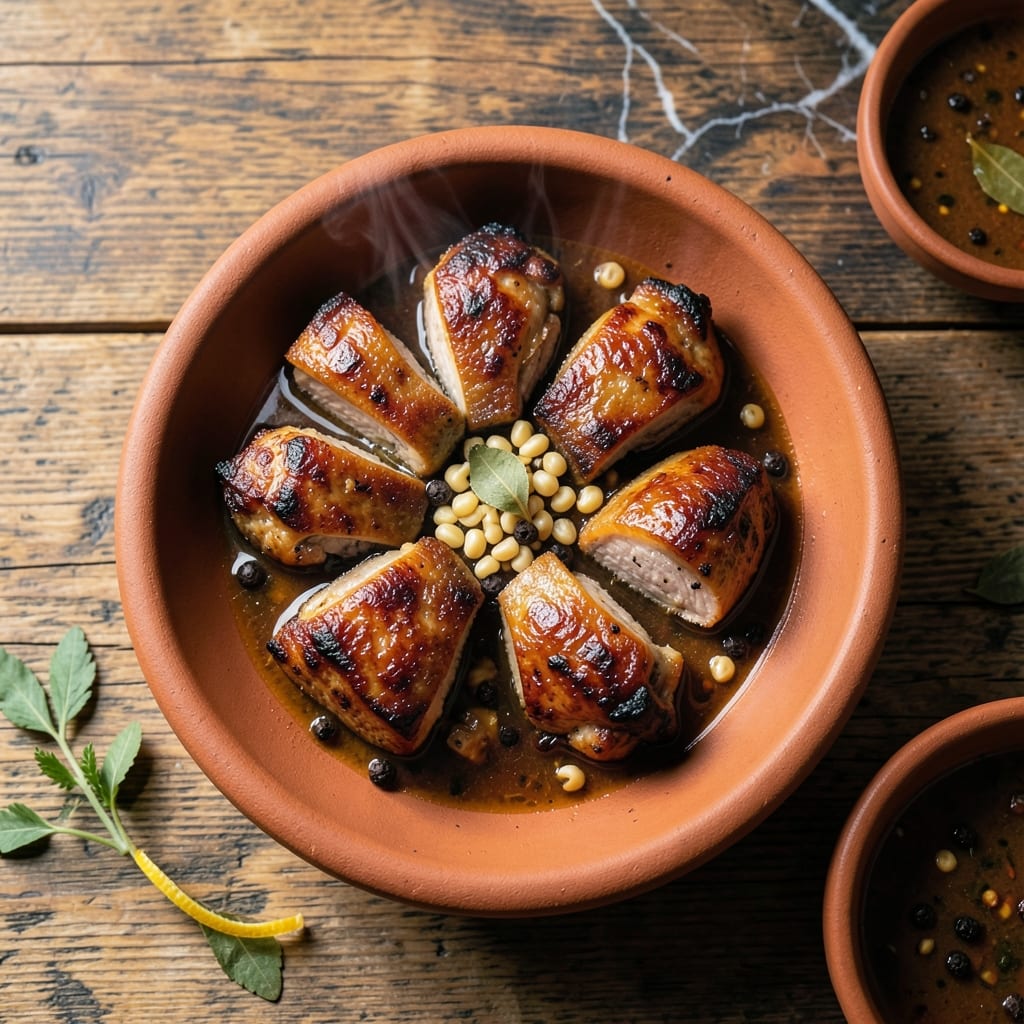
My grandmother’s handwritten notes taught me that the best dishes often rely on simple, bold flavors. This creation transforms pork chops through a tangy vinegar-based marinade that tenderizes while adding depth.
The adobo-style approach ensures juicy results every time, with the acidity cutting through the richness of the meat. Just a few hours of marinating work magic on even the most affordable cuts.
What emerges is pork with a perfect balance of savory and sour notes, complemented by the caramelized edges from searing. The vinegar creates a subtle tang that makes each bite memorable.
Serve with steamed rice to soak up every drop of the flavorful pan sauce. This method honors tradition while fitting seamlessly into modern kitchens.
Ingredients for Filipino Pork Chop Recipe Vinegar
Bold vinegar, garlic, and soy transform these chops into something unforgettable.
| Ingredient | Amount | Notes |
|---|---|---|
| Bone-In Pork Chops 🥩 | 4 whole | About 1-inch thick, rib or loin |
| White Vinegar 💧 | ¾ cup | Or cane vinegar preferred |
| Soy Sauce 🫒 | ½ cup | Low-sodium for control |
| Garlic Cloves 🧄 | 8 cloves | Peeled, smashed, minced |
| Bay Leaves 🍃 | 4 pieces | Dried, whole leaves |
| Black Peppercorns 🌶️ | 2 tsp | Whole, lightly crushed |
| Brown Sugar 🧈 | 2 tbsp | Light or dark variety |
| Olive Oil 🫒 | 2 tbsp | For searing chops |
| Water 💧 | ¼ cup | To thin marinade slightly |
| Salt 🧂 | 1 tsp | Kosher or sea salt |
| Onion 🧅 | 1 whole | Yellow or white, sliced |
| Green Onions 🌱 | 4 pieces | For garnish, sliced thin |
[recipe_ingredient_scaler]
The vinegar is non-negotiable here—cane vinegar is traditional, but white vinegar works in a pinch. Pork chops should be bone-in for flavor and moisture. Costco or Sam’s Club have great bulk packs, but any supermarket with a butcher counter will do. Look for chops about an inch thick so they don’t dry out during cooking. Bay leaves add that signature adobo depth, so don’t skip them (dried is fine).
No cane vinegar? Apple cider vinegar adds a nice fruitiness. Low-sodium soy sauce is key here—you can always add salt, but you can’t take it out. Fresh garlic is a must (jarred just doesn’t have the same punch). Brown sugar can be swapped for coconut sugar at a 1:1 ratio. Out of bay leaves? A pinch of dried thyme gives a similar earthy note, though it’s not the same.
Marinate for at least 4 hours (overnight is even better). Cooked chops keep 3-4 days in the fridge, or freeze for up to 3 months. The pan sauce is gold—pour it over rice or save it for dipping later.
Why You’ll Love This Recipe
- One Pan Meal: I just toss the pork chops, vinegar, soy sauce, and garlic in a pan—minimal cleanup, maximum flavor.
- Tangy Garlic Bite: That sharp vinegar and rich garlic combo hits different, especially with the soy sauce rounding it out.
- Feeds the Gang: I make a big batch for Sunday lunch, and it’s always a hit with both kids and adults.
- Budget Hero: Bone-in chops stay juicy and cost less, and the pantry staples mean I’m not buying extra ingredients.
Step-by-Step Instructions for Tangy Adobo-Style Pork Chops
Here’s the method I use to get that perfect balance of tangy and savory with every bite.
Step 1: Create the Adobo Marinade
In a large bowl, combine the 0.75 cup white vinegar, 0.5 cup soy sauce, 8 cloves minced garlic, 4 pieces bay leaves, 2 tsp lightly crushed black peppercorns, 2 tbsp brown sugar, 0.25 cup water, and 1 tsp salt.
Whisk everything together until the brown sugar and salt dissolve completely. I like to let it sit for 5 minutes to allow the flavors to meld before adding the pork. The vinegar will mellow slightly as it mixes with the soy sauce, creating that signature adobo tang without being overpowering.
Add the sliced onion, then submerge all 4 bone-in pork chops in the marinade. Make sure they’re fully coated. Cover the bowl and refrigerate for at least 4 hours, or overnight for maximum flavor penetration.
Step 2: Sear the Pork Chops to Lock in Juices
Remove the pork chops from the marinade, reserving the marinade for later. Pat them dry with paper towels—this is crucial for achieving a good sear. Heat 2 tbsp olive oil in a large skillet over medium-high heat until it shimmers.
Add the chops and sear for 3-4 minutes per side until they develop a deep golden brown crust. Don’t overcrowd the pan; work in batches if necessary. You’ll know they’re ready to flip when they release easily from the pan without sticking.
The sear caramelizes the sugars in the marinade, adding depth of flavor. Transfer the chops to a plate and set aside.
Step 3: Simmer in Marinade for Tenderness
Pour the reserved marinade into the same skillet, scraping up any browned bits from the bottom. Bring it to a boil over medium heat, then reduce to a simmer. Return the pork chops to the skillet, along with any accumulated juices.
Cover and let them simmer gently for 15-20 minutes, flipping halfway through. The chops are done when they reach an internal temperature of 145°F and the meat near the bone is no longer pink. The marinade should reduce slightly, coating the chops in a glossy, flavorful sauce.
Step 4: Rest and Garnish for Serving
Transfer the pork chops to a serving platter and let them rest for 5-10 minutes. This allows the juices to redistribute, ensuring every bite is moist and flavorful. Spoon the reduced marinade over the top to enhance the tangy adobo flavor.
Garnish with the sliced green onions for a fresh, vibrant finish. The contrast of the bright green against the rich, caramelized chops is as appealing to the eyes as it is to the palate.
Pro Tips For Making Filipino Pork Chop Recipe Vinegar
- Sear Before Simmering: Brown the pork chops in a hot pan first—I learned this the hard way after ending up with pale, boiled-tasting meat. That initial sear locks in the flavor before the vinegar and soy sauce do their work.
- Balance the Vinegar: Use a 1:1 ratio of white vinegar to soy sauce to avoid an overpowering sour taste. My grandmother swore by this, and she was right: it keeps the tang bright but not harsh.
- Don’t Rush the Sauce: Let the vinegar and soy mixture reduce by at least a third before adding the pork chops back in. After burning three batches, I finally figured out that patience is what gives the sauce its rich, sticky consistency.
- Smash the Garlic: Lightly crush the garlic cloves with the flat of your knife before adding them—this releases more flavor without burning. Sounds weird, but it works and saves you from fishing out charred bits later.
Flavor Customization for These Flavors
Extra Tangy Boost
For a sharper vinegar bite, increase the white vinegar to 1 full cup in the marinade. I learned this trick from my grandmother’s notes—she always said more vinegar means more flavor penetration. Just balance it with an extra 1 tbsp brown sugar to keep the sweetness in check. 💡
Sweet and Sour
Add ¼ cup pineapple juice to the marinade for a fruity twist that complements the vinegar. The natural sugars caramelize beautifully during searing. I use Dole brand for consistent sweetness, but any 100% juice works.
Spicy Kick
For heat, add 1-2 sliced Thai bird’s eye chilies or ½ tsp red pepper flakes to the marinade. The acidity of the vinegar amplifies the spice, so start with less and adjust to taste. I prefer fresh chilies for their bright, clean heat.
Herb Infusion
Stir in 1 tbsp dried oregano or 5-6 fresh thyme sprigs for an earthy depth. These herbs pair perfectly with the bay leaves. I often use Penzeys dried oregano—its potency means a little goes a long way.
Citrus Zing
Add zest of 1 lemon or 2 tbsp calamansi juice for a bright citrus note. The citrus enhances the vinegar’s tang without overpowering. I find calamansi at my local Asian market, but lemon works in a pinch.
Umami Richness
For deeper savory notes, add 1 tbsp fish sauce or 1 tsp oyster sauce to the marinade. These ingredients boost the soy sauce’s natural umami. I use Red Boat fish sauce for its clean, pure flavor. 🥗
Nutrition Facts
Frequently Asked Questions
Can I use apple cider vinegar instead?
Yes! Apple cider vinegar adds a fruity depth that works beautifully. Use the same amount as white vinegar, but taste before adding extra sugar since it’s slightly sweeter.
How long should I marinate the pork chops?
Marinate for at least 4 hours for noticeable flavor, but overnight in the fridge yields the best results. Never marinate at room temperature for more than 2 hours to avoid bacterial growth.
Why does the vinegar make the meat so tender?
The acidity in vinegar breaks down muscle fibers, making the pork more tender. Just don’t over-marinate beyond 24 hours, or the texture can turn mushy.
Can I skip the searing step?
Searing is key for developing a caramelized crust and deep flavor. If you skip it, your chops may taste steamed rather than rich and savory. Always pat them dry first for the best sear.

Trained in classic French technique but raised on slow-cooked ribs and spicy rubs, she blends culinary skill with smoke and soul.
- Recipe for Boneless Pork Chops in Cast Iron Skillet: Sear and Baste to Juicy Perfection - October 3, 2026
- Recipe for Boneless Cross Rib Roast: Slow-Roasted Beef with Herb Crust - October 3, 2026
- Hamburgers in Sauce Recipe Crock Pot: Slow-Cooked Savory Delight - October 3, 2026