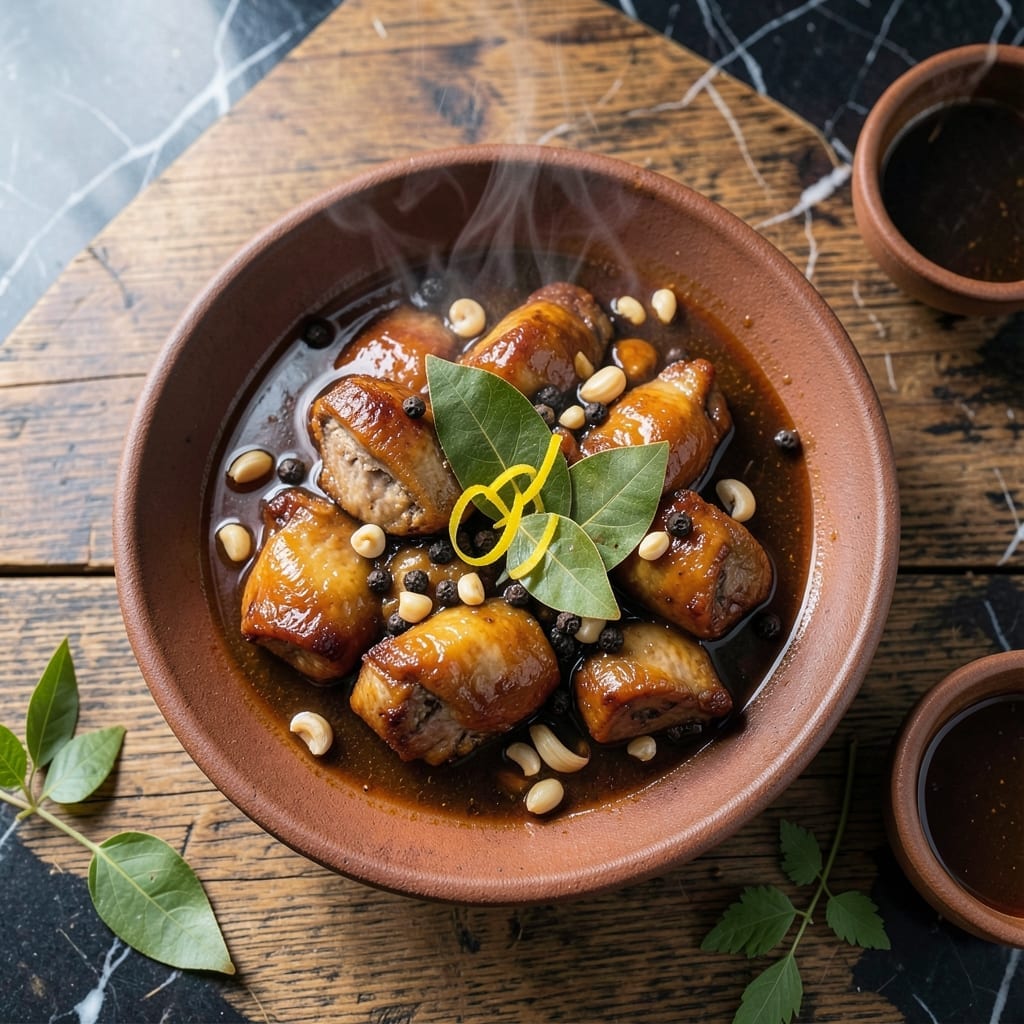
I learned traditional Filipino cooking by watching my grandmother work her magic without measuring spoons. Her pork dishes always balanced bold flavors with simple techniques.
This collection transforms everyday pork into something extraordinary using vinegar, soy sauce, and garlic. The methods are time-tested but adaptable to modern kitchens.
From tangy adobo to crispy lechon, these recipes deliver authentic taste without complicated steps. Each dish tells a story of Filipino culinary tradition.
Whether you’re new to Filipino cuisine or reconnecting with familiar flavors, these ideas bring restaurant-quality results home.
Ingredients for Filipino Pork Recipe Ideas
Bold flavors start with pork, vinegar, garlic, and a few pantry staples ready to shine.
| Ingredient | Amount | Notes |
|---|---|---|
| Pork Shoulder 🐖 | 2 lb | Cut into 2-inch chunks, skin-on preferred |
| White Vinegar 🍶 | ¾ cup | Cane vinegar for authenticity |
| Soy Sauce 🫙 | ½ cup | Silver Swan or Datu Puti brand |
| Garlic Cloves 🧄 | 12 cloves | Peeled, smashed and minced |
| Bay Leaves 🌿 | 5 pieces | Dried, whole leaves |
| Black Peppercorns 🌶️ | 1 tbsp | Lightly crushed for depth |
| Brown Sugar 🍚 | 2 tbsp | Packed, for balancing acidity |
| Banana Leaves 🍃 | 2 pieces | For wrapping lechon, optional |
| Lemon Grass 🌱 | 2 stalks | Bruised, cut into 3-inch pieces |
| Fish Sauce 🐟 | 2 tbsp | Patis or Thai tiparos |
| Cooking Oil 🛢️ | ¼ cup | Neutral-flavored for frying |
| Onion 🧅 | 1 whole | Medium, sliced into rings |
| Salt 🧂 | 1 tsp | Adjust to taste |
[recipe_ingredient_scaler]
The pork shoulder is non-negotiable here—look for well-marbled cuts with the skin on for that authentic crispy lechon texture. Asian markets often have pre-cut chunks perfect for adobo, but any butcher can prep it for you. Vinegar should be Filipino cane vinegar (Datu Puti or Silver Swan), but white vinegar works in a pinch. Don’t skip the bay leaves—they’re the backbone of the aroma.
Out of cane vinegar? Apple cider vinegar at equal amounts works, though the flavor profile shifts slightly. No fish sauce? Soy sauce plus a pinch of salt gets you close. For the lechon, banana leaves are traditional but aluminum foil works too (just won’t have that signature aroma). If you can’t find fresh lemongrass, dried and rehydrated is acceptable, but use half the amount.
Marinated pork keeps 3-4 days in the fridge, but it’s best cooked fresh. Cooked dishes hold up well—adobo actually improves overnight. Leftovers freeze for 3 months (thaw before reheating). Always store bay leaves and lemongrass in cool, dark places to preserve their potency.
Why You’ll Love This Recipe
- I’ll be real: this stretches far—great for Sunday lunch with the family or meal prepping for the week.
- One Pot Magic: Honestly, I just toss everything in and let the pork shoulder soak up the vinegar, soy, and garlic—minimal cleanup, maximum flavor.
- Tangy Depth: That sharp white vinegar cuts through the richness while the bay leaves add this subtle earthy note I didn’t know I needed.
- Feeds the Crew: I’ll be real: this stretches far—great for Sunday lunch with the family or meal prepping for the week.
Step-by-Step Instructions for Filipino Pork Dishes
This method delivers authentic flavors that will transport you straight to the Philippines.
Step 1: Marinate the Pork Shoulder in Aromatics
In a large bowl, combine the 2 lb pork shoulder with 0.75 cup white vinegar, 0.5 cup soy sauce, minced 12 cloves garlic cloves, 5 pieces bay leaves, 1 tbsp black peppercorns, 2 tbsp brown sugar, and 1 tsp salt.
Mix thoroughly, ensuring every piece is well coated. The vinegar tenderizes the meat while the soy sauce infuses it with deep umami. Let it marinate at room temperature for 30 minutes or refrigerated for up to 24 hours for maximum flavor penetration.
This balance of acid, salt, and sweetness is the foundation of Filipino adobo. The pork should look glossy and smell intensely aromatic when ready for cooking.
Step 2: Sear the Meat for Depth of Flavor
Heat 0.25 cup cooking oil in a large pot over medium-high heat. Remove the pork from the marinade (reserve the liquid) and pat dry with paper towels. Sear in batches for 3-4 minutes per side until deep golden brown on all sides.
Don’t overcrowd the pot—this prevents steaming and ensures a proper sear. The pork should release easily from the bottom when it’s ready to flip. Transfer the seared meat to a plate and set aside.
In the same pot, sauté the sliced 1 whole onion until translucent, about 2-3 minutes. This builds the flavor base for the sauce.
Step 3: Braise with Reserved Marinade and Aromatics
Return the seared pork to the pot and pour in the reserved marinade. Add the 2 stalks lemon grass and 2 tbsp fish sauce. Bring to a boil, then reduce heat to low, cover, and simmer for 1.5-2 hours.
The pork is done when it’s fork-tender and the sauce has reduced slightly. Stir occasionally and check that the liquid doesn’t evaporate completely. The sauce should coat the back of a spoon with a rich, glossy consistency.
For lechon-style flavor, you can wrap the pork in 2 pieces banana leaves during the last 30 minutes of cooking. This imparts a subtle, earthy aroma that’s distinctly Filipino.
Step 4: Reduce the Sauce and Finish
Once the pork is tender, remove it from the pot and set aside. Increase the heat to medium-high and let the sauce reduce for 5-7 minutes until it thickens enough to coat the pork beautifully.
Taste and adjust seasoning if needed—remember, the flavors concentrate as the sauce reduces. Return the pork to the pot and turn to coat evenly in the glossy, reduced sauce.
Transfer to a serving dish and let rest for 10 minutes before serving. The pork should be fall-apart tender with a rich, tangy-sweet sauce clinging to every piece.
Pro Tips For Making Filipino Pork Recipe Ideas
- Simmer Low and Slow: I learned this the hard way—boiling the pork shoulder in vinegar and soy sauce too aggressively makes it tough. Keep it at a gentle simmer for 45-60 minutes until fork-tender.
- Crush the Garlic: Sounds weird, but it works: lightly crushing the garlic cloves (peeled) releases more flavor into the adobo than mincing, and you can fish them out later if you prefer.
- Balance the Vinegar: After burning a batch from too much acidity, I finally figured out that 1 part white vinegar to 2 parts soy sauce is the sweet spot for that tangy-savory Filipino adobo taste.
- Use Fresh Bay Leaves: My grandmother swore by this, and she was right: dried bay leaves work, but fresh ones (2-3 leaves) add a brighter, more complex aroma to the pork as it braises.
Wine and Beer Pairings for These Flavors
Beer Pairings
Filipino beer San Miguel Pale Pilsen cuts through the richness with crisp, clean notes that complement the vinegar and garlic. Its light body won’t overwhelm the tangy adobo. I always keep a few bottles on hand for authentic pairings. 🍺
Light Lager Options
Any light lager like Red Horse Beer works beautifully—its mild bitterness balances the sweet and savory. Serve ice cold, as Filipinos do, to enhance the contrast with warm, saucy pork.
Wine Choices
A chilled Riesling with its slight sweetness and acidity mirrors the dish’s tangy profile. Off-dry styles from Washington State or Germany pair especially well with the vinegar and brown sugar notes.
Rosé Alternative
For a refreshing twist, try a dry Provence rosé. Its berry and citrus notes complement the garlic and soy without clashing. I love how the pale pink color looks next to golden pork. ✨
Non-Alcoholic Option
Calamansi juice or sago’t gulaman (a Filipino drink) offers a traditional pairing. The tartness of calamansi cuts through the fat, while the sweet coconut milk in sago’t gulaman balances the savory flavors.
Nutrition Facts
Frequently Asked Questions
Can I use chicken instead of pork?
Yes! Chicken thighs work well with the same marinade. Reduce cooking time to 45-60 minutes since poultry cooks faster. The flavors still shine with the vinegar and soy base.
How do I make it less sour?
Balance the acidity by adding 1-2 tbsp more brown sugar or a splash of coconut milk. Start with small adjustments to avoid over-sweetening.
What if my sauce is too thin?
Uncover and simmer on medium-high heat for 5-10 minutes to reduce. Stir frequently to prevent burning. A cornstarch slurry can thicken it quickly if needed.
Can I cook this in a slow cooker?
Sear the pork first, then cook on low for 6-8 hours or high for 3-4 hours. The flavors deepen beautifully with longer cooking.

Trained in classic French technique but raised on slow-cooked ribs and spicy rubs, she blends culinary skill with smoke and soul.
- Hamburgers in Sauce Recipe Crock Pot: Slow-Cooked Savory Delight - October 3, 2026
- Sanjeev Kapoor Egg Biryani Recipe: Fragrant Spiced Rice With Boiled Eggs - October 3, 2026
- Recipe for French Pork Spread Gorton: Savory Gallic Flavors in a Spreadable Delight - October 3, 2026