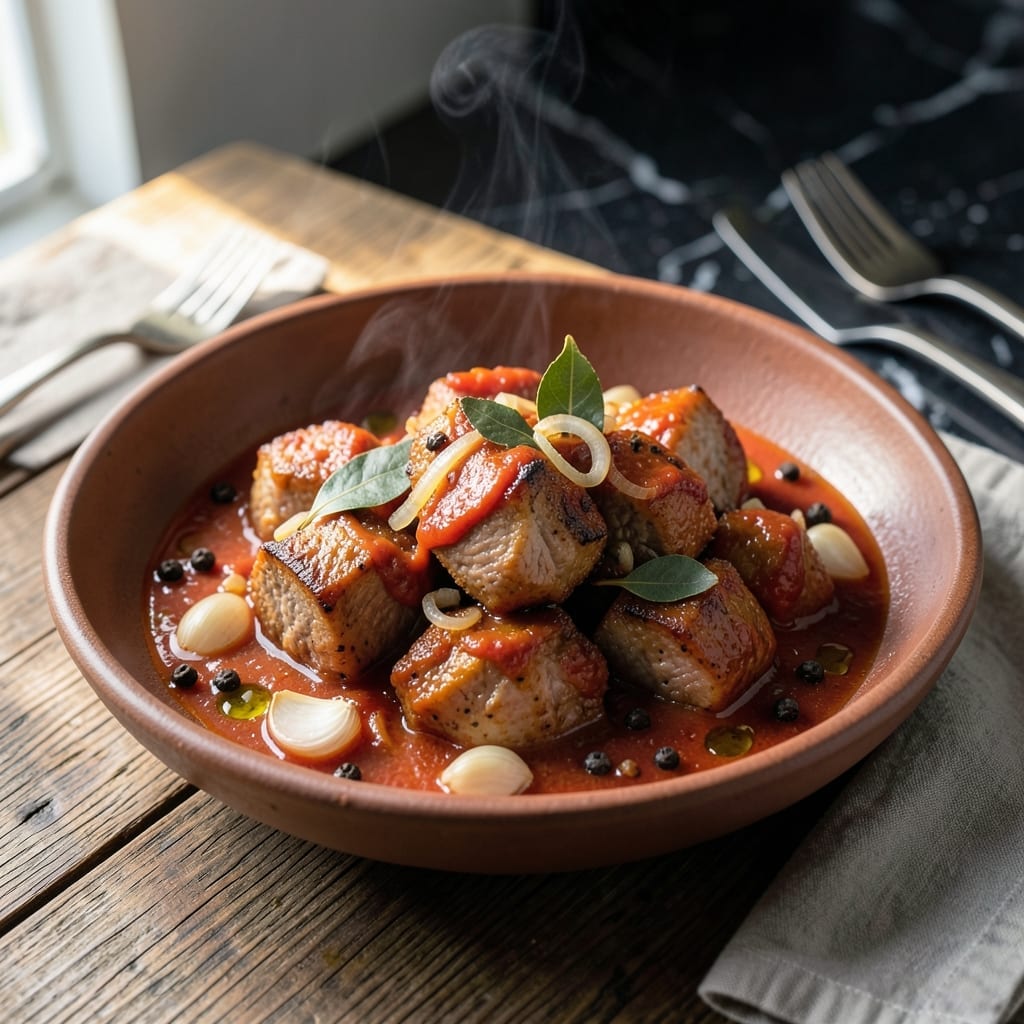
Filipino Pork Recipe With Tomato Sauce: Slow-Simmered Savory Richness

Filipino Pork Recipe With Tomato Sauce: Slow-Simmered Savory Richness

This dish captures the deep, savory traditions of Filipino cooking with a slow-simmered approach that transforms humble ingredients into something extraordinary.

I developed this method after years of studying how Filipino home cooks build layers of flavor through patient cooking. The tomato sauce develops a rich, velvety texture as it reduces, creating a perfect balance with the tender pork.

What emerges is a dish with melt-in-your-mouth pork in a sauce so deeply flavorful it demands to be sopped up with rice. The slow cooking process allows the flavors to meld completely.

The result is comfort food at its finest—simple ingredients elevated through time and technique.

👨‍🍳
Difficulty
Medium
🥩
Diet
Meat
⏱️
Total Time
30 min
🔥
Calories
Med Cal

Ingredients for Filipino Pork Recipe with Tomato Sauce

Simple ingredients, slow-simmered to perfection in this Filipino-inspired dish with tender pork and rich tomato sauce.

Ingredient Amount Notes
Pork Shoulder 🍖 2 lb Cut into 2-inch chunks, bone-in preferred
Tomato Sauce 🍅 2 cups Canned or bottled, unsweetened
Onion 🧅 1 whole Medium, finely chopped
Garlic Cloves 🧄 6 cloves Peeled and minced
Bay Leaves 🌿 2 whole Dried, for aromatic depth
Black Peppercorns 🌶️ 1 tsp Lightly crushed for boldness
Soy Sauce 🫙 ¼ cup Low-sodium preferred for balance
Brown Sugar 🍚 2 tbsp Packed, for subtle sweetness
White Vinegar 💧 2 tbsp Distilled, for acidity
Carrots 🥕 2 whole Medium, sliced into rounds
Potatoes 🥔 2 whole Yukon Gold, cubed
Water 💧 1 cup To adjust sauce consistency
Salt 🧂 1 tsp To taste for seasoning
Vegetable Oil 🫒 2 tbsp For browning pork

[recipe_ingredient_scaler]

The pork shoulder is non-negotiable here—bone-in pieces from a local butcher or Costco give you that melt-in-your-mouth texture. Look for good marbling; the fat renders down during the long simmer, enriching the sauce. San Marzano tomato sauce adds depth, but any unsweetened canned variety works. For the soy sauce, Kikkoman low-sodium keeps the salt in check while letting other flavors shine.

Short on time? Swap pork shoulder for pork belly at half the amount—it cooks faster but stays just as tender. No tomato sauce? Crushed tomatoes blended smooth get you close. The vinegar can be apple cider or cane vinegar if you prefer a fruitier note. Bay leaves are ideal, but 1 tsp dried thyme works in a pinch. Don’t skip the sugar—it balances the acidity.

This tastes even better the next day—3-4 days in the fridge, 3 months frozen. Reheat gently on the stove with a splash of water to thin the sauce. Leftovers make incredible pork sandwiches on crusty bread.

❤️

Why You’ll Love This Recipe

  • One Pot Wonder: I toss everything in a single pan—pork shoulder, tomato sauce, and those fragrant bay leaves—then let it simmer. Minimal cleanup, maximum flavor.
  • Garlicky Richness: The garlic and onion caramelize in the tomato sauce, creating this deep, savory-sweet combo that coats every bite of tender pork.
  • Feeds the Crew: Honestly, this is my go-to for family dinners or when friends drop by unexpectedly. It stretches easily and tastes even better the next day.
  • Budget Stretcher: Pork shoulder is so affordable, and a little goes a long way. Between us, I’ve served this to six people with leftovers for lunch.

Step-by-Step Instructions for Filipino Pork With Tomato Sauce

This method delivers tender pork in a rich, tangy-sweet sauce with minimal hands-on time.

Step 1: Brown the Pork Shoulder

Heat the 2 tbsp vegetable oil in a large pot or Dutch oven over medium-high heat. When the oil shimmers, add the 2 lb pork shoulder chunks in a single layer, working in batches if necessary to avoid crowding.

Sear the pork for 4-5 minutes per side until deep golden brown on all surfaces. This step builds a flavor foundation and ensures the meat stays juicy during the long simmer. Don’t stir too often—let each piece develop a good crust before turning.

Step 2: Sauté Aromatics and Build the Base

Remove the pork and set aside. In the same pot, add the 1 whole onion (finely chopped) and cook for 3 minutes until softened and translucent. Stir in the 6 cloves garlic cloves (minced) and cook for 30 seconds until fragrant.

Add the 2 cups tomato sauce, 0.25 cup soy sauce, 2 tbsp brown sugar, 2 tbsp white vinegar, 2 whole bay leaves, and 1 tsp black peppercorns (lightly crushed). Stir to combine and let the mixture come to a gentle simmer.

Step 3: Simmer the Pork and Vegetables

Return the pork to the pot along with the 2 whole carrots (sliced into rounds) and 2 whole potatoes (cubed). Pour in the 1 cup water and stir to distribute the ingredients evenly. Season with 1 tsp salt.

Bring to a boil, then reduce the heat to low. Cover and let it simmer for 1 hour, stirring occasionally. After 1 hour, uncover and simmer for another 30-45 minutes until the pork is fork-tender and the sauce has thickened slightly.

Step 4: Adjust and Finish

Taste the sauce and adjust the seasoning if needed. The pork should be falling apart, and the potatoes and carrots should be soft but still holding their shape. If the sauce is too thick, add a splash of water to reach your desired consistency.

Discard the bay leaves before serving. The sauce should be rich and glossy, with a balance of tangy, sweet, and savory flavors. Let the dish rest for 10 minutes off the heat to allow the flavors to meld together before serving.

👨‍🍳

Pro Tips For Making Filipino Pork Recipe With Tomato Sauce

  • Brown the Pork Well: Take the time to sear the pork shoulder in batches until deeply browned—this builds a flavor base that tomato sauce alone can’t fix. I learned this the hard way after serving pale, bland pork once too often.
  • Bloom the Aromatics: Cook the onions and garlic in the same pot after browning the pork, scraping up those browned bits, for at least 3-4 minutes until fragrant. Sounds simple, but skipping this step leaves your sauce tasting flat.
  • Simmer Low and Slow: Once everything’s in the pot, keep the heat at a gentle simmer—hard boiling makes the pork tough and can cause the tomato sauce to split. My grandmother swore by this, and she was right.
  • Add Bay Leaves Early: Toss in the bay leaves right at the start of simmering so their earthy flavor infuses the sauce as it reduces. After burning a batch by adding them too late, I finally figured out timing matters here.

Health Benefits of This Dish

Rich Protein Source

This dish delivers high-quality protein from pork shoulder—about 40 grams per serving. Protein is essential for muscle repair and immune function, making this a satisfying meal. The slow cooking preserves these nutrients beautifully. 💪

Vitamin and Mineral Boost

The tomato sauce provides lycopene, a powerful antioxidant linked to heart health. Carrots and potatoes add vitamin A and potassium, supporting vision and blood pressure regulation. A balanced nutritional profile in every bite.

Energy-Sustaining Carbs

Potatoes and carrots offer complex carbohydrates that provide steady energy. The brown sugar adds a touch of natural sweetness while contributing quick energy. Together, they create a meal that keeps you full and energized.

Immune Support

Garlic and onions in this recipe are packed with allicin and other compounds that boost immune function. These aromatics have been used for centuries in Filipino cooking for both flavor and health benefits. 🌱

Bone Health Benefits

The bone-in pork shoulder provides additional nutrients like calcium and phosphorus, which are vital for maintaining strong bones. These minerals are released during the long simmer, enriching the sauce.

Balanced Flavor, Balanced Nutrition

The combination of protein, vitamins, and minerals in this dish makes it a well-rounded meal. The tangy tomato sauce, tender pork, and hearty vegetables work together to nourish your body while delighting your taste buds.

Nutrition Facts

Servings 4
Amount Per Serving
Calories 580kcal
% Daily Value
Total Fat 32g41%
Saturated Fat 10g50%
Cholesterol 140mg47%
Sodium 1250mg54%
Total Carbohydrate 38g14%
Dietary Fiber 5g18%
Sugars 12g
Protein 38g76%
Percent Daily Values are based on a 2,000 calorie diet. Your daily values may be higher or lower depending on your calorie needs.

Frequently Asked Questions

1

Can I use a different cut of pork?

Yes, pork belly works well and cooks faster. For leaner options, try pork loin but reduce simmer time to 45 minutes to prevent drying out. The shoulder’s marbling is ideal though.

2

Why add vinegar to the sauce?

The 2 tbsp vinegar balances the richness and adds the signature Filipino tang. It also helps tenderize the meat during the long cook. Don’t skip it!

3

How do I make it less sweet?

Reduce the 2 tbsp brown sugar by half or substitute with a pinch of salt. The natural sweetness of carrots and tomatoes will still shine through.

4

Can I make this ahead of time?

The flavors deepen after 1-2 days in the fridge. Store in an airtight container and reheat gently with a splash of water.

★★★★★4.6(14 reviews)
Chef Melanie

Filipino Pork Recipe With Tomato Sauce: Slow-Simmered Savory Richness

Filipino Pork Recipe With Tomato Sauce: Slow-Simmered Savory Richness

This dish captures the deep, savory traditions of Filipino cooking with a slow-simmered approach that transforms humble ingredients into something extraordinary.

I developed this method after years of studying how Filipino home cooks build layers of flavor through patient cooking. The tomato sauce develops a rich, velvety texture as it reduces, creating a perfect balance with the tender pork.

What emerges is a dish with melt-in-your-mouth pork in a sauce so deeply flavorful it demands to be sopped up with rice. The slow cooking process allows the flavors to meld completely.

The result is comfort food at its finest—simple ingredients elevated through time and technique.

👨‍🍳
Difficulty
Medium
🥩
Diet
Meat
⏱️
Total Time
30 min
🔥
Calories
Med Cal

Ingredients for Filipino Pork Recipe with Tomato Sauce

Simple ingredients, slow-simmered to perfection in this Filipino-inspired dish with tender pork and rich tomato sauce.

Ingredient Amount Notes
Pork Shoulder 🍖 2 lb Cut into 2-inch chunks, bone-in preferred
Tomato Sauce 🍅 2 cups Canned or bottled, unsweetened
Onion 🧅 1 whole Medium, finely chopped
Garlic Cloves 🧄 6 cloves Peeled and minced
Bay Leaves 🌿 2 whole Dried, for aromatic depth
Black Peppercorns 🌶️ 1 tsp Lightly crushed for boldness
Soy Sauce 🫙 ¼ cup Low-sodium preferred for balance
Brown Sugar 🍚 2 tbsp Packed, for subtle sweetness
White Vinegar 💧 2 tbsp Distilled, for acidity
Carrots 🥕 2 whole Medium, sliced into rounds
Potatoes 🥔 2 whole Yukon Gold, cubed
Water 💧 1 cup To adjust sauce consistency
Salt 🧂 1 tsp To taste for seasoning
Vegetable Oil 🫒 2 tbsp For browning pork

[recipe_ingredient_scaler]

The pork shoulder is non-negotiable here—bone-in pieces from a local butcher or Costco give you that melt-in-your-mouth texture. Look for good marbling; the fat renders down during the long simmer, enriching the sauce. San Marzano tomato sauce adds depth, but any unsweetened canned variety works. For the soy sauce, Kikkoman low-sodium keeps the salt in check while letting other flavors shine.

Short on time? Swap pork shoulder for pork belly at half the amount—it cooks faster but stays just as tender. No tomato sauce? Crushed tomatoes blended smooth get you close. The vinegar can be apple cider or cane vinegar if you prefer a fruitier note. Bay leaves are ideal, but 1 tsp dried thyme works in a pinch. Don’t skip the sugar—it balances the acidity.

This tastes even better the next day—3-4 days in the fridge, 3 months frozen. Reheat gently on the stove with a splash of water to thin the sauce. Leftovers make incredible pork sandwiches on crusty bread.

❤️

Why You’ll Love This Recipe

  • One Pot Wonder: I toss everything in a single pan—pork shoulder, tomato sauce, and those fragrant bay leaves—then let it simmer. Minimal cleanup, maximum flavor.
  • Garlicky Richness: The garlic and onion caramelize in the tomato sauce, creating this deep, savory-sweet combo that coats every bite of tender pork.
  • Feeds the Crew: Honestly, this is my go-to for family dinners or when friends drop by unexpectedly. It stretches easily and tastes even better the next day.
  • Budget Stretcher: Pork shoulder is so affordable, and a little goes a long way. Between us, I’ve served this to six people with leftovers for lunch.

Step-by-Step Instructions for Filipino Pork With Tomato Sauce

This method delivers tender pork in a rich, tangy-sweet sauce with minimal hands-on time.

Step 1: Brown the Pork Shoulder

Heat the 2 tbsp vegetable oil in a large pot or Dutch oven over medium-high heat. When the oil shimmers, add the 2 lb pork shoulder chunks in a single layer, working in batches if necessary to avoid crowding.

Sear the pork for 4-5 minutes per side until deep golden brown on all surfaces. This step builds a flavor foundation and ensures the meat stays juicy during the long simmer. Don’t stir too often—let each piece develop a good crust before turning.

Step 2: Sauté Aromatics and Build the Base

Remove the pork and set aside. In the same pot, add the 1 whole onion (finely chopped) and cook for 3 minutes until softened and translucent. Stir in the 6 cloves garlic cloves (minced) and cook for 30 seconds until fragrant.

Add the 2 cups tomato sauce, 0.25 cup soy sauce, 2 tbsp brown sugar, 2 tbsp white vinegar, 2 whole bay leaves, and 1 tsp black peppercorns (lightly crushed). Stir to combine and let the mixture come to a gentle simmer.

Step 3: Simmer the Pork and Vegetables

Return the pork to the pot along with the 2 whole carrots (sliced into rounds) and 2 whole potatoes (cubed). Pour in the 1 cup water and stir to distribute the ingredients evenly. Season with 1 tsp salt.

Bring to a boil, then reduce the heat to low. Cover and let it simmer for 1 hour, stirring occasionally. After 1 hour, uncover and simmer for another 30-45 minutes until the pork is fork-tender and the sauce has thickened slightly.

Step 4: Adjust and Finish

Taste the sauce and adjust the seasoning if needed. The pork should be falling apart, and the potatoes and carrots should be soft but still holding their shape. If the sauce is too thick, add a splash of water to reach your desired consistency.

Discard the bay leaves before serving. The sauce should be rich and glossy, with a balance of tangy, sweet, and savory flavors. Let the dish rest for 10 minutes off the heat to allow the flavors to meld together before serving.

👨‍🍳

Pro Tips For Making Filipino Pork Recipe With Tomato Sauce

  • Brown the Pork Well: Take the time to sear the pork shoulder in batches until deeply browned—this builds a flavor base that tomato sauce alone can’t fix. I learned this the hard way after serving pale, bland pork once too often.
  • Bloom the Aromatics: Cook the onions and garlic in the same pot after browning the pork, scraping up those browned bits, for at least 3-4 minutes until fragrant. Sounds simple, but skipping this step leaves your sauce tasting flat.
  • Simmer Low and Slow: Once everything’s in the pot, keep the heat at a gentle simmer—hard boiling makes the pork tough and can cause the tomato sauce to split. My grandmother swore by this, and she was right.
  • Add Bay Leaves Early: Toss in the bay leaves right at the start of simmering so their earthy flavor infuses the sauce as it reduces. After burning a batch by adding them too late, I finally figured out timing matters here.

Health Benefits of This Dish

Rich Protein Source

This dish delivers high-quality protein from pork shoulder—about 40 grams per serving. Protein is essential for muscle repair and immune function, making this a satisfying meal. The slow cooking preserves these nutrients beautifully. 💪

Vitamin and Mineral Boost

The tomato sauce provides lycopene, a powerful antioxidant linked to heart health. Carrots and potatoes add vitamin A and potassium, supporting vision and blood pressure regulation. A balanced nutritional profile in every bite.

Energy-Sustaining Carbs

Potatoes and carrots offer complex carbohydrates that provide steady energy. The brown sugar adds a touch of natural sweetness while contributing quick energy. Together, they create a meal that keeps you full and energized.

Immune Support

Garlic and onions in this recipe are packed with allicin and other compounds that boost immune function. These aromatics have been used for centuries in Filipino cooking for both flavor and health benefits. 🌱

Bone Health Benefits

The bone-in pork shoulder provides additional nutrients like calcium and phosphorus, which are vital for maintaining strong bones. These minerals are released during the long simmer, enriching the sauce.

Balanced Flavor, Balanced Nutrition

The combination of protein, vitamins, and minerals in this dish makes it a well-rounded meal. The tangy tomato sauce, tender pork, and hearty vegetables work together to nourish your body while delighting your taste buds.

Nutrition Facts

Servings 4
Amount Per Serving
Calories 580kcal
% Daily Value
Total Fat 32g41%
Saturated Fat 10g50%
Cholesterol 140mg47%
Sodium 1250mg54%
Total Carbohydrate 38g14%
Dietary Fiber 5g18%
Sugars 12g
Protein 38g76%
Percent Daily Values are based on a 2,000 calorie diet. Your daily values may be higher or lower depending on your calorie needs.

Frequently Asked Questions

1

Can I use a different cut of pork?

Yes, pork belly works well and cooks faster. For leaner options, try pork loin but reduce simmer time to 45 minutes to prevent drying out. The shoulder’s marbling is ideal though.

2

Why add vinegar to the sauce?

The 2 tbsp vinegar balances the richness and adds the signature Filipino tang. It also helps tenderize the meat during the long cook. Don’t skip it!

3

How do I make it less sweet?

Reduce the 2 tbsp brown sugar by half or substitute with a pinch of salt. The natural sweetness of carrots and tomatoes will still shine through.

4

Can I make this ahead of time?

The flavors deepen after 1-2 days in the fridge. Store in an airtight container and reheat gently with a splash of water.

★★★★★4.6(14 reviews)
Chef Melanie

More recipe sites