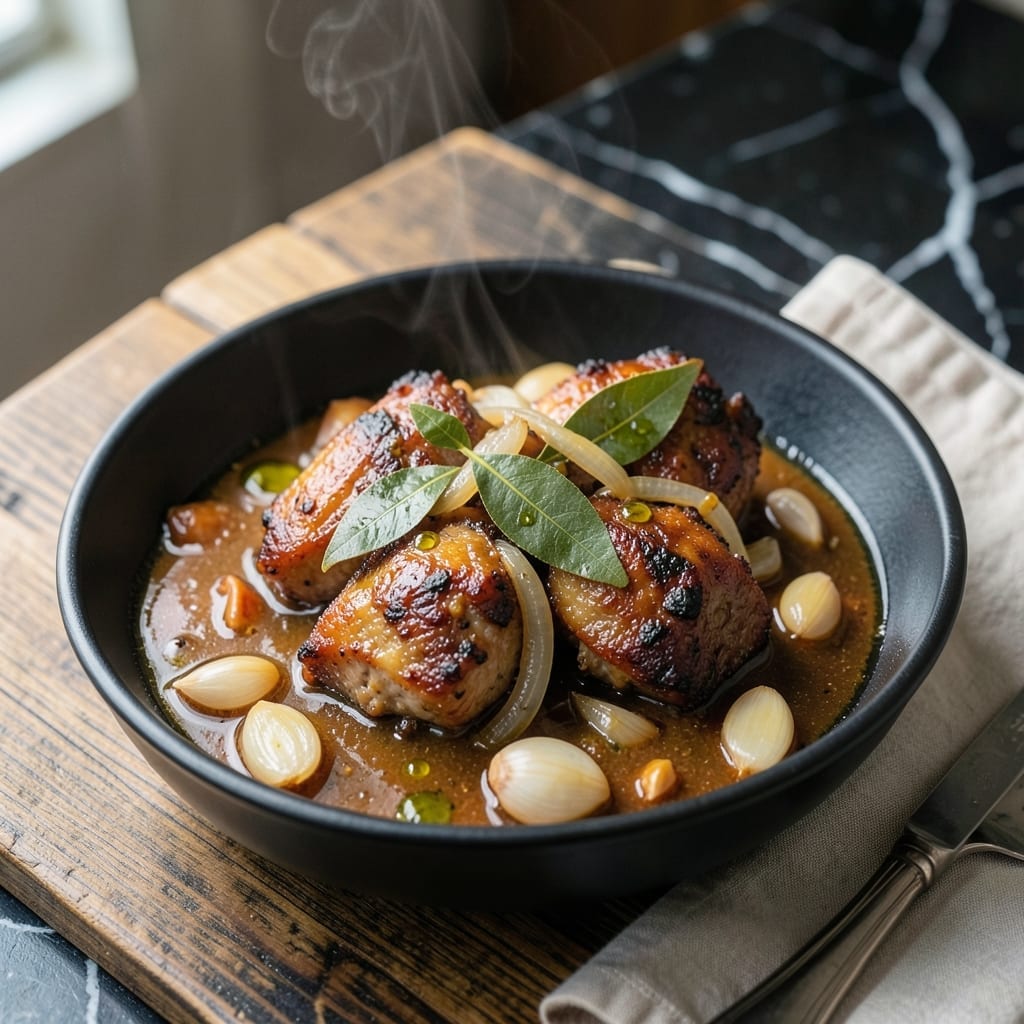
Filipino pork dishes carry generations of tradition in every bite. I learned the value of these recipes from my grandmother’s handwritten cards, each one a treasure of cultural heritage.
These creations showcase the bold, tangy, and savory flavors that define Filipino cuisine. Simple ingredients transform into dishes that honor authentic techniques without unnecessary complexity.
You’ll find recipes here that bring the warmth of a Filipino kitchen to your home. Each one delivers the traditional taste that has been passed down through families.
From slow-cooked adobo to crispy lechon kawali, these are the dishes that make every meal special.
Ingredients for Filipino Pork Recipe List
Traditional Filipino flavors start with quality pork and bold seasonings. Nothing complicated here.
| Ingredient | Amount | Notes |
|---|---|---|
| Pork Shoulder 🐖 | 2 lb | Cut into 2-inch chunks, bone-in preferred |
| Soy Sauce 🥫 | ¾ cup | Filipino brand like Silver Swan preferred |
| White Vinegar 🧪 | ½ cup | Cane vinegar for authenticity |
| Garlic Cloves 🧄 | 10 cloves | Peeled and crushed |
| Bay Leaves 🍃 | 5 pieces | Dried, whole leaves |
| Black Peppercorns 🌶️ | 1 tbsp | Whole, lightly crushed |
| Brown Sugar 🍚 | 2 tbsp | Packed, for balancing acidity |
| Onion 🧅 | 1 whole | Large, sliced into rings |
| Potatoes 🥔 | 1 lb | Yukon Gold, peeled and quartered |
| Pineapple Juice 🍍 | ½ cup | For tenderizing pork |
| Cooking Oil 🫒 | 2 tbsp | Neutral flavor like vegetable oil |
| Salt 🧂 | 1 tsp | Kosher or sea salt |
| Green Onions 🌱 | 4 whole | Thinly sliced for garnish |
| Calamansi or Lime 🍈 | 2 pieces | Juiced for brightness |
[recipe_ingredient_scaler]
The pork shoulder is non-negotiable for authentic texture—bone-in gives the richest flavor. Look for well-marbled cuts at Asian markets or the international section of Whole Foods. Filipino soy sauce (like Silver Swan) is darker and saltier than Chinese varieties, so don’t swap it. Bay leaves should be whole and dried; fresh ones can be bitter. I always buy my vinegar from Seafood City when I’m stocking up.
No canned pineapple juice? Fresh pineapple blended and strained works in a pinch. Out of calamansi? Lime or lemon juice at a 1:1 ratio. If you can’t find Filipino soy sauce, use regular soy sauce plus 1 tsp extra salt. The potatoes can be swapped for sweet potatoes (add 10 minutes to cooking time). For a quicker version, pork belly cooks faster but loses some depth.
Leftovers taste even better the next day—3-4 days in the fridge, 3 months frozen. Reheat gently to keep the pork tender. I like to make a double batch and freeze half for lazy days. The vinegar smell mellows as it cooks (don’t worry, it’s supposed to be strong).
Why You’ll Love This Recipe
- I’ll be real: pork shoulder is cheap, and this recipe turns it into something ridiculously good without breaking the bank.
- One Pot Magic: I just toss the pork shoulder, soy sauce, vinegar, garlic, and bay leaves in a pot and let it simmer—hardly any cleanup.
- Savory and Tangy: The mix of soy sauce and white vinegar gives that classic Filipino balance of salty and sour that I crave.
- Feeds a Crowd: Honestly, this dish stretches perfectly for family gatherings or meal prep—pork shoulder goes a long way.
Step-by-Step Instructions for Filipino Pork Adobo
This traditional method delivers authentic flavor with every tender, saucy bite.
Step 1: Sear the Pork Shoulder Until Browned
Heat the 2 tablespoons cooking oil in a large pot over medium-high heat. Add the 2 lb pork shoulder chunks and sear for 5-7 minutes, turning occasionally, until the meat develops a deep golden-brown crust on all sides.
Don’t overcrowd the pot—work in batches if needed. The browning creates a flavor foundation for the dish. You’ll notice the pork releases easily from the pot when it’s ready to flip.
Step 2: Build the Adobo Marinade with Aromatics
Add the 10 cloves garlic cloves, 1 whole onion (sliced into rings), 5 pieces bay leaves, and 1 tablespoon black peppercorns to the pot. Sauté for 2 minutes until the garlic turns light golden and the onions soften slightly.
Pour in the 0.75 cup soy sauce, 0.5 cup white vinegar, 2 tablespoons brown sugar, and 0.5 cup pineapple juice. Stir to dissolve the sugar, then add the 1 teaspoon salt. This balance of salty, tangy, and sweet is what makes adobo so irresistible.
Step 3: Simmer Until Pork is Tender
Return all the pork to the pot (if you seared in batches) and add enough water to barely cover the meat. Bring to a boil, then reduce heat to low. Cover and simmer for 1 to 1.5 hours until the pork is fork-tender.
Halfway through cooking, add the 1 lb potatoes (peeled and quartered) to the pot. They’ll soak up all the incredible flavors as they cook alongside the pork. You’ll know it’s ready when the pork shreds easily with a fork.
Step 4: Reduce the Sauce and Finish
Once the pork is tender, uncover the pot and increase the heat to medium-high. Let the sauce reduce for 10-15 minutes until it thickens slightly and coats the back of a spoon. The sauce should be rich and glossy, not watery.
Remove from heat and stir in the juice from the 2 pieces calamansi or lime. This final touch brightens all the flavors. Taste and adjust seasoning if needed—though traditional adobo is bold and tangy, not overly sweet.
Step 5: Garnish and Serve Warm
Discard the bay leaves and transfer the pork and potatoes to a serving dish. Spoon the thick, flavorful sauce over the top. Garnish generously with the 4 whole green onions, thinly sliced.
Serve immediately with steamed rice to soak up every last drop of sauce. The dish tastes even better the next day as the flavors continue to meld. This is comfort food at its most authentic and satisfying.
Pro Tips For Making Filipino Pork Recipe List
- Simmer, Don’t Boil: Keep the heat low enough to maintain a gentle simmer when cooking the pork in soy sauce and vinegar—boiling makes the meat tough and can turn the sauce bitter.
- Crush the Garlic: Smash the garlic cloves before adding them to release more flavor into the marinade or braising liquid. I learned this the hard way—whole cloves just don’t infuse as well.
- Resist Early Tasting: Let the pork shoulder braise for at least 45 minutes before checking for doneness; it needs time to break down, and peeking too soon slows the process.
- Use Extra Bay Leaves: Sounds weird, but it works: toss in an extra bay leaf or two while cooking. They’re subtle, but they add a depth that’s missing if you stick to just one.
Troubleshooting This Dish
Sauce Too Watery
If your adobo sauce hasn’t thickened after reducing, remove the pork and potatoes first. Boil the sauce on high heat for another 5-10 minutes. I learned this trick from my grandmother’s notes—she always said patience is key. A cornstarch slurry (1 tbsp cornstarch + 2 tbsp water) can help in a pinch. 💡
Pork Not Tender
If the pork is tough after simmering, it needs more time. Return it to the pot with extra liquid (water or pineapple juice), cover, and cook on low heat for another 30-45 minutes. Check that your heat wasn’t too high—gentle simmering is crucial.
Overly Salty Flavor
Filipino soy sauce is salty! If your dish tastes too strong, add 1-2 cups water and simmer for 15 minutes to dilute. Balance with 1 tbsp brown sugar or a splash of vinegar. I always taste before adding extra salt.
Vinegar Overpowering
The vinegar smell is strong at first but mellows as it cooks. If it’s still too sharp, add 1 tbsp brown sugar to balance. Simmer uncovered for 10 minutes to let the acid cook off. Grandmother’s recipe cards always noted this would happen.
Sauce Too Sweet
If you’ve added too much sugar, balance with 1-2 tbsp vinegar or a squeeze of calamansi/lime. The tang will cut through the sweetness. Remember, traditional adobo should be tangy, not dessert-like. Honestly, I’ve made this mistake more than once!
Potatoes Mushy
If your potatoes turned to mush, they were likely added too early or cut too small. Next time, add them 30-45 minutes before the pork finishes. Use Yukon Gold for their firm texture. I’ve learned to check them with a fork for perfect doneness.
Nutrition Facts
Frequently Asked Questions
Can I use a different cut of pork?
Pork belly works but cooks faster. Pork loin stays leaner but may dry out. For best results, stick with bone-in shoulder for rich flavor.
How long can I store leftovers?
Keep in an airtight container in the fridge for 3-4 days or freeze for up to 3 months. Reheat gently to maintain tenderness.
What if I don’t have Filipino soy sauce?
Use regular soy sauce plus 1 tsp extra salt. The flavor won’t be identical but still delicious. For authenticity, seek out Silver Swan brand.
Can I make this in a slow cooker?
Yes! Brown the pork first, then cook on low for 6-8 hours. Add potatoes in the last 2 hours to prevent mushiness.

Trained in classic French technique but raised on slow-cooked ribs and spicy rubs, she blends culinary skill with smoke and soul.
- Meat Loaf Recipe With Beef And Pork: Homestyle Blend With Rich Gravy - October 3, 2026
- Hamburger Patty Recipe No Egg: Juicy Bind With Breadcrumbs and Milk - October 3, 2026
- Recipe for Oven Baked Halibut: Buttery White Fish with Zesty Lemon Topping - October 3, 2026