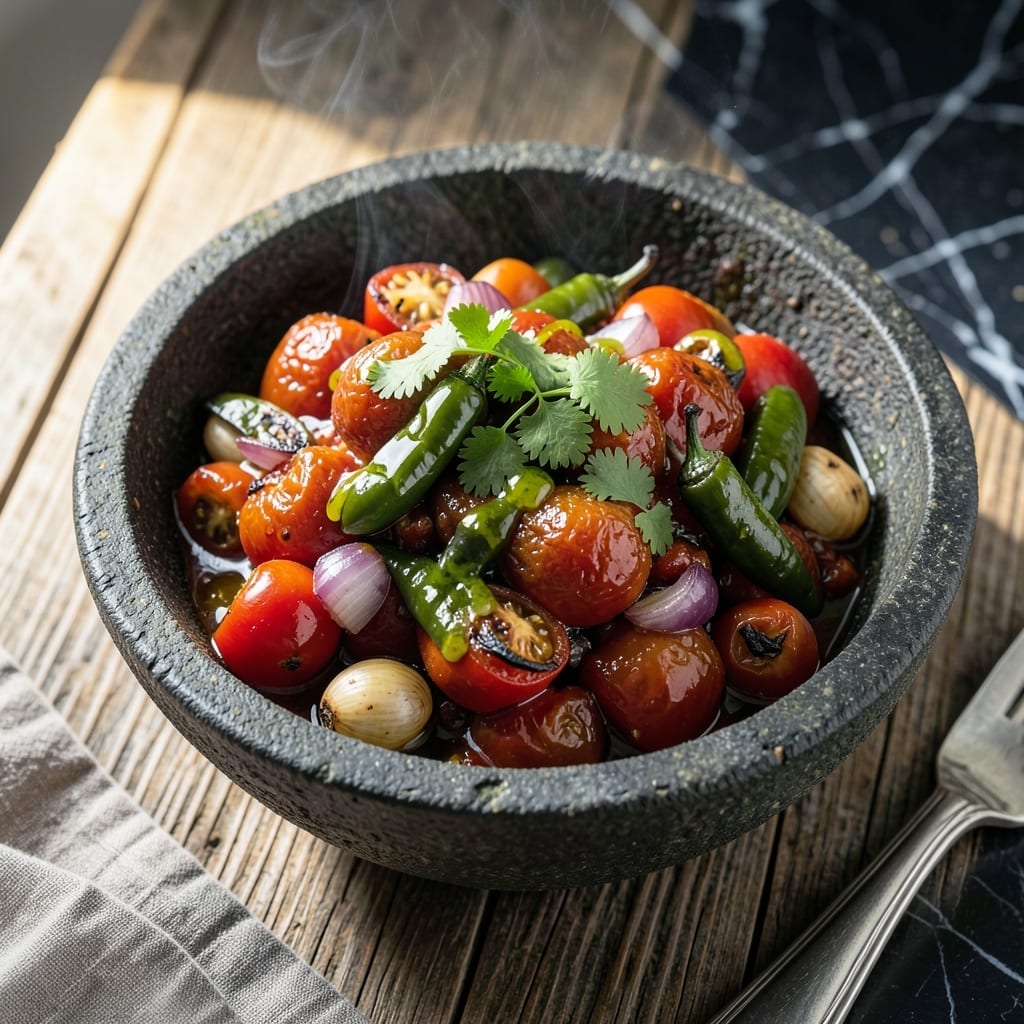
Nothing beats the deep, smoky flavor of salsa made right on the grill. This method transforms fresh tomatoes, peppers, and onions into a bold, charred blend that captures the essence of outdoor cooking.
I developed this recipe after years of tinkering with heat levels and ingredient ratios. The key is achieving that perfect balance between charred vegetables and bright, fresh flavors. Every bite delivers the unmistakable taste of fire-kissed ingredients.
You’ll end up with a salsa that’s both rustic and refined—smoky from the grill, vibrant from the lime, and just spicy enough to keep things interesting. The texture strikes the ideal balance between chunky and smooth.
Perfect for chips, tacos, or as a topping for grilled meats. This is the salsa that will have everyone asking for your secret.
Ingredients for Fire Roasted Salsa Recipe Grill
Fresh tomatoes, peppers, and onions charred to smoky perfection on the grill.
| Ingredient | Amount | Notes |
|---|---|---|
| Roma Tomatoes 🍅 | 2 lb | Firm, ripe, halved |
| Jalapeño Peppers 🌶️ | 4 whole | Seeds removed for mild heat |
| Red Onion 🧅 | 1 whole | Quartered, skin on |
| Garlic Cloves 🧄 | 6 cloves | Unpeeled for roasting |
| Cilantro 🌿 | ½ cup | Fresh, chopped |
| Lime Juice 🍈 | ¼ cup | Freshly squeezed |
| Olive Oil 🫒 | 2 tbsp | For grilling and finishing |
| Sea Salt 🧂 | 1 ½ tsp | Adjust to taste |
| Ground Cumin 🌿 | 1 tsp | Toasted if possible |
[recipe_ingredient_scaler]
The tomatoes are the backbone here. Roma tomatoes have the right meat-to-seed ratio for grilling—juicy but not watery. Farmers markets or Whole Foods usually have the best selection in summer. Look for ones that feel heavy for their size. The jalapeños add heat, but leave some seeds in if you want extra kick. Wear gloves when handling (trust me on this one).
No fresh jalapeños? Poblano peppers add a milder, earthier heat. Out of cilantro? Flat-leaf parsley works in a pinch (though the flavor is different). The lime juice is non-negotiable—fresh only. Bottled just doesn’t have the same bright punch. If you’re missing cumin, a pinch of smoked paprika can add depth, but it’s not the same.
This salsa tastes best fresh but keeps in the fridge for 5-7 days. Store in a glass jar for optimal flavor. For longer storage, freeze in ice cube trays—perfect for 3 months (just thaw what you need).
Why You’ll Love This Recipe
- This salsa works on everything: tacos, nachos, or even as a topping for grilled chicken. Honestly, I make a double batch every time.
- One Pan Wonder: I just toss the Roma tomatoes, jalapeños, and onion right on the grill—no extra bowls or prep work.
- Smoky Depth: That char from the fire brings out the sweetness in the tomatoes and a little heat from the jalapeños, with the garlic and cilantro tying it all together.
- Taco Night MVP: This salsa works on everything: tacos, nachos, or even as a topping for grilled chicken. Honestly, I make a double batch every time.
Step-by-Step Instructions for Fire Roasted Salsa
Here’s the method. Straightforward, tested, works every time.
Step 1: Prepare Vegetables for Charring
Arrange the 2 lb Roma Tomatoes (halved) and 1 whole Red Onion (quartered with skin on) on a baking sheet. Add the 4 whole Jalapeño Peppers and 6 cloves Garlic Cloves (unpeeled) alongside them. Brush everything with 2 tbsp Olive Oil to prevent sticking and promote even charring.
I always quarter the onion with the skin on—it protects the layers from burning while allowing the edges to caramelize beautifully. The unpeeled garlic cloves will roast to a sweet, mellow flavor without any bitterness. Make sure the tomatoes are firm and ripe so they hold their shape during grilling.
Step 2: Char on the Grill for Smoky Depth
Preheat your grill to medium-high heat. Place the vegetables directly on the grates, cut-side down for the tomatoes and onion. Close the lid and let them cook undisturbed for 5-7 minutes until you see deep char marks and the edges start to blacken.
Flip the tomatoes, onion, and jalapeños, then continue grilling for another 5-7 minutes until all sides are charred and the vegetables soften. The garlic cloves will cook faster—remove them as soon as they turn golden brown and feel soft when pressed. This charring creates the signature smoky flavor that defines fire-roasted salsa.
Step 3: Finishing Touches and Blending
Transfer all the charred vegetables to a bowl and cover with a clean kitchen towel. Let them steam for 10 minutes—this makes peeling the garlic and tomatoes much easier. Meanwhile, peel the garlic cloves and remove the skin from the onion quarters. The tomatoes will have softened enough that you can slide their skins off with your fingers.
In a food processor or blender, combine the peeled vegetables, 0.5 cup Cilantro, 0.25 cup Lime Juice, 1.5 tsp Sea Salt, and 1 tsp Ground Cumin. Pulse until you reach your desired consistency—I prefer a slightly chunky texture for salsa, so I pulse just until everything is combined but still has some bite.
Step 4: Adjust and Serve
Taste the salsa and adjust the seasoning if needed. The sea salt should be prominent but not overpowering, and the lime juice should add a bright, tangy finish. If it needs more depth, a pinch of ground cumin can enhance the smoky notes from the grill.
Transfer the salsa to a serving bowl and let it sit for 15-20 minutes before serving to allow the flavors to meld together. The salsa will taste even better the next day as the smoky, charred flavors continue to develop. Serve with tortilla chips, on tacos, or as a topping for grilled meats.
Pro Tips For Making Fire Roasted Salsa Recipe Grill
- Char Evenly: Rotate the tomatoes and jalapeños every 2-3 minutes to prevent blackened spots—I learned this the hard way after burning half a batch.
- Keep Garlic Intact: Leave garlic cloves in their skins while grilling to avoid bitter, burnt flavors. Peel them after roasting when they’re soft and sweet.
- Skip the Seeds: Remove most jalapeño seeds before grilling unless you want serious heat—sounds obvious, but I’ve ruined salsa for friends who can’t handle spice.
- Rest Before Blending: Let the charred veggies cool for 10 minutes after grilling so the flavors meld. Hot salsa blends unevenly and tastes raw.
Wine and Beer Pairings for This fire roasted salsa recipe grill
Crisp Mexican Lagers
A cold Modelo Especial or Pacifico cuts through the smoky heat perfectly. The light body and subtle malt sweetness complement the charred flavors without overpowering them. I always keep a few in my cooler during grill sessions. 🍺
Zesty White Wines
For wine lovers, a Sauvignon Blanc from New Zealand offers crisp acidity and citrus notes that pair beautifully with the lime and cilantro. Kim Crawford is my go-to for this style. The bright finish cleanses your palate between bites.
Citrusy IPAs
A West Coast IPA with its hoppy bitterness and citrus notes stands up to the bold flavors. Try Stone Brewing IPA or Lagunitas for a perfect balance. The carbonation helps refresh your mouth after each spicy bite.
Light Bodied Reds
If you prefer red wine, a chilled Pinot Noir from Oregon works surprisingly well. Eyrie Vineyards makes one that’s light enough to complement rather than compete. Serve it slightly cooler than room temperature for best results.
Non-Alcoholic Sparkling
For a non-alcoholic option, Topo Chico with a lime wedge mirrors the salsa’s bright acidity. The effervescence and mineral notes make it feel special. I often serve this for guests who don’t drink alcohol.
Nutrition Facts
Frequently Asked Questions
How do I prevent the vegetables from sticking to the grill?
Brush the grates with oil before cooking and ensure they’re hot. Use a clean brush to oil the vegetables too. This creates a barrier that helps release them easily.
Can I use a gas grill instead of charcoal?
A gas grill works fine—just preheat it to medium-high heat and follow the same charring process. Charcoal adds extra smokiness, but gas is more convenient and still delivers great flavor.
What if my salsa turns out too watery?
Drain excess liquid or blend in a few extra tortilla chips to thicken it. Using Roma tomatoes and removing seeds before grilling also helps prevent a runny texture.
How long will the salsa stay fresh in the fridge?
Store it in an airtight container and it’ll keep for 5-7 days. The flavors deepen over time, so it often tastes even better the next day.

Trained in classic French technique but raised on slow-cooked ribs and spicy rubs, she blends culinary skill with smoke and soul.
- Recipe for Boneless Pork Chops in Cast Iron Skillet: Sear and Baste to Juicy Perfection - October 3, 2026
- Recipe for Boneless Cross Rib Roast: Slow-Roasted Beef with Herb Crust - October 3, 2026
- Hamburgers in Sauce Recipe Crock Pot: Slow-Cooked Savory Delight - October 3, 2026