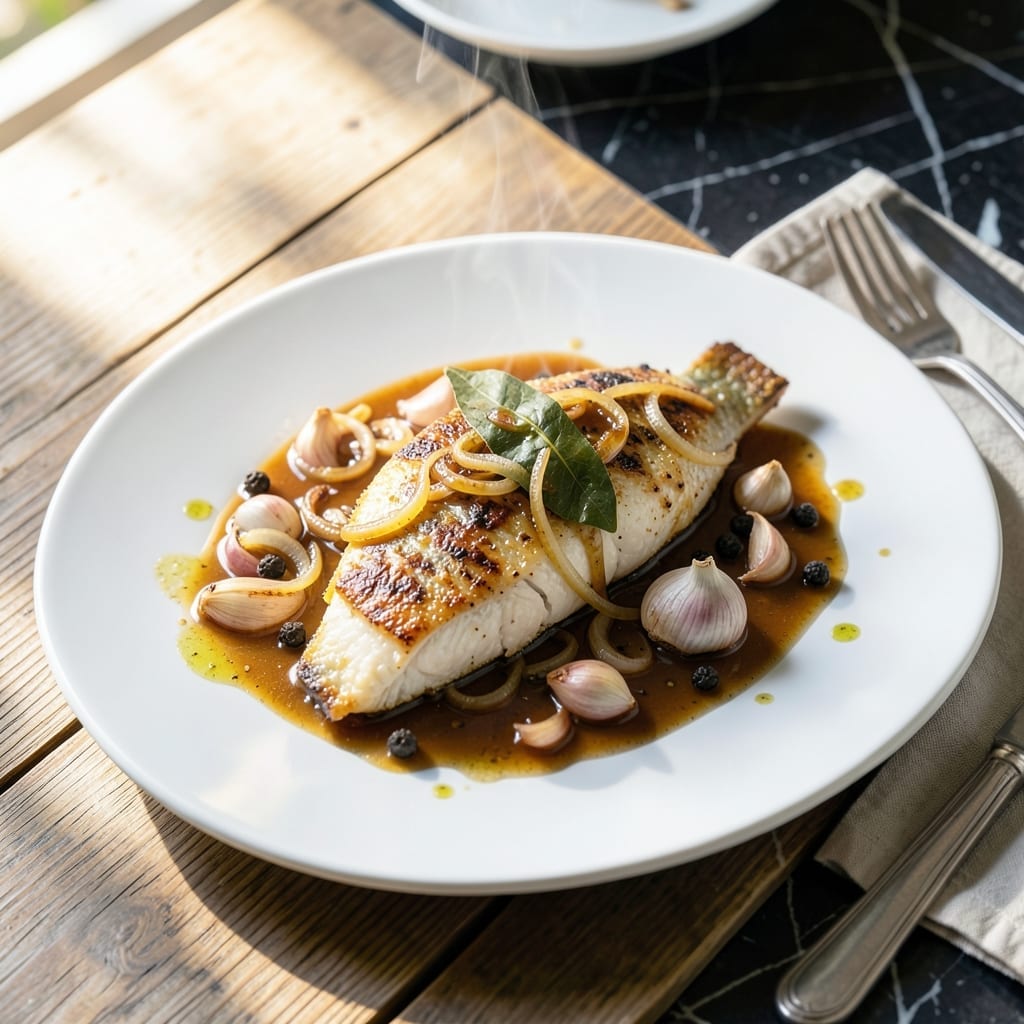
This adobo-style fish brings bold Filipino flavors to your home kitchen with a simple yet foolproof technique.
I developed this recipe after years of testing different vinegar-to-soy ratios, finally landing on the perfect balance that highlights the fish without overpowering it. The key is a short marinade followed by gentle simmering.
What results is tender fish coated in a tangy, savory sauce that clings to every bite. The vinegar cuts through the richness while garlic and black pepper add depth to the dish.
Serve with steamed rice to soak up every drop of the flavorful sauce. This is comfort food with authentic island character.
Ingredients for Fish Recipe Filipino Food
Simple ingredients deliver authentic Filipino adobo flavors in this foolproof dish.
| Ingredient | Amount | Notes |
|---|---|---|
| White Fish Fillets 🐟 | 1 ½ lb | Firm white fish like cod or snapper |
| Soy Sauce 🫒 | ½ cup | Low-sodium preferred for balance |
| White Vinegar 🧂 | ½ cup | Cane vinegar for authenticity |
| Garlic Cloves 🧄 | 8 cloves | Minced for maximum flavor |
| Bay Leaves 🍃 | 3 whole | Dried, for aromatic depth |
| Black Peppercorns 🌶️ | 1 tbsp | Whole, crushed for freshness |
| Onion 🧅 | 1 whole | Medium, thinly sliced |
| Water 💧 | ½ cup | For simmering liquid |
| Cooking Oil 🫒 | 2 tbsp | Neutral oil like vegetable or canola |
| Brown Sugar 🍚 | 1 tsp | Optional, to balance acidity |
| Green Onions 🧅 | ¼ cup | Chopped, for garnish |
| Steamed Rice 🍚 | 2 cups | Cooked, for serving |
[recipe_ingredient_scaler]
The fish is the star, so firm white varieties like cod or snapper work best—they hold up to the vinegar without falling apart. Asian markets often carry the traditional cane vinegar, but white vinegar works too. Look for low-sodium soy sauce to control the saltiness. For the bay leaves, dried is standard, but fresh adds a brighter note if you can find them.
No cane vinegar? Apple cider vinegar at a 1:1 ratio works in a pinch. Skip the sugar if you prefer a more traditional tartness. The garlic can be adjusted to taste—10 cloves for extra boldness. Short on time? Pre-minced garlic from a jar saves minutes (though fresh is ideal). The black peppercorns can be substituted with ground black pepper at half the amount.
This tastes even better the next day as the flavors meld. Store leftovers in the fridge for up to 3 days—the fish will continue to absorb the sauce. Reheat gently to avoid breaking the fillets. The sauce alone freezes well for 1 month if you want to make extra for future meals.
Why You’ll Love This Recipe
- One Pan Wonder: I just toss the fish, soy sauce, vinegar, and garlic in a pan and let it simmer—minimal effort, maximum payoff.
- Garlic Soy Magic: The combination of soy sauce, vinegar, and garlic creates this tangy, savory sauce that soaks right into the fish.
- Weeknight Hero: Honestly, I make this on busy nights when I need something quick but flavorful for the family.
- Budget Stretcher: White fish fillets are affordable, and this recipe makes them taste like a million bucks. Leftovers? Even better the next day.
Step-by-Step Instructions for Adobo-Style White Fish
Master this classic Filipino cooking technique for tender, flavorful fish with minimal effort.
Step 1: Sear the White Fish Fillets
Heat the 2 tbsp cooking oil in a large skillet over medium-high heat until it shimmers but doesn’t smoke. Pat the 1.5 lb white fish fillets completely dry with paper towels—this prevents splattering and ensures a good sear.
Carefully add the fillets to the hot oil, skin-side down if they have skin. Cook undisturbed for 3-4 minutes until the edges turn opaque and the bottom develops a light golden crust. Flip gently with a spatula and sear the other side for 2 minutes. Remove the fillets to a plate and set aside.
Step 2: Sauté Aromatics for the Adobo Sauce
In the same skillet, reduce heat to medium. Add the thinly sliced onion and sauté for 2-3 minutes until softened and translucent. Stir in the 8 cloves minced garlic cloves and cook for 30 seconds until fragrant but not browned.
Add the 1 tbsp black peppercorns (lightly crushed) and 3 whole bay leaves. Toast for 15 seconds to release their aromas—you’ll smell the difference immediately. This builds the foundation of your adobo sauce with rich, layered flavors.
Step 3: Simmer in Tangy Adobo Liquid
Pour in the 0.5 cup soy sauce, 0.5 cup white vinegar, 0.5 cup water, and 1 tsp brown sugar. Stir well to combine and bring to a gentle simmer. Let this mixture cook for 3-4 minutes until slightly reduced and the flavors meld together.
Return the seared white fish fillets to the skillet, spooning the sauce over them. Reduce heat to low, cover, and simmer for 8-10 minutes until the fish flakes easily with a fork and absorbs the bold adobo flavors.
Step 4: Finish and Serve with Garnish
Remove the skillet from heat and discard the bay leaves. Taste the sauce and adjust seasoning if needed—Filipino adobo should have a balanced tangy, salty, and slightly sweet profile. The brown sugar mellows the acidity without overpowering.
Transfer the fish to a serving platter and spoon the adobo sauce over the top. Garnish with the 0.25 cup chopped green onions for a fresh, vibrant finish. Serve immediately over 2 cups steamed rice to soak up every bit of the delicious sauce.
Pro Tips For Making Fish Recipe Filipino Food
- Simmer, Don’t Boil: Keep the heat at a gentle simmer when cooking the fish in the soy-vinegar sauce—I learned this the hard way after turning my first batch into rubbery bits.
- Pat Fish Dry: Blot the white fish fillets with a paper towel before cooking; it helps the sauce cling better and prevents a watery finish.
- Balance the Vinegar: Taste as you go and adjust the vinegar-to-soy ratio—too much vinegar can overpower the dish, and I’ve ruined a meal by dumping it all in at once.
- Use Fresh Garlic: Mince the garlic cloves just before cooking; pre-minced garlic from a jar lacks the sharp, aromatic punch this Filipino dish needs.
Serving Suggestions for This fish recipe filipino food
Classic Rice Pairing
Steamed jasmine rice is the traditional base for this dish, soaking up the tangy adobo sauce beautifully. I always use a 1:1.5 rice-to-water ratio in my rice cooker for perfectly fluffy grains. The neutral flavor lets the fish shine. 💛
Fresh Garnish Touch
Sprinkle chopped cilantro or extra green onions on top just before serving. The fresh herbaceous notes brighten the dish. I also love adding sliced red chili peppers for a pop of color and subtle heat.
Vegetable Sides
Steamed bok choy or green beans make excellent accompaniments. Their crisp texture contrasts nicely with the tender fish. A quick stir-fry with garlic maintains the Filipino flavor profile.
Pickled Accompaniment
Serve with atchara (Filipino pickled papaya) for a refreshing crunch. The vinegar in the pickles complements the adobo sauce. I find 2 tbsp per serving adds the perfect tangy contrast.
Bread Option
For a heartier meal, offer warm pandesal (Filipino bread rolls) to soak up the sauce. Toast them lightly and serve in a basket. My family loves tearing them apart to dip directly into the adobo liquid.
Beverage Pairing
An ice-cold San Miguel beer or calamansi juice cuts through the richness. The citrus notes in calamansi especially complement the vinegar in the dish. I always keep chilled bottles on hand for this meal. ✨
Nutrition Facts
Frequently Asked Questions
Can I use a different type of fish?
Firm white fish like tilapia, mahi-mahi, or halibut work well. Avoid delicate fish like sole that may fall apart during cooking. The key is choosing fillets that hold their shape.
How do I balance the sauce if it’s too sour?
Add 1 tsp brown sugar or honey to mellow the acidity. For a saltier profile, include 1 tbsp soy sauce extra. Taste as you adjust—Filipino adobo should be tangy but not overpowering.
Can I make this ahead of time?
The flavors deepen after 1 day in the fridge. Store in an airtight container and reheat gently on the stove. Avoid microwaving to prevent breaking the fillets.
What if my sauce is too salty?
Balance it by adding 1/4 cup water or 2 tbsp vinegar. Simmer for 2-3 minutes to let flavors meld. Adjust gradually—you can always add more but can’t take it out.

Trained in classic French technique but raised on slow-cooked ribs and spicy rubs, she blends culinary skill with smoke and soul.
- Recipe for Boneless Pork Chops in Cast Iron Skillet: Sear and Baste to Juicy Perfection - October 3, 2026
- Recipe for Boneless Cross Rib Roast: Slow-Roasted Beef with Herb Crust - October 3, 2026
- Hamburgers in Sauce Recipe Crock Pot: Slow-Cooked Savory Delight - October 3, 2026