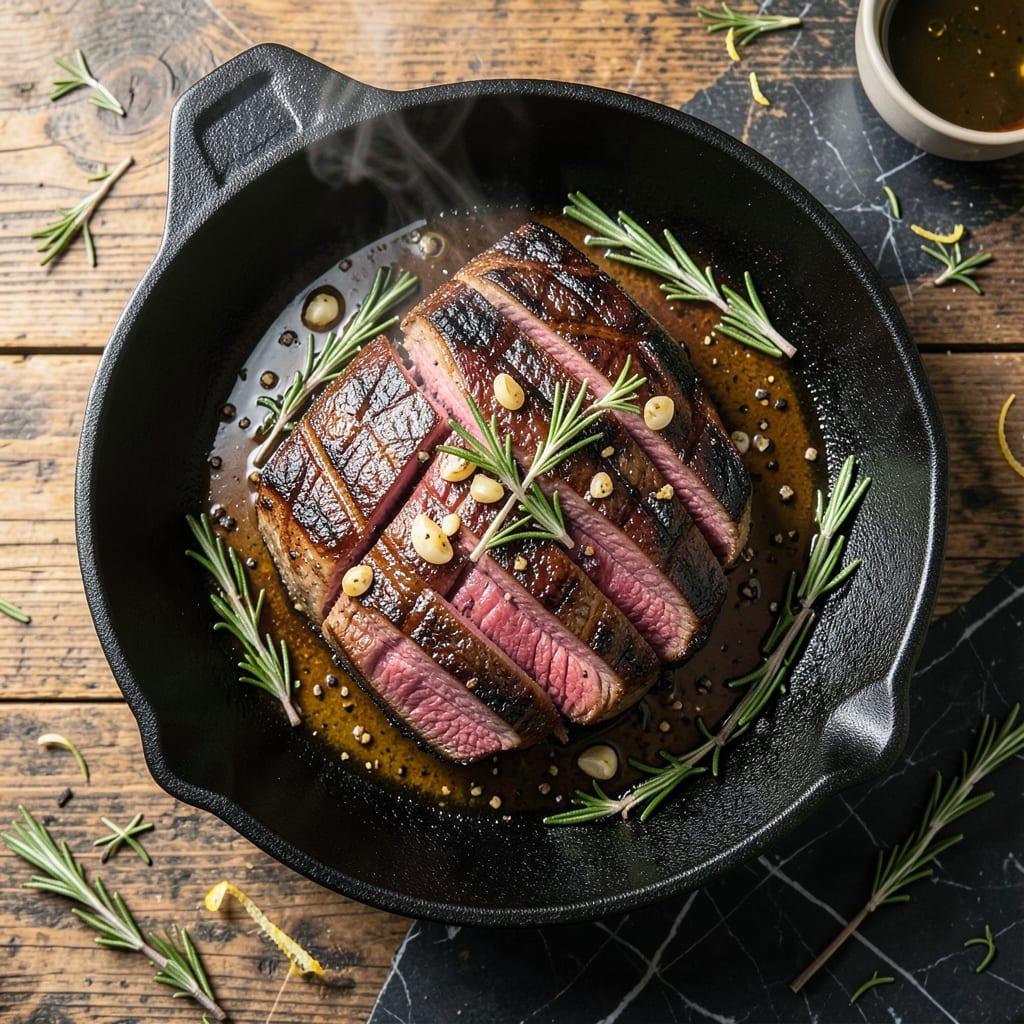
This garlic-rosemary crusted flat iron roast transforms an affordable cut into a restaurant-quality centerpiece. The secret lies in proper seasoning and precise roasting to achieve a tender, juicy result with a flavorful crust.
I developed this method after testing multiple approaches in my small Boston kitchen. The combination of fresh herbs, garlic, and a hot oven ensures a perfectly caramelized exterior while keeping the interior succulent.
The roast requires minimal effort but delivers impressive results. A simple dry brine and herb crust elevate the beef without complicated techniques. Resting before slicing guarantees moist, evenly cooked meat.
Serve with roasted vegetables or mashed potatoes for a complete meal. This dish proves that elegant dinners don’t require hours in the kitchen.
Ingredients for Flat Iron Roast
Restaurant-quality beef starts with this affordable cut and a handful of fresh herbs.
| Ingredient | Amount | Notes |
|---|---|---|
| Flat Iron Steak 🥩 | 2 lb | Single piece, well-marbled |
| Fresh Rosemary 🌿 | 3 tbsp | Finely chopped, stems discarded |
| Garlic Cloves 🧄 | 6 cloves | Minced to fine paste |
| Kosher Salt 🧂 | 1 ½ tbsp | Diamond Crystal preferred |
| Black Pepper 🌶️ | 1 tbsp | Freshly cracked, coarse |
| Olive Oil 🫒 | 2 tbsp | Extra-virgin, for searing |
| Dijon Mustard 🟡 | 2 tbsp | For crust adhesion |
| Unsalted Butter 🧈 | 2 tbsp | Softened, for finishing |
| Fresh Thyme sprigs 🌿 | 4 whole | Leaves stripped, optional |
| Red Wine 🍷 | ½ cup | Dry variety for deglazing |
| Beef Broth 🥘 | ½ cup | Low-sodium preferred |
| Shallot 🧅 | 1 whole | Finely minced for pan sauce |
[recipe_ingredient_scaler]
The beef is everything here. Flat iron steak from Whole Foods or Costco has the best marbling for this cut—look for pieces at least 1.5 inches thick. Ask the butcher to leave the fat cap on (it renders into the crust beautifully). The rosemary and thyme should be bright green and fragrant—if they smell like dust, they’re past their prime. Fresh garlic cloves (not the pre-minced stuff in jars) make a noticeable difference.
No flat iron? Flank steak or top blade roast work in a pinch—just trim any excess fat first. Out of fresh herbs? Dried at one-third the amount, but fresh really shines here. Red wine can be subbed with extra beef broth plus a splash of balsamic. For the mustard, whole-grain works too (it’ll give you a textured crust). The butter can be omitted, but it adds a ridiculous amount of richness.
Leftovers slice thin for sandwiches—tastes even better cold the next day. The roast keeps 4-5 days in the fridge, or freeze sliced portions for 3 months. Let it rest at room temp for 30 minutes before reheating (don’t skip this part).
Why You’ll Love This Recipe
- One Pan Wonder: I toss the steak with rosemary, garlic, salt, and pepper, then roast it—no marinating, no fuss.
- Ridiculously Good: That garlic-rosemary crust on the flat iron? Honestly, it’s the reason I make this every other week.
- Feeds a Crowd: Between us, this roast stretches for dinner tonight and sandwiches tomorrow with zero extra effort.
- Budget Hero: Flat iron stays tender without the prime rib price, so I can splurge on the fresh herbs guilt-free.
Step-by-Step Instructions for Garlic-Rosemary Crusted Flat Iron Roast
Here’s the method that turns a humble cut into a showstopper with minimal effort.
Step 1: Create the Herb Crust and Prep the Meat
Finely chop the 3 tbsp fresh rosemary and mince the 6 cloves garlic cloves to a paste. In a small bowl, combine these with the 2 tbsp Dijon mustard, 1.5 tbsp kosher salt, and 1 tbsp black pepper. This aromatic paste will form the flavor base for your crust.
Pat the 2 lb flat iron steak completely dry with paper towels—this ensures a good sear. Rub the herb-garlic paste all over the surface of the meat, pressing it in firmly so it adheres. Let the steak sit at room temperature for 30 minutes to allow the flavors to penetrate.
Step 2: Sear the Roast to Build a Crust
Heat the 2 tbsp olive oil in a large oven-safe skillet or Dutch oven over medium-high heat until it shimmers. Add the flat iron steak and sear for 3-4 minutes per side until deeply browned. The goal is to develop a rich crust that locks in juices.
Watch for the edges to turn dark golden brown and for the herb paste to caramelize slightly. If the pan starts to smoke excessively, reduce the heat slightly—you want a steady sear, not burnt herbs. The searing step is crucial; don’t rush it, as this builds the foundation of flavor.
Step 3: Finish in the Oven for Even Doneness
Preheat your oven to 375°F. Once the steak is seared on both sides, transfer the skillet to the oven. Roast for 15-20 minutes until the internal temperature reaches 130-135°F for medium-rare. The exact time will depend on the thickness of your steak.
Use a meat thermometer to check doneness—this is the only reliable way to ensure perfect results. If you don’t have a thermometer, press the center of the steak with your finger: it should feel slightly firm but still yield to pressure, similar to the base of your thumb when your hand is relaxed.
Step 4: Rest and Prepare the Pan Sauce
Transfer the roast to a cutting board and tent loosely with foil. Let it rest for 10-15 minutes—this step is non-negotiable. Resting allows the juices to redistribute, ensuring every slice is moist and flavorful. While it rests, the internal temperature will rise by 5-10°F.
Place the skillet over medium heat and add the minced 1 whole shallot. Cook for 1-2 minutes until soft and translucent. Pour in the 0.5 cup red wine and 0.5 cup beef broth, scraping up any browned bits from the bottom of the pan. Simmer for 5-6 minutes until reduced by half.
Finish the sauce by whisking in the 2 tbsp unsalted butter until melted and fully incorporated. The sauce should coat the back of a spoon. Optionally, add the leaves from the 4 whole fresh thyme sprigs for an extra layer of aroma.
Step 5: Slice and Serve
Slice the flat iron steak against the grain into ½-inch thick pieces. The grain runs in one direction through the steak, so cut perpendicular to those lines for the most tender slices. Arrange the slices on a platter and spoon the pan sauce over the top.
Serve immediately while the meat is still warm. Each slice should have a dark, caramelized crust on the outside and a rosy, juicy interior. The pan sauce adds a rich, savory finish that ties all the flavors together beautifully.
Pro Tips For Making Flat Iron Roast
- Dry the Steak: Pat the flat iron steak completely dry with paper towels before seasoning—moisture is the enemy of a good sear, and I learned this the hard way after too many steaks boiled in their own juices.
- Rest Before Slicing: Let the roast rest under foil for at least 10 minutes after cooking, or all those beautiful juices will end up on the cutting board instead of in the meat.
- Crush the Garlic: Smash the garlic cloves with the flat of your knife before using them—it releases way more flavor than leaving them whole, and it takes two seconds.
- Slice Against the Grain: Look for the direction of the muscle fibers in the flat iron and slice perpendicular to them, or you’ll be chewing through tough, stringy bits no matter how well you cooked it.
Serving Suggestions for This flat iron roast
Plating for Elegance
Arrange the sliced roast on a warm platter, slightly overlapping each piece for a restaurant-style presentation. I like to fan the slices out from the center, with the caramelized crust facing up to showcase that beautiful color contrast. 💛
Sauce Drizzle Technique
Spoon the pan sauce generously over the meat, letting it pool slightly at the base of the platter. Use a squeeze bottle for a more controlled, artistic drizzle if you’re feeling fancy. The rich sauce enhances every bite.
Vegetable Pairings
Roasted asparagus or Brussels sprouts complement the beef perfectly. Toss 1 lb of either with 1 tbsp olive oil and roast at 400°F for 15-20 minutes until caramelized. Their earthy notes balance the herb crust beautifully.
Starch Suggestions
Creamy mashed potatoes or buttery egg noodles soak up the pan sauce wonderfully. For a lighter option, try roasted fingerling potatoes with rosemary—they echo the herb flavors in your roast.
Garnish Finishing Touches
Sprinkle with flaky sea salt and freshly cracked black pepper just before serving. Add a few fresh rosemary sprigs for color and aroma. These small details make the dish look as good as it tastes. ✨
Serving Temperature
Serve the roast while it’s still warm from resting. The internal temperature should be around 135-140°F for perfect medium-rare. If the meat cools too much, warm the slices briefly in the oven at 200°F for 5 minutes.
Nutrition Facts
Frequently Asked Questions
What internal temperature should I aim for?
For medium-rare, target 130-135°F. The temperature will rise 5-10°F while resting, reaching 135-140°F. Use a meat thermometer for accuracy.
Can I use a different cut of beef?
Yes! Flank steak or top blade roast work well. Trim excess fat first and adjust cooking time based on thickness.
How long should the roast rest before slicing?
Rest for 10-15 minutes under foil. This lets juices redistribute for moist, tender slices. Never skip this step!
What if my herb crust burns during searing?
Lower the heat to medium and sear more slowly. burnt herbs taste bitter. A little char is fine, but watch carefully.

Trained in classic French technique but raised on slow-cooked ribs and spicy rubs, she blends culinary skill with smoke and soul.
- Recipe for Boneless Pork Chops in Cast Iron Skillet: Sear and Baste to Juicy Perfection - October 3, 2026
- Recipe for Boneless Cross Rib Roast: Slow-Roasted Beef with Herb Crust - October 3, 2026
- Hamburgers in Sauce Recipe Crock Pot: Slow-Cooked Savory Delight - October 3, 2026