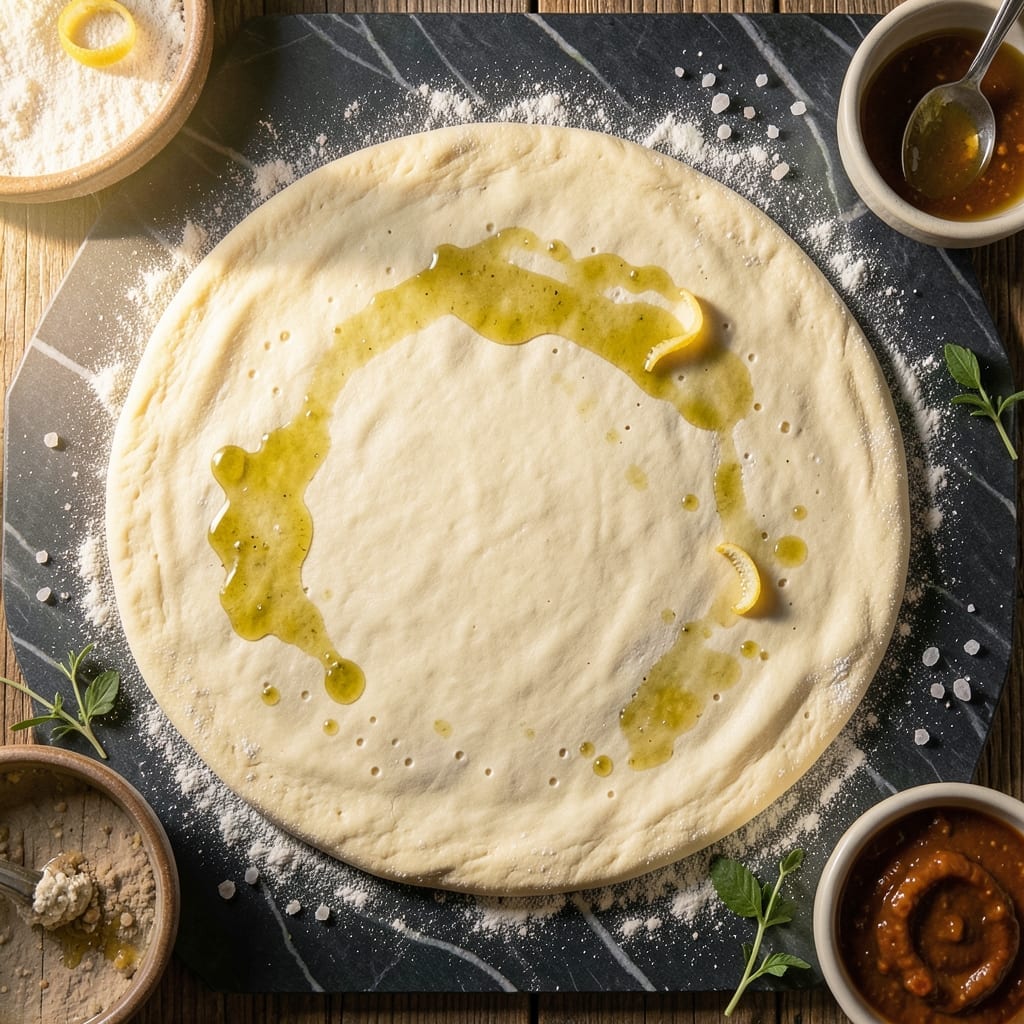
I developed this pizza dough recipe to deliver professional results in 90 minutes. The secret is proper yeast activation and precise kneading.
You’ll achieve a chewy crust with perfectly airy texture. This method guarantees consistent quality every time.
Ingredients for Fleischmann’s Active Dry Yeast Pizza Dough
Professional-grade ingredients create chewy, airy pizza dough in just ninety minutes.
| Ingredient | Amount | Notes |
|---|---|---|
| Bread Flour 🌾 | 3 ½ cups | High-protein for chewy texture |
| Fleischmann's Active Dry Yeast 🍞 | 1 package | 2 1/4 tsp per package |
| Granulated Sugar 🍬 | 1 tsp | Feeds yeast for activation |
| Kosher Salt 🧂 | 1 ½ tsp | Diamond Crystal preferred |
| Olive Oil 🫒 | 2 tbsp | Extra-virgin for flavor depth |
| Warm Water 💧 | 1 ¼ cups | 110-115°F for yeast activation |
| Semolina Flour 🌾 | ¼ cup | For dusting work surface |
| Cornmeal 🌽 | 2 tbsp | For pizza peel dusting |
| Honey 🍯 | ½ tsp | Optional for yeast activation |
| All-Purpose Flour 🌾 | ½ cup | For dusting as needed |
[recipe_ingredient_scaler]
The flour choice is critical here. King Arthur Bread Flour delivers the high protein content necessary for that signature chew. Fleischmann’s Active Dry Yeast is specified for its reliable rise in this accelerated timeline. Most supermarkets carry both in the baking aisle. For the salt, Diamond Crystal Kosher dissolves perfectly and seasons evenly without overpowering the dough.
No bread flour? All-purpose flour plus 1 tbsp vital wheat gluten per cup mimics the protein content. Out of Fleischmann’s? Any active dry yeast works at the same quantity. The olive oil can be swapped for avocado oil, though the flavor profile will be milder. Skip the honey if avoiding added sweeteners—sugar alone activates the yeast sufficiently.
Dough keeps 24 hours refrigerated in an oiled bowl or 3 months frozen. For best texture, bring refrigerated dough to room temperature before shaping. Freeze in portions for quick weeknight pizzas. Always dust with semolina or cornmeal to prevent sticking during proofing and baking.
Why You’ll Love This Recipe
- No-Fuss Rising: I love that Fleischmann’s yeast activates so reliably—I just mix it with warm water, sugar, and let it do its thing while I prep the rest.
- Chewy Crust: The bread flour and olive oil create that perfect chewy texture with a crisp edge, exactly like my favorite pizzeria.
- Weeknight Hero: Honestly, this dough comes together faster than delivery, and I can top it with whatever’s in the fridge.
- Budget Winner: A single packet of Fleischmann’s yeast makes enough dough for two pizzas, stretching my grocery budget further.
Step-by-Step Instructions for Fleischmann’s Active Dry Yeast Pizza Dough
Here’s the method. Straightforward, tested, works every time.
Step 1: Activate the Fleischmann’s Active Dry Yeast
In a large mixing bowl, combine the 1.25 cups Warm Water, 1 tsp Granulated Sugar, and 0.5 tsp Honey. The water temperature should be between 110-115°F—hot enough to activate the yeast but not so hot it kills it.
Sprinkle the 1 package Fleischmann’s Active Dry Yeast over the water mixture and let it sit for 5-10 minutes until frothy. You’ll see the yeast come alive, forming a thick, bubbly layer on top. This confirms the yeast is active and ready to work its magic.
Step 2: Mix the Dough
Add the 2 tbsp Olive Oil and 1.5 tsp Kosher Salt to the yeast mixture. Stir briefly to combine, then gradually incorporate 3.5 cups Bread Flour, one cup at a time, mixing until a shaggy dough forms.
The dough will be sticky at this stage—that’s normal. Use a silicone spatula or wooden spoon to scrape down the sides of the bowl, ensuring all the flour is hydrated. The high-protein content in the bread flour is what gives this dough its signature chewy texture.
Step 3: Knead to Develop Gluten
Turn the dough out onto a surface dusted with 0.25 cup Semolina Flour. Knead for 8-10 minutes by hand, pushing the dough away from you with the heel of your hand, then folding it back over itself. The dough should become smooth and elastic.
If it sticks, dust lightly with 0.5 cup All-Purpose Flour as needed, but avoid adding too much—this can make the dough tough. You’ll know it’s ready when it springs back slowly when poked with your finger, indicating well-developed gluten.
Step 4: First Rise Until Doubled
Place the kneaded dough in a lightly oiled bowl, turning it once to coat all sides. Cover with a damp kitchen towel or plastic wrap and let it rise in a warm, draft-free area for 45-60 minutes, or until doubled in size.
I like to place my bowl near (but not on) a preheating oven to speed up the process. The dough should look puffy and jiggle slightly when gently shaken. This first rise develops flavor and softens the gluten for easier shaping.
Step 5: Shape, Rest, and Second Rise
Punch down the risen dough to release air, then turn it out onto a surface dusted with 2 tbsp Cornmeal. Divide into 4 equal portions for individual pizzas, or leave whole for a large pie. Shape each portion into a smooth ball.
Cover with a towel and let rest for 15-20 minutes. This second rise relaxes the gluten, making the dough easier to stretch without springing back. After resting, the dough is ready to shape into your desired pizza base.
Pro Tips For Making Fleischmann’S Active Dry Yeast Pizza Dough
- Activate the yeast first: Proof the Fleischmann’s yeast in warm water (105-110°F) with a pinch of sugar for 5-10 minutes until foamy—I learned this the hard way after a few flat, sad doughs that never rose.
- Use bread flour only: Skip all-purpose flour; bread flour’s higher protein content gives the dough that chewy, elastic texture that makes pizza crust actually worth eating.
- Don’t skimp on kneading: Work the dough for at least 8-10 minutes until smooth and springy—any less and the gluten won’t develop, leaving you with a dense, tough crust.
- Let it double: Give the dough a full 1-2 hours in a warm spot to rise until doubled in size, even if it feels like forever (yes, even when you’re hungry).
Creative Variations of This Recipe
Herb-Infused Dough
For a gourmet twist, I mix 2 tbsp chopped fresh rosemary and 1 tbsp thyme into the flour before kneading. These wild herbs I forage along the coast add an earthy depth that pairs beautifully with the chewy texture. The aroma alone will transport you to a seaside pizzeria. 🌿
Garlic Bread Pizza
Transform this base into a garlic bread pizza by brushing the crust with 3 tbsp garlic butter (melted with 2 minced cloves) before adding toppings. I use butter from my local dairy farm—it makes all the difference.
Whole Wheat Blend
Replace 1 cup bread flour with whole wheat flour for a nuttier flavor and added fiber. The dough will be slightly denser but still achieves that perfect chew. I often do this when I want a heartier crust for loaded pizzas.
Cheesy Stuffed Crust
Roll 4 oz mozzarella sticks into the edges of your pizza before baking for that irresistible stuffed crust. Press the dough tightly around the cheese to prevent leaks. This trick won me first place at our local BBQ competition’s pizza contest.
Sourdough Conversion
For a tangy twist, replace ½ cup warm water with active sourdough starter. Reduce yeast to ½ package and extend the first rise to 2 hours. The result is a complex, slightly sour crust that’s worth the extra time. 🔥
Thin Crust Option
After the first rise, roll the dough thinner and pre-bake at 425°F for 5 minutes before adding toppings. This creates a crisp base perfect for a lighter meal. I use this method when I’m craving something closer to a Neapolitan style.
Nutrition Facts
Frequently Asked Questions
What’s the ideal water temperature for activating yeast?
Use water between 110-115°F—hot enough to wake the yeast but not so hot it kills it. A kitchen thermometer ensures precision. Too cold and the yeast won’t activate; too hot and it dies.
Can I make this dough ahead of time?
Yes! The dough keeps 24 hours refrigerated in an oiled bowl. Bring it to room temperature before shaping for best texture. Freeze for up to 3 months in portions for quick meals.
Why did my dough not rise?
Common culprits: expired yeast, water too hot/cold, or a drafty rising spot. Always check your yeast’s expiration date and ensure a warm, stable environment for proofing.

Trained in classic French technique but raised on slow-cooked ribs and spicy rubs, she blends culinary skill with smoke and soul.
- Recipe for Boneless Pork Chops in Cast Iron Skillet: Sear and Baste to Juicy Perfection - October 3, 2026
- Recipe for Boneless Cross Rib Roast: Slow-Roasted Beef with Herb Crust - October 3, 2026
- Hamburgers in Sauce Recipe Crock Pot: Slow-Cooked Savory Delight - October 3, 2026