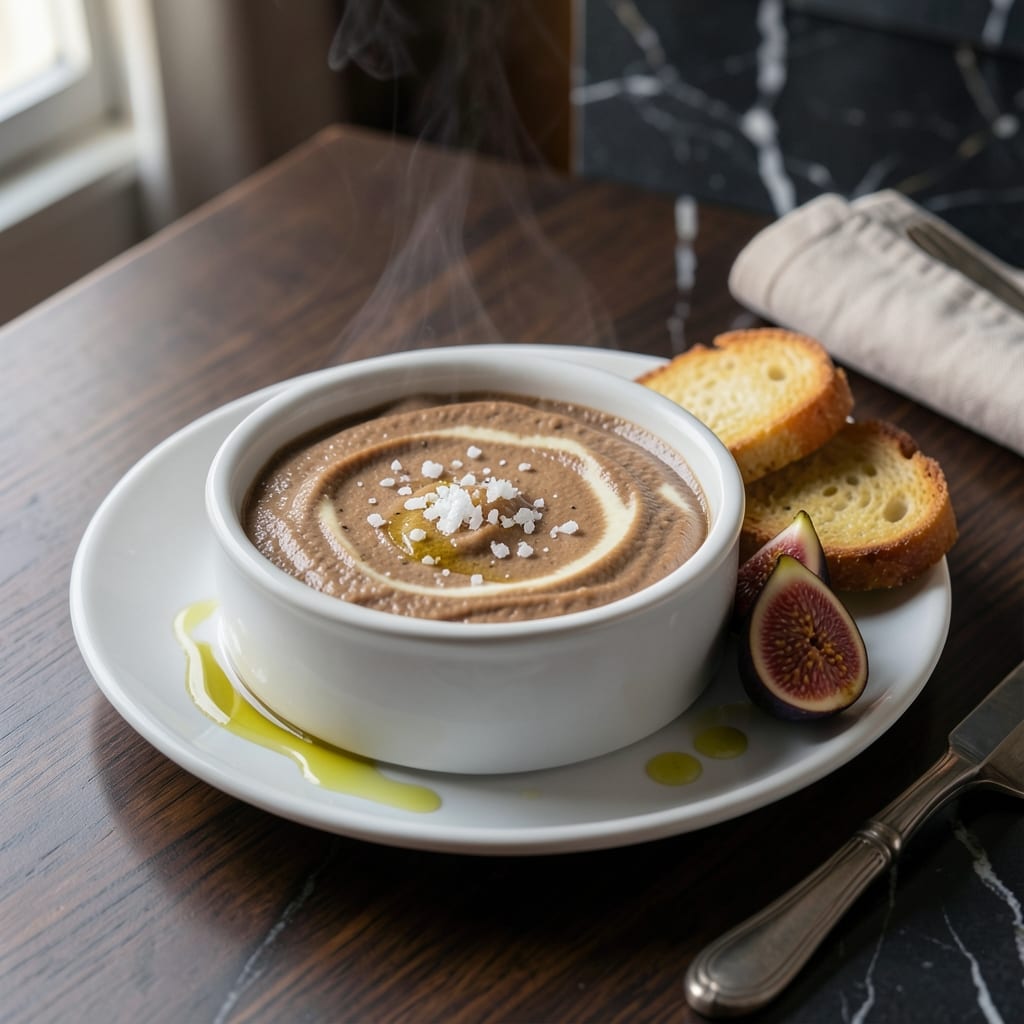
Crafting foie gras pate at home elevates any gathering with its velvety texture and rich depth of flavor. This recipe transforms premium duck liver into a spread that rivals fine dining establishments.
The key lies in gentle handling and precise temperature control. A water bath ensures even cooking, while straining creates the signature silky smooth consistency that defines exceptional pate.
What emerges is a luxurious spread with a delicate mousse-like quality, perfect for pairing with crusty bread or fresh fruit. The subtle seasoning allows the natural richness of the liver to shine.
Serve chilled for the best texture and flavor. This recipe yields a refined appetizer that impresses without requiring professional techniques.
Ingredients for Foie Gras Pate
Premium duck liver and refined ingredients create this luxurious spread with velvety texture.
| Ingredient | Amount | Notes |
|---|---|---|
| Duck Liver (Grade A Foie Gras) 🦆 | 1 lb | Veins removed, lobes separated |
| Heavy Cream 🥛 | ½ cup | Cold, full-fat preferred |
| Unsalted Butter 🧈 | ½ cup | European-style recommended |
| Kosher Salt 🧂 | 1 tsp | Diamond Crystal preferred |
| White Pepper 🌶️ | ½ tsp | Freshly ground for subtle heat |
| Sugar 🍚 | 1 tsp | Fine granulated for balance |
| Cognac or Brandy 🥃 | 2 tbsp | High-quality for depth |
| Shallot 🧅 | 1 whole | Finely minced for aroma |
| Fresh Thyme 🌿 | 2 tsp | Leaves only, stems discarded |
| Fresh Bay Leaf 🍃 | 1 whole | For infusion during cooking |
| Water 💧 | 2 cups | For water bath cooking |
[recipe_ingredient_scaler]
The foie gras quality is paramount. Grade A lobes from reputable suppliers like Hudson Valley Foie Gras or La Belle Fermiere ensure optimal fat content and texture. Inspect for uniform color and minimal blemishes. The liver must be fresh—never frozen—for the signature silky finish. European-style butter, with its higher fat content, provides superior mouthfeel compared to standard varieties.
Substitutions are limited due to the nature of this dish. Chicken liver lacks the richness and texture but can be used in a pinch (expect a coarser result). Skip the cognac if avoiding alcohol—apple cider reduction offers a mild sweetness alternative. Dried thyme at half the amount works if fresh is unavailable, but fresh provides brighter, more complex aromatics.
Store the finished pâté covered in a thin layer of melted butter to prevent oxidation. Keeps for 5 days refrigerated or 3 months frozen. Always serve chilled, allowing it to sit at room temperature for 10 minutes before serving to soften slightly without compromising texture.
Why You’ll Love This Recipe
- Surprisingly Simple: I just blend the foie gras with cream and butter—no fancy techniques required.
- Luxurious Spread: That rich, buttery duck liver with a hint of white pepper is ridiculously good on crusty bread.
- Dinner Party Star: Honestly, it looks impressive but takes less time than most appetizers I’ve made.
- Makes Extra: I always double the batch because it keeps beautifully in the fridge for a week.
Step-by-Step Instructions for Foie Gras Pate
Master the technique for a velvety texture and refined flavor that defines this luxurious spread.
Step 1: Prepare and Clean the Duck Liver
Begin by carefully separating the 1 lb Duck Liver (Grade A Foie Gras) into individual lobes. Using a sharp knife, gently remove any visible veins or blood spots, taking care not to tear the delicate flesh. This step is crucial for achieving the silky-smooth finish characteristic of proper pate.
The liver should appear uniform in color and texture once cleaned. Rinse briefly under cold water and pat thoroughly dry with paper towels. Proper drying prevents the liver from steaming during cooking, which would compromise the final texture.
Step 2: Poach the Liver in Aromatic Liquid
In a saucepan, combine the 2 cups Water, 1 whole Shallot (finely minced), 2 tsp Fresh Thyme (leaves only), and 1 whole Fresh Bay Leaf. Bring to a gentle simmer over medium heat—you want small bubbles, not a rolling boil.
Add the cleaned duck liver lobes to the simmering liquid. Maintain the temperature at a gentle simmer and poach for 3-4 minutes, turning once, until the exterior turns opaque but the center remains slightly pink. This brief cooking preserves the liver’s delicate flavor and creamy consistency.
Step 3: Blend with Fat and Seasonings
Drain the poached liver and discard the poaching liquid. While still warm, transfer the liver to a food processor along with the 0.5 cup Unsalted Butter (cut into pieces), 0.5 cup Heavy Cream, 2 tbsp Cognac or Brandy, 1 tsp Kosher Salt, 0.5 tsp White Pepper, and 1 tsp Sugar.
Pulse the mixture in 5-second bursts until completely smooth, scraping down the sides as needed. The pate should have a glossy, spreadable consistency. Be patient—this may take 2-3 minutes of processing to achieve the proper texture.
Step 4: Strain and Chill for Perfect Texture
Press the mixture through a fine-mesh sieve into a bowl to remove any remaining fibrous bits. This final straining ensures the pate is impossibly smooth. Transfer to ramekins or a small terrine mold.
Cover the surface directly with plastic wrap to prevent a skin from forming. Refrigerate for at least 4 hours, or preferably overnight, to allow the flavors to meld and the texture to set properly. The pate will firm up significantly as it chills.
Serve at cool room temperature for the best spreadable consistency and most nuanced flavor.
Pro Tips For Making Foie Gras Pate
- Chill the Liver: Soak the foie gras lobes in cold water for 1-2 hours before prep to soften veins and make cleaning easier—I learned this the hard way after struggling with tough membranes.
- Keep It Cold: Work with the liver and butter in a chilled bowl over ice, especially when blending, to prevent the fat from separating and ruining the silky texture.
- Strain the Cream: After infusing the heavy cream with aromatics, strain it through a fine-mesh sieve before mixing—skipping this leaves unwanted bits in your pate.
- Rest Before Serving: Let the pate set in the fridge for at least 4 hours, preferably overnight, so the flavors meld and the texture firms up—it’s not ready straight from the mold.
Storing and Reheating foie gras pate
Refrigerator Storage
Let your pâté cool completely before storing. Transfer to an airtight container and cover the surface with a thin layer of melted butter to prevent oxidation. Store at 40°F or below for up to 5 days. The flavors deepen over time, making it even more delicious after 24 hours. ❄️
Freezer Storage
For longer storage, wrap individual portions tightly in plastic wrap, then place in a freezer bag. Squeeze out excess air to prevent freezer burn. This creation freezes beautifully for up to 3 months without losing its luxurious texture.
Thawing Properly
Move your pâté from the freezer to the refrigerator and allow it to thaw overnight—about 12-18 hours. Never thaw at room temperature, as this can compromise both texture and safety. Once thawed, consume within 3 days.
Serving Temperature
For the best experience, remove your pâté from the refrigerator 10-15 minutes before serving. This brief rest at room temperature softens it slightly for easier spreading while maintaining its elegant structure. The subtle warming enhances the rich flavors. 💛
Avoiding Common Pitfalls
Never microwave your pâté to warm it, as this will melt the fat and ruin the texture. If you notice any separation after storage, simply stir it gently with a knife to reincorporate. Always use clean utensils when serving to prevent contamination.
Nutrition Facts
Frequently Asked Questions
How long should I chill the pate before serving?
Chill for at least 4 hours, preferably overnight. This allows the flavors to meld and the texture to set properly for the best spreading consistency.
Can I use chicken liver instead of duck?
Chicken liver can be used, but expect a coarser texture. Duck liver’s higher fat content creates the signature silky finish that defines authentic pate.
Why does my pate have a grainy texture?
Graininess usually means under-processing or skipping the straining step. Blend in 5-second bursts for 2-3 minutes and always press through a fine-mesh sieve.
What’s the best way to serve this spread?
Serve chilled with crusty bread, cornichons, or fresh figs. Let it sit at room temperature for 10-15 minutes before serving for ideal spreadability.

Trained in classic French technique but raised on slow-cooked ribs and spicy rubs, she blends culinary skill with smoke and soul.
- Recipe for Boneless Pork Chops in Cast Iron Skillet: Sear and Baste to Juicy Perfection - October 3, 2026
- Recipe for Boneless Cross Rib Roast: Slow-Roasted Beef with Herb Crust - October 3, 2026
- Hamburgers in Sauce Recipe Crock Pot: Slow-Cooked Savory Delight - October 3, 2026