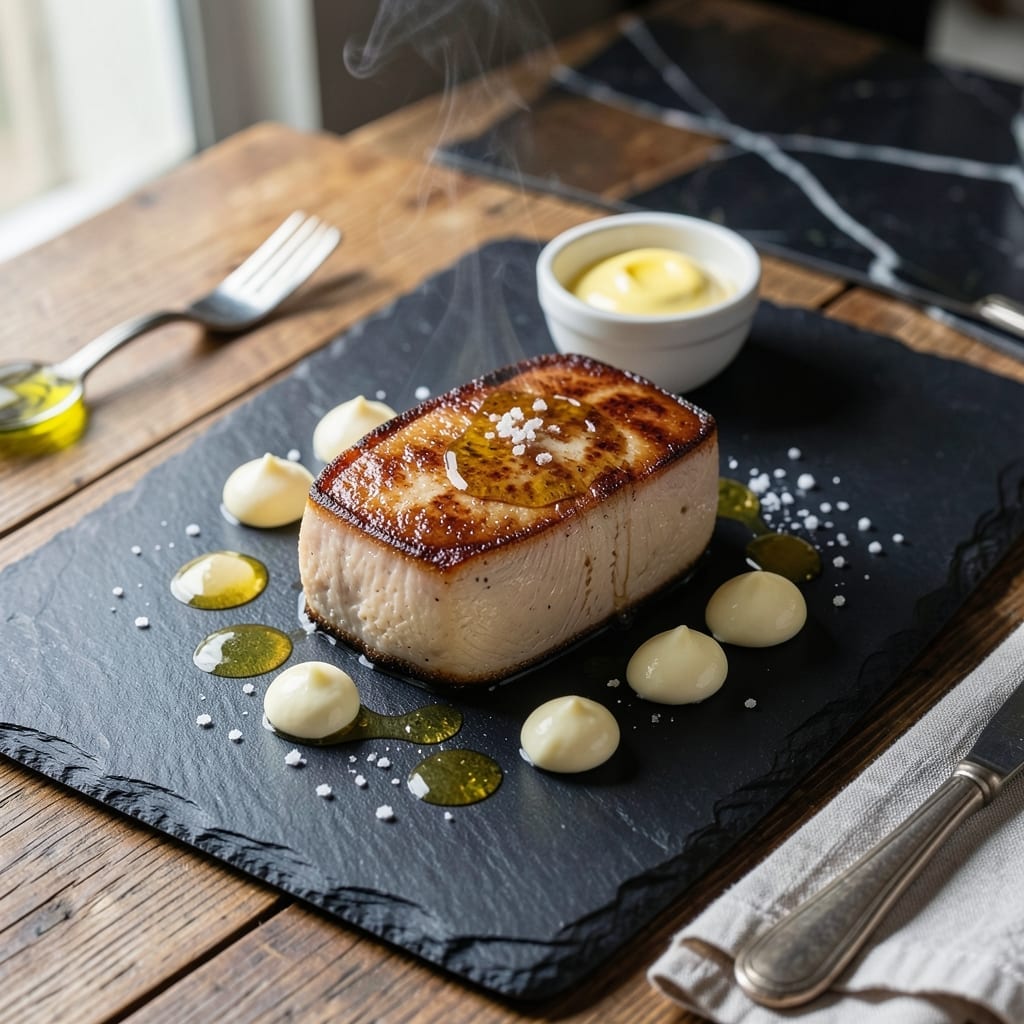
This dish embodies the pinnacle of French culinary artistry, delivering velvety richness on a delicate toast point. My training taught me the precision required to transform this ingredient into something extraordinary.
Mastering the technique takes patience, but the result—a luxurious, buttery texture with subtle sweetness—justifies every careful step. Serve with a touch of fleur de sel for contrast.
Ingredients for Foie Gras
Luxury ingredients for a dish that defines French opulence on toast.
| Ingredient | Amount | Notes |
|---|---|---|
| Grade A Foie Gras Lobe 🍖 | 1 lb | Cleaned, veins removed, chilled |
| Kosher Salt 🧂 | 1 tsp | Diamond Crystal preferred for texture |
| White Pepper 🌶️ | ¼ tsp | Freshly ground for subtle heat |
| Sauternes Wine 🍷 | ½ cup | Sweet dessert wine for poaching |
| Heavy Cream 🥛 | ½ cup | Chilled, full-fat required |
| Unsalted Butter 🧈 | ½ cup | European-style preferred, cubed |
| Shallots 🧅 | 2 whole | Finely minced for aromatic base |
| Brioche Bread 🍞 | 4 slices | Toasted until golden crisp |
| Fleur de Sel 🧂 | ½ tsp | For finishing delicate crunch |
| Port Wine 🍷 | ¼ cup | For deglazing pan juices |
| Fresh Thyme 🌿 | 2 sprigs | Leaves stripped, stems discarded |
| Granulated Sugar 💧 | 1 tsp | Balances richness subtly |
[recipe_ingredient_scaler]
The foie gras must be Grade A lobe—anything less won’t deliver that buttery melt. D’Artagnan is my go-to for consistent quality (they clean the veins properly, which saves hours). Look for pale ivory color with no bruising. If you’re lucky enough to have a specialty butcher, ask them to clean it for you. The Sauternes is non-negotiable; Château d’Yquem is the gold standard but any good sweet wine works.
No Sauternes? Late-harvest Riesling gets close to that honeyed depth. Swap brioche for sourdough if that’s what’s fresh—just make sure it’s crusty enough to hold the foie. Skip the port? Madeira adds that deep, caramelized note. The cream must be full-fat (no shortcuts here). If you’re watching salt, reduce the poaching salt by half and adjust at the end.
Poached foie gras keeps 3-4 days in the fridge submerged in its fat. The toast points are best served immediately (they get soggy fast). Leftovers? Seal tightly and freeze for up to 3 months—thaw in the fridge overnight before reheating gently.
Why You’ll Love This Recipe
- One Pan Luxury: I just sear the lobe, deglaze with Sauternes, and finish with cream—no fancy equipment needed.
- Silky & Sweet: The wine cuts the richness while heavy cream makes it melt-in-your-mouth tender.
- Holiday Showstopper: I serve this at dinner parties and everyone thinks I slaved for hours.
- Leftovers? Please.: Honestly, even cold the next day on toast, it’s still ridiculously good.
Instructions
Here’s the method I use to transform this delicate ingredient into a melt-in-your-mouth masterpiece.
Step 1: Prep and Season the Foie Gras Lobe
Begin by carefully separating the 1 lb Grade A Foie Gras Lobe into individual lobes if they’re still connected. Gently pull apart any remaining veins or blood spots with your fingers or a small knife—this is crucial for a smooth texture.
Pat the lobes completely dry with paper towels. Season all over with 1 tsp Kosher Salt and 0.25 tsp White Pepper, making sure to coat every surface evenly. The salt enhances the natural richness, while the white pepper adds a subtle, aromatic heat without the visual specks of black pepper. Chill the seasoned lobes uncovered for 30 minutes to let the flavors penetrate.
Step 2: Poach in Sauternes Wine
In a saucepan just large enough to hold the lobes in a single layer, combine the 0.5 cup Sauternes Wine and 1 tsp Granulated Sugar. Warm over low heat until the sugar dissolves, then add the 2 sprigs Fresh Thyme and 2 whole Shallots, finely minced.
Place the chilled lobes into the warm wine mixture. The liquid should come about halfway up the lobes—add a splash of water if needed. Maintain the heat at a gentle 160-180°F (use a thermometer for precision) and poach for 3-4 minutes. You’ll see the edges firm up slightly and the color lighten. Remove the lobes with a slotted spoon and drain on a wire rack. Reserve the poaching liquid.
Step 3: Sear for a Golden Crust
Heat a dry skillet over medium-high heat until very hot. Add the lobes and sear for 1-2 minutes per side until the surface turns a deep, golden brown. The foie gras should develop a crisp exterior while staying creamy inside.
Transfer the seared lobes to a warm plate. Pour off any excess fat from the skillet but leave the browned bits—this is pure flavor. Add the 0.25 cup Port Wine to deglaze, scraping up those bits with a wooden spoon. Simmer for 1-2 minutes until the wine reduces by half.
Step 4: Finish with Cream and Butter
Lower the heat to medium-low and add the 0.5 cup Heavy Cream to the skillet. Simmer for 2-3 minutes until the cream thickens slightly and takes on a pale ivory color.
Remove the skillet from heat and whisk in the 0.5 cup Unsalted Butter, a few cubes at a time, until the sauce is smooth and glossy. Strain the sauce through a fine-mesh sieve to remove the shallots and thyme, then pour it over the foie gras lobes.
Step 5: Serve on Toasted Brioche
Toast the 4 slices Brioche Bread until they’re golden and crisp. Place each slice on a warm plate and top with a lobe of foie gras. Spoon the sauce generously over the top and finish with a pinch of 0.5 tsp Fleur de Sel for a delicate crunch.
Serve immediately while the foie gras is still warm and the sauce is silky. The contrast of the crispy brioche, creamy foie gras, and rich sauce makes every bite unforgettable.
Pro Tips For Making Foie Gras
- Chill the Lobe First: Let the foie gras sit in the fridge for 24 hours before prep to firm it up—makes veining and portioning way easier. I learned this the hard way after wrestling with a slippery, warm lobe.
- Score the Veins: Use a small knife to carefully separate the veins while keeping the lobes intact—this prevents the fat from pooling and ensures even cooking. Sounds tedious, but it’s the thing that matters most for texture.
- Skip the High Heat: Foie gras burns fast. Keep your pan at medium-low and cook slowly to render the fat without scorching the outside. After ruining a lobe on high, I finally figured out patience wins here.
- Deglaze with Sauternes: Once the foie gras is out of the pan, pour in a splash of Sauternes to lift all those caramelized bits—reduces into a rich sauce with almost no extra effort. I was skeptical until I tried it, but now it’s non-negotiable.
Serving Suggestions for foie gras
Plating with Elegance
I love presenting this on warm brioche toasts—the golden crust contrasts beautifully with the satiny foie gras. Use a small offset spatula to place each lobe precisely, keeping the shape intact. The sauce should pool slightly around the base, not cover the top completely. 💛
Garnish for Contrast
A pinch of fleur de sel adds the perfect salty crunch against the richness. I also scatter microgreens or chive batons for a pop of color and freshness. The visual contrast makes the dish as stunning as it tastes.
Wine Pairing Moment
Serve with the same Sauternes used for poaching—its honeyed sweetness complements the dish perfectly. For red lovers, a Pinot Noir with bright acidity cuts through the fat beautifully. I always pour a splash for the cook too. 🍷
Temperature Matters
This dish is best served warm, not piping hot. The foie gras should have that just-melted quality. If it sits too long, the sauce will thicken—keep plates warmed in a 150°F oven until ready to serve.
Portion Control
A 2-ounce portion per toast point is ideal—rich enough to satisfy but not overwhelming. I use a kitchen scale for precision. Remember, this is about quality, not quantity.
Alternative Presentation
For a rustic touch, serve on grilled sourdough instead of brioche. The charred edges add a smoky note that pairs surprisingly well with the delicate foie gras.
Nutrition Facts
Frequently Asked Questions
What’s the ideal temperature for poaching?
Maintain a gentle 160-180°F for perfect results. Use a thermometer for precision, as too high heat can toughen the delicate lobes.
Can I substitute the Sauternes wine?
Yes, a good late-harvest Riesling works as an alternative. It offers similar honeyed depth, though Sauternes remains the gold standard for flavor.
How long can I store prepared foie gras?
Poached foie gras keeps 3-4 days submerged in its fat in the fridge. For longer storage, freeze for up to 3 months and thaw overnight in the refrigerator.
Why is Grade A lobe important?
Grade A ensures the smoothest texture and richest flavor. Lower grades may have more veins or bruising, affecting the final dish’s quality and presentation.

Trained in classic French technique but raised on slow-cooked ribs and spicy rubs, she blends culinary skill with smoke and soul.
- Recipe for Boneless Pork Chops in Cast Iron Skillet: Sear and Baste to Juicy Perfection - October 3, 2026
- Recipe for Boneless Cross Rib Roast: Slow-Roasted Beef with Herb Crust - October 3, 2026
- Hamburgers in Sauce Recipe Crock Pot: Slow-Cooked Savory Delight - October 3, 2026