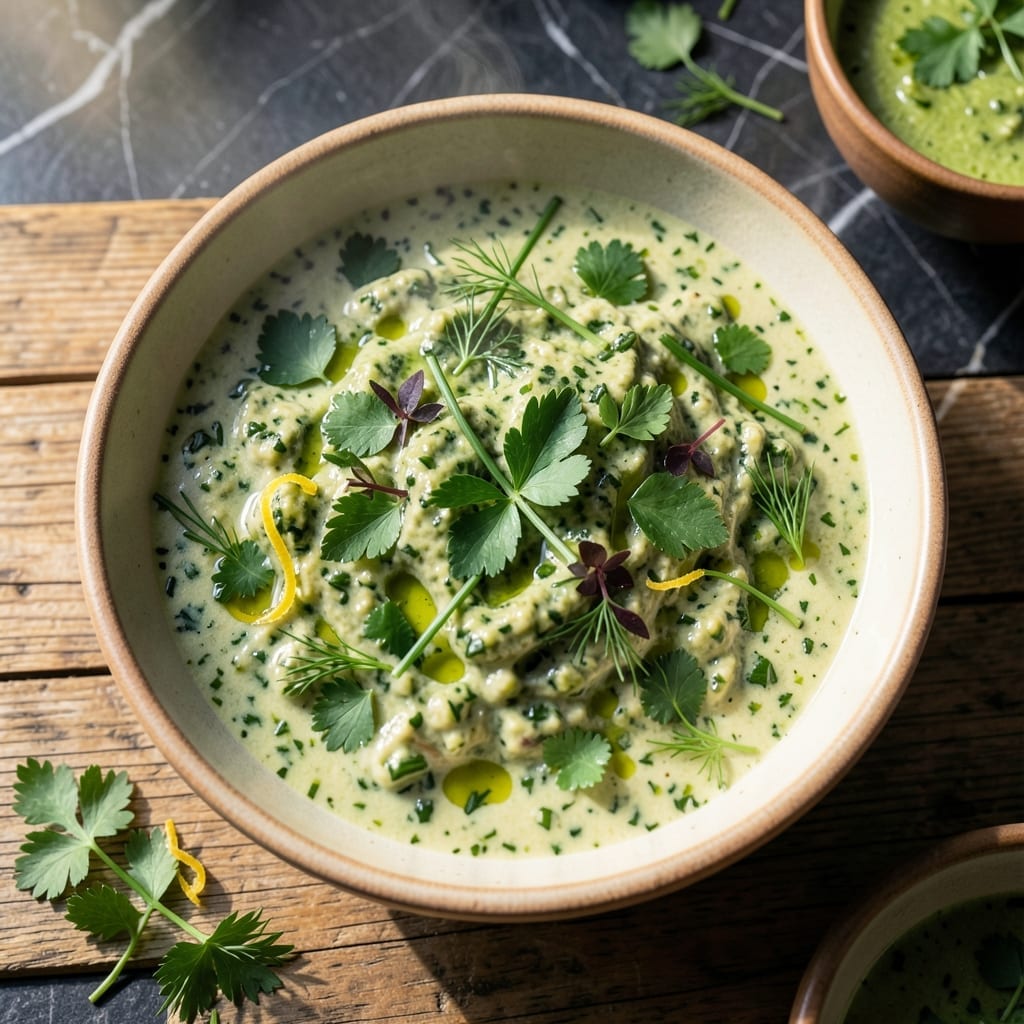
Frankfurt’s famous green sauce has been a regional treasure since the 19th century, and this version stays true to its roots. The blend of seven fresh herbs creates a vibrant, tangy dip that’s a staple in Hessian cuisine.
I’ve refined this recipe to balance the sharpness of sour cream with the brightness of vinegar and mustard. The key is using the freshest herbs—parsley, chives, and tarragon are non-negotiable for authentic flavor.
This sauce transforms simple boiled eggs or potatoes into a traditional Frankfurt meal. Its herbaceous depth and creaminess make it a versatile condiment for grilled meats or as a spread.
Make a batch and let the flavors meld for a few hours before serving. The result is a traditional sauce that’s both bold and refreshing.
Ingredients for Frankfurt Green Sauce
Seven fresh herbs, tangy sour cream, and bright vinegar create this traditional Frankfurt condiment.
| Ingredient | Amount | Notes |
|---|---|---|
| Fresh Parsley 🌿 | 1 cup | Flat-leaf variety preferred |
| Fresh Chives 🌿 | ½ cup | Finely chopped |
| Fresh Tarragon 🌿 | ¼ cup | French tarragon for best flavor |
| Fresh Dill 🌿 | ¼ cup | Chopped, stems removed |
| Fresh Cress 🌿 | ¼ cup | Watercress or garden cress |
| Fresh Burnet 🌿 | ¼ cup | Optional but traditional |
| Fresh Chervil 🌿 | ¼ cup | Delicate anise flavor |
| Sour Cream 🥛 | 1 ½ cups | Full-fat for creaminess |
| White Wine Vinegar 🍷 | 2 tbsp | Bright acidity preferred |
| Dijon Mustard 🟡 | 1 tbsp | Smooth, mild flavor |
| Salt 🧂 | ½ tsp | Fine sea salt |
| Sugar 🍚 | ½ tsp | Balances acidity |
[recipe_ingredient_scaler]
The herbs are everything here. Parsley, chives, and tarragon are non-negotiable for authentic flavor—fresh is mandatory. Farmers markets often have the best selection, but well-stocked grocery stores like Whole Foods or Kroger usually carry everything. Look for vibrant, unblemished leaves. If you can’t find all seven, prioritize parsley and chives, but the full blend is what makes it special.
No sour cream? Full-fat Greek yogurt works in a pinch (strain it first). Missing a herb? Double up on parsley or chives—they’re the backbone. White wine vinegar is ideal, but apple cider vinegar at half the amount can substitute. The mustard should be mild—Dijon is perfect, but yellow mustard works too if that’s what you have.
This sauce tastes best after 2-3 hours in the fridge, letting flavors meld. Keeps 3-4 days covered. The herbs will darken over time—stir before serving to refresh the color. Not suitable for freezing.
Why You’ll Love This Recipe
- Minimal Chopping Required: I just toss all those fresh herbs—parsley, chives, tarragon, dill, cress—into the blender. No fancy knife skills needed.
- Herb Explosion: Honestly, the mix of seven fresh greens creates this bright, tangy flavor that’s unlike any store-bought sauce.
- Pairs With Everything: I’ve slathered it on boiled eggs, grilled chicken, even just bread. Between us, it’s my secret for making simple meals feel special.
- Stays Fresh for Days: The sauce keeps beautifully in the fridge, so I can make a big batch and have it ready for quick meals all week.
Step-by-Step Instructions for Frankfurt Green Sauce
This traditional method preserves the authentic herb-forward character of the classic German dip.
Step 1: Prepare and Chop the Fresh Herbs
Finely chop the 1 cup Fresh Parsley, 0.5 cup Fresh Chives, 0.25 cup Fresh Tarragon, 0.25 cup Fresh Dill, 0.25 cup Fresh Cress, 0.25 cup Fresh Burnet, and 0.25 cup Fresh Chervil. I recommend using a sharp chef’s knife for clean cuts that prevent bruising the delicate herbs.
The parsley should be flat-leaf for best texture, and the chives should be minced finely. Remove any tough stems from the tarragon and dill. The herbs should be uniformly small but not puréed—you want visible flecks of green throughout the finished sauce.
Step 2: Combine Herbs with Wet Ingredients
In a medium mixing bowl, add the chopped herbs to the 1.5 cups Sour Cream, 2 tbsp White Wine Vinegar, and 1 tbsp Dijon Mustard. Use a silicone spatula to fold everything together gently, ensuring the herbs are evenly distributed.
The sour cream provides the creamy base, while the vinegar and mustard add the necessary tang. Full-fat sour cream is essential here—it gives the sauce its characteristic richness and prevents a watery consistency.
Step 3: Season and Balance the Flavors
Add the 0.5 tsp Salt and 0.5 tsp Sugar to the mixture. Stir well and taste. The salt enhances the herbal notes, while the sugar subtly balances the acidity from the vinegar.
Let the sauce sit for 10-15 minutes at room temperature before serving. This resting period allows the flavors to meld together. You’ll notice the herbs soften slightly and the sauce thickens as the sour cream absorbs the liquid from the herbs.
Step 4: Adjust Consistency and Serve
Check the consistency. If it’s too thick, thin it with a splash of cold water or milk, 1 tablespoon at a time, until it reaches your desired texture. Traditional Frankfurt green sauce should coat the back of a spoon but still be pourable.
Serve chilled or at room temperature. This sauce pairs perfectly with boiled potatoes, grilled meats, or as a dip for fresh vegetables. The vibrant green color and fresh herb aroma should be immediately noticeable.
Pro Tips For Making Frankfurt Green Sauce
- Blanch the Herbs: Drop the parsley, chives, and tarragon into boiling water for 10 seconds, then shock in ice water—I learned this the hard way after my first batch turned bitter from raw greens.
- Skip the Dull Knife: Use a razor-sharp chef’s knife to finely mince all herbs; a dull blade bruises the cress and dill, making the sauce muddy instead of bright.
- Avoid Over-Salting Early: Hold off on seasoning until the sauce is blended; the flavors concentrate as it sits, and I’ve ruined batches by salting too soon.
- Use a Mortar First: Pound the tarragon and dill in a mortar before blending—sounds old-school, but it releases oils that actually change the outcome, making the sauce richer.
Storing and Reheating This frankfurt green sauce
Refrigerator Storage
Transfer your sauce to an airtight container—I use glass jars with tight lids from my local farmers market. It’ll stay fresh at 40°F or below for 3-4 days. The herbs will darken slightly, so give it a good stir before serving. 🌿
Flavor Development
This creation actually tastes better after 2-3 hours in the fridge. The sour cream absorbs the herbal essences, creating a more harmonious blend. I always make it the morning I plan to serve it for optimal flavor.
Freezing Not Recommended
The fresh herbs don’t hold up well to freezing—they’ll turn mushy and lose their vibrant character. If you must, freeze for no more than 1 month, but expect a noticeable texture change.
Room Temperature Revival
For serving, let it sit at room temperature for 15-20 minutes to take the chill off. The flavors are more pronounced when not ice cold. I like to set the jar on the counter while I prep the rest of the meal.
Reheating Caution
Never heat this sauce—it’ll separate and lose its creamy texture. If it’s too thick after refrigeration, thin with 1-2 tbsp cold water or milk. Stir gently to maintain the herb suspension.
Serving Freshness Tip
For local BBQ competitions, I portion into small mason jars with ribbons. Keeps the presentation fresh and makes transport easy. The vibrant green color always draws compliments from judges. ✨
Nutrition Facts
Frequently Asked Questions
Can I use dried herbs instead of fresh?
No, fresh herbs are essential for authentic flavor and texture. Dried herbs lack the bright, vibrant taste and will turn the sauce muddy. If you must substitute, use 1/3 the amount but expect a different result.
What can I use if I can’t find all seven herbs?
Prioritize parsley and chives as the base. Add any combination of tarragon, dill, or chervil you can find. Even with 3-4 herbs, it will still taste delicious and authentic.
How long can I store this in the fridge?
It keeps well in an airtight container for 3-4 days. The herbs may darken slightly, but the flavor remains fresh. Always stir before serving to refresh the color.
Why does my sauce taste bitter?
Bitterness usually comes from over-chopping herbs or using stems. Stick to leaves only and chop just before mixing. The sugar in the recipe helps balance any residual bitterness.

Trained in classic French technique but raised on slow-cooked ribs and spicy rubs, she blends culinary skill with smoke and soul.
- Recipe for Boneless Pork Chops in Cast Iron Skillet: Sear and Baste to Juicy Perfection - October 3, 2026
- Recipe for Boneless Cross Rib Roast: Slow-Roasted Beef with Herb Crust - October 3, 2026
- Hamburgers in Sauce Recipe Crock Pot: Slow-Cooked Savory Delight - October 3, 2026