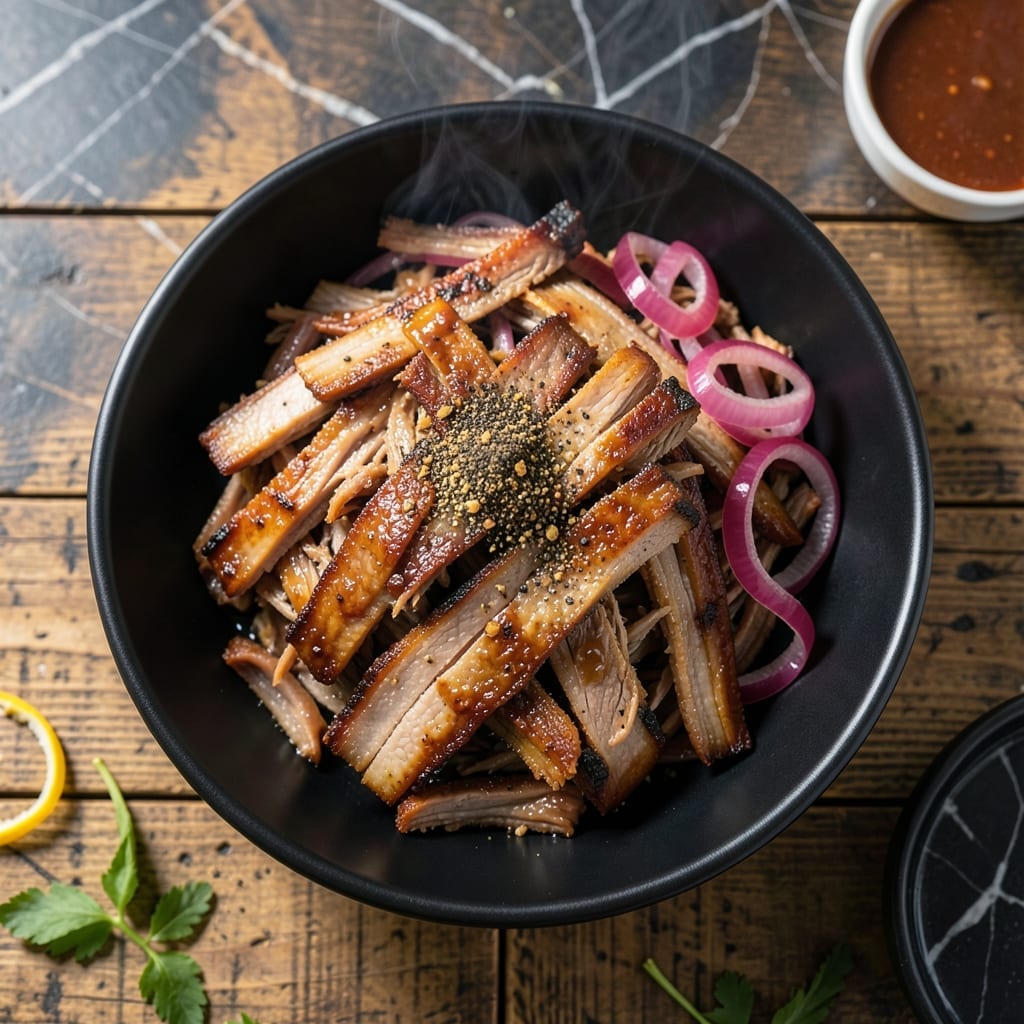
Central Texas BBQ is about patience and precision, not shortcuts. This method brings Franklin’s legendary smokehouse results to your backyard with a simple, proven approach.
Low and slow is the mantra here—tough pork shoulder transforms into tender, smoky perfection after hours in the smoker. The bark forms a flavorful crust that’s worth the wait.
Ingredients for Franklin Bbq Pulled Pork
Patience and precision start with these quality ingredients for authentic Texas BBQ results.
| Ingredient | Amount | Notes |
|---|---|---|
| Pork Shoulder 🥩 | 8 lb | Bone-in, well-marbled preferred |
| Coarse Kosher Salt 🧂 | ½ cup | Diamond Crystal brand recommended |
| Coarse Black Pepper 🌶️ | ½ cup | Freshly ground preferred |
| Paprika 🌶️ | ¼ cup | Sweet or smoked variety |
| Garlic Powder 🧄 | 2 tbsp | Not garlic salt |
| Onion Powder 🧅 | 2 tbsp | Granulated for even distribution |
| Brown Sugar 🍚 | ½ cup | Light or dark variety |
| Yellow Mustard 🟡 | ½ cup | For binder in rub |
| Apple Cider Vinegar 🍏 | ½ cup | For mopping during cook |
| Hickory Wood Chunks 🪵 | 4 lb | Or oak wood preferred |
| BBQ Sauce 🍯 | 2 cups | For serving, optional |
| Hamburger Buns 🍔 | 12 pieces | For serving, lightly toasted |
[recipe_ingredient_scaler]
The pork shoulder is non-negotiable—bone-in, well-marbled cuts from a reputable butcher yield the best results. Costco or Whole Foods often carry quality pork shoulders at reasonable prices. Look for 8-10 lb roasts with a good fat cap; this ensures moisture during the long cook. Diamond Crystal kosher salt is the professional standard here—its coarse texture adheres better to the meat than fine table salt.
No hickory wood? Oak or pecan work beautifully too—avoid mesquite, as it can overpower. For the rub, freshly ground black pepper makes a noticeable difference in the bark formation. If you’re out of brown sugar, turbinado sugar is an acceptable substitute. The apple cider vinegar can be replaced with white vinegar in a pinch, though the flavor profile will be slightly sharper.
Store the pork shoulder in the fridge for up to 3 days before cooking, or freeze for 6 months. The rub can be mixed ahead and stored in an airtight container for 1 month. Leftover pulled pork freezes beautifully for up to 3 months—portion before freezing for easy reheating.
Why You’ll Love This Recipe
- Set It and Forget It: I rub the pork shoulder with salt, pepper, paprika, and garlic powder, then let the smoker do the work.
- Smoky, Spiced Perfection: The coarse spices create a crust that locks in juices, and the pork falls apart with that signature Franklin BBQ flavor.
- Feeds a Crowd: One pork shoulder makes enough for tacos, sandwiches, or a big family dinner with leftovers for days.
- Budget-Friendly Feast: Pork shoulder is affordable, and this recipe turns it into a meal that feels like a splurge.
Step-by-Step Instructions for Franklin BBQ Pulled Pork
Master the Central Texas technique with precision timing and heat control for fall-apart tender results.
Step 1: Apply the Signature Rub
Combine the 0.5 cup Coarse Kosher Salt, 0.5 cup Coarse Black Pepper, 0.25 cup Paprika, 2 tbsp Garlic Powder, 2 tbsp Onion Powder, and 0.5 cup Brown Sugar in a bowl. Pat the 8 lb Pork Shoulder dry with paper towels to ensure the rub adheres properly.
Brush the entire surface of the pork shoulder with the 0.5 cup Yellow Mustard—this acts as a binder for the rub. Apply the spice mixture generously, pressing it into the meat so it forms a thick, even crust. Let the seasoned pork sit at room temperature for 30-45 minutes while you prepare your smoker.
Step 2: Set Up the Smoker for Low and Slow
Load your smoker with the 4 lb Hickory Wood Chunks and preheat to 225°F. Maintain this temperature throughout the cook—consistency is critical for proper rendering of fat and collagen breakdown. Place a water pan in the smoker to help regulate temperature and add moisture to the cooking environment.
Once the smoker is stable at 225°F with clean, thin blue smoke, place the pork shoulder fat-side up on the grill grates. The fat cap will render slowly, basting the meat as it cooks. Close the lid and resist the urge to check on it for at least the first 4 hours.
Step 3: Mop and Monitor Through the Stall
After 6-8 hours of smoking, the pork will likely hit the stall—where the internal temperature plateaus around 165-170°F. At this point, begin mopping the pork every 45-60 minutes with the 0.5 cup Apple Cider Vinegar to keep the exterior moist and add a tangy depth to the bark.
Insert a probe thermometer into the thickest part of the pork, avoiding the bone. The stall can last several hours, but patience is key. Continue mopping and maintaining that 225°F temperature until the internal temperature reaches 200-203°F.
Step 4: Rest and Pull the Pork
When the pork shoulder reaches 203°F and a probe slides in with no resistance, transfer it to a large tray or butcher paper. Wrap it tightly in a towel and let it rest in a warm cooler or oven set to 170°F for at least 1 hour (up to 4 hours for competition-style results).
After resting, use two forks or meat claws to pull the pork into shreds. Discard any large fat chunks or connective tissue. Toss the pulled pork with some of the accumulated juices to keep it moist. Serve on the 12 pieces Hamburger Buns with the 2 cups BBQ Sauce on the side for those who want it.
Pro Tips For Making Franklin Bbq Pulled Pork
- Dry the Shoulder: Pat the pork shoulder completely dry with paper towels before seasoning—any moisture keeps the rub from sticking properly and slows down bark formation.
- Season Overnight: I learned this the hard way—rub the shoulder with salt, pepper, paprika, and garlic powder at least 12 hours before cooking so the flavors penetrate deep into the meat.
- Resist the Urge: Don’t peek or flip the pork for the first 4-6 hours of smoking; every time you open the lid, you lose heat and add 30 minutes to your cook time.
- Shred When Hot: Pull the pork apart while it’s still warm, not cold—this makes a real difference in texture and helps the juices redistribute instead of pooling at the bottom.
Regional Styles of This Dish
Central Texas Style
This is the classic approach I grew up with—simple rub, hickory smoke, and 12-14 hours at 225°F. The bark forms a dark, flavorful crust while the inside stays juicy. Franklin’s version is the gold standard, and I’ve spent years perfecting my own take. 🌡️
Memphis Dry Rub
For a sweeter, spicier profile, add ¼ cup cayenne and ½ cup turbinado sugar to your rub. Memphis-style pulled pork skips the sauce, letting the dry rub shine. I love serving this with tangy coleslaw to balance the heat.
Carolina Vinegar Style
Carolina pitmasters swear by a vinegar-based sauce. After pulling, toss the pork with 1 cup apple cider vinegar, ½ cup white vinegar, ¼ cup brown sugar, and 1 tbsp red pepper flakes. It’s bright, tangy, and perfect for sandwiches.
Kansas City Sweet
Here, the sauce is king. Mix 2 cups ketchup, ½ cup molasses, ¼ cup apple cider vinegar, and 2 tbsp smoked paprika for a thick, sweet glaze. Brush it on during the last 30 minutes of cooking. 💛
Alabama White Sauce
This one’s unique—mayonnaise-based with a tangy kick. Whisk 1 cup mayo, ¼ cup apple cider vinegar, 1 tbsp horseradish, and 1 tsp black pepper. Drizzle over pulled pork for a creamy, zesty twist.
Competition Hybrid
For local BBQ competitions, I combine techniques: Texas rub, Carolina vinegar mop, and a light Kansas City sauce finish. It’s a crowd-pleaser that balances smoky, tangy, and sweet flavors in every bite.
Nutrition Facts

Trained in classic French technique but raised on slow-cooked ribs and spicy rubs, she blends culinary skill with smoke and soul.
- Recipe for Boneless Pork Chops in Cast Iron Skillet: Sear and Baste to Juicy Perfection - October 3, 2026
- Recipe for Boneless Cross Rib Roast: Slow-Roasted Beef with Herb Crust - October 3, 2026
- Hamburgers in Sauce Recipe Crock Pot: Slow-Cooked Savory Delight - October 3, 2026