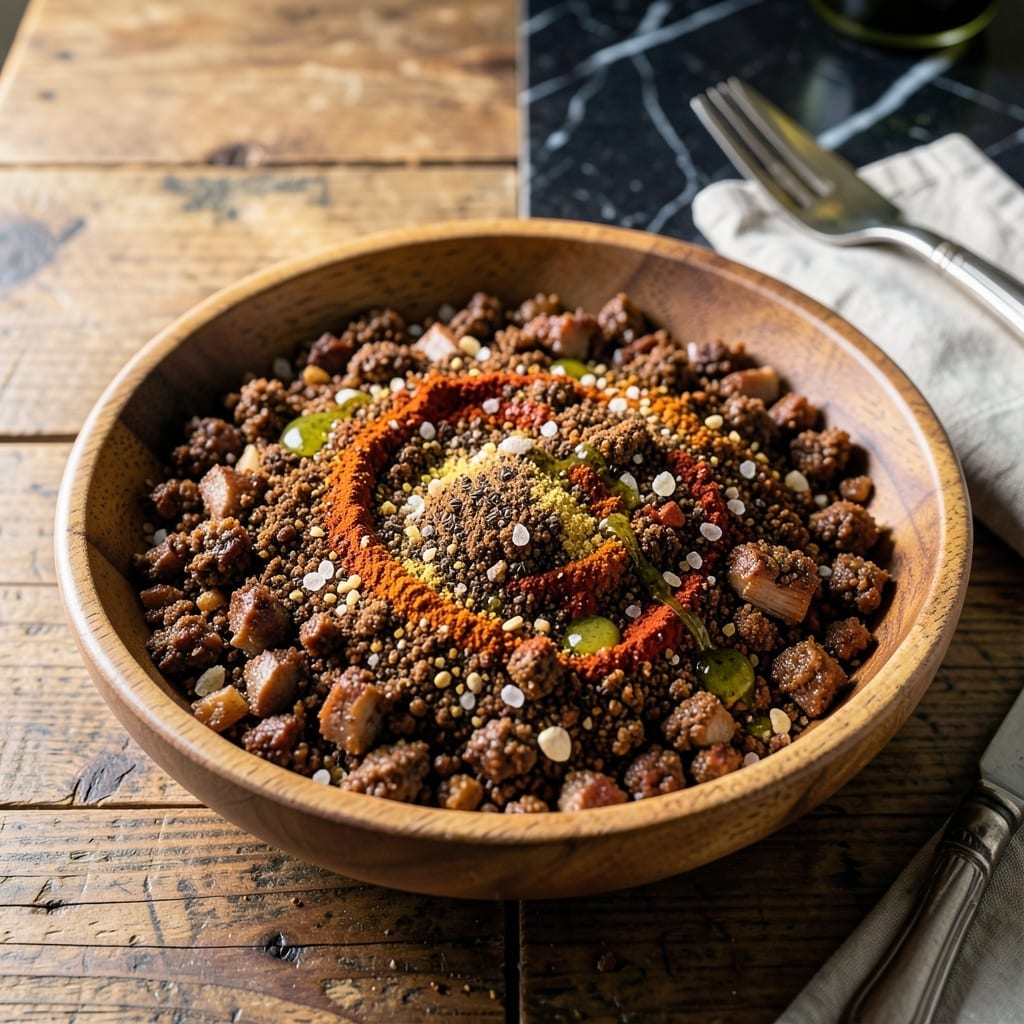
This blend captures the authentic Texas pitmaster approach to seasoning pulled pork. I developed it after years of perfecting my technique at local BBQ competitions.
Use it generously on pork shoulder before smoking, and store extra in an airtight container for up to 6 months. The balance of spices delivers that signature bark and deep flavor.
Ingredients for Franklin Bbq Pulled Pork Rub
Nine ingredients, one legendary rub. Authentic Texas pitmaster flavor in every bite.
| Ingredient | Amount | Notes |
|---|---|---|
| Coarse Kosher Salt 🧂 | ½ cup | Diamond Crystal preferred for texture |
| Black Pepper 🌶️ | ¼ cup | Freshly ground for best flavor |
| Paprika 🌶️ | 3 tbsp | Sweet variety for color and depth |
| Garlic Powder 🧄 | 2 tbsp | Not garlic salt, pure powder |
| Onion Powder 🧅 | 2 tbsp | Balances sweetness and savor |
| Chili Powder 🌶️ | 1 tbsp | Mild blend for subtle heat |
| Cayenne Pepper 🔥 | 1 tsp | Adjust for heat preference |
| Ground Cumin 🌿 | 1 tbsp | Toasted for deeper aroma |
| Brown Sugar 🍚 | ¼ cup | Light or dark, for caramelization |
[recipe_ingredient_scaler]
The salt is non-negotiable—Diamond Crystal kosher salt gives that perfect bark you’re after. Whole Foods or Costco carry it in bulk. Paprika is your color workhorse, so don’t skimp on quality. I get mine from Penzeys (their sweet paprika is next-level), but any grocery store brand works if it’s fresh. The brown sugar? Light or dark, but skip the powdered stuff—it won’t caramelize right.
No cayenne? Crushed red pepper at half the amount. Want more smoke? Swap regular paprika for smoked. The cumin is doing heavy lifting—toast whole seeds and grind fresh if you’re feeling fancy. Out of garlic powder? Granulated garlic works at the same ratio. Brown sugar can be swapped for coconut sugar, but expect a slightly different flavor profile.
Glass jar, cool dark place, done. Keeps for 6 months easy—if it lasts that long. I make a double batch every time and stash half in the freezer. That way, I’m always ready for a last-minute smoke session.
Why You’ll Love This Recipe
- Five-Minute Mix: I dump these five spices in a bowl, stir, and boom—my pulled pork is seasoned better than most BBQ joints.
- Smoky Depth: That paprika and black pepper combo gives the bark a rich, almost charred flavor without touching a smoker.
- Freezer Friendly: I make a double batch, keep it in a jar, and sprinkle on chicken or ribs whenever I need a quick flavor boost.
- Penny-Pincher’s Dream: Coarse salt and basic pantry spices cost pennies but taste like a secret from a Texas pitmaster.
Step-by-Step Instructions for Pulled Pork Rub
Here’s the method. Straightforward, tested, works every time.
Step 1: Measure All Dry Ingredients Precisely
Gather your 0.5 cup Coarse Kosher Salt, 0.25 cup Black Pepper, 3 tbsp Paprika, 2 tbsp Garlic Powder, and 2 tbsp Onion Powder. I use Diamond Crystal salt for its texture—it adheres better to meat than finer grains.
For the Black Pepper, I recommend freshly grinding it if possible. The aroma difference is noticeable, and it creates a more vibrant rub. This step ensures every component is ready before you start blending.
Step 2: Add the Supporting Spices and Sweetness
Measure out the 1 tbsp Chili Powder, 1 tsp Cayenne Pepper, 1 tbsp Ground Cumin, and 0.25 cup Brown Sugar. The cumin should be toasted first if you’re starting from whole seeds—this deepens its earthy aroma.
The Brown Sugar adds caramelization and balances the heat from the cayenne. Light or dark works, but dark sugar will give your bark a deeper color and slightly molasses-like complexity.
Step 3: Combine and Mix Thoroughly
Add all ingredients to a large bowl. I like to start with the salt and sugar, then layer in the spices. This prevents the finer powders from clumping together at the bottom.
Whisk vigorously for 1-2 minutes until the mixture is uniform in color and texture. You should see no streaks of individual spices. For best results, let the rub sit for 30 minutes before using—this allows the flavors to meld together.
Step 4: Apply to Meat with Confidence
Pat your pork shoulder completely dry before applying the rub. This creates the perfect surface for adhesion. I use about ½ cup of rub per 5 pounds of meat, pressing it firmly into all surfaces.
Let the seasoned meat rest uncovered in the refrigerator for at least 1 hour, or ideally overnight. This dry brine process ensures the salt penetrates deeply, while the surface dries out slightly for better bark formation during cooking.
Pro Tips For Making Franklin Bbq Pulled Pork Rub
- Toast Your Spices: Lightly toast the paprika, garlic powder, and onion powder in a dry pan for 30 seconds—just until fragrant. I learned this the hard way after my rub tasted flat straight from the jar.
- Use Coarse Salt: Stick with coarse kosher salt, not fine table salt, or you’ll oversalt the pork. The bigger grains dissolve perfectly during the long cook and give you even seasoning.
- Apply Rub Night Before: Don’t rush it—coat the pork shoulder with the rub and let it sit uncovered in the fridge overnight. The salt has time to penetrate deep, and the surface dries out just enough for a better bark.
- Skip the Sugar: Franklin’s rub is all about the savory depth, so resist adding brown sugar or other sweeteners. The pork’s natural sugars caramelize beautifully without it.
Essential Equipment for Perfect Results
Quality Mixing Bowls
I always use a large stainless steel mixing bowl for blending rubs—it’s durable and won’t absorb odors like plastic. A 2-quart bowl gives plenty of room to whisk without spilling. Look for one with a wide base for stability.
Precision Measuring Tools
For accuracy, I swear by OXO Good Grips measuring cups and spoons. Their angled design lets you read measurements from above. A set with ¼ tsp to 1 cup covers all your rub needs. 💪
Whisk or Spice Grinder
A simple balloon whisk works perfectly for combining dry ingredients. For larger batches, I use my Cuisinart spice grinder to pulverize any clumps and ensure an even texture. The difference in consistency is noticeable.
Storage Containers
Glass jars with tight-sealing lids are ideal for storing your rub. I prefer 16-ounce mason jars or swing-top containers from World Market. They keep spices fresh and make it easy to shake out what you need.
Application Tools
For even coverage, I use a silicon basting brush to help press the rub into the meat. A small fine-mesh sieve is also handy for dusting lighter coats or touching up spots you missed.
Scale for Consistency
When I’m making big batches, I weigh ingredients with my Escali digital scale. It’s accurate to 1 gram and has a tare function. This ensures every batch of rub is identical. 🌟
Nutrition Facts

Trained in classic French technique but raised on slow-cooked ribs and spicy rubs, she blends culinary skill with smoke and soul.
- Recipe for Boneless Cross Rib Roast: Slow-Roasted Beef with Herb Crust - October 3, 2026
- Hamburgers in Sauce Recipe Crock Pot: Slow-Cooked Savory Delight - October 3, 2026
- Sanjeev Kapoor Egg Biryani Recipe: Fragrant Spiced Rice With Boiled Eggs - October 3, 2026