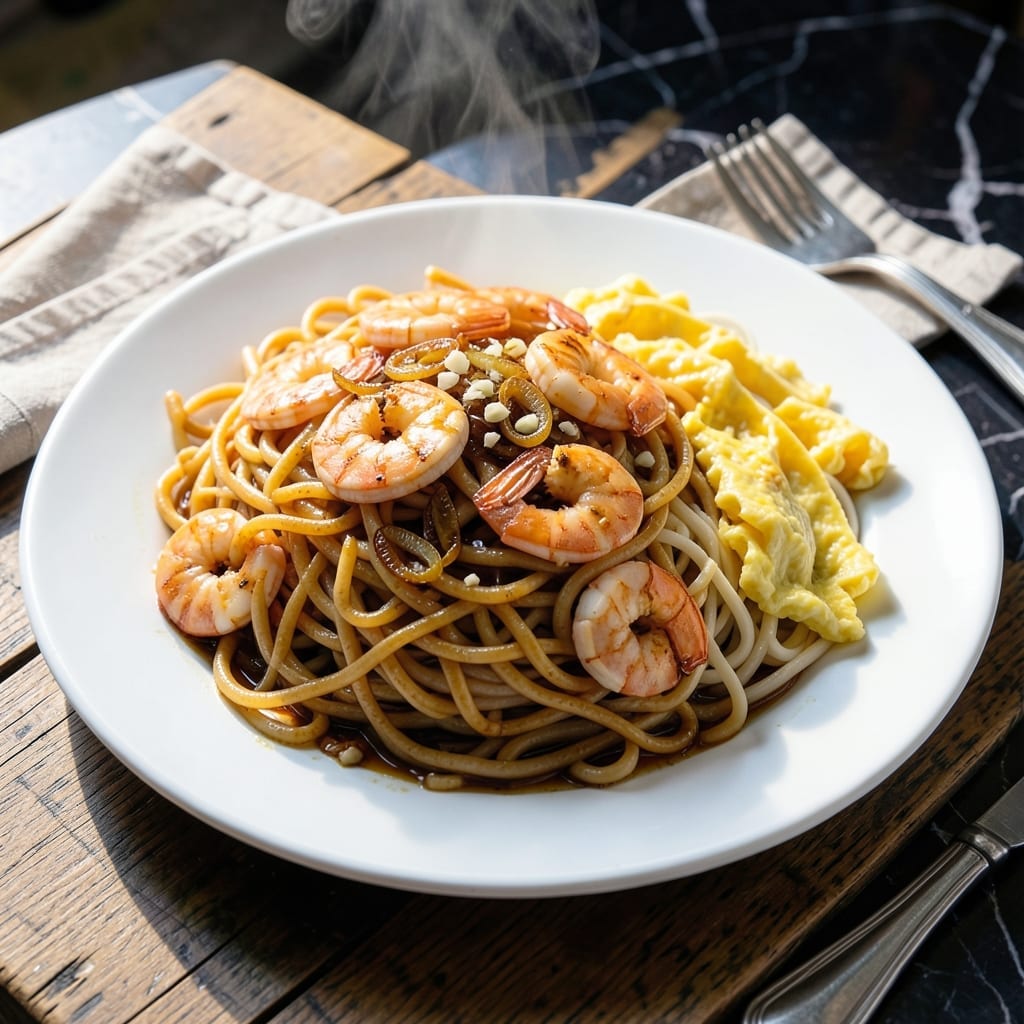
This Singapore-style dish brings together sweet and savory flavors in every bite of wok-tossed rice vermicelli. I’ve refined this method to capture the authentic street food experience at home.
The key is high heat and quick cooking to achieve the right texture—tender strands with a slight char. Traditional ingredients like soy sauce, shrimp, and eggs create the signature taste.
What sets this version apart is the balance of umami and sweetness, with each strand coated evenly. The wok-frying technique ensures every mouthful is packed with flavor.
Ready in 20 minutes, this dish delivers restaurant-quality results with simple steps. The aroma alone will transport you to a bustling hawker center.
Ingredients for Fried Bee Hoon Recipe Singapore
Authentic Singaporean flavors start with these carefully selected ingredients for perfect wok-fried strands.
| Ingredient | Amount | Notes |
|---|---|---|
| Rice Vermicelli 🍜 | 8 oz | Soaked in warm water 10 minutes |
| Shrimp 🦐 | ½ lb | Peeled, deveined, medium size |
| Large Eggs 🥚 | 2 whole | Lightly beaten for cooking |
| Garlic Cloves 🧄 | 4 cloves | Minced finely for aroma |
| Shallots 🧅 | 2 whole | Thinly sliced for sweetness |
| Light Soy Sauce 🫒 | 3 tbsp | For seasoning base |
| Dark Soy Sauce 🫒 | 1 tbsp | For color depth |
| Oyster Sauce 🫒 | 2 tbsp | For umami richness |
| Sesame Oil 🫒 | 1 tbsp | For aromatic finish |
| Bean Sprouts 🌱 | 1 cup | Rinsed and drained well |
| Green Onions 🧅 | 3 whole | Sliced thinly for garnish |
| White Pepper 🌶️ | ½ tsp | Ground for subtle heat |
| Vegetable Oil 🫒 | 3 tbsp | For high-heat frying |
| Chili Paste 🌶️ | 1 tbsp | Sambal oelek preferred |
| Lime 🍋 | 1 whole | Cut into wedges for serving |
[recipe_ingredient_scaler]
The rice vermicelli is critical here. Look for thin bee hoon strands at any Asian market—avoid the wider rice noodles. The shrimp should be fresh, not previously frozen if possible, for the best texture. Wild-caught or sustainably farmed are ideal. For soy sauces, Pearl River Bridge or Lee Kum Kee brands deliver consistent quality that professional kitchens rely on.
No shrimp? Chicken breast cut into thin strips works well. For a vegetarian version, firm tofu pressed and cubed absorbs the flavors beautifully. Can’t find oyster sauce? Vegetarian oyster sauce or a mix of soy sauce with a touch of sugar can substitute. The chili paste is flexible—sriracha works in a pinch though sambal oelek provides the authentic heat profile.
Store dry rice vermicelli in an airtight container at room temperature for up to 1 year. Once soaked, use immediately. The cooked dish keeps well in the refrigerator for 3-4 days but loses its signature wok hei (breath of the wok) the next day. Reheat in a hot pan rather than the microwave to preserve texture.
Why You’ll Love This Recipe
- One Pan Wonder: I love that I can toss the rice vermicelli, shrimp, and eggs into a single wok and have dinner ready in minutes.
- Umami Explosion: The garlic and shallots fry up into this fragrant base that makes every bite ridiculously good.
- Weeknight Hero: Honestly, it’s my go-to when I need something fast but still crave-worthy for the family.
- Budget Stretcher: A little shrimp goes a long way, and the rice vermicelli keeps it light on the wallet.
Step-by-Step Instructions for Wok-Tossed Sweet and Savory Strands
Execute these precise techniques to achieve authentic texture and layered flavors every time.
Step 1: Prepare the Rice Vermicelli and Protein
Soak the 8 oz Rice Vermicelli in warm water for 10 minutes until pliable but still firm. Drain thoroughly and set aside. Meanwhile, pat the 0.5 lb Shrimp dry with paper towels to prevent splattering when cooking.
Lightly beat the 2 whole Large Eggs in a small bowl with a pinch of the 0.5 tsp White Pepper. This creates a silky texture that will coat the vermicelli beautifully. Have all ingredients prepped and within reach—wok cooking moves quickly.
Step 2: Stir-Fry Aromatics and Shrimp
Heat 2 tbsp Vegetable Oil in a wok over high heat until shimmering. Add the 4 cloves Garlic Cloves and 2 whole Shallots, stir-frying for 30-45 seconds until fragrant but not browned. The shallots should soften slightly but retain their sweetness.
Push the aromatics to one side and add the shrimp in a single layer. Cook undisturbed for 1-2 minutes per side until just pink and opaque. Remove shrimp and set aside. The residual heat will finish cooking them through.
Step 3: Cook the Eggs and Combine All Elements
Add the remaining 1 tbsp Vegetable Oil to the wok. Pour in the beaten eggs, tilting the pan to create a thin, even layer. Scramble gently with a spatula until just set but still slightly runny—this ensures they’ll coat the noodles without becoming rubbery.
Add the drained rice vermicelli, 3 tbsp Light Soy Sauce, 1 tbsp Dark Soy Sauce, 2 tbsp Oyster Sauce, and 1 tbsp Chili Paste. Toss vigorously with tongs for 2-3 minutes until the noodles are evenly coated and heated through.
Step 4: Finish with Vegetables and Final Touches
Return the shrimp to the wok along with the 1 cup Bean Sprouts. Stir-fry for 1-2 minutes until the sprouts are just tender but still crisp. The vermicelli should be slightly chewy with a glossy sheen from the sauces.
Drizzle with 1 tbsp Sesame Oil and the remaining 0.5 tsp White Pepper. Toss once more to distribute evenly. The sesame oil adds a nutty aroma that completes the flavor profile. Garnish with 3 whole Green Onions and serve immediately with 1 whole Lime wedges on the side.
Pro Tips For Making Fried Bee Hoon Recipe Singapore
- Soak the Noodles: I learned this the hard way—cover the rice vermicelli in warm water for exactly 5 minutes, then drain. Any longer and they turn mushy, any shorter and they stay crunchy.
- High Heat First: Crank the wok to maximum and get it smoking hot before adding the garlic and shallots. Sounds intense, but it’s the only way to get that fragrant base without bitterness.
- Shrimp Last: Add the shrimp only after the eggs are set and pushed to the side—this keeps them tender instead of rubbery from overcooking.
- Use Day-Old Eggs: My grandmother swore by this: slightly older eggs fry up fluffier and spread easier in the wok. Fresh ones are too firm and don’t blend as well with the noodles.
Storing and Reheating fried bee hoon recipe singapore
Refrigerator Storage
Let your dish cool completely at room temperature for no more than 2 hours before transferring to airtight containers. I use glass containers with locking lids to maintain freshness. Store in the refrigerator at 40°F or below for up to 3-4 days. ❄️
Freezer Storage
For longer storage, portion into freezer-safe bags or containers. Squeeze out excess air to prevent freezer burn. This creation freezes well for up to 2 months without significant texture changes. Label with the date to track freshness.
Stovetop Reheating
My preferred method uses a wok or large skillet over medium-high heat. Add 1-2 tbsp water or chicken broth and cover with a lid to create steam. Stir-fry for 3-4 minutes until heated through, which restores some of the original texture. 🔥
Microwave Reheating
Place a single portion on a microwave-safe plate and cover with a damp paper towel. Heat on 70% power for 1-2 minutes, then stir and continue in 30-second intervals until reaching 165°F. Add a splash of water if it appears dry.
Nutrition Facts
Frequently Asked Questions
Can I use other noodles instead?
Stick with thin rice vermicelli for authenticity. Wider rice noodles or wheat noodles won’t absorb flavors the same way. In a pinch, angel hair pasta works but texture differs.
Why soak the noodles first?
Soaking for 10 minutes softens the strands so they cook evenly in the wok. Skip this and they’ll stay hard in the center. Drain well to prevent soggy results.
How do I prevent sticky noodles?
Use high heat and toss constantly with tongs. Add sauces gradually to avoid clumping. Overcrowding the wok causes sticking—work in batches if needed.
Can I make this ahead?
Best served fresh, but leftovers keep for 3-4 days refrigerated. Reheat in a wok with a splash of water to revive texture. Freezing isn’t recommended.

Trained in classic French technique but raised on slow-cooked ribs and spicy rubs, she blends culinary skill with smoke and soul.
- Recipe for Boneless Pork Chops in Cast Iron Skillet: Sear and Baste to Juicy Perfection - October 3, 2026
- Recipe for Boneless Cross Rib Roast: Slow-Roasted Beef with Herb Crust - October 3, 2026
- Hamburgers in Sauce Recipe Crock Pot: Slow-Cooked Savory Delight - October 3, 2026