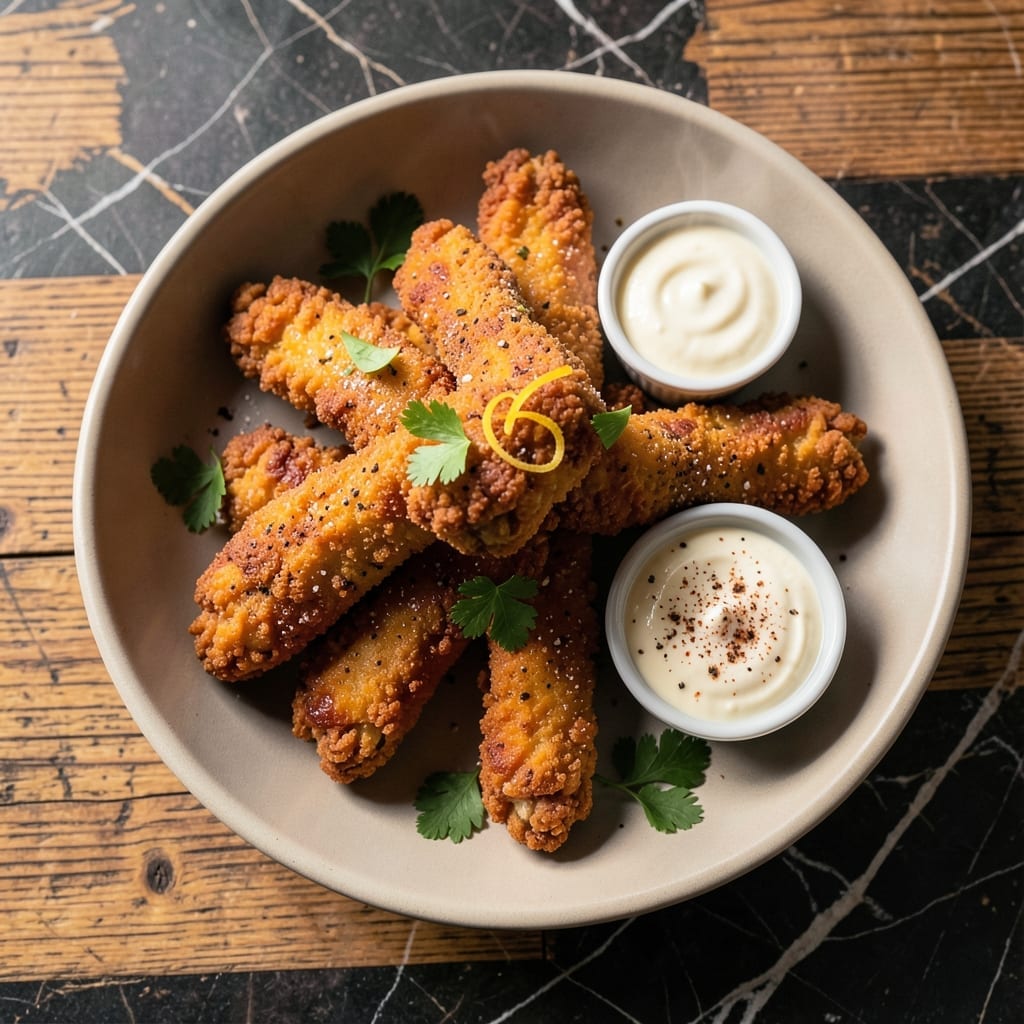
This recipe delivers the crispy, golden chicken tenders I perfected after years of trial and error in my home kitchen.
Soaking the chicken in milk creates tender meat with a juicy bite. The buttermilk marinade adds subtle tang that complements the crunchy coating.
Each piece emerges from the fryer with a shatteringly crispy exterior that gives way to succulent chicken inside. The milk in the batter ensures the coating adheres perfectly.
These tenders rival any restaurant version, with a texture that stays crispy even after cooling. Ready to transform your fried chicken game?
Ingredients for Fried Chicken Tenders Recipe with Milk
Pantry staples plus a quick stop at the dairy aisle. Everything you need for golden perfection.
| Ingredient | Amount | Notes |
|---|---|---|
| Chicken Tenders 🍗 | 1 ½ lb | Boneless, skinless, uniform size |
| Buttermilk 🥛 | 2 cups | Full-fat for best tenderness |
| All-Purpose Flour 🌾 | 2 cups | Divided for dredging and batter |
| Cornstarch 🌽 | ¼ cup | For extra crispiness |
| Large Eggs 🥚 | 2 whole | Beaten for batter binding |
| Baking Powder 🧂 | 1 tsp | Makes coating lighter |
| Paprika 🌶️ | 2 tsp | Sweet or smoked variety |
| Garlic Powder 🧄 | 1 tsp | Fresh ground preferred |
| Onion Powder 🧅 | 1 tsp | Balances seasoning blend |
| Salt 🧂 | 1 ½ tsp | Diamond Crystal preferred |
| Black Pepper 🌶️ | 1 tsp | Freshly ground for best flavor |
| Cayenne Pepper 🔥 | ¼ tsp | Optional for heat |
| Vegetable Oil 🫒 | 4 cups | For frying, high smoke point |
[recipe_ingredient_scaler]
The chicken is the star here. Boneless, skinless tenders save prep time and cook evenly—look for uniform size at Whole Foods or Costco. Buttermilk is non-negotiable; the full-fat version at Trader Joe’s has that perfect tang. If your grocery store only carries low-fat, add a splash of milk to compensate. The cornstarch is what gives that next-level crunch (worth the extra minute to find in the baking aisle).
No buttermilk? Whole milk with 1 tbsp lemon juice per cup works in a pinch. Swap cornstarch for arrowroot powder at equal amounts. For the coating, Panko breadcrumbs can replace half the flour for extra texture. The spices are flexible—smoked paprika adds depth if you’re feeling fancy, or skip the cayenne if you’re serving kids.
Fry in batches so the oil stays hot—this keeps them shatteringly crispy. Leftovers? Layer on a rack (not stacked) to maintain texture. Keeps 2-3 days in the fridge, but honestly, they’re best fresh. Reheat in the oven at 375°F for 10 minutes (microwave ruins the crunch).
Why You’ll Love This Recipe
- I’ll be real: they’re just as good cold the next day in a sandwich or chopped over a salad—no waste, all flavor.
- No-Fuss Breading: I toss the tenders in buttermilk, then a quick dip in flour and cornstarch—no complicated steps, just crispy results every time.
- That Buttery Crunch: Honestly, the buttermilk soak makes the chicken so tender, and the cornstarch gives it that ridiculous crunch I can’t resist.
- Crowd-Pleasing Staple: Between us, this is my go-to for picky eaters, game days, or just a Tuesday night when no one can agree on dinner.
Step-by-Step Instructions for Buttermilk-Soaked Fried Chicken Tenders
Here’s the method I use to guarantee crispy, juicy tenders with a perfect golden crust.
Step 1: Marinate the Chicken Tenders in Buttermilk
Place the 1.5 lb Chicken Tenders in a large bowl and pour the 2 cups Buttermilk over them, ensuring each piece is fully submerged. I always use full-fat buttermilk—it tenderizes the meat and helps the coating adhere beautifully.
Cover and refrigerate for at least 4 hours, or ideally overnight. The longer it soaks, the more tender and flavorful your creation becomes. You’ll notice the tenders plump slightly as they absorb the liquid.
Step 2: Prepare the Crispy Coating Mixture
In a shallow dish, whisk together 2 cups All-Purpose Flour, 0.25 cup Cornstarch, 1 tsp Baking Powder, 2 tsp Paprika, 1 tsp Garlic Powder, 1 tsp Onion Powder, 1.5 tsp Salt, 1 tsp Black Pepper, and 0.25 tsp Cayenne Pepper. The cornstarch and baking powder are my secrets for an extra-crispy, light texture.
In a separate bowl, beat the 2 whole Large Eggs until smooth. This creates a binding layer between the buttermilk and flour mixture, ensuring the coating stays put during frying.
Step 3: Dredge and Bread the Tenders
Remove the chicken from the buttermilk, letting excess drip off. Dip each piece into the beaten eggs, then coat thoroughly in the flour mixture, pressing gently to adhere. Place the breaded tenders on a wire rack set over a baking sheet.
Let them rest for 10 minutes—this helps the coating set and prevents it from sliding off when it hits the hot oil. You’ll see the coating transform from wet and clumpy to dry and ready for frying.
Step 4: Fry to Golden Perfection
Heat the 4 cups Vegetable Oil in a deep, heavy pot or Dutch oven to 350°F. Use a thermometer for accuracy—too low and the tenders will absorb oil; too high and the outside burns before the inside cooks.
Working in batches to avoid crowding, fry the tenders for 4-5 minutes per side until they’re deep golden brown and the internal temperature reaches 165°F. Transfer to a wire rack or paper towel-lined plate to drain.
Here’s the thing—if the oil temperature drops below 325°F when adding the chicken, wait for it to recover before continuing. This ensures even cooking and that signature crispiness.
Pro Tips For Making Fried Chicken Tenders Recipe With Milk
- Soak Overnight: Let the chicken tenders bathe in the buttermilk for at least 4 hours—overnight if you can. I learned this the hard way after my first batch came out dry and bland.
- Double Dredge: Dip the tenders in the flour-cornstarch mix, then back in the egg-buttermilk wash, then flour again. Sounds like a hassle, but it’s the only way to get that thick, shatteringly crisp crust.
- Heat the Oil: Use a thermometer and keep the oil at 350°F. After burning three batches, I finally figured out that guessing just doesn’t cut it.
- Rest Before Frying: Give the dredged tenders 10 minutes on a rack before they hit the oil. My grandmother swore by this, and she was right—it keeps the coating from sliding off.
Best Sauces and Condiments for This fried chicken tenders recipe with milk
Classic Dipping Sauces
You can’t go wrong with ranch dressing—I make mine with ½ cup mayonnaise, ¼ cup buttermilk, and 1 tbsp fresh dill. Honey mustard is another crowd-pleaser: mix ¼ cup Dijon with 2 tbsp honey and 1 tbsp yellow mustard. These pair perfectly with the buttermilk tang. 💛
Spicy Kick Options
Sriracha mayo adds heat—combine ½ cup mayo with 2 tbsp sriracha and 1 tsp lime juice. For a smoky version, stir 1 tbsp chipotle in adobo into ½ cup sour cream. I always keep these in squeeze bottles for easy drizzling.
Sweet and Tangy
BBQ sauce is a must—Sweet Baby Ray’s works great, but I also love a homemade version with ketchup, brown sugar, and apple cider vinegar. For a lighter option, peach jam mixed with 1 tbsp cider vinegar creates a delightful contrast.
Global Flavors
Try gochujang sauce for Korean flair: mix 2 tbsp gochujang with 1 tbsp soy sauce and 1 tbsp honey. Tzatziki brings Mediterranean freshness—Greek yogurt with cucumber and garlic cools the heat. These elevate your tenders to restaurant quality. ✨
Nutrition Facts
Frequently Asked Questions
Why use buttermilk instead of regular milk?
Buttermilk’s acidity tenderizes the chicken better than regular milk. The tang also adds depth to the coating’s flavor.
What oil works best for frying?
Use oils with high smoke points like vegetable, canola, or peanut oil. Avoid olive oil as it can burn at 350°F.
Can I bake instead of frying?
Yes! Bake at 400°F for 15-20 minutes, flipping halfway. The texture won’t be identical but still delicious.
How do I keep them crispy longer?
Place on a wire rack after frying, never stack. This allows air circulation to prevent sogginess.

Trained in classic French technique but raised on slow-cooked ribs and spicy rubs, she blends culinary skill with smoke and soul.
- Recipe for Boneless Pork Chops in Cast Iron Skillet: Sear and Baste to Juicy Perfection - October 3, 2026
- Recipe for Boneless Cross Rib Roast: Slow-Roasted Beef with Herb Crust - October 3, 2026
- Hamburgers in Sauce Recipe Crock Pot: Slow-Cooked Savory Delight - October 3, 2026