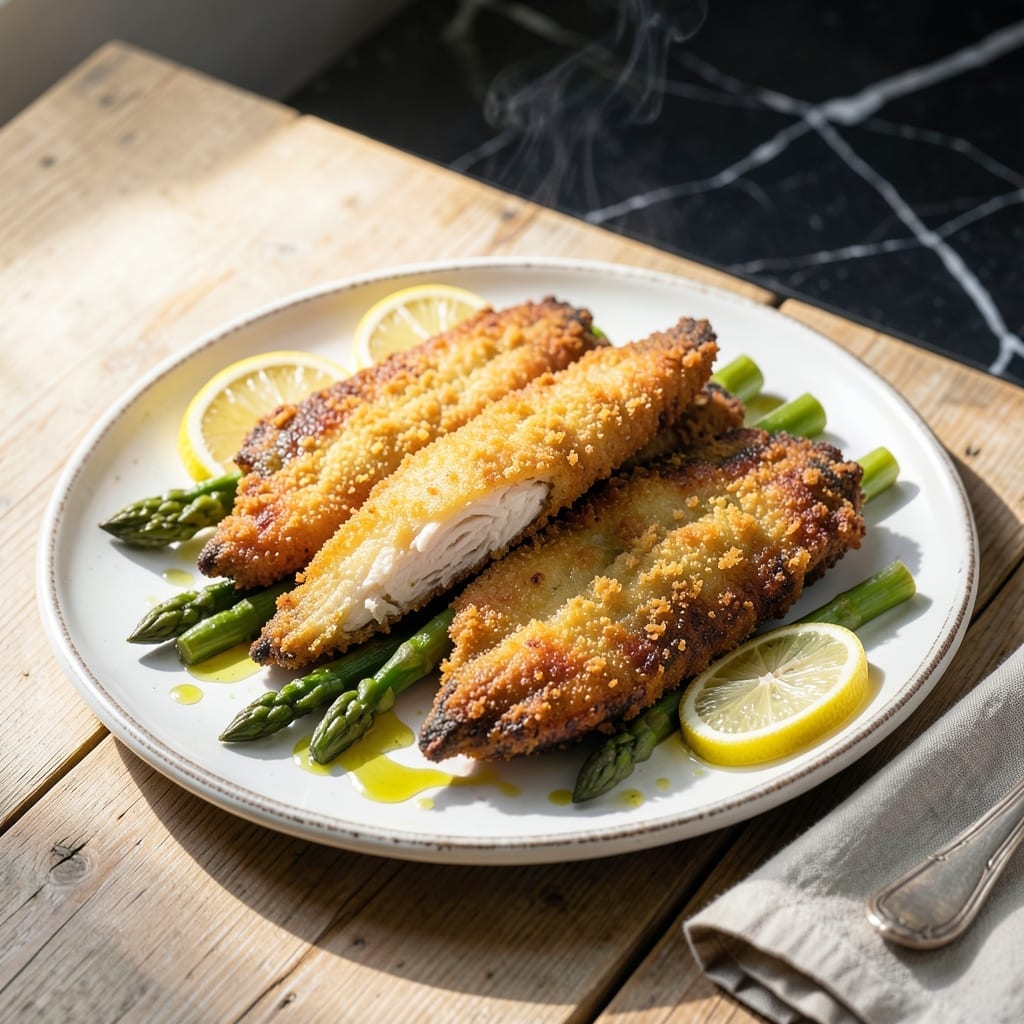
Achieving a golden crisp coating on flounder requires a precise technique that balances lightness with crunch. This method transforms delicate flounder fillets into a dish with a delicate interior and a shatteringly crisp exterior.
The secret lies in the flour mixture and oil temperature. A well-seasoned flour blend creates a thin, even coating that fries to perfect crispness. Maintaining the right oil temperature ensures the flounder cooks through without absorbing excess oil.
What results is flounder with a coating so light it practically melts in your mouth, yet holds its crispness until the last bite. The contrast between the tender fish and the crisp exterior makes every bite satisfying.
Serve immediately for the best texture, paired with lemon wedges and your favorite tartar sauce. This is flounder done right, with a coating that stays crisp from first bite to last.
Ingredients for Fried Flounder Recipe with Flour
Pantry staples and fresh flounder team up for that perfect golden crisp coating.
| Ingredient | Amount | Notes |
|---|---|---|
| Flounder Fillets 🐟 | 1 ½ lb | Fresh or thawed, patted dry |
| All-Purpose Flour 🌾 | 1 cup | For light, crisp coating |
| Cornstarch 🌽 | ¼ cup | Adds extra crispiness |
| Salt 🧂 | 1 ½ tsp | Diamond Crystal preferred |
| Black Pepper 🌶️ | ½ tsp | Freshly ground |
| Paprika 🌶️ | 1 tsp | Sweet or smoked variety |
| Garlic Powder 🧄 | 1 tsp | Not garlic salt |
| Onion Powder 🧅 | 1 tsp | Balances the seasoning |
| Vegetable Oil 🫒 | 4 cups | For deep frying, neutral flavor |
| Lemon 🍋 | 1 whole | Cut into wedges for serving |
| Fresh Parsley 🌿 | ¼ cup | Chopped, for garnish |
| Tartar Sauce 🥄 | ½ cup | Store-bought or homemade |
[recipe_ingredient_scaler]
The flounder is everything here. Fresh fillets from the seafood counter (ask for skinless) are ideal, but frozen works if thawed properly. Pat them bone-dry—this is non-negotiable for that shatteringly crisp coating. I grab mine from Whole Foods when they have wild-caught, but any trusted fishmonger will do. The flour-cornstarch combo gives you that light, airy crunch without heaviness.
No cornstarch? Swap in rice flour at the same ratio—works like a charm. Want more kick? Add half a teaspoon of cayenne to the flour mix. Short on fresh parsley? Dried parsley at half the amount gets the job done. The vegetable oil needs to be neutral (canola or peanut oil work too). Don’t even think about olive oil here—it’ll burn before reaching the right temp.
Fry in batches so you don’t crowd the pan—keeps the oil temp steady. Serve immediately (the crispness doesn’t wait). Leftovers? Honestly, they’re best avoided, but if you must, reheat in a 400°F oven for 5-7 minutes to revive the crunch.
Why You’ll Love This Recipe
- One Pan Magic: I just dredge the flounder in flour and cornstarch, then fry—no fuss, no extra dishes.
- Crispy Perfection: That golden crust with tender flounder inside? The salt and pepper make every bite just right.
- Weeknight Hero: Honestly, it’s my go-to for quick dinners—ready before the kids start asking for snacks.
- Budget Friendly: Flounder fillets stretch far, and the flour-cornstarch mix keeps costs low without skimming on flavor.
Step-by-Step Instructions for Fried Flounder With Flour
This method delivers that perfect golden crust without any fuss. Let’s get frying.
Step 1: Season and Dredge the Flounder
Pat the 1.5 lb Flounder Fillets completely dry with paper towels—this is crucial for a crispy coating. In a shallow dish, whisk together the 1 cup All-Purpose Flour, 0.25 cup Cornstarch, 1.5 tsp Salt, 0.5 tsp Black Pepper, 1 tsp Paprika, 1 tsp Garlic Powder, and 1 tsp Onion Powder until evenly combined.
Dredge each fillet in the flour mixture, pressing gently to adhere. Shake off any excess—too much coating will fall off in the oil and create a messy fry. You want a thin, even layer that will crisp up beautifully.
Step 2: Heat the Oil to the Right Temperature
Pour the 4 cups Vegetable Oil into a deep, heavy-bottomed pot or Dutch oven. Heat over medium-high heat until it reaches 350-375°F on a deep-fry thermometer. If you don’t have a thermometer, test with a pinch of flour—it should sizzle immediately and rise to the surface.
The temperature is critical here. Too cool, and the flounder will absorb oil and turn greasy. Too hot, and the outside will burn before the inside cooks. Maintain a steady heat throughout the frying process.
Step 3: Fry Until Golden and Crisp
Carefully lower 2-3 dredged fillets into the hot oil, being careful not to overcrowd the pot. Fry for 3-4 minutes per side until the coating is golden brown and crisp. The flounder is delicate, so use a slotted spatula to gently flip it.
You’ll know it’s done when the edges are deeply golden and the coating sounds crisp when tapped with the spatula. Transfer the fried flounder to a paper towel-lined plate to drain excess oil. Repeat with the remaining fillets, allowing the oil to return to temperature between batches.
Step 4: Serve with Lemon and Tartar Sauce
Cut the 1 whole Lemon into wedges and chop the 0.25 cup Fresh Parsley. Arrange the fried flounder on a serving platter and garnish with the parsley. Serve immediately with the lemon wedges and 0.5 cup Tartar Sauce on the side.
The flounder should be tender and flaky inside, with a light, crisp coating that shatters slightly when bitten. Squeeze a little lemon over the top just before eating to brighten up the rich, savory flavor. This dish is best enjoyed fresh out of the fryer.
Pro Tips For Making Fried Flounder Recipe With Flour
- Pat the Fillets Dry: I learned this the hard way—any moisture left on the flounder will steam the coating instead of frying it. Use paper towels and press hard to get every spot dry.
- Use a Flour-Cornstarch Mix: After burning a few batches, I finally figured out that a 2:1 ratio of flour to cornstarch gives that extra-crispy crust without getting too thick.
- Skip the Overcrowding: Resist the urge to fit all the fillets in the pan at once. Give each piece about an inch of space, or the oil temp will drop and you’ll end up with soggy fish.
- Heat the Oil First: Sounds obvious, but I used to add the fish too soon. Get the oil shimmering—about 350°F—before the flounder hits the pan, or it’ll absorb oil like a sponge.
Troubleshooting fried flounder recipe with flour
Oil Temperature Issues
If your coating is greasy instead of crisp, your oil is likely too cool. The ideal range is 350-375°F. I use a ThermoWorks Candy Thermometer for accuracy. If you don’t have one, a pinch of flour should sizzle vigorously when dropped in the oil.
Coating Not Sticking
This usually means the fillets weren’t dry enough. Pat them thoroughly with paper towels before dredging. Also, shake off excess flour—too thick a layer won’t adhere properly. The flour-cornstarch mix should create a thin, even coating that clings to the fish. 💡
If the coating still falls off, try chilling the dredged fillets for 10 minutes before frying to help the coating set.
Uneven Cooking
Uneven cooking often happens when the oil temperature drops. Fry in small batches—2-3 fillets at a time—to avoid overcrowding. Allow the oil to return to temperature between batches, which usually takes about 2 minutes.
Fish Breaking Apart
Flounder is delicate, so use a slotted spatula for flipping. If the fillets are too thin, they may fall apart. Look for fillets that are at least ½ inch thick. Also, avoid moving them too much in the oil—let them cook undisturbed for 3-4 minutes per side.
Overcooked or Dry Fish
This dish cooks quickly, so don’t walk away. The flounder is done when it flakes easily with a fork. If you’re unsure, use a meat thermometer—it should read 145°F internally. Serve immediately to maintain moisture and crispness. 🔥
Nutrition Facts
Frequently Asked Questions
What oil works best for frying?
Use a neutral oil with a high smoke point like vegetable, canola, or peanut. These handle 350-375°F without burning. Avoid olive oil—it smokes at lower temps.
Can I use frozen flounder?
Yes, but thaw completely in the fridge overnight and pat very dry before dredging. Excess moisture prevents crispiness. Never refreeze after thawing.
How do I keep the coating crispy longer?
Drain on a wire rack, not paper towels, to prevent steam buildup. Serve immediately for best texture. Leftovers? Reheat in a 400°F oven for 5-7 minutes.
Why is my coating falling off?
Fillets weren’t dry enough or oil temp was too low. Pat thoroughly, ensure 350-375°F oil, and don’t overcrowd the pan. Chilling dredged fish for 10 minutes helps too.

Trained in classic French technique but raised on slow-cooked ribs and spicy rubs, she blends culinary skill with smoke and soul.
- Recipe for Boneless Pork Chops in Cast Iron Skillet: Sear and Baste to Juicy Perfection - October 3, 2026
- Recipe for Boneless Cross Rib Roast: Slow-Roasted Beef with Herb Crust - October 3, 2026
- Hamburgers in Sauce Recipe Crock Pot: Slow-Cooked Savory Delight - October 3, 2026