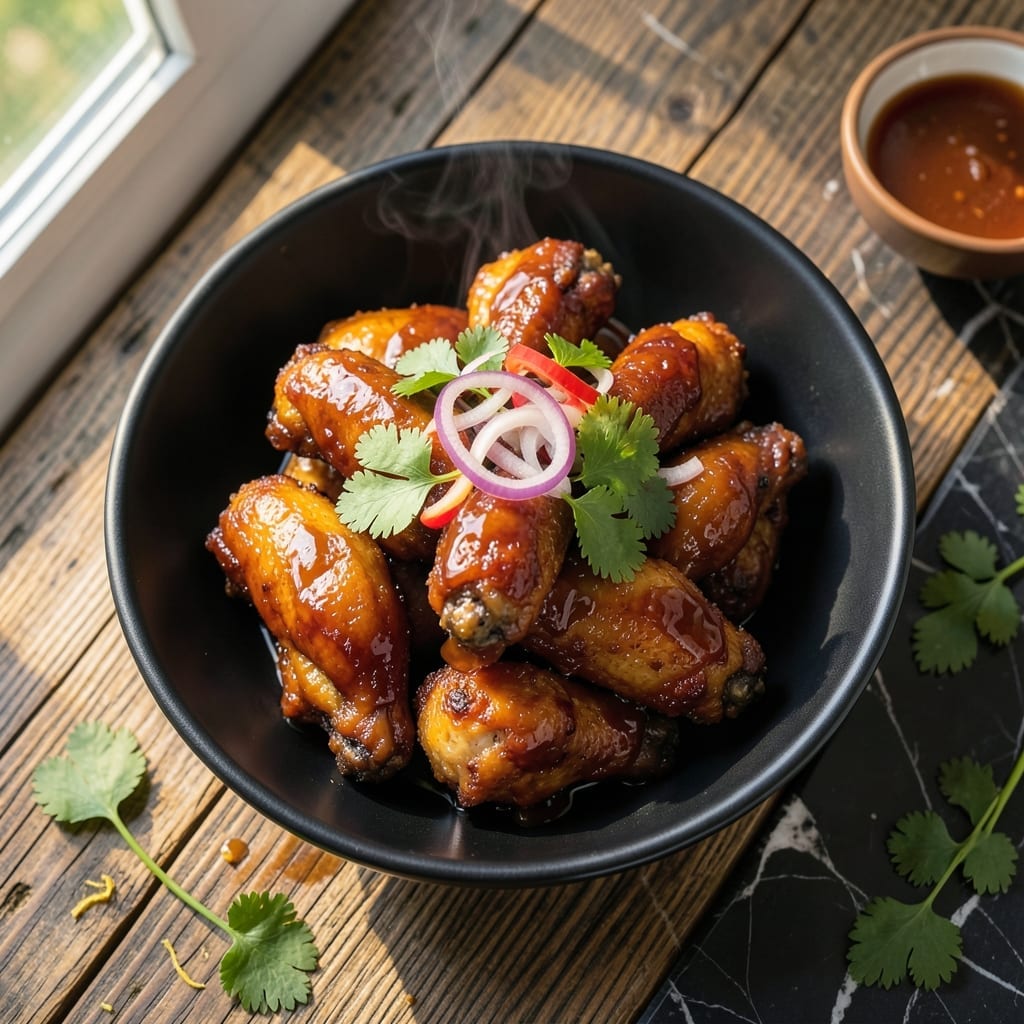
There’s an art to achieving crispy wings with a sticky-sweet glaze that clings perfectly to each bite. This method delivers restaurant-quality results at home.
Double-frying ensures maximum crunch while the honey barbecue glaze adds a sweet, smoky finish. The contrast of textures and flavors makes these wings irresistible.
Ingredients for Fried Honey Barbecue Wings
Restaurant-quality wings start with these essential ingredients for maximum crunch and sticky-sweet flavor.
| Ingredient | Amount | Notes |
|---|---|---|
| Chicken Wings 🍗 | 2 lb | Split into drumettes and flats |
| Vegetable Oil 🫒 | 4 cups | For frying, high smoke point |
| Barbecue Sauce 🍯 | 1 ½ cups | High-quality, thick variety |
| Honey 🍯 | ½ cup | Pure, unfiltered preferred |
| Apple Cider Vinegar 🍏 | 2 tbsp | For balancing sweetness |
| Worcestershire Sauce 🍶 | 1 tbsp | Adds depth of flavor |
| Garlic Powder 🧄 | 1 tsp | Freshly ground if possible |
| Onion Powder 🧅 | 1 tsp | Enhances savory notes |
| Smoked Paprika 🌶️ | ½ tsp | For smoky aroma |
| Kosher Salt 🧂 | 1 tsp | Plus more to taste |
| Black Pepper 🌶️ | ½ tsp | Freshly ground preferred |
| Cornstarch 🌾 | ¼ cup | For extra crispiness |
[recipe_ingredient_scaler]
The wings are the foundation—opt for fresh, high-quality chicken wings with skin intact for optimal crispiness. Costco and Whole Foods offer excellent options. For frying, peanut or vegetable oil with a high smoke point is essential. The barbecue sauce should be thick and rich; Sweet Baby Ray’s or Stubb’s are reliable choices for consistent flavor and texture.
No honey? Maple syrup or agave can substitute, though the flavor profile will shift slightly. For a tangier glaze, increase the apple cider vinegar by half. If you lack Worcestershire, soy sauce with a dash of lemon juice works in a pinch. The smoked paprika is key for depth—don’t skip it unless absolutely necessary (regular paprika lacks the smokiness).
Fry in batches to avoid crowding—this keeps the oil temp steady and wings crisp. Leftovers? They’ll keep in the fridge for 3-4 days, but the texture is best fresh. Reheat in the oven at 375°F to revive some crunch.
Why You’ll Love This Recipe
- One Pan Wonder: I just fry the wings, then toss them in the honey-barbecue glaze—no extra pots or complicated steps.
- Sweet & Smoky: That mix of honey and barbecue sauce with a tangy vinegar kick? Ridiculously good.
- Crowd Pleaser: I’ve served these at game nights and weeknight dinners—everyone reaches for seconds.
- Budget Friendly: Wings are affordable, and the sauce comes together with pantry staples I already have.
Step-by-Step Instructions for Fried Honey Barbecue Wings
Master the technique for achieving ultra-crispy wings with a glossy, finger-licking glaze every time.
Step 1: Season and Coat the Chicken Wings
Pat the 2 lb chicken wings completely dry with paper towels—this is non-negotiable for achieving maximum crispiness. In a large bowl, toss the wings with 1 tsp kosher salt, 0.5 tsp black pepper, 1 tsp garlic powder, 1 tsp onion powder, and 0.5 tsp smoked paprika until evenly coated.
Sprinkle the 0.25 cup cornstarch over the seasoned wings and toss again until each piece is lightly dusted. The cornstarch creates an ultra-crispy crust that holds up to the sticky glaze. Let the wings rest for 10 minutes while you prepare the oil—this helps the coating adhere better during frying.
Step 2: Fry the Wings to Golden Perfection
In a large, heavy-bottomed pot or Dutch oven, heat the 4 cups vegetable oil to 350°F. Use a deep-fry thermometer for accuracy—oil temperature is critical for even cooking and preventing greasiness. The oil is ready when a pinch of cornstarch sizzles immediately upon contact.
Working in batches to avoid overcrowding, carefully lower the wings into the hot oil. Fry for 12-15 minutes, turning occasionally, until they’re deep golden brown and cooked through. The internal temperature should reach 165°F. Transfer the fried wings to a wire rack set over a baking sheet to drain excess oil while maintaining crispiness.
Step 3: Prepare the Honey Barbecue Glaze
In a medium saucepan, combine the 1.5 cups barbecue sauce, 0.5 cup honey, 2 tbsp apple cider vinegar, and 1 tbsp Worcestershire sauce. Simmer over medium-low heat for 5-7 minutes, stirring frequently, until the mixture thickens slightly and becomes glossy.
The vinegar and Worcestershire balance the sweetness of the honey and barbecue sauce, creating a complex, tangy-sweet glaze. Reduce the heat to low once it reaches your desired consistency to prevent burning.
Step 4: Toss and Serve Immediately
Add all the fried wings to the saucepan with the glaze. Toss gently with tongs until each wing is fully coated and the glaze clings evenly. This step should take no more than 1-2 minutes—you want the wings to stay crispy, not soggy.
Transfer the wings to a serving platter and let them rest for 2-3 minutes to allow the glaze to set slightly. Serve immediately while hot and crispy, with extra napkins for the inevitable sticky fingers. The contrast of the crackling exterior and the luscious, sweet-savory glaze is what makes this dish unforgettable.
Pro Tips For Making Fried Honey Barbecue Wings
- Dry the Wings: Pat the wings completely dry with paper towels before frying—I learned this the hard way after my first batch splattered oil everywhere and came out soggy.
- Double Fry: Fry the wings once at 325°F for 8 minutes, rest them for 5, then fry again at 375°F for 3-4 minutes. This guarantees crispy skin without drying out the meat.
- Warm the Honey: Microwave the honey for 15-20 seconds before mixing it with the barbecue sauce—it blends smoother and coats the wings evenly, no clumps left behind.
- Toss Immediately: As soon as the wings come out of the fryer, toss them in the honey-barbecue-vinegar mix while they’re still screaming hot. The sauce sticks better and forms that glossy, finger-licking glaze.
Serving Suggestions for This fried honey barbecue wings
Platter Presentation
Arrange the wings on a large wooden board or slate platter for a rustic look. I love using my olive wood serving board—it adds warmth and complements the golden-brown wings. Stack them slightly off-center for visual appeal, leaving room for dipping sauces. 💛
Dipping Sauce Pairings
Ranch dressing is the classic choice, but try blue cheese dressing for a bolder contrast against the sweet glaze. I also serve a small bowl of pickle spears and carrot sticks for crunch and acidity to cut through the richness.
Garnish for Impact
Sprinkle thinly sliced green onions or chopped cilantro over the wings just before serving. The pop of green color makes the dish look vibrant and fresh. A light dusting of smoked paprika adds a subtle smoky aroma that ties back to the glaze.
Side Dish Ideas
Crispy fries or onion rings make perfect partners—they soak up any leftover glaze beautifully. For a lighter option, a cool slaw with a tangy vinaigrette balances the heat and sweetness. I often add a side of cornbread for a Southern-inspired spread. 🔥
Serving Temperature
Serve these wings immediately while they’re still hot and crispy. The glaze thickens as it cools, so timing is everything. If you must hold them, keep them warm in a 200°F oven for no more than 10 minutes—any longer and they’ll lose their crunch.
Beverage Matches
An ice-cold lighter beer like a pilsner or lager cuts through the richness perfectly. For non-alcoholic options, sparkling lemonade or iced tea offers refreshing contrast. The bubbles and acidity cleanse your palate between bites.
Nutrition Facts
Frequently Asked Questions
What oil works best for frying?
Use a high smoke point oil like vegetable or peanut oil for best results. They handle the 350°F heat without burning. Avoid olive oil—it smokes at lower temps.
Can I bake instead of frying?
Yes, but texture differs. Bake at 425°F for 45-50 minutes, flipping halfway. The wings won’t be as crispy but still delicious. For extra crunch, broil for 2 minutes at the end.
How do I keep the glaze from sliding off?
Toss wings in glaze immediately after frying while they’re hot. The heat helps the glaze cling. Let them rest for 2-3 minutes on a rack so excess drips off.
What if my glaze is too thin?
Simmer it longer over medium-low heat until thickened. Add a cornstarch slurry (1 tsp cornstarch + 1 tbsp water) for quick thickening. Stir constantly to avoid burning.

Trained in classic French technique but raised on slow-cooked ribs and spicy rubs, she blends culinary skill with smoke and soul.
- Recipe for Boneless Pork Chops in Cast Iron Skillet: Sear and Baste to Juicy Perfection - October 3, 2026
- Recipe for Boneless Cross Rib Roast: Slow-Roasted Beef with Herb Crust - October 3, 2026
- Hamburgers in Sauce Recipe Crock Pot: Slow-Cooked Savory Delight - October 3, 2026