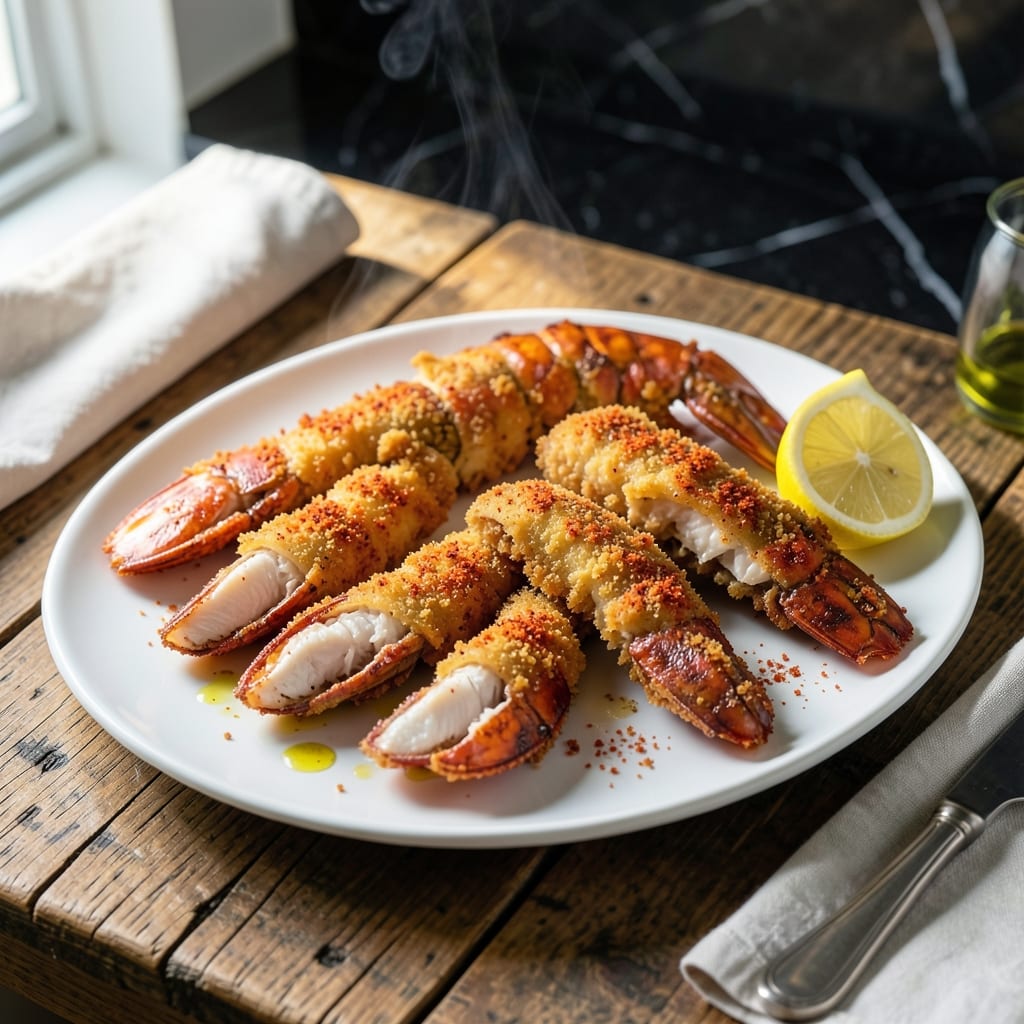
This fried lobster tail delivers restaurant-quality luxury with a crispy exterior and tender, buttery meat inside. I developed this method after testing multiple techniques in my small Boston kitchen, focusing on achieving perfect texture without drying out the delicate lobster.
The secret lies in a light, seasoned coating that creates a golden crust while allowing the natural sweetness of the lobster to shine through. A quick fry at the right temperature ensures the meat stays succulent, and the result is a dish that feels indulgent yet approachable.
What you get is a foolproof way to prepare lobster tail that’s ready in minutes. The contrast between the crispy coating and the tender lobster meat makes every bite unforgettable. Serve with lemon wedges and drawn butter for the full experience.
Perfect for special occasions or when you want to treat yourself to something extraordinary. Here’s how to make it.
Ingredients for Fried Lobster Tail Recipe Video
Luxury ingredients for a restaurant-worthy dish at home. Simple, fresh, and totally indulgent.
| Ingredient | Amount | Notes |
|---|---|---|
| Lobster Tails 🦞 | 4 whole | Fresh or thawed, 6-8 oz each |
| All-Purpose Flour 🌾 | 1 cup | For light, crispy coating |
| Cornstarch 🌾 | ½ cup | For extra crispiness |
| Old Bay Seasoning 🌶️ | 1 tbsp | Classic seafood seasoning |
| Paprika 🌶️ | 1 tsp | Sweet or smoked variety |
| Garlic Powder 🧄 | 1 tsp | Not garlic salt |
| Salt 🧂 | 1 tsp | Sea salt or kosher |
| Black Pepper 🌶️ | ½ tsp | Freshly ground preferred |
| Large Eggs 🥚 | 2 whole | Beaten for egg wash |
| Butter 🧈 | ½ cup | Unsalted, melted for dipping |
| Vegetable Oil 🫒 | 4 cups | For deep frying |
| Lemon 🍋 | 1 whole | Cut into wedges for serving |
| Fresh Parsley 🌿 | ¼ cup | Chopped, for garnish |
[recipe_ingredient_scaler]
Lobster tails are the star here. Fresh from a trusted seafood market is ideal, but frozen (thawed overnight) works great—just look for tails that are bright, not dull or discolored. I grab mine from Whole Foods or the fish counter at Market Basket in Boston. Size matters: 6-8 oz tails cook evenly without drying out. If you can only find larger tails, adjust the frying time slightly (the meat will still be tender).
No Old Bay? Mix 1 tsp paprika + 1/2 tsp each cayenne, black pepper, and celery salt. Cornstarch sub? Arrowroot powder works the same for crispiness. Egg wash can be buttermilk or beer for extra tang. For the butter, ghee or clarified butter adds richness without burning. Skip the parsley if you must, but fresh herbs really brighten up the dish.
Fry in small batches so the oil stays hot. Leftover lobster keeps in the fridge for 1-2 days, but honestly, it’s best eaten fresh. To reheat, warm in a 350°F oven for 5-10 minutes. The coating might soften but will still taste amazing. Don’t skimp on the drawn butter—it’s essential for that luxurious finish.
Why You’ll Love This Recipe
- One Pot Wonder: I just need a bowl for the flour-cornstarch mix, a pan, and 10 minutes—no fancy setup.
- That Old Bay Kick: The seasoning plus paprika gives the lobster a smoky, spicy crust that’s ridiculously good.
- Impress Without Stress: I serve this for date night or Sunday supper and look like a pro with zero fuss.
- Leftovers? Rarely: Honestly, between my husband and me, the plate’s clean before it hits the table.
Step-by-Step Instructions for Fried Lobster Tail
Here’s how to turn those lobster tails into golden, crispy perfection with a buttery finish.
Step 1: Prep the Lobster Tails
If using frozen lobster tails, thaw them completely in the refrigerator overnight. Pat each of the 4 whole Lobster Tails dry with paper towels—any moisture will cause the coating to slip off. Using kitchen shears, cut through the top shell lengthwise, stopping at the base of the tail.
Gently pull the shell apart and lift out the meat, keeping it attached at the base. Place the meat on top of the shell. This butterflying technique ensures even cooking and prevents curling. Lightly score the top of the meat in a crosshatch pattern to help it cook evenly and absorb flavors.
Step 2: Create the Crispy Coating
In a shallow bowl, whisk together the 1 cup All-Purpose Flour, 0.5 cup Cornstarch, 1 tbsp Old Bay Seasoning, 1 tsp Paprika, 1 tsp Garlic Powder, 1 tsp Salt, and 0.5 tsp Black Pepper until evenly combined. The cornstarch is key here—it gives that extra crunch you’re after.
In another bowl, beat the 2 whole Large Eggs with a fork until well blended. Dip each lobster tail first into the egg wash, letting any excess drip off, then press it into the flour mixture. Coat all sides thoroughly, pressing gently so the seasoning adheres. Shake off any excess flour for a light, even coating.
Step 3: Fry to Golden Perfection
Heat the 4 cups Vegetable Oil in a large, deep skillet or Dutch oven over medium-high heat until it reaches 350-375°F. Use a deep-fry thermometer for accuracy—this temperature range ensures a crispy exterior without overcooking the delicate meat inside.
Carefully lower the coated lobster tails into the hot oil, a couple at a time to avoid crowding the pan. Fry for 3-4 minutes per side until the coating turns golden brown and the lobster meat is opaque and cooked through. The internal temperature should read 140°F when done.
Step 4: Finish and Serve
Transfer the fried lobster tails to a paper towel-lined plate to drain any excess oil. Melt the 0.5 cup Butter in a small bowl and serve it alongside for dipping. The rich, melted butter complements the crispy coating and tender lobster perfectly.
Garnish with the 0.25 cup Fresh Parsley, finely chopped, and serve immediately with wedges from the 1 whole Lemon. The brightness of the lemon cuts through the richness, balancing each bite beautifully. Serve hot for the best texture and flavor.
Pro Tips For Making Fried Lobster Tail Recipe Video
- Dry the Tails: Pat the lobster tails completely dry with paper towels before dredging—I learned this the hard way after my first batch steamed instead of fried.
- Hot Oil Only: Make sure your oil hits 375°F before adding the tails, or you’ll end up with greasy, soggy breading instead of that crisp golden crust.
- Double Dredge: Toss the tails in flour first, then cornstarch mixed with Old Bay and paprika for extra crunch—skip the egg wash, it just makes a gummy mess.
- Rest Before Serving: Give the fried tails 2-3 minutes on a wire rack so the coating sets and doesn’t slide off when you cut into it—yes, even if you’re starving.
Regional Styles of This Dish
New England Classic
In Boston, we keep it simple with a light cornmeal and flour dredge for extra crunch. I learned this from a fisherman at the Boston Fish Pier—just swap ½ cup flour for ½ cup cornmeal in the coating. The texture is incredible. 💪
Southern Style
Down South, they love a spicy kick. Add 1 tsp cayenne and 1 tsp Cajun seasoning to the flour mix. I tested this in my tiny kitchen and the heat balances the sweet lobster perfectly. Serve with remoulade for dipping.
Asian Fusion
For an umami twist, replace Old Bay with 1 tbsp soy sauce powder and 1 tsp ginger powder. The savory depth pairs beautifully with the lobster. I use Kikkoman soy sauce powder for consistency.
Mediterranean Touch
Add 1 tsp dried oregano and ½ tsp lemon zest to the coating. The bright, herby notes transport you to a Greek island. I love this version with a tzatziki dipping sauce instead of butter.
Spicy Buffalo
Toss the fried tails in ¼ cup Buffalo sauce after frying. The tangy heat is a game-changer. I use Frank’s RedHot for that classic Buffalo flavor. Serve with blue cheese dressing. 🔥
Gluten-Free Option
Swap the all-purpose flour for 1 cup gluten-free flour blend. I tested King Arthur’s with great results. The texture is just as crispy, and no one will know the difference.
Nutrition Facts
Frequently Asked Questions
Can I use frozen lobster tails?
Yes, but thaw them overnight in the fridge first. Pat them completely dry before coating to ensure the crispy layer sticks.
What oil works best for frying?
Use vegetable oil or peanut oil for the neutral flavor and high smoke point. Avoid olive oil—it can burn at frying temps.
How do I know when it’s done?
The coating turns golden brown and the meat reaches 140°F internally. Look for opaque, firm meat that flakes easily.
Why did my coating fall off?
Likely the tails weren’t dry enough before dredging. Press the coating firmly onto the meat and let it rest 5 minutes before frying.

Trained in classic French technique but raised on slow-cooked ribs and spicy rubs, she blends culinary skill with smoke and soul.
- Recipe For Leftover Fried Fish: Crunchy Leftovers Transformed - October 3, 2026
- Recipe for Crock Pot Swiss Steak: Slow-Cooked Beef With Mushroom Gravy - October 3, 2026
- Recipe for Kabsa Rice: Spiced Middle Eastern Feast in One Pot - October 3, 2026