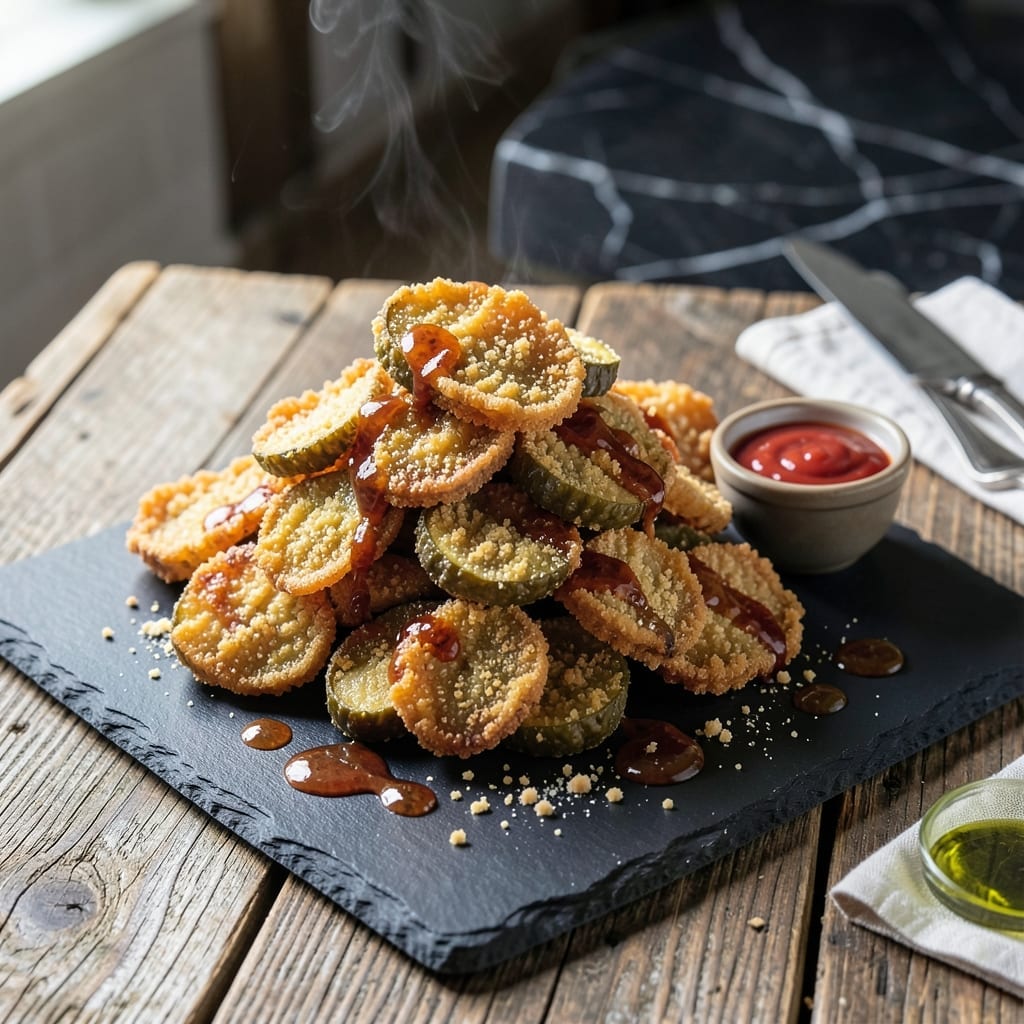
This almond flour coating creates a crispy exterior that rivals traditional breading methods. I developed this approach after testing multiple alternatives to find the best texture without sacrificing flavor.
The almond flour forms a golden crust that stays crunchy even after frying. Each bite delivers the tangy pickle perfectly encased in a nutty, savory layer that holds up beautifully.
No special equipment is required—just a bowl, a pan, and 15 minutes of your time. The process is straightforward yet delivers results that will impress anyone at your table.
These pickles emerge hot and crunchy, with a satisfying contrast between the coating and the briny center. Serve immediately for the best experience.
Ingredients for Fried Pickle Recipe Without Breadcrumbs
Almond flour and a few spices create that perfect crunchy coating for these tangy pickles.
| Ingredient | Amount | Notes |
|---|---|---|
| Dill Pickle Chips 🥒 | 24 pieces | Drained and patted dry thoroughly |
| Almond Flour 🌰 | 2 cups | Fine, blanched variety preferred |
| Large Eggs 🥚 | 2 whole | Beaten for binding coating |
| Hot Sauce 🌶️ | 2 tbsp | Optional for tangy kick |
| Garlic Powder 🧄 | 1 tsp | Enhances savory flavor profile |
| Onion Powder 🧅 | 1 tsp | Complements the garlic perfectly |
| Paprika 🌶️ | 1 tsp | Smoked or sweet for color |
| Salt 🧂 | ½ tsp | Fine sea salt recommended |
| Black Pepper 🌶️ | ½ tsp | Freshly ground preferred |
| Vegetable Oil 🫒 | 2 cups | For frying, high smoke point |
| All-Purpose Flour 🌾 | ¼ cup | Optional for extra crispiness |
[recipe_ingredient_scaler]
The almond flour is key here. Bob’s Red Mill or King Arthur brands work beautifully—look for fine, blanched varieties. I grab mine from Whole Foods or Trader Joe’s when I’m restocking. The pickles should be the sandwich-style chips (not whole), and Vlasic or Claussen have the best crunch. Drain them well—wet pickles make the coating slide right off (and nobody wants that).
No almond flour? Crushed pork rinds at one-to-one ratio give great crunch (though not vegetarian). Short on spices? Cajun seasoning at half the amount works in a pinch. The eggs can be swapped for aquafaba or buttermilk if you need a binder change. For extra crisp, add that optional all-purpose flour—it’s worth the extra minute.
Best eaten fresh and hot—crunch fades fast. Leftovers keep in the fridge for 2-3 days, but reheat in a toaster oven or air fryer to revive. The almond flour itself? Store in the freezer for up to 6 months to keep it fresh and prevent rancidity.
Why You’ll Love This Recipe
- One-Bowl Wonder: I just toss almond flour, eggs, and spices in a single bowl—no breadcrumbs, no extra dishes.
- Tangy Spicy Crunch: The hot sauce in the batter pairs with the briny pickles for a kick that’s honestly addictive.
- Party in Minutes: I’ve served these at game day and weeknight dinners alike. They disappear fast.
- Budget Stretcher: Almond flour is cheaper than breadcrumbs here, and a jar of pickles goes a long way.
Step-by-Step Instructions for Fried Pickles Without Breadcrumbs
Here’s the method I developed for achieving that perfect crunch without traditional breading.
Step 1: Prepare and Season the Pickle Chips
Start by thoroughly draining the 24 pieces Dill Pickle Chips and patting them completely dry with paper towels. Any moisture will prevent the coating from adhering properly and can cause splattering during frying. I like to lay them out on a clean kitchen towel to absorb every last drop.
This drying step is crucial—it ensures the almond flour mixture sticks to each slice rather than sliding off. Real talk: if your pickles feel damp, give them another pat. The difference between a crispy bite and a soggy one often comes down to this simple preparation.
Step 2: Create the Almond Flour Coating Mixture
In a shallow bowl, combine the 2 cups Almond Flour, 1 tsp Garlic Powder, 1 tsp Onion Powder, 1 tsp Paprika, 0.5 tsp Salt, and 0.5 tsp Black Pepper. Whisk until evenly distributed. The almond flour provides that perfect crispy texture we’re after, while the spices add depth to every bite.
For extra crispiness, you can add the 0.25 cup All-Purpose Flour to the mixture. I’ve found this optional addition creates an even more robust crust that holds up beautifully to frying. The fine, blanched almond flour works best here, as it creates a smoother, more uniform coating.
Step 3: Set Up the Egg Wash Station
In another shallow bowl, beat the 2 whole Large Eggs until well combined. For a tangy kick, stir in the 2 tbsp Hot Sauce at this point. The egg wash acts as the glue that helps the almond flour coating adhere to the pickles, while the hot sauce adds a subtle spicy note that complements the dill perfectly.
I like to set up my workstation with the pickles on one side, the egg wash in the middle, and the almond flour mixture on the other. This assembly line approach makes the coating process quick and efficient. Make sure your egg wash is well beaten—this ensures even coverage without thick clumps.
Step 4: Coat and Fry the Pickles to Golden Perfection
Heat the 2 cups Vegetable Oil in a deep skillet or Dutch oven over medium-high heat until it reaches 350-375°F. Use a thermometer for accuracy—this temperature range is ideal for achieving that golden brown crust without burning the almond flour.
Working in batches to avoid crowding, dip each pickle chip first in the egg wash, letting any excess drip off, then coat it thoroughly in the almond flour mixture. Press gently to ensure the coating adheres completely. Fry for 2-3 minutes per side until golden brown and crispy. The pickles will float when they’re ready to flip.
Don’t rush this step—you want that deep golden color that signals the coating has crisped properly. Use a slotted spoon to transfer the fried pickles to a paper towel-lined plate to drain any excess oil. The contrast between the crispy exterior and the tangy pickle inside is what makes this dish so satisfying.
Pro Tips For Making Fried Pickle Recipe Without Breadcrumbs
- Pat Pickles Dry: Blot the pickle chips with a paper towel before dredging—almond flour sticks better to dry surfaces, and you’ll get a crispier coating.
- Heat the Oil First: Get your oil to 350°F before adding the pickles. I learned this the hard way—cold oil makes them greasy instead of golden and crisp.
- Skip the Overcrowding: Fry in small batches so the oil temperature doesn’t drop. Crowding the pan turns your pickles soggy, and nobody wants that.
- Add Hot Sauce Early: Mix the hot sauce into the egg wash before dipping the pickles. Sounds weird, but it works: the flavor clings better than if you just drizzle it on after.
Essential Equipment for This Dish
Deep Fry Setup
I use a 5-quart Dutch oven for frying—it provides enough depth for safe submerging while maintaining steady oil temperature. A candy thermometer clipped to the side is essential for monitoring the 350-375°F range. The Lodge Enameled Dutch Oven is my go-to for even heat distribution.
Oil Choices
Vegetable oil is my standard for its high smoke point and neutral flavor. For a healthier option, avocado oil works beautifully at these temperatures. Avoid olive oil—it burns at these temps. Always use enough oil to submerge pickles completely, about 2-3 inches deep.
Draining Station
Set up a wire rack over a baking sheet lined with paper towels. This allows air circulation on all sides, keeping your pickles crispy rather than soggy. I like the OXO Good Grips cooling rack for its sturdy construction. The rack prevents the coating from steaming as it cools.
Safety Essentials
A splatter screen is non-negotiable—almond flour can create fine particles that pop in hot oil. Keep a fire extinguisher rated for grease fires nearby, just in case. Never leave hot oil unattended, and use tongs to handle pickles to avoid burns. 🔥
Coating Prep Tools
Use shallow bowls (not deep) for your egg wash and almond flour mixture—this makes dipping easier. I prefer stainless steel mixing bowls from Cuisinart for their durability. A fork works better than a whisk for beating eggs to the right consistency.
Testing Oil Temperature
Drop a pinch of almond flour into the oil—if it sizzles immediately and floats, you’re ready. If it sinks or bubbles slowly, wait another 2-3 minutes. Maintaining proper temperature is key to preventing greasy, undercooked results. Invest in that thermometer—it’s worth every penny.
Nutrition Facts
Frequently Asked Questions
What can I use instead of almond flour?
Crushed pork rinds work great for a crispy texture, though they’re not vegetarian. Cornmeal or crushed nuts also create a good crust. Each alternative brings a slightly different flavor profile.
Why do my pickles turn out soggy?
This usually happens if the pickles weren’t dried thoroughly before coating. Excess moisture prevents the coating from crisping. Also, ensure your oil is at 350-375°F before frying.
Can I bake these instead of frying?
Yes! Place coated pickles on a rack over a baking sheet. Bake at 400°F for 10-12 minutes, flipping halfway. They won’t be as crispy as fried but still delicious.
How do I keep them crispy longer?
Drain on a wire rack, not paper towels, to prevent steam buildup. Serve immediately for the best texture. Reheat in an air fryer at 375°F for 3-4 minutes if needed.

Trained in classic French technique but raised on slow-cooked ribs and spicy rubs, she blends culinary skill with smoke and soul.
- Recipe for Boneless Pork Chops in Cast Iron Skillet: Sear and Baste to Juicy Perfection - October 3, 2026
- Recipe for Boneless Cross Rib Roast: Slow-Roasted Beef with Herb Crust - October 3, 2026
- Hamburgers in Sauce Recipe Crock Pot: Slow-Cooked Savory Delight - October 3, 2026