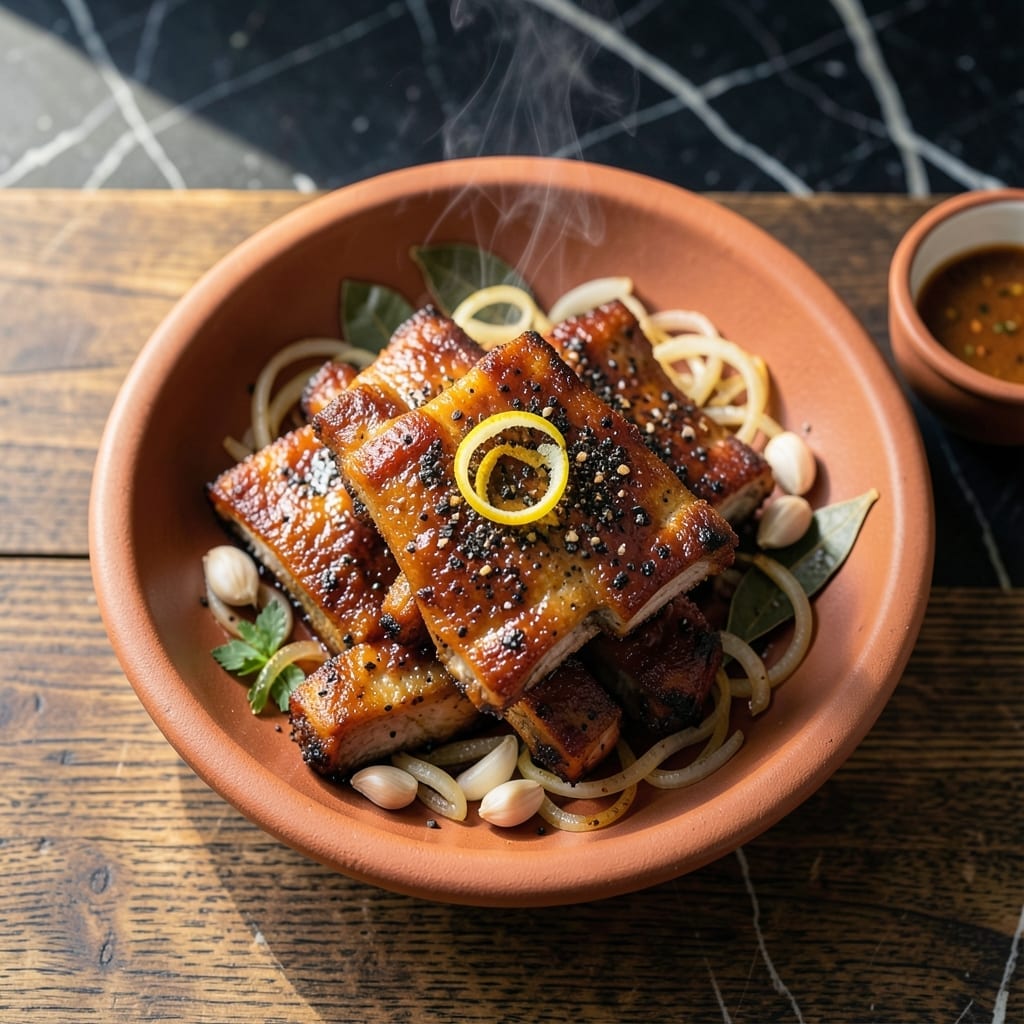
This Filipino-style fried pork ribs recipe delivers the double-fried crispness that makes each bite irresistible. The first fry renders the fat and starts the cooking process, while the second creates that signature shatteringly crisp exterior.
What sets this apart is the calamansi glaze—tangy, slightly sweet, and distinctly Filipino. I tested this method in my small Boston kitchen until I achieved the ideal balance between crunch and tenderness. The ribs emerge golden and crispy, with meat so tender it nearly falls off the bone.
The calamansi adds a bright citrus note that cuts through the richness of the pork. Serve with steamed rice to soak up every drop of flavor. This dish brings authentic Filipino taste to your home kitchen.
Perfect for family dinners or special occasions when you want to impress. Here’s how to make it right.
Ingredients for Fried Pork Ribs Recipe Filipino Style
Double-fried ribs meet bright calamansi glaze for that authentic Filipino crunch and tang.
| Ingredient | Amount | Notes |
|---|---|---|
| Pork Ribs 🥩 | 2 lb | Baby back or spare ribs, cut into individual pieces |
| Calamansi Juice 🍊 | ½ cup | Freshly squeezed or bottled |
| Soy Sauce 🫒 | ¼ cup | All-purpose or light variety |
| Brown Sugar 🍚 | 3 tbsp | Light or dark, packed |
| Garlic Cloves 🧄 | 6 cloves | Minced or crushed |
| Vegetable Oil 🫒 | 4 cups | For deep frying |
| Cornstarch 🌾 | ½ cup | For coating ribs |
| Salt 🧂 | 1 tsp | Kosher or sea salt |
| Black Pepper 🌶️ | 1 tsp | Freshly ground preferred |
| Bay Leaves 🍃 | 2 whole | For marinade flavor |
| Onion 🧅 | 1 whole | Medium, sliced for marinade |
| Rice Vinegar 🍯 | 2 tbsp | For glaze tang |
| Honey 🍯 | 2 tbsp | For glaze sweetness |
| Ginger 🌿 | 1 tbsp | Fresh, grated |
[recipe_ingredient_scaler]
The ribs are everything here. Baby back or spare ribs work best—ask your butcher to cut them into individual pieces (saves you the hassle). I grab mine from Whole Foods or the local Asian market when I want extra meaty cuts. Look for ribs with good marbling; that fat renders down and keeps the meat juicy. The calamansi juice is non-negotiable for that authentic Filipino zing (Asian markets carry it, or order online).
No calamansi? Regular lime juice at half the amount gets you close, but add a splash of orange juice to mimic the sweetness. Out of soy sauce? Fish sauce plus a pinch of sugar works in a pinch (but skip if you’re vegetarian). For the glaze, brown sugar can be swapped for coconut sugar—same amount, slightly deeper flavor. If you’re avoiding deep frying, air fry at 400°F (but the texture won’t be quite the same).
Marinate the ribs overnight for maximum flavor. Leftovers keep in the fridge for 3-4 days—reheat in the oven to keep them crispy. The glaze can be made ahead and stored in the fridge for 1 week. Trust me, this dish tastes even better the next day.
Why You’ll Love This Recipe
- One Pan Magic: I toss the ribs in calamansi, soy, and brown sugar, then fry—no fancy steps, just big flavor with minimal cleanup.
- Sweet-Savory Bomb: The brown sugar caramelizes with the soy and garlic, creating that sticky, finger-licking glaze I can’t resist.
- Crowd Pleaser: I serve this at family gatherings, and honestly, even the picky eaters go back for seconds.
- Budget Win: Pork ribs stretch far, and the affordable ingredients mean I can make this without breaking the bank.
Step-by-Step Instructions for Filipino-Style Fried Pork Ribs
Here’s how I achieve that signature double-fried crispness with a tangy calamansi kick.
Step 1: Marinate the Pork Ribs for Maximum Flavor
In a large bowl, combine the 2 lb Pork Ribs with 0.5 cup Calamansi Juice, 0.25 cup Soy Sauce, 3 tbsp Brown Sugar, 6 cloves Garlic Cloves, 1 tsp Salt, 1 tsp Black Pepper, 2 whole Bay Leaves, 1 whole Onion, and 1 tbsp Ginger.
Mix everything well, ensuring the pork ribs are fully coated. Cover and refrigerate for at least 2 hours or overnight for deeper flavor penetration. This marinating step is crucial for that authentic Filipino taste profile.
Step 2: Coat and First Fry for Tender Interior
Drain the ribs from the marinade (reserve the marinade for later) and pat them dry with paper towels. Place the 0.5 cup Cornstarch in a shallow dish and dredge each rib piece thoroughly, pressing gently to ensure an even coating.
Heat 4 cups Vegetable Oil in a deep pot to 325°F. Fry the ribs in batches for 4-5 minutes until they turn a light golden color. This first fry cooks the meat through while keeping it tender. Drain on a wire rack to maintain crispness.
Step 3: Prepare the Glaze and Second Fry for Crispiness
While the ribs cool, combine the reserved marinade with 2 tbsp Rice Vinegar and 2 tbsp Honey in a small saucepan. Simmer over medium heat for 5-7 minutes until it reduces to a syrupy consistency. This creates the sticky, tangy glaze that defines this dish.
Increase the oil temperature to 375°F. Fry the ribs again for 2-3 minutes until they’re deep golden brown and ultra crispy. This second fry at higher heat achieves that coveted crunch while the glaze adds the perfect finishing touch.
Step 4: Toss and Serve Immediately
Drain the ribs on fresh paper towels after the second fry. While still hot, toss them in the prepared glaze until evenly coated. The heat helps the glaze adhere beautifully to the crispy exterior.
Serve immediately while the ribs are at their crispiest. The contrast of the crunchy coating with the tender, flavorful meat and the tangy-sweet glaze is what makes this Filipino-style dish so irresistible. Best enjoyed with steamed rice to soak up all the delicious flavors.
Pro Tips For Making Fried Pork Ribs Recipe Filipino Style
- Marinate Overnight: I learned this the hard way—soaking the ribs in calamansi, soy sauce, and crushed garlic for at least 4 hours (or overnight) lets the flavors sink deep. Anything less and the taste just sits on the surface.
- Pat Them Dry: After marinating, blot the ribs with a paper towel before frying. Sounds tedious, but it guarantees a crispy crust instead of steamed meat.
- Skip the Overcrowding: Fry in batches with space between each piece—about 2-3 ribs at a time in a standard pan. Crowding drops the oil temp fast, and you’ll end up with soggy, greasy ribs.
- Double Fry for Crisp: First fry at medium heat to cook through, then crank it up high for the last 2 minutes to get that golden, crackling finish. My grandmother swore by this, and she was right.
Troubleshooting Great fried pork ribs recipe filipino style
Oil Temperature Issues
If your ribs absorb too much oil, your oil likely wasn’t hot enough. Use a candy thermometer to maintain 325°F for the first fry and 375°F for the second. I learned this the hard way in my tiny Boston kitchen—greasy ribs are no one’s idea of crispy. 🌡️
Soggy Coating Problems
Sogginess often happens when ribs steam after frying. Always drain on a wire rack, never paper towels, to allow air circulation. Also, don’t crowd the pot—fry in batches to maintain oil temperature and prevent steam buildup.
Glaze Too Thin
If your calamansi glaze is runny, simmer it longer. The ideal consistency should coat the back of a spoon. I add an extra 1 tsp cornstarch slurry (mixed with water) if it’s still too thin after 7 minutes of reduction.
Uneven Cooking
Smaller rib pieces cook faster than larger ones. Sort your ribs by size before frying to ensure even cooking. The meatier spare ribs may need an extra 30-60 seconds in the first fry to cook through completely.
Marinade Overpowering
If the soy-calamansi flavor is too strong, reduce marinating time to 2 hours instead of overnight. I also recommend adding 1 tbsp honey to the marinade to balance the acidity and saltiness.
Losing the Crisp
To keep ribs crispy for serving, fry the second batch just before eating. If you must hold them, place on a rack in a 200°F oven for up to 15 minutes. Any longer and they’ll lose that signature crunch we worked so hard to achieve.
Nutrition Facts
Frequently Asked Questions
Can I use regular limes instead of calamansi?
Yes, substitute 1/4 cup lime juice plus 1 tbsp orange juice for the calamansi. The combo mimics the unique sweet-tart flavor. I tested this swap in my Boston kitchen with great results.
Why double-fry the ribs?
The first fry at 325°F cooks the meat through, while the second at 375°F creates the crispy exterior. This two-step method ensures tender inside and crunchy outside. Skipping either step affects texture.
How do I keep them crispy for a party?
Fry the second batch just before serving. If needed, hold in a 200°F oven on a wire rack for up to 15 minutes. Any longer and they’ll lose that perfect crunch.
Can I bake instead of frying?
For a lighter version, bake at 400°F for 25-30 minutes, flipping halfway. The texture won’t be as crispy, but you’ll still get great flavor. Use a wire rack for air circulation.

Trained in classic French technique but raised on slow-cooked ribs and spicy rubs, she blends culinary skill with smoke and soul.
- Recipe for Boneless Pork Chops in Cast Iron Skillet: Sear and Baste to Juicy Perfection - October 3, 2026
- Recipe for Boneless Cross Rib Roast: Slow-Roasted Beef with Herb Crust - October 3, 2026
- Hamburgers in Sauce Recipe Crock Pot: Slow-Cooked Savory Delight - October 3, 2026