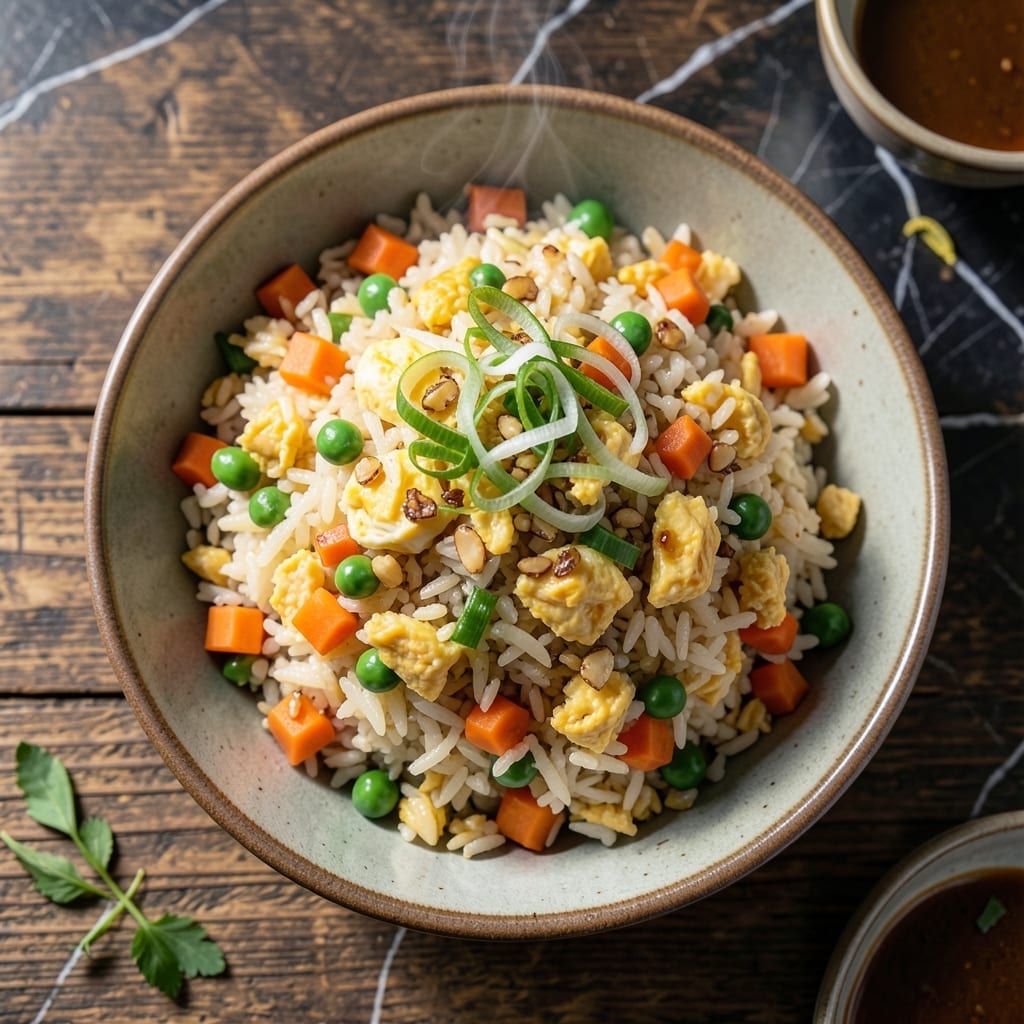
This fried rice delivers bold flavor with minimal effort, using rice vinegar to add that perfect tangy brightness. I developed this method after countless takeout orders, determined to recreate that restaurant-quality taste at home.
The secret lies in high heat and proper prep. Day-old rice prevents mushiness, while rice vinegar cuts through the richness with its clean acidity. Every bite offers a balance of savory, sweet, and tangy notes.
What you get is a dish with distinct wok-hei aroma, tender vegetables, and perfectly seasoned grains. The vinegar doesn’t overpower—it enhances all the other flavors in the pan.
Ready in 20 minutes, this works as a main or side. Here’s how to make it right every time.
Ingredients for Fried Rice Recipe Rice Vinegar
Day-old rice, fresh veggies, and a splash of tangy vinegar make this dish sing.
| Ingredient | Amount | Notes |
|---|---|---|
| Cooked White Rice 🍚 | 4 cups | Day-old, chilled preferred |
| Large Eggs 🥚 | 3 whole | Beaten for scrambling |
| Carrots 🥕 | ¾ cup | Diced into small cubes |
| Frozen Peas 🌱 | ¾ cup | No need to thaw |
| Green Onions 🧅 | ½ cup | Thinly sliced, whites and greens separated |
| Garlic Cloves 🧄 | 3 cloves | Minced for maximum flavor |
| Rice Vinegar 🍶 | 2 tbsp | Unseasoned variety preferred |
| Soy Sauce 🫙 | 3 tbsp | Low-sodium if preferred |
| Sesame Oil 🫒 | 1 tbsp | Toasted for depth |
| Vegetable Oil 🫒 | 2 tbsp | Neutral flavor, high smoke point |
| Granulated Sugar 🧂 | 1 tsp | Balances the acidity |
| Ground White Pepper 🌶️ | ¼ tsp | Traditional choice for fried rice |
| Salt 🧂 | ½ tsp | Adjust to taste at end |
[recipe_ingredient_scaler]
The rice is everything here. Day-old jasmine or long-grain from the fridge works best—fresh rice turns to mush. I grab mine from Trader Joe’s (their jasmine is perfect). The rice vinegar is non-negotiable for that restaurant tang; Kikkoman or Marukan are easy to find. For the veggies, any mix works, but carrots and peas give that classic texture and color combo.
No rice vinegar? Apple cider vinegar at half the amount gets you close. Short on veggies? Bell peppers or corn work great (just dice ’em small). The soy sauce can be swapped for tamari if you need gluten-free. Want extra protein? Diced chicken or shrimp (cook it first, then set aside) makes this a full meal. The sesame oil adds that final layer—don’t skip it.
Leftovers keep 3-4 days in the fridge and reheat like a dream. Freezes for 3 months too, though the texture softens a bit. I always make extra—it’s even better the next day once everything melds.
Why You’ll Love This Recipe
- One Pan Magic: I just dump everything into the wok—rice, eggs, veggies—and it’s done in 15 minutes flat.
- Tangy Brightness: The rice vinegar gives it this zingy lift that makes the carrots and peas pop.
- Lunchbox Hero: Honestly, it reheats like a dream, so I pack leftovers for work all week.
- Pantry Friendly: Between us, I always have these ingredients on hand, so dinner’s never a stress.
Step-by-Step Instructions for Wok-Tossed Savory Bites With Tangy Zip
Here’s the method I swear by for perfect texture and flavor every time.
Step 1: Prep Ingredients and Scramble Eggs
Start by beating the 3 whole Large Eggs in a bowl with a pinch of the 0.5 tsp Salt. Heat 1 tbsp of the 2 tbsp Vegetable Oil in your wok over high heat until it shimmers.
Pour in the eggs and scramble quickly with a spatula until just set but still slightly soft—about 30-45 seconds. Remove the eggs to a plate and set aside. This prevents overcooking later when you combine everything.
Wipe the wok clean with a paper towel, but don’t wash it—you want those flavorful egg remnants.
Step 2: Stir-Fry Vegetables and Aromatics
Add the remaining 1 tbsp Vegetable Oil to the wok over high heat. Toss in the 0.75 cup Carrots and stir-fry for 2-3 minutes until they start to soften. Add the 0.75 cup Frozen Peas and minced 3 cloves Garlic Cloves, stir-frying for another 1-2 minutes until the garlic is fragrant.
The peas will thaw almost instantly from the heat of the wok. Keep the ingredients moving constantly—this is where that signature wok hei flavor develops.
Step 3: Combine Rice and Seasonings
Add the 4 cups Cooked White Rice to the wok, breaking up any clumps with your spatula. Stir-fry for 2-3 minutes until the rice is hot and slightly toasted. The rice should look dry and separate easily.
Drizzle the 3 tbsp Soy Sauce, 2 tbsp Rice Vinegar, 1 tbsp Sesame Oil, 1 tsp Granulated Sugar, and 0.25 tsp Ground White Pepper over the rice. Toss everything together for 1-2 minutes until evenly coated and the liquid has mostly evaporated.
Step 4: Finish with Eggs and Green Onions
Return the scrambled eggs to the wok and add the 0.5 cup Green Onions. Stir-fry for another 1-2 minutes until everything is heated through. The green onions should stay bright and slightly crisp.
Taste and adjust the seasoning with the remaining 0.5 tsp Salt if needed. The rice should have a balanced tangy-savory flavor with a slight sheen from the oils. Serve immediately while hot. The texture should be slightly crispy in spots with tender, flavorful bites throughout.
Pro Tips For Making Fried Rice Recipe Rice Vinegar
- Chill the Rice: Use day-old rice straight from the fridge—it’s drier and fries up fluffier. I learned this the hard way after making mushy fried rice with fresh, warm rice.
- High Heat Only: Crank the heat to medium-high and keep it there. After burning three batches, I finally figured out that lukewarm oil just steams the veggies instead of searing them.
- Scramble Eggs First: Push the scrambled eggs to one side of the pan before adding the rice, so they stay soft and distinct. My grandmother swore by this, and she was right.
- Add Vinegar Last: Drizzle the rice vinegar over the finished dish and toss quickly—it brightens the flavors without making the rice soggy. Sounds weird, but it works.
Troubleshooting Perfect Results
Rice Too Soft
If your rice turns mushy, you likely used fresh rice. Day-old, chilled rice with separated grains is essential for that perfect texture. I learned this the hard way in my tiny Boston kitchen—fresh rice absorbs too much moisture. Spread hot rice on a tray to cool quickly if you’re in a pinch.
Eggs Overcooked
Scrambled eggs should be just set when removed from the wok. If they’re rubbery in the final dish, you cooked them too long initially. 30-45 seconds over high heat is all they need—keep them slightly soft for the second cook.
Weak Vinegar Flavor
If the tang is missing, your rice vinegar might be old or you added it too early. Use Marukan or Kikkoman for reliable flavor. Add the 2 tbsp Rice Vinegar with the soy sauce so it doesn’t evaporate before infusing the dish.
Sticky Rice Clumps
Clumpy rice usually means low heat or insufficient oil. Use 2 tbsp Vegetable Oil and keep the wok at high heat. Break up clumps with your spatula before adding seasonings. A crowded wok also steams instead of frying—work in batches if needed. 💡
Bland Overall Taste
If the flavor falls flat, you might have under-seasoned or used low-sodium soy sauce without adjusting. Taste before serving and add a pinch more salt or 0.25 tsp Ground White Pepper. The 1 tsp Granulated Sugar balances acidity—don’t skip it.
Burnt Garlic
Burnt garlic tastes bitter and ruins the dish. Add minced 3 cloves Garlic Cloves after the carrots soften, not before. Keep everything moving constantly in the wok. If you see brown spots, pull the wok off heat immediately.
Nutrition Facts
Frequently Asked Questions
Can I use a different type of vinegar?
Apple cider vinegar works in a pinch—use only 1 tbsp since it’s stronger. Avoid balsamic or red wine vinegar, as their flavors overpower the dish.
Why is day-old rice important?
Fresh rice holds too much moisture, turning mushy when stir-fried. Day-old rice has dried slightly, giving you those perfect separate grains. Spread hot rice on a tray to speed up cooling if needed.
How do I prevent the garlic from burning?
Add minced garlic after the carrots soften, not at the start. Keep the wok moving constantly over high heat. Burnt garlic tastes bitter and ruins the flavor.
Can I add extra protein?
Cook diced chicken, shrimp, or tofu first, then set aside. Add it back at the end with the eggs. Ensure proteins are fully cooked before combining.

Trained in classic French technique but raised on slow-cooked ribs and spicy rubs, she blends culinary skill with smoke and soul.
- Recipe for Boneless Pork Chops in Cast Iron Skillet: Sear and Baste to Juicy Perfection - October 3, 2026
- Recipe for Boneless Cross Rib Roast: Slow-Roasted Beef with Herb Crust - October 3, 2026
- Hamburgers in Sauce Recipe Crock Pot: Slow-Cooked Savory Delight - October 3, 2026