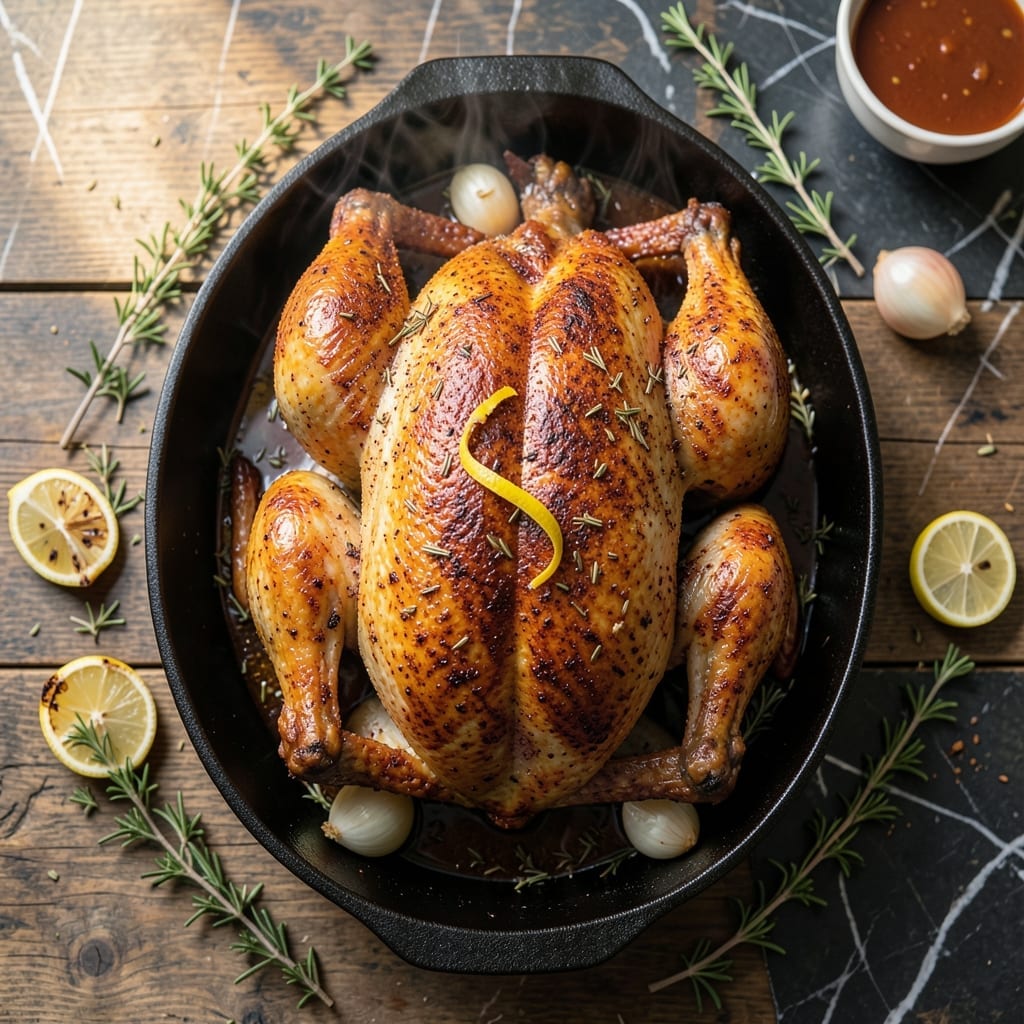
This Cajun-spiced turkey delivers crispy, golden skin and juicy meat with bold, smoky flavors. I developed this method after testing multiple seasoning blends to achieve that perfect balance of heat and depth.
The key is a dry brine with Cajun spices that penetrates deep into the meat before frying. This creates layers of flavor that stay with the turkey through the cooking process, while the hot oil ensures a perfectly crispy exterior.
Safety comes first with deep-frying, so I always use a proper turkey fryer setup and monitor the oil temperature carefully. The result is a showstopping centerpiece that’s worth every minute of preparation.
This technique transforms a simple turkey into a flavor-packed masterpiece that will impress at any gathering. The spice rub forms a beautiful crust that seals in moisture.
Ingredients for Fried Turkey Recipe Cajun
A bold Cajun spice rub and dry brine create layers of flavor beneath perfectly crispy skin.
| Ingredient | Amount | Notes |
|---|---|---|
| Whole Turkey 🦃 | 12 lb | Fresh or thawed, not brined |
| Kosher Salt 🧂 | ½ cup | Diamond Crystal preferred for dry brine |
| Paprika 🌶️ | 3 tbsp | Sweet or smoked variety |
| Garlic Powder 🧄 | 2 tbsp | Freshly ground if possible |
| Onion Powder 🧅 | 2 tbsp | Fine grind preferred |
| Dried Thyme 🍃 | 1 tbsp | Rubbed between fingers to release oils |
| Dried Oregano 🌿 | 1 tbsp | Mediterranean variety preferred |
| Cayenne Pepper 🔥 | 1 ½ tsp | Adjust for desired heat level |
| Ground Black Pepper 🌶️ | 1 tbsp | Freshly ground preferred |
| Dried Rosemary 🌿 | 1 tbsp | Crushed to release flavor |
| Peanut Oil 🫒 | 5 cups | For deep frying, high smoke point |
| Butter 🧈 | ½ cup | Unsalted, melted for basting |
| Cajun Seasoning 🌶️ | 2 tbsp | Store-bought or homemade blend |
[recipe_ingredient_scaler]
The turkey is the centerpiece, so source a fresh, high-quality bird—12 to 14 pounds is ideal for even cooking. For the dry brine, Diamond Crystal kosher salt dissolves best and penetrates evenly. Spices should be fresh—check the dates on your jars. I buy mine in bulk from Penzeys or specialty spice shops for optimal potency. The peanut oil must have a high smoke point; refined peanut oil is the gold standard for frying.
No Cajun seasoning? Make your own with equal parts paprika, garlic powder, and onion powder, plus a pinch of cayenne. Smoked paprika adds depth if you want more complexity. For the oil, vegetable or corn oil can substitute in a pinch, but peanut oil’s flavor is neutral and ideal. If using a smaller turkey, reduce the spice rub proportionally to avoid overpowering the meat.
Store the turkey in the fridge uncovered for 12-24 hours after applying the dry brine to let the skin dry out. Peanut oil can be reused once or twice if filtered and stored properly. Leftover turkey keeps for 4 days refrigerated or can be frozen for up to 3 months.
Why You’ll Love This Recipe
- Minimal Fuss: I just mix the kosher salt, paprika, garlic, and onion powder, rub it on the turkey, and let the fryer do the rest.
- That Cajun Kick: The combo of smoky paprika and punchy garlic powder gives the skin a deep, spicy-savory crust that’s impossible to resist.
- Feeds the Whole Crew: One turkey, one batch of spices, and suddenly I’ve got a showstopping centerpiece for game day or Sunday supper.
- Leftovers for Days: Honestly, the fried turkey tastes even better sliced up in po’ boys or tossed into gumbo the next day.
Step-by-Step Instructions for Spice-Rubbed Fried Turkey
This method delivers perfectly crispy skin with a well-seasoned, juicy interior every time.
Step 1: Dry Brine and Season the Turkey
Pat the 12 lb Whole Turkey completely dry inside and out with paper towels. This step is crucial for achieving maximum crispiness. In a bowl, combine the 0.5 cup Kosher Salt with 3 tbsp Paprika, 2 tbsp Garlic Powder, 2 tbsp Onion Powder, 1 tbsp Dried Thyme, 1 tbsp Dried Oregano, 1.5 tsp Cayenne Pepper, 1 tbsp Ground Black Pepper, and 1 tbsp Dried Rosemary.
Rub this spice mixture evenly all over the turkey, including inside the cavity. I find that working the seasoning under the skin of the breast and thighs ensures deeper flavor penetration. Let the turkey sit uncovered in the refrigerator for 12-24 hours to allow the dry brine to work its magic.
Step 2: Prepare the Frying Setup
Select a heavy pot large enough to accommodate the turkey with 2-3 inches of oil above it. Pour in the 5 cups Peanut Oil and heat to 325°F on a deep-fry thermometer. It’s essential to use peanut oil for its high smoke point and neutral flavor that won’t compete with the Cajun seasoning.
While the oil heats, remove the turkey from the refrigerator and let it sit at room temperature for 30 minutes. This ensures more even cooking. Melt the 0.5 cup Butter and stir in the 2 tbsp Cajun Seasoning – you’ll use this for basting during frying.
Step 3: Fry the Turkey to Golden Perfection
Carefully lower the turkey into the hot oil, breast-side up. Use a turkey fryer basket or sturdy tongs for this step, and work slowly to prevent oil splatter. The oil temperature will drop when you add the turkey – maintain it at 325°F throughout cooking.
Fry the turkey for 3-4 minutes per pound, basting occasionally with the Cajun butter mixture. For a 12 lb turkey, this will take approximately 36-48 minutes. The turkey is done when the internal temperature reaches 165°F in the thickest part of the thigh and the skin is deep golden brown and crisp.
Step 4: Rest and Serve
Carefully remove the turkey from the oil and transfer to a wire rack set over a baking sheet. Let it rest for 20-30 minutes before carving. This resting period allows the juices to redistribute, ensuring moist meat throughout.
The skin should be incredibly crispy with a rich, spicy aroma from the Cajun seasoning. Carve and serve immediately while hot. The combination of the dry brine and frying method guarantees juicy meat with that coveted crispy exterior that makes this preparation so special.
Pro Tips For Making Fried Turkey Recipe Cajun
- Dry the Turkey: Pat the turkey completely dry with paper towels before seasoning—any moisture will steam the skin instead of frying it crisp. I learned this the hard way after pulling out a soggy bird my first attempt.
- Use Peanut Oil: Sounds weird, but it works: peanut oil has a high smoke point and neutral flavor that lets the Cajun spices shine. Vegetable oil works in a pinch, but peanut is the gold standard.
- Check Oil Temp: Keep your oil at a steady 350°F—any lower and you’ll get greasy turkey, any higher and the outside burns before the inside cooks. A candy thermometer clipped to the pot is worth its weight in crispy skin.
- Rest Before Carving: Give the turkey at least 20-30 minutes to rest after frying, tented loosely with foil. This keeps all those juices from running onto the cutting board when you slice into it—your future self will thank you.
Common Mistakes When Making This Recipe
Oil Temperature Errors
I’ve seen too many cooks ruin their turkey by letting the oil temperature dip below 300°F. This causes greasy, soggy skin instead of that perfect crisp. Use a deep-fry thermometer and adjust the heat source frequently to maintain 325°F. 🌡️
Overcrowding the Pot
Your pot must be large enough to submerge the turkey with 2-3 inches of oil above it. Too small a pot leads to dangerous oil overflow when you add the bird. I recommend a 30-quart pot for a 12 lb turkey.
Skipping the Dry Brine
Don’t rush the dry brine step—12-24 hours in the fridge is non-negotiable. This ensures the salt and spices penetrate deeply. Skipping it results in bland meat, no matter how well you season the exterior. I learned this the hard way with my first few attempts.
Improper Thawing
Frying a partially frozen turkey is a recipe for disaster. The bird must be completely thawed to cook evenly. For a 12 lb turkey, allow 24 hours in the fridge for every 4-5 pounds. Never thaw at room temperature.
Neglecting Safety Gear
Hot oil is unforgiving. Wear heat-resistant gloves, long sleeves, and use a turkey fryer kit with a basket. Keep a fire extinguisher rated for grease fires nearby. I always fry outdoors on a level surface, far from structures.
Rushing the Rest
Carving too soon causes all those beautiful juices to end up on your cutting board. Let the turkey rest for at least 20 minutes after frying. This allows the meat to reabsorb its moisture, keeping every bite juicy and flavorful. 💪
Nutrition Facts
Frequently Asked Questions
Can I use a different oil for frying?
Peanut oil is ideal, but vegetable or corn oil can work. Ensure it has a high smoke point above 350°F.
How do I know when the turkey is done?
Use a meat thermometer to check the thickest part of the thigh. It should read 165°F. The skin will be deep golden brown.
Do I need to inject the turkey with seasoning?
The dry brine method infuses flavor deeply. Injection isn’t necessary but can add extra moisture if you prefer.
Can I reuse the oil after frying?
Yes, if filtered and stored properly in an airtight container. Reuse once or twice for best results.

Trained in classic French technique but raised on slow-cooked ribs and spicy rubs, she blends culinary skill with smoke and soul.
- Recipe for Boneless Pork Chops in Cast Iron Skillet: Sear and Baste to Juicy Perfection - October 3, 2026
- Recipe for Boneless Cross Rib Roast: Slow-Roasted Beef with Herb Crust - October 3, 2026
- Hamburgers in Sauce Recipe Crock Pot: Slow-Cooked Savory Delight - October 3, 2026