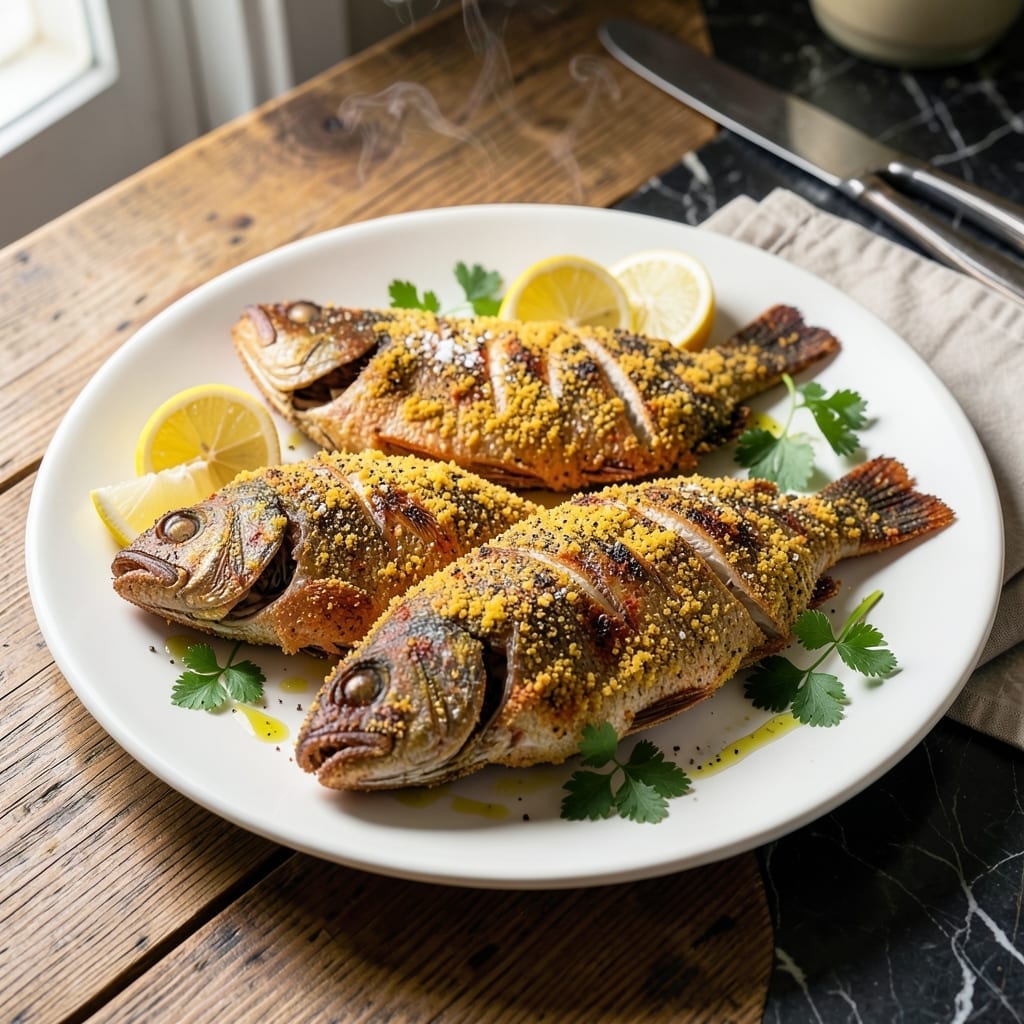
This method delivers crispy skin and moist flesh every time. A proper fry transforms whole catfish into a golden, flaky masterpiece.
Hot oil and a simple cornmeal coating create the perfect crust while sealing in natural juices. Serve immediately for the best texture.
Ingredients for Fried Whole Catfish
Simple ingredients transform whole catfish into that perfect crispy, moist masterpiece every time.
| Ingredient | Amount | Notes |
|---|---|---|
| Whole Catfish 🐟 | 4 whole | Cleaned, gutted, about 1.5 lb each |
| Fine Yellow Cornmeal 🌽 | 2 cups | Stone-ground preferred for texture |
| All-Purpose Flour 🌾 | 1 cup | For initial dusting coat |
| Kosher Salt 🧂 | 2 tbsp | Diamond Crystal brand recommended |
| Freshly Ground Black Pepper 🌶️ | 1 tsp | Coarse grind for best flavor |
| Cayenne Pepper 🔥 | ½ tsp | Adjust to heat preference |
| Garlic Powder 🧄 | 1 tsp | Not garlic salt |
| Onion Powder 🧅 | 1 tsp | Freshly ground preferred |
| Paprika 🌶️ | 1 tbsp | Sweet or smoked variety |
| Buttermilk 🥛 | 1 cup | For soaking fish |
| Vegetable Oil 🫒 | 8 cups | Peanut oil works too |
| Lemon Wedges 🍋 | 4 pieces | For serving and brightness |
[recipe_ingredient_scaler]
The catfish quality is non-negotiable. Farm-raised from reputable suppliers like Catfish Institute certified farms ensures clean, mild flavor. Look for fish with clear eyes, bright red gills, and no fishy odor. The cornmeal should be fine yellow stone-ground—Bob’s Red Mill is widely available and consistent. Buttermilk acts as both tenderizer and adhesive for the coating, so don’t skip it.
No buttermilk? Whole milk with 1 tbsp vinegar works in a pinch. Cornmeal can be swapped with fine polenta at a 1:1 ratio. For extra crunch, add 1/2 cup crushed cornflakes to the coating. The oil must reach 350°F—use a candy thermometer for accuracy. If frying in batches, keep finished fish warm in a 200°F oven.
Fry immediately for best results—coating softens quickly. Leftovers keep 2-3 days refrigerated but lose crispness. Reheat in a 400°F oven for 10-12 minutes to restore some texture. Never microwave fried fish.
Why You’ll Love This Recipe
- One Pan Magic: I just coat the catfish in cornmeal and flour, then fry—no fancy steps, no extra bowls to wash.
- Crispy Perfection: That golden cornmeal crust with a little kick of black pepper? Ridiculously good with every bite.
- Feeds a Crowd: I served this at our last fish fry and everyone went back for seconds—even the picky eaters.
- Budget Winner: Honestly, whole catfish is cheap, and a little cornmeal goes a long way for a filling meal.
Instructions
Master the technique for achieving perfectly crisp skin while keeping the flesh tender and juicy.
Step 1: Prepare the Catfish and Seasoning Blend
Pat the 4 whole Whole Catfish completely dry inside and out with paper towels. This crucial step removes excess moisture that would otherwise prevent the coating from adhering properly and achieving that coveted crispy texture.
In a shallow dish, combine the 2 cups Fine Yellow Cornmeal, 1 cup All-Purpose Flour, 2 tbsp Kosher Salt, 1 tsp Freshly Ground Black Pepper, 0.5 tsp Cayenne Pepper, 1 tsp Garlic Powder, 1 tsp Onion Powder, and 1 tbsp Paprika. Whisk thoroughly to distribute the spices evenly throughout the dry mixture.
Step 2: Create the Buttermilk Coating
Pour the 1 cup Buttermilk into a separate shallow dish. The acidity in the buttermilk not only adds flavor but also helps tenderize the fish while creating a perfect base for the cornmeal coating to cling to.
Dip each catfish into the buttermilk, ensuring it is completely coated on all sides. Allow any excess to drip off for a moment before moving to the seasoning blend. This prevents a gummy, overly thick coating.
Step 3: Dredge and Rest the Catfish
Press each buttermilk-soaked catfish firmly into the cornmeal mixture, turning to coat all surfaces completely. The texture should be evenly covered with a visible crust. Place the dredged fish on a wire rack set over a baking sheet.
Let the coated catfish rest for 10 minutes at room temperature. This resting period allows the coating to set, which helps it adhere better during frying and results in a crisper finish. The rack ensures air circulation, preventing the coating from becoming soggy on the bottom.
Step 4: Fry to Golden Perfection
In a large, deep skillet or Dutch oven, heat the 8 cups Vegetable Oil to 350°F over medium-high heat. Use a deep-fry thermometer to monitor the temperature accurately, as maintaining the correct heat is essential for even cooking and a golden crust.
Carefully lower one or two catfish into the hot oil, depending on the size of your pan. Fry for 6-8 minutes per side until the coating is deep golden brown and crisp. Avoid overcrowding the pan, which would lower the oil temperature and result in greasy fish. Transfer the fried catfish to a paper towel-lined plate to drain excess oil.
Step 5: Serve Immediately with Lemon
Serve the fried catfish hot, with the 4 pieces Lemon Wedges on the side. The acidity from the lemon cuts through the richness of the fried coating and enhances the natural sweetness of the fish.
The skin should be shatteringly crisp, while the flesh inside remains moist and flaky. For best results, enjoy immediately while the coating is at its peak crispness.
Pro Tips For Making Fried Whole Catfish
- Heat the Oil High: Get your oil to 350°F before the catfish hits the pan—I learned this the hard way after too many soggy, oil-logged fillets. A hot start ensures that crust forms fast and locks in moisture.
- Dry the Catfish: Pat the whole catfish completely dry with paper towels before dredging. Sounds tedious, but it’s the only way the cornmeal-flour mix actually sticks and fries up crisp instead of sliding off in sad little clumps.
- Skip the Overcrowding: Fry one catfish at a time, even if it feels slow. Crowding the pan drops the oil temp, and you’ll end up with greasy fish instead of that golden, crackling skin everyone’s after.
- Rest Before Serving: Let the fried catfish drain on a rack for 2-3 minutes after frying. This keeps the crust crisp while the inside finishes cooking—plus, it’s just long enough to grab a beer before digging in.
Pro Cooking Tips for This Recipe
Oil Temperature Control
Maintaining 350°F oil temperature is non-negotiable. I use a candy thermometer clipped to the pan for accuracy. If the oil drops below 325°F, the fish will absorb grease instead of crisping.
Even Coating Trick
After dredging, I place the fish on a wire rack for 10 minutes to set the coating. This prevents soggy spots and ensures even browning. Press firmly into the cornmeal for maximum adhesion.
Frying Technique
Fry 2 fish at a time max in a 12-inch Dutch oven to avoid crowding. Use tongs to gently lower and flip the fish. The coating should sizzle immediately upon hitting the oil.
Crispiness Secret
For extra crunch, I add ½ cup crushed cornflakes to the cornmeal mix. The double starch creates an incredibly crisp shell. Just don’t overcrowd the pan—this is key.
Resting and Serving
Drain on a wire rack, not paper towels, to keep the bottom crisp. Serve within 5 minutes for peak texture. A squeeze of lemon right before eating brightens the rich flavor. 🔥
Oil Choice
I prefer peanut oil for its high smoke point and clean flavor. Vegetable oil works too. Avoid olive oil—its low smoke point will burn at frying temps.
Nutrition Facts
Frequently Asked Questions
What oil works best for frying?
Peanut oil is ideal due to its high smoke point and neutral flavor. Vegetable or canola oil also work well. Avoid olive oil as it burns at frying temperatures.
How do I know when it’s done?
The coating should be deep golden brown and crisp. The internal temperature should reach 145°F when measured at the thickest part. This takes 6-8 minutes per side.
Can I use fillets instead of whole fish?
Yes, but adjust cooking time to 3-4 minutes per side. Whole fish holds moisture better and makes a more impressive presentation. Fillets may dry out faster.
Why did my coating fall off?
This usually happens if the fish wasn’t dried thoroughly before dredging or if the oil temperature was too low. Ensure oil is at 350°F and pat fish completely dry first.

Trained in classic French technique but raised on slow-cooked ribs and spicy rubs, she blends culinary skill with smoke and soul.
- Recipe for Boneless Pork Chops in Cast Iron Skillet: Sear and Baste to Juicy Perfection - October 3, 2026
- Recipe for Boneless Cross Rib Roast: Slow-Roasted Beef with Herb Crust - October 3, 2026
- Hamburgers in Sauce Recipe Crock Pot: Slow-Cooked Savory Delight - October 3, 2026