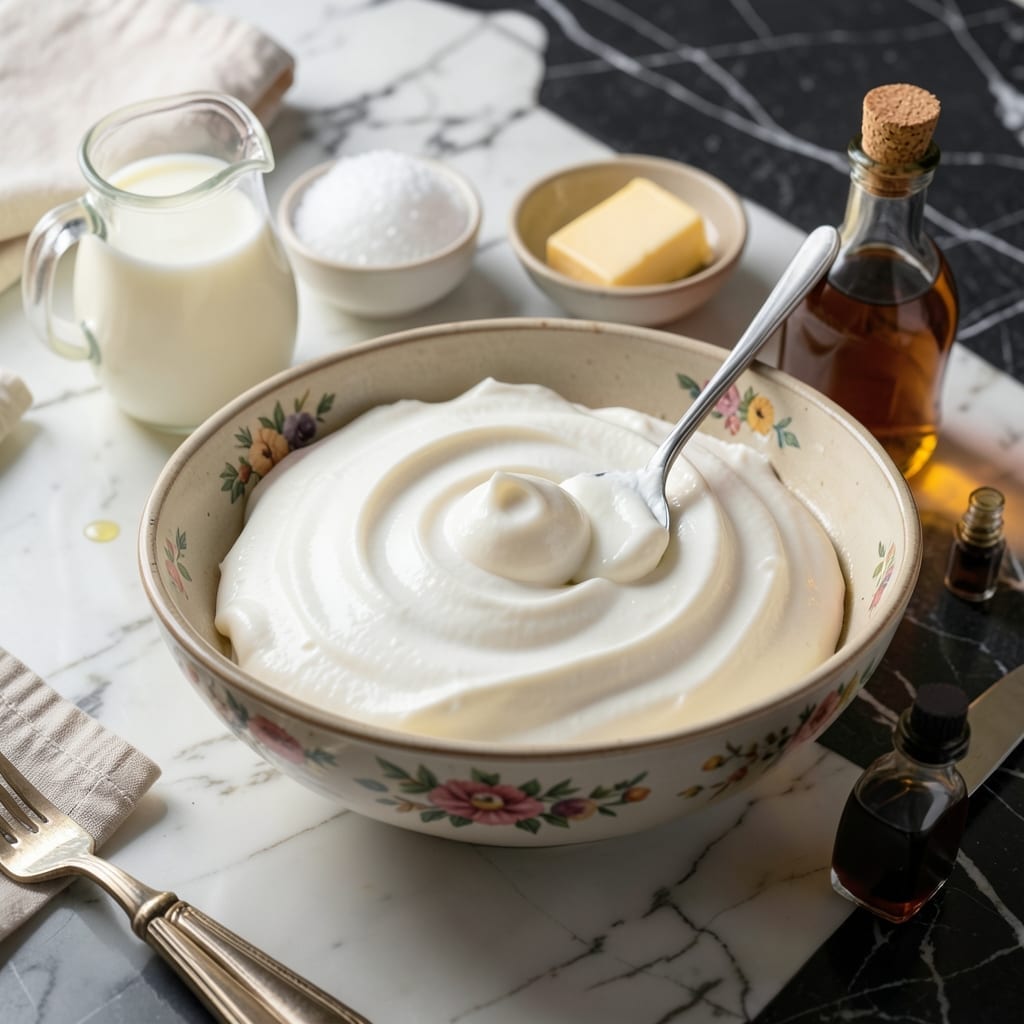
This frosting recipe proves you don’t need powdered sugar to achieve a smooth, spreadable texture. Using granulated sugar and a precise technique, you’ll create a glaze that’s just as velvety and sweet.
Perfect for cakes, cupcakes, or cookies, this method delivers consistent results with simple ingredients. The key is dissolving the sugar completely for a flawless finish every time.
Ingredients for Frosting Recipe Without Powdered Sugar
Eight ingredients transform granulated sugar into a smooth, velvety glaze perfect for any dessert.
| Ingredient | Amount | Notes |
|---|---|---|
| Granulated Sugar 🍚 | 2 cups | Superfine for faster dissolving |
| Whole Milk 🥛 | ½ cup | Room temperature for best results |
| Unsalted Butter 🧈 | ½ cup | Cut into small cubes |
| Vanilla Extract 🌿 | 2 tsp | Pure extract for best flavor |
| Light Corn Syrup 💧 | 2 tbsp | Helps create smooth texture |
| Salt 🧂 | ¼ tsp | Fine sea salt preferred |
| Heavy Cream 🥣 | ¼ cup | Optional for richer texture |
| Almond Extract 🌰 | ¼ tsp | Optional for depth of flavor |
[recipe_ingredient_scaler]
The quality of your sugar matters here. Domino or C&H superfine sugar dissolves most efficiently, but regular granulated works with proper technique. Organic Valley whole milk provides the richest base, though any milk will do. For the butter, Plugrá or Kerrygold unsalted gives superior creaminess without overpowering the vanilla notes.
No corn syrup? Honey or agave can substitute at a 1:1 ratio, though the texture may vary slightly. For a dairy-free version, coconut milk and vegan butter work well. The vanilla extract should be pure, not imitation—the difference is noticeable. If you prefer a different flavor profile, maple syrup at half the amount adds a warm depth.
This glaze keeps 3-4 days in an airtight container at room temperature. For longer storage, refrigerate for up to 1 week. Reheat gently in a double boiler to restore smoothness before using. Avoid freezing as it can cause separation.
Why You’ll Love This Recipe
- No Powder Needed: I love that I can skip the powdered sugar and still get silky-smooth frosting just using granulated sugar and a little corn syrup.
- Buttery Richness: The unsalted butter and whole milk give it that deep, creamy flavor that tastes way better than store-bought.
- Weeknight Friendly: Honestly, it comes together in 10 minutes flat—perfect for when I need to frost cupcakes in a hurry.
- Budget Winner: Granulated sugar is cheaper than powdered, and this recipe stretches to cover a whole layer cake without breaking the bank.
Step-by-Step Instructions for Frosting Without Powdered Sugar
This technique transforms granulated sugar into a silky, spreadable glaze through controlled heating and cooling.
Step 1: Melt and Combine the Base Ingredients
In a medium saucepan, melt the 0.5 cup Unsalted Butter over medium heat until just melted—do not let it brown. Immediately add the 2 cups Granulated Sugar, 0.5 cup Whole Milk, 2 tbsp Light Corn Syrup, and 0.25 tsp Salt, stirring constantly with a whisk.
The sugar will begin to dissolve as the mixture warms. Continue stirring until the mixture reaches a gentle boil. At this stage, you’ll notice the edges of the mixture pulling slightly away from the pan and the texture becoming more uniform.
Step 2: Achieve the Perfect Simmer
Once boiling, reduce the heat to maintain a steady but gentle simmer. Cook without stirring for 3-4 minutes until the mixture reaches 234-238°F on a candy thermometer. This temperature range is crucial—it ensures the sugar fully dissolves while preventing crystallization.
You’ll observe the mixture thickening slightly and developing a glossy sheen. If you don’t have a thermometer, test by dropping a small amount into cold water—it should form a soft ball that flattens slightly when removed.
Step 3: Cool and Incorporate Flavorings
Remove the saucepan from heat and place it on a wire rack to cool for 5 minutes. This cooling period is essential to prevent the extracts from evaporating when added. Stir occasionally to release heat evenly.
After cooling, add the 2 tsp Vanilla Extract and 0.25 tsp Almond Extract, stirring until fully incorporated. For a richer texture, gradually whisk in the 0.25 cup Heavy Cream until smooth. The mixture will lighten slightly in color and become more fluid.
Step 4: Beat to Desired Consistency
Transfer the mixture to a heatproof bowl and let it cool to room temperature, stirring occasionally. Once cooled to about 90°F, use a hand mixer to beat the frosting for 3-5 minutes on medium speed.
You’ll notice the texture transforming from a thin syrup to a thicker, spreadable consistency. The frosting should hold its shape when a spoon is dragged through it but still be smooth and glossy. If it’s too thick, add a teaspoon of warm water; if too thin, continue beating until thickened.
Pro Tips For Making Frosting Recipe Without Powdered Sugar
- Boil to Soft Ball: Cook the sugar-milk-corn syrup mix to 235-240°F on a candy thermometer—I learned this the hard way after ending up with rock-hard frosting.
- Use Room Temp Butter: Take the butter out 30 minutes before starting, or it’ll clump instead of creaming smoothly with the hot syrup.
- Skip the Corn Syrup Swap: Resist replacing light corn syrup with honey or maple; the flavor shifts and the texture gets grainy.
- Add Vanilla Last: Stir in the vanilla only after the frosting cools slightly, or the alcohol will evaporate and leave the flavor flat.
Pro Cooking Tips for This Dish
Precision Temperature Control
Hitting that 234-238°F sweet spot is non-negotiable for dissolving sugar without crystallization. I swear by my ThermoWorks candy thermometer—it’s accurate to 1°F and clips to the pan. If you’re without one, the cold water test works: drop a bit in and look for a soft ball that flattens when removed. 🌡️
Stirring Strategy
Stir constantly while melting the butter and sugar to prevent scorching at the bottom. Once boiling, resist the urge to stir—this can cause sugar crystals to form on the pan sides. Just let it simmer gently until it reaches temperature.
Cooling Technique
Letting the mixture cool for 5 minutes before adding extracts prevents their delicate flavors from evaporating. I set my pan on a wire rack to speed up cooling without shocking the mixture. Stir occasionally to distribute the heat evenly.
Beating for Texture
Use a hand mixer on medium speed for 3-5 minutes once cooled to 90°F. This whips air into the glaze, creating that spreadable consistency. If it’s too thick, add warm water by the teaspoon. Too thin? Keep beating—it will thicken as it cools further.
Equipment Matters
A heavy-bottomed saucepan prevents hot spots that can burn your sugar. I use my All-Clad stainless steel pan for this—it heats evenly and cleans up beautifully. Avoid nonstick for candy-making; the high heat can damage the coating.
Patience Pays Off
Don’t rush the cooling or beating steps. The texture transforms dramatically as it cools, going from syrup to perfect frosting consistency. I’ve learned the hard way that shortcuts here lead to grainy or runny results. 💡
Nutrition Facts
Frequently Asked Questions
Can I use brown sugar instead of granulated?
Yes, but it will add a molasses flavor and darker color. Reduce other liquids by 1-2 tablespoons since brown sugar contains moisture. The texture will be slightly different but still smooth.
Why does my frosting turn grainy?
Graininess usually means the sugar didn’t fully dissolve. Ensure you reach 234-238°F and avoid stirring once boiling. Adding a splash of warm water can sometimes fix it.
How long does this frosting last?
Stored in an airtight container at room temperature, it stays fresh for 3-4 days. For longer storage, refrigerate for up to 1 week and reheat gently before using.

Trained in classic French technique but raised on slow-cooked ribs and spicy rubs, she blends culinary skill with smoke and soul.
- Recipe for Boneless Pork Chops in Cast Iron Skillet: Sear and Baste to Juicy Perfection - October 3, 2026
- Recipe for Boneless Cross Rib Roast: Slow-Roasted Beef with Herb Crust - October 3, 2026
- Hamburgers in Sauce Recipe Crock Pot: Slow-Cooked Savory Delight - October 3, 2026