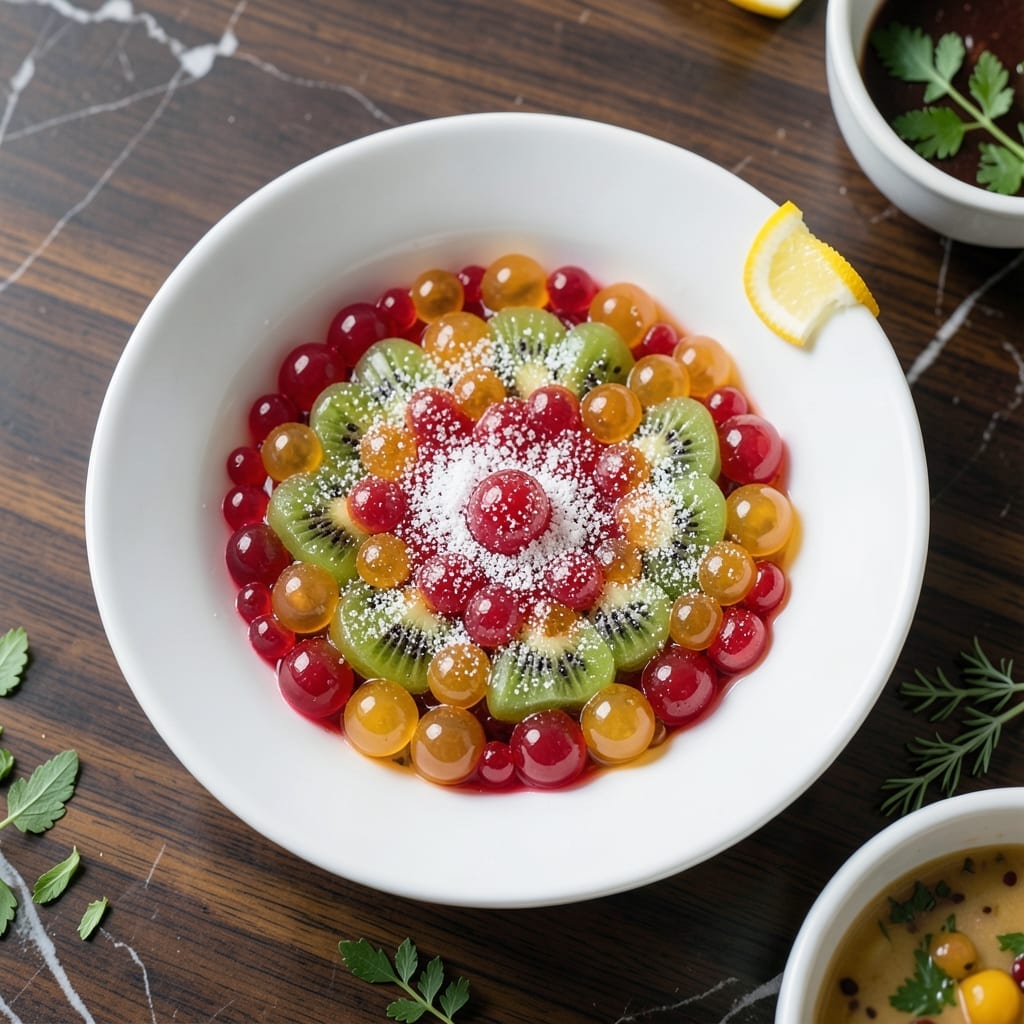
This molecular gastronomy technique brings restaurant-quality innovation to your home kitchen. The process transforms fruit juice into delicate, bouncy spheres that burst with vibrant flavor.
Using sodium alginate and calcium chloride, you’ll create a chemical reaction that forms a thin membrane around each drop of juice. The method requires precision but delivers consistently perfect results every time.
What emerges is a dish that surprises and delights—tiny, glossy orbs that maintain their shape until they touch your tongue. The texture is uniquely satisfying, offering a play between liquid and solid.
Serve these as an elegant dessert garnish or a standalone molecular gastronomy experience. The possibilities are as endless as your imagination.
Ingredients for Fruit Caviar
A few precise ingredients unlock restaurant-quality molecular magic at home with vibrant flavor spheres.
| Ingredient | Amount | Notes |
|---|---|---|
| Fruit Juice 🍹 | 2 cups | Strained, no pulp, room temperature |
| Sodium Alginate ⚗️ | ½ tsp | Food-grade, molecular gastronomy quality |
| Calcium Chloride ⚗️ | 2 cups | Dissolved in water, 0.5% solution |
| Distilled Water 💧 | 4 cups | For calcium bath, cold |
| Granulated Sugar 🍚 | 2 tbsp | Optional, adjust to taste |
| Citric Acid 🍋 | ¼ tsp | For acidity balance in juice |
| Sodium Citrate ⚗️ | ¼ tsp | Optional, for calcium sequestering |
| Vanilla Extract 🌿 | ½ tsp | Pure extract, optional flavoring |
| Agar Agar 🌿 | 0.125 tsp | Optional, for additional stability |
| Food Coloring 🎨 | ½ tsp | Optional, for enhanced visual appeal |
[recipe_ingredient_scaler]
The sodium alginate and calcium chloride are non-negotiable—Modernist Pantry or Molecular Gastronomy Shop are reliable sources. Look for food-grade labels, not industrial stuff. Calcium chloride often comes as a powder; dissolve it fully in distilled water (the chlorine taste disappears). For the juice, freshly squeezed gives the brightest flavor, but high-quality bottled works too (just avoid added calcium).
No calcium chloride? Calcium lactate works at twice the amount. Skip the citric acid if your juice is already tart (lemon, lime, passionfruit). Sodium citrate helps with cloudy juices—AmazingFoodMadeEasy.com sells it. For extra shine, add a drop of soy lecithin. Vanilla or other extracts can flavor neutral juices like apple or pear.
Prepare the calcium bath last—it starts working immediately. Use within 24 hours for best texture. Store finished caviar in the bath in the fridge for up to 3 days. Rinse in plain water before serving to remove excess calcium taste (worth the extra minute).
Why You’ll Love This Recipe
- I’ll be real: leftovers keep for days in the fridge, so I can prep ahead and still have that perfect texture.
- No Fuss Mixing: I just blend fruit juice with sodium alginate and drop it into calcium chloride water—no fancy tools, no stress.
- Burst of Pure Fruit: Honestly, that first pop in your mouth tastes like summer in a bite, with the sugar balancing any tartness.
- Party Starter: Between us, it’s the easiest way to impress guests—adds color and fun to desserts, cocktails, or even salads.
Step-by-Step Instructions for Fruit Caviar
Here’s the method. Straightforward, tested, works every time.
Step 1: Prepare the Calcium Chloride Bath
In a medium bowl, combine the 4 cups Distilled Water with the 2 cups Calcium Chloride solution. Stir until fully dissolved. This creates your setting bath where the magic happens.
The water must be cold—room temperature or below—to ensure the caviar forms properly. I use a clear bowl so I can watch the transformation as the spheres develop. This bath should remain undisturbed until you’re ready to use it.
Step 2: Blend the Fruit Juice with Sodium Alginate
In a blender, combine the 2 cups Fruit Juice with the 0.5 tsp Sodium Alginate, 0.25 tsp Citric Acid, and 2 tbsp Granulated Sugar. Add the 0.5 tsp Vanilla Extract, 0.5 tsp Food Coloring, and 0.125 tsp Agar Agar if using.
Blend on high for 2-3 minutes until the mixture is completely smooth and slightly frothy. You want no visible grains of alginate—they’ll ruin your caviar texture. Let it rest for 10 minutes to allow air bubbles to rise to the surface before use.
Step 3: Form and Set the Caviar Spheres
Fill a clean dropper or small syringe with the fruit juice mixture. Hold it 1-2 inches above the calcium bath surface. Slowly drip the juice into the bath, creating small, uniform droplets.
You’ll see each drop instantly form a sphere and sink to the bottom. Let the spheres set in the bath for 2 minutes—this gives them their characteristic bouncy texture. Don’t stir the bath; let the spheres rest undisturbed during this critical setting period.
Step 4: Rinse and Finish the Caviar
Using a fine mesh strainer, carefully remove the spheres from the calcium bath. Transfer them to a bowl of clean, cold water to rinse off any residual calcium chloride. Gently swirl the strainer in the water for 30 seconds.
Drain the caviar and transfer to a paper towel-lined plate. Blot gently to remove excess moisture. The spheres should be glossy, firm to the touch, and maintain their perfect spherical shape. Serve immediately or refrigerate in an airtight container for up to 24 hours.
Pro Tips For Making Fruit Caviar
- Chill the Juice: I learned this the hard way—using room-temperature fruit juice makes the caviar pearls dissolve before they even form. Always refrigerate your juice for at least 2 hours before mixing with sodium alginate.
- Dissolve Alginate Slowly: Skip the clumps by whisking sodium alginate into the juice gradually, then let it sit for 10 minutes. Sounds tedious, but it actually changes the outcome.
- Use Distilled Water: Tap water’s minerals can mess with the calcium chloride bath, giving you weak or uneven pearls. Distilled water is non-negotiable here.
- Strain the Pearls: After the bath, rinse the pearls in clean water and strain them through a fine mesh sieve—this removes excess calcium chloride and keeps them from sticking together.
Serving Suggestions for Leftovers
Elegant Dessert Garnish
Sprinkle these glossy spheres over vanilla ice cream or panna cotta for a restaurant-worthy finish. The temperature contrast between cold caviar and creamy desserts creates a magical experience. I love watching guests’ faces when they first try this combination. 💫
Cocktail Enhancer
Drop a few spheres into champagne or prosecco for a bubbly surprise. The caviar will float and burst with flavor as they hit your tongue. For non-alcoholic options, try adding them to sparkling lemonade.
Cheese Board Accent
Pair with mild cheeses like brie or goat cheese on your charcuterie board. The sweet-tart flavor cuts through the richness beautifully. I arrange them in small piles around the cheese for a pop of color.
Salad Topper
Add a modern twist to fruit salads by mixing in these flavorful spheres. They work particularly well with mixed berries or citrus segments. The texture contrast makes every bite exciting.
Standalone Bite
Serve in Chinese soup spoons as individual bites at parties. I like to add a drop of complementary sauce, like honey or balsamic reduction, to each spoon for extra flair.
Frozen Delight
Freeze the caviar for 30 minutes before serving for a refreshing, icy texture. This works especially well with tropical juices like mango or passionfruit. Just be sure to serve immediately after freezing. ❄️
Nutrition Facts
Frequently Asked Questions
What can I use if I don’t have a dropper?
Use a small spoon or even a plastic bottle with a tiny hole poked in the cap. The key is creating small, consistent droplets for uniform spheres.
Why did my spheres stick together?
This happens if you add droplets too quickly or stir the bath. Space each drop 1-2 inches apart and let them set undisturbed for 2 minutes.
Can I make this without special ingredients?
For a simple version, try agar-agar instead of alginate. Mix 1 cup juice with 0.5 tsp agar, heat, then drop into cold oil to form spheres.
How do I get perfectly round caviar?
Use a syringe for precise control. Hold it steady 1-2 inches above the bath and release droplets slowly. Surface tension does the rest!

Trained in classic French technique but raised on slow-cooked ribs and spicy rubs, she blends culinary skill with smoke and soul.
- Recipe for Boneless Pork Chops in Cast Iron Skillet: Sear and Baste to Juicy Perfection - October 3, 2026
- Recipe for Boneless Cross Rib Roast: Slow-Roasted Beef with Herb Crust - October 3, 2026
- Hamburgers in Sauce Recipe Crock Pot: Slow-Cooked Savory Delight - October 3, 2026