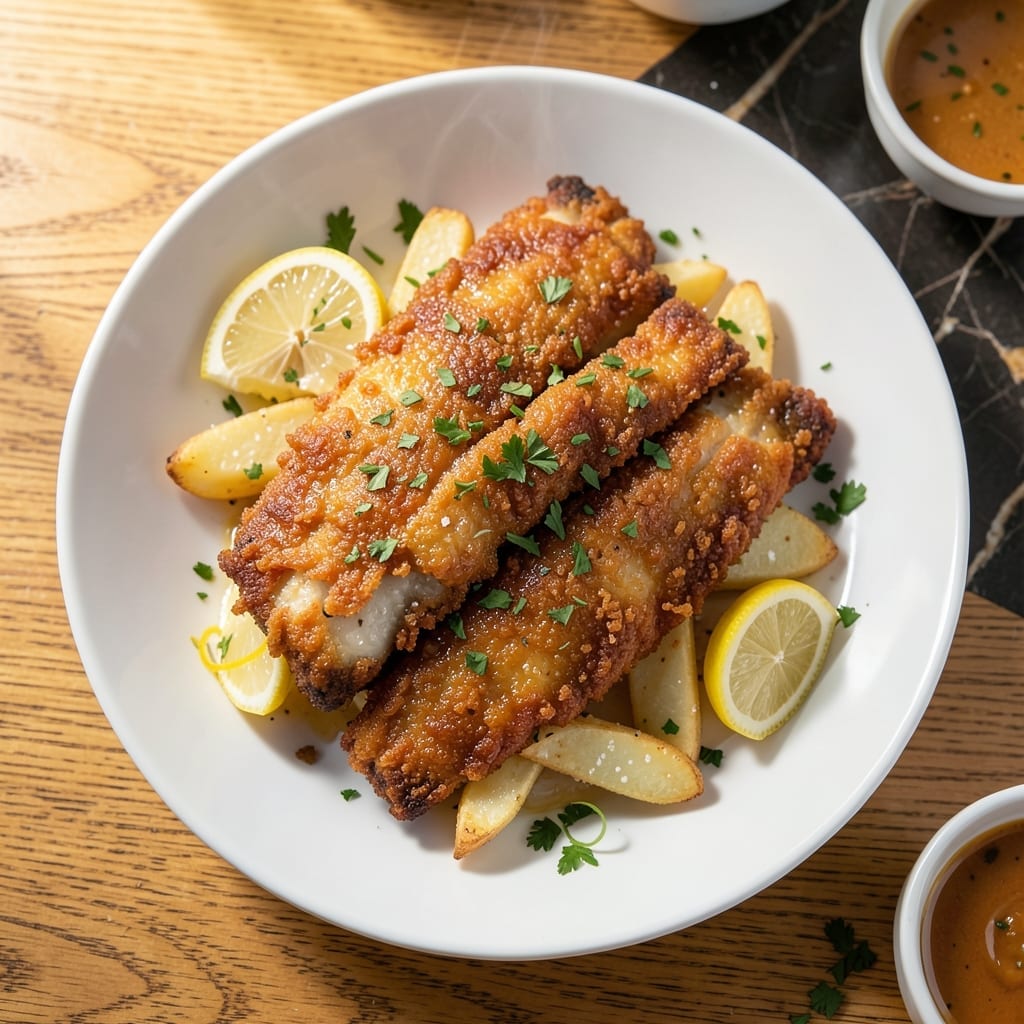
There’s an art to achieving crispy cod that stays golden outside while remaining flaky inside.
This method delivers restaurant-quality results with a simple batter and precise frying technique. The key is maintaining the right oil temperature and not overcrowding the pan.
Ingredients for Fry Cod Fish
Fresh cod and pantry staples create these crispy, flaky golden bites in no time.
| Ingredient | Amount | Notes |
|---|---|---|
| Cod Fillets 🐟 | 1 ½ lb | Fresh or thawed, skinless |
| All-Purpose Flour 🌾 | 1 cup | For dredging and batter |
| Cornstarch 🌾 | ¼ cup | For extra crispiness |
| Baking Powder 🧂 | 1 tsp | Lightens the batter |
| Sea Salt 🧂 | 1 ½ tsp | Divided for fish and batter |
| Black Pepper 🌶️ | ½ tsp | Freshly ground preferred |
| Garlic Powder 🧄 | 1 tsp | For savory depth |
| Paprika 🌶️ | 1 tsp | Smoked or sweet variety |
| Cold Beer 🍺 | 1 cup | Light lager for batter |
| Vegetable Oil 🫒 | 4 cups | For deep frying |
| Lemon Wedges 🍋 | 4 pieces | For serving |
| Tartar Sauce 🥄 | ½ cup | Store-bought or homemade |
| Fresh Parsley 🌿 | ¼ cup | Chopped, for garnish |
[recipe_ingredient_scaler]
The cod is everything here. Wild-caught Pacific cod from Whole Foods or a trusted fishmonger is ideal—look for fillets that are moist, translucent, and smell like the ocean (never fishy). Thickness matters: aim for 1-inch thick fillets for even cooking. The cornstarch is non-negotiable—it’s what gives that shatteringly crisp coating. Bob’s Red Mill is a reliable brand if you’re replenishing your supply.
No beer? Sparkling water or club soda works just as well for the batter’s lift. Out of cod? Haddock or pollock are great substitutes with similar flakiness. For a gluten-free version, swap the all-purpose flour for rice flour or a 1:1 gluten-free blend. The paprika can be omitted if you prefer a milder flavor, but it adds a nice color and subtle warmth.
Fry in batches to avoid dropping the oil temperature—this is what keeps the coating crisp. Leftovers? They’re best fresh but can be reheated in a 400°F oven for 10-12 minutes. The tartar sauce keeps for 5 days in the fridge.
Why You’ll Love This Recipe
- 20-Minute Meal: I can get this from flour-dredged cod to golden, crispy perfection faster than delivery arrives.
- Crispy Outside, Tender In: That cornstarch and baking powder trick makes the crust shatter like a fine chip, while the cod stays flaky and moist.
- Feeds a Crowd: Honestly, it’s my go-to when the whole family’s over—just scale up the fillets and keep the same simple batter.
- Budget Stretch: Cod fillets go further here. Between us, it’s cheaper than takeout and just as satisfying.
Step-by-Step Instructions for Fry Cod Fish
Master the technique for achieving perfectly crispy exteriors with tender, flaky centers every time.
Step 1: Prepare the Cod and Heating Oil
Pat the 1.5 lb cod fillets completely dry with paper towels—this is critical for crispiness, as moisture causes splattering and prevents proper browning. Season both sides evenly with ½ tsp sea salt and the 0.5 tsp black pepper. Set aside while you prepare the batter.
In a deep, heavy-bottomed pot or Dutch oven, heat the 4 cups vegetable oil over medium-high heat to 350°F. Use a deep-fry thermometer for accuracy. The oil must reach temperature before frying to ensure immediate crisping and prevent greasy results.
Step 2: Create the Crispy Batter
In a large bowl, whisk together the 1 cup all-purpose flour, 0.25 cup cornstarch, 1 tsp baking powder, remaining 1 tsp sea salt, 1 tsp garlic powder, and 1 tsp paprika. The cornstarch is non-negotiable—it creates an ultra-crispy crust that stays shatteringly light.
Slowly pour in the 1 cup cold beer while whisking continuously until just combined. The batter should be thick but pourable, with small bubbles indicating the baking powder is activating. Cold beer is essential to keep the coating crisp and prevent it from absorbing too much oil.
Step 3: Fry the Cod to Golden Perfection
Dip each seasoned cod fillet into the batter, letting any excess drip off for 5 seconds. Carefully lower into the hot oil, working in batches to avoid crowding the pot (which lowers the oil temperature). Fry for 3-4 minutes per side until the coating is deep golden brown and the fish flakes easily when tested with a fork.
Maintain the oil temperature between 340-350°F throughout frying. If it drops too low, the fish will absorb oil and become soggy. Use a slotted spoon to transfer the fried cod to a wire rack set over a baking sheet—this allows air circulation to keep it crisp, unlike paper towels which trap steam.
Step 4: Serve Immediately with Garnishes
Let the cod rest for 2 minutes to allow the internal temperature to stabilize. The coating should remain audibly crisp when tapped. Transfer to a serving platter and garnish with the 0.25 cup fresh parsley, chopping it just before serving to preserve its vibrant color and aroma.
Serve with the 4 pieces lemon wedges and 0.5 cup tartar sauce on the side. The acidity from the lemon cuts through the richness of the fried coating, while the tartar sauce adds a creamy contrast. For best results, eat immediately while the exterior is at its peak crispness.
Pro Tips For Making Fry Cod Fish
- Pat the Cod Dry: I learned this the hard way—wet fillets steam instead of fry, so blot them thoroughly with paper towels before dredging. Sounds tedious, but it’s the only way to get that crispy crust.
- Chill the Batter: Mix your flour, cornstarch, and baking powder, then let the batter rest in the fridge for 15 minutes before coating the fish. It keeps the coating from sliding off and gives it extra crunch.
- Hot Oil, Fast Fry: Use a thermometer and aim for 375°F—any cooler and the cod absorbs oil like a sponge. Fry in small batches so the temperature doesn’t drop, or you’ll end up with soggy fish.
- Salt the Flour: Skip salting the fish directly and season the flour mixture instead—about 1 teaspoon of sea salt per cup. This way, every bite of crust is perfectly seasoned, not just the surface.
Common Mistakes When Making Perfect Results
Overcrowding the Pan
This is the most common mistake I see with home cooks. Adding too many fillets at once drops the oil temperature dramatically. Fry in batches with at least 2 inches between pieces. I use my Dutch oven and never exceed 3 fillets at a time. 🔥
Wrong Oil Temperature
Your oil must be at 350°F before adding the fish. Too cool and you’ll get greasy, soggy results. Too hot and the outside burns before the inside cooks. I always use a deep-fry thermometer—I recommend Taylor’s Classic.
Skipping the Drying Step
Pat those fillets completely dry with paper towels. Any moisture causes dangerous splattering and prevents proper browning. I press firmly with triple-layered towels to remove all surface water.
Using Warm Beer
Cold beer is non-negotiable for crispy batter. Warm beer makes the coating absorb oil like a sponge. I keep my light lager in the fridge until the last second, then pour it straight into the dry ingredients.
Rushing the Rest
Let the batter rest for 5 minutes after mixing. This allows the gluten to relax and the baking powder to activate fully. I set a timer—skipping this makes the coating dense instead of airy and crisp.
Improper Draining
Never drain on paper towels—they trap steam and make your beautiful crisp coating soggy. Use a wire rack set over a baking sheet. I also place a sheet of parchment under the rack for easy cleanup. ✨
Nutrition Facts
Frequently Asked Questions
What oil works best for frying?
Use a neutral oil with a high smoke point like vegetable or canola. Avoid olive oil as it can burn at 350°F. Peanut oil is another great option for extra crispiness.
Can I use frozen cod?
Yes, but thaw it completely in the fridge overnight first. Pat it completely dry before battering to prevent splattering and ensure even cooking. Never refreeze after thawing.
How do I know when it’s done?
The coating should be deep golden brown and the fish should flake easily with a fork. The internal temperature should reach 145°F. Overcooking makes it dry.
Why is my batter falling off?
This usually happens if the oil isn’t hot enough or the fish wasn’t dried properly. Ensure oil is at 350°F and pat fillets thoroughly before dipping in batter.

Trained in classic French technique but raised on slow-cooked ribs and spicy rubs, she blends culinary skill with smoke and soul.
- Recipe for Fully Cooked Spiral Ham: Sweet Glaze and Effortless Elegance - October 3, 2026
- Recipe for Cream of Rice: Silky Smooth Breakfast Comfort - October 3, 2026
- Old Fashioned Beef and Noodles Recipe Crock Pot: Set-It-and-Forget-It Hearty Meal - October 3, 2026