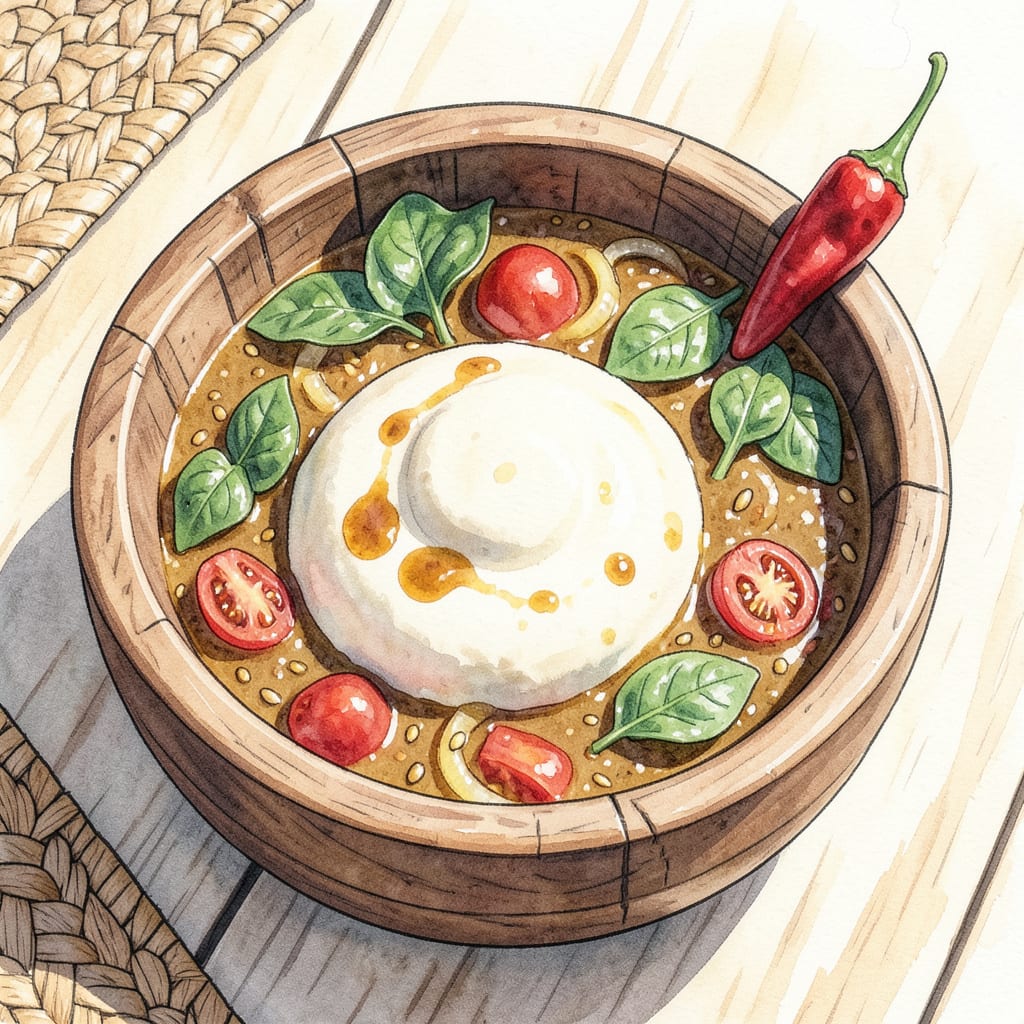
This West African classic combines the smooth, stretchy comfort of fufu with the rich, nutty depth of egusi soup—a pairing that defines home cooking across Nigeria, Ghana, and beyond. The dish balances texture and flavor perfectly: silky pounded yam or cassava against a hearty melon seed stew thickened with leafy greens.
What makes this recipe special is its versatility. The vegan foundation of palm oil, bitter leaf, and ground egusi seeds creates a deeply satisfying base, while the fufu’s neutral canvas lets the soup’s complex flavors shine. Whether you’re recreating childhood memories or exploring West African cuisine for the first time, this meal delivers authentic comfort in every bite.
Ingredients for Fufu and Egusi
Authentic West African ingredients create this deeply comforting pairing of silky fufu and rich egusi soup—vegan, hearty, and full of tradition.
| Ingredient | Amount | Notes |
|---|---|---|
| Dried Egusi Seeds 🌱 | 1 ½ cups | Ground to fine powder consistency |
| Red Palm Oil 🫒 | ½ cup | Unrefined for authentic flavor |
| Bitter Leaf 🌿 | 2 cups | Fresh or dried, finely chopped |
| Fresh Spinach 🍃 | 3 cups | Packed, roughly chopped |
| Yellow Onion 🧅 | 1 whole | Medium-sized, finely diced |
| Roma Tomatoes 🍅 | 3 whole | Fresh, blended or finely chopped |
| Scotch Bonnet Pepper 🌶️ | 1 whole | Seeds removed, minced (adjust to taste) |
| Garlic Cloves 🧄 | 4 cloves | Fresh, minced to fine consistency |
| Ground Crayfish 🦞 | ¼ cup | Vegan alternative: nutritional yeast |
| Vegetable Stock 💧 | 4 cups | Low-sodium preferred for control |
| White Yam 🍠 | 2 lb | Peeled, cut into 2-inch chunks |
| Cassava 🌰 | 1 lb | Peeled, cut into 2-inch chunks |
| Himalayan Pink Salt 🧂 | 1 ½ tsp | Adjust to taste during cooking |
| Ground White Pepper 🌶️ | ½ tsp | Freshly ground for optimal aroma |
| Locust Beans (Iru) 🌿 | 2 tbsp | Fermented, finely crushed (optional) |
[recipe_ingredient_scaler]
The egusi seeds and palm oil form the foundation of this dish. Optimal quality requires unrefined red palm oil—available at African markets or online retailers like African Food Store. For the bitter leaf, fresh is ideal but dried (rehydrated) works acceptably. The white yam and cassava must be fresh, not pre-packaged—look for firm tubers without soft spots. Ground crayfish traditionally adds umami, but nutritional yeast provides a suitable vegan alternative with comparable depth.
Substitutions maintain authenticity when carefully chosen. Replace scotch bonnet with habanero at half the quantity if unavailable. Fresh spinach can substitute pumpkin leaves (ugu) if sourcing proves difficult. For the vegetable stock, homemade is preferable but low-sodium store-bought brands like Imagine or Pacific Foods work adequately. Locust beans (iru) add complexity but may be omitted—replace with 1 tbsp miso paste for fermented depth. The fufu base allows flexibility: plantains or cocoyam can replace yam/cassava in equal weights.
Storage requires attention to freshness. Prepared egusi soup keeps 4-5 days refrigerated in airtight containers, while the flavor deepens overnight. Fufu is best consumed immediately but can be refrigerated up to 2 days—reheat by steaming. Unused palm oil should be stored in a cool, dark place for 6-12 months. For meal prep, prepare components separately and combine just before serving to maintain ideal textures.
Instructions
This traditional preparation method ensures authentic West African flavors with perfect texture and balance.
Step 1: Prepare the Egusi Base
Begin by grinding the 1.5 cups Dried Egusi Seeds to a fine powder consistency using a high-powered blender or food processor. The texture should resemble coarse cornmeal when properly ground. Transfer to a large bowl and set aside.
In a separate heavy-bottomed pot, heat the 0.5 cup Red Palm Oil over medium heat until it becomes fragrant but not smoking. Add the finely diced Yellow Onion and sauté for 3-4 minutes until translucent and just beginning to caramelize at the edges. This aromatic foundation is crucial for authentic flavor development.
Step 2: Build the Vegetable Foundation
To the pot with onions, add the minced Garlic Cloves, blended Roma Tomatoes, and minced Scotch Bonnet Pepper. Cook this mixture for 8-10 minutes, stirring frequently, until the tomatoes break down completely and the mixture reduces by about one-third. The oil should begin to separate at the edges, indicating proper concentration of flavors.
Stir in the finely chopped Bitter Leaf and roughly chopped Fresh Spinach, cooking for an additional 5 minutes until the greens wilt completely. Add the Ground Crayfish and Locust Beans (Iru), stirring to incorporate fully. This combination creates the characteristic umami depth of traditional egusi soup.
Step 3: Complete the Soup Base
Pour in the 4 cups Vegetable Stock and bring the mixture to a gentle simmer. Gradually whisk in the ground egusi seeds, ensuring no lumps form. The mixture will thicken significantly as it cooks. Season with 1.5 tsp Himalayan Pink Salt and 0.5 tsp Ground White Pepper, adjusting to taste.
Reduce heat to low and let the soup simmer uncovered for 20-25 minutes, stirring occasionally. The final consistency should be thick enough to coat the back of a spoon but still pourable. The soup is ready when the egusi is fully cooked and the flavors have melded completely.
Step 4: Prepare the Fufu Components
While the soup simmers, peel and cut the White Yam and Cassava into 2-inch chunks. Place them in separate pots of boiling water and cook until fork-tender, about 15-20 minutes for yam and 20-25 minutes for cassava. The pieces should be completely soft with no resistance when pierced.
Drain both components thoroughly and return to their respective pots. Using a wooden spoon or potato masher, pound each until completely smooth and elastic. The fufu should have a stretchy, dough-like consistency when properly prepared. Keep covered to maintain warmth until serving.
Step 5: Assemble and Serve
To serve, portion the fufu into individual serving bowls, creating a well in the center. Ladle the hot egusi soup generously over and around the fufu. The contrast between the smooth, neutral fufu and the rich, textured soup creates the perfect balance.
Serve immediately while hot. Traditional presentation involves keeping the fufu and soup slightly separated to allow diners to tear portions of fufu and dip into the soup as they eat. The dish should be consumed fresh for optimal texture and flavor.
Perfect Pairings for This Recipe
Traditional Sides
No West African meal is complete without jollof rice on the side. The tomato-based rice complements the egusi’s nutty richness while adding vibrant color. I love making mine with 1 cup basmati rice cooked in 2 cups tomato-passata broth for that perfect balance. 🌶️
Fresh Vegetable Pairings
Serve with sliced cucumbers and ripe avocados to cut through the soup’s richness. The cool crunch provides refreshing contrast. I toss them with lime juice and a pinch of salt—simple but transformative.
Beverage Complements
For drinks, nothing beats hibiscus tea (zobo) with its tart, cranberry-like flavor. Chill it overnight with 1 cinnamon stick and 3 cloves for depth. The floral notes balance the soup’s earthy tones beautifully.
Protein Additions
While this dish shines vegan, adding grilled fish or smoked turkey makes it heartier. I recommend tilapia fillets rubbed with 1 tsp smoked paprika before grilling for 4 minutes per side.
Spicy Condiments
Offer shito (black pepper sauce) on the side for heat lovers. My quick version blends 2 tbsp dried shrimp, 1 cup roasted tomatoes, and 3 habaneros until smooth. A little goes a long way!
Dessert Follow-Up
End with coconut chin chin—crunchy fried dough bites. The sweetness contrasts the meal’s savory depth. I make mine with 2 cups flour and ½ cup coconut milk for extra richness. ✨
Nutrition Facts

Trained in classic French technique but raised on slow-cooked ribs and spicy rubs, she blends culinary skill with smoke and soul.
- Recipe for Boneless Pork Chops in Cast Iron Skillet: Sear and Baste to Juicy Perfection - October 3, 2026
- Recipe for Boneless Cross Rib Roast: Slow-Roasted Beef with Herb Crust - October 3, 2026
- Hamburgers in Sauce Recipe Crock Pot: Slow-Cooked Savory Delight - October 3, 2026