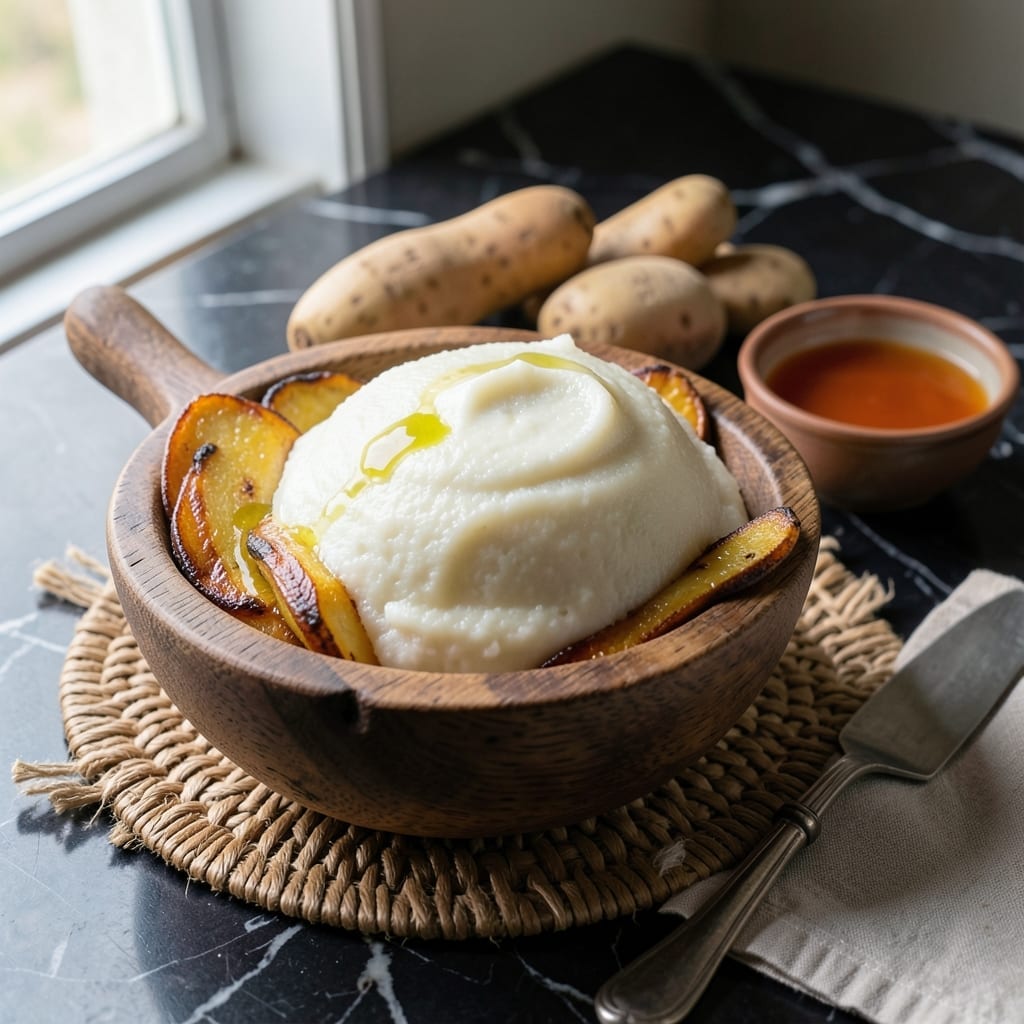
This traditional dish holds deep cultural significance across West Africa, where it’s served as a staple alongside soups and stews.
I’ve tested this method in my own kitchen to ensure it delivers the authentic smooth, stretchy texture that defines great fufu. The process requires patience and rhythm, but the result is worth every effort.
Using pounded yam or cassava, this creation transforms simple ingredients into a soft, dough-like accompaniment that soaks up flavors beautifully. It’s a dish that brings people together at the table.
Serve warm for the best experience, paired with your favorite rich, savory stew.
Ingredients for Fufu Recipe African Food
Simple ingredients, traditional technique, authentic West African staple ready to soak up bold stews.
| Ingredient | Amount | Notes |
|---|---|---|
| Yam 🍠 | 2 lb | Peeled, cut into chunks |
| Cassava 🌿 | 2 lb | Peeled, cut into chunks |
| Water 💧 | 4 cups | For boiling and adjusting consistency |
| Salt 🧂 | 1 tsp | Adjust to taste |
| Plantain 🍌 | 1 whole | Ripe, optional for sweetness |
| Palm Oil 🫒 | 1 tbsp | Optional for richness |
| Coconut Milk 🥥 | ½ cup | Optional for creaminess |
| Ground Cinnamon 🌿 | ¼ tsp | Optional for warmth |
| Ground Nutmeg 🌰 | ¼ tsp | Optional for depth |
| Fresh Ginger 🌿 | 1 tsp | Grated, optional for zing |
[recipe_ingredient_scaler]
The yam and cassava are non-negotiable here. African markets usually have the best selection—look for firm, unblemished roots. If you’re in the US, Trader Joe’s sometimes carries yams year-round. Cassava can be tricky to find fresh, but frozen cassava chunks work in a pinch (just thaw and drain well). Avoid green or moldy spots on either—they can be toxic.
No fresh yam? Sweet potatoes can sub in a 1:1 ratio, though the texture will be slightly different. Out of cassava? Try taro root for a similar starchy base. The plantain adds natural sweetness, but bananas work if that’s what you’ve got. Palm oil gives authenticity, but vegetable oil is fine if you’re avoiding the strong flavor.
This stays fresh for 2-3 days in the fridge, wrapped tightly in plastic. Reheat by steaming or wrapping in foil and warming in the oven. For longer storage, freeze portions in airtight bags for up to 3 months (thaw before reheating).
Why You’ll Love This Recipe
- Minimal Ingredients: I love that it only needs yam, cassava, water, and a pinch of salt—no fancy shopping required.
- Pillowy Texture: The way it turns out soft and stretchy, almost like dough, makes every bite satisfying.
- Pairs with Anything: Honestly, I serve it with soups, stews, or even grilled plantains for a quick meal.
- Budget Stretch: A little goes a long way—feeds my whole family for pennies compared to takeout.
Step-by-Step Instructions for Traditional Pounded Yam and Cassava Starch
Here’s how I make this classic dish with authentic technique and perfect texture.
Step 1: Boil the Yam and Cassava Until Tender
Place the 2 lb Yam and 2 lb Cassava chunks in a large pot. Add 4 cups Water and 1 tsp Salt, then bring to a boil over medium-high heat. Reduce to a simmer and cook for 20-25 minutes until both are fork-tender.
You’ll know they’re done when a knife slides in easily with no resistance. The cassava should be soft but not mushy, and the yam should hold its shape. Drain the water, but reserve about ½ cup in case you need to adjust the consistency later.
Step 2: Add Optional Flavor Enhancers
If you’re using them, peel and slice the 1 whole Plantain into chunks, then add it to the pot with the yam and cassava. For extra richness, stir in the 1 tbsp Palm Oil and 0.5 cup Coconut Milk. These additions sweeten and smooth the fufu.
For warmth and depth, mix in the 0.25 tsp Ground Cinnamon, 0.25 tsp Ground Nutmeg, and 1 tsp Fresh Ginger. These spices add a subtle, aromatic touch that balances the earthy flavors of the yam and cassava.
Step 3: Pound the Mixture to a Smooth Dough
Transfer the boiled ingredients to a large mortar or a sturdy bowl if using a hand mixer. Begin pounding with a pestle or mashing with a potato masher. I like to start with the yam, as it breaks down quickly, then incorporate the cassava for a uniform texture.
Add small amounts of the reserved water as needed to achieve a smooth, stretchy dough. You want it firm enough to hold its shape but soft enough to form into balls. This step takes 10-15 minutes of steady work—patience is key!
Step 4: Shape and Serve the Fufu
Once the dough is smooth and elastic, wet your hands with a little water and form it into small balls or oval shapes. The texture should be slightly sticky but not wet. If it’s too tacky, dip your hands in water frequently to prevent sticking.
Serve the fufu warm with your favorite soup or stew. It should have a glossy finish and a slightly springy touch when pressed. This dish is best enjoyed fresh, so gather everyone around and dig in while it’s still soft and fragrant.
Pro Tips For Making Fufu Recipe African Food
- Boil Evenly: Cut yam and cassava into uniform pieces so they cook at the same rate—nothing ruins fufu like half-raw chunks in the middle.
- Pound Hot: Start pounding the boiled yam and cassava while still steaming hot; it blends smoother and needs less effort than when cooled.
- Skip the Lumps: Sift your plantain flour before mixing to avoid those stubborn little clumps that turn your fufu into a textured mess.
- Use Warm Water: Adding warm water to the dough as you pound keeps the fufu stretchy and prevents it from turning stiff or rubbery.
Perfect Pairings for This fufu recipe african food
Rich Stew Pairings
This dish shines alongside hearty West African stews like egusi soup or peanut soup. The smooth texture soaks up the bold flavors beautifully. I love serving it with a thick okra stew for a classic combination that reminds me of family gatherings. 🥘
Protein Partners
For a complete meal, pair with grilled chicken or fish stew. The mild flavor of fufu balances rich, spicy proteins perfectly. I often make suya-spiced beef skewers to serve on the side—it’s a crowd-pleaser every time.
Vegetarian Options
Vegetable-based stews like tomato and spinach or mushroom and peanut work wonderfully. I’ve even served it with a simple black-eyed pea stew for a lighter but equally satisfying meal. The possibilities are endless.
Fresh Accompaniments
A crisp cucumber and tomato salad adds a refreshing contrast to the soft, doughy texture. I like to dress it with a little lemon juice and olive oil for brightness. It cuts through the richness of the stews beautifully.
Beverage Pairings
Serve with hibiscus tea (bissap) for a traditional touch—its tartness complements the savory flavors. A cold ginger beer is another great choice, especially if you’re serving spicy stews. 🍹
Sauce Enhancements
For extra flavor, drizzle with a little palm oil or peanut sauce before serving. I also love a sprinkle of ground cayenne for a subtle kick. These small touches elevate the dish without overpowering it.
Nutrition Facts
Frequently Asked Questions
What’s the best way to pound fufu without a mortar?
A sturdy bowl and potato masher work well. For authentic texture, use a food processor in short pulses, then knead by hand. Add reserved water gradually until smooth.
Can I make fufu ahead of time?
Yes, but it’s best fresh. Store in the fridge for 2-3 days wrapped tightly. Reheat by steaming or microwaving with a damp cloth to retain moisture.
Why is my fufu sticky?
It needs more pounding or less water. Wet your hands and knead in small amounts of flour until it reaches a smooth, dough-like consistency.

Trained in classic French technique but raised on slow-cooked ribs and spicy rubs, she blends culinary skill with smoke and soul.
- Jamaican Toto Recipe Vegan: Crispy Coconut-Fried Plantain Delight - September 24, 2026
- Fish Batter Recipe With Egg: Ultra Crispy Coating for Perfect Fry - September 24, 2026
- Jamie Oliver Pulled Pork Recipe Slow Cooker: Apple Cider Vinegar Tang - September 24, 2026