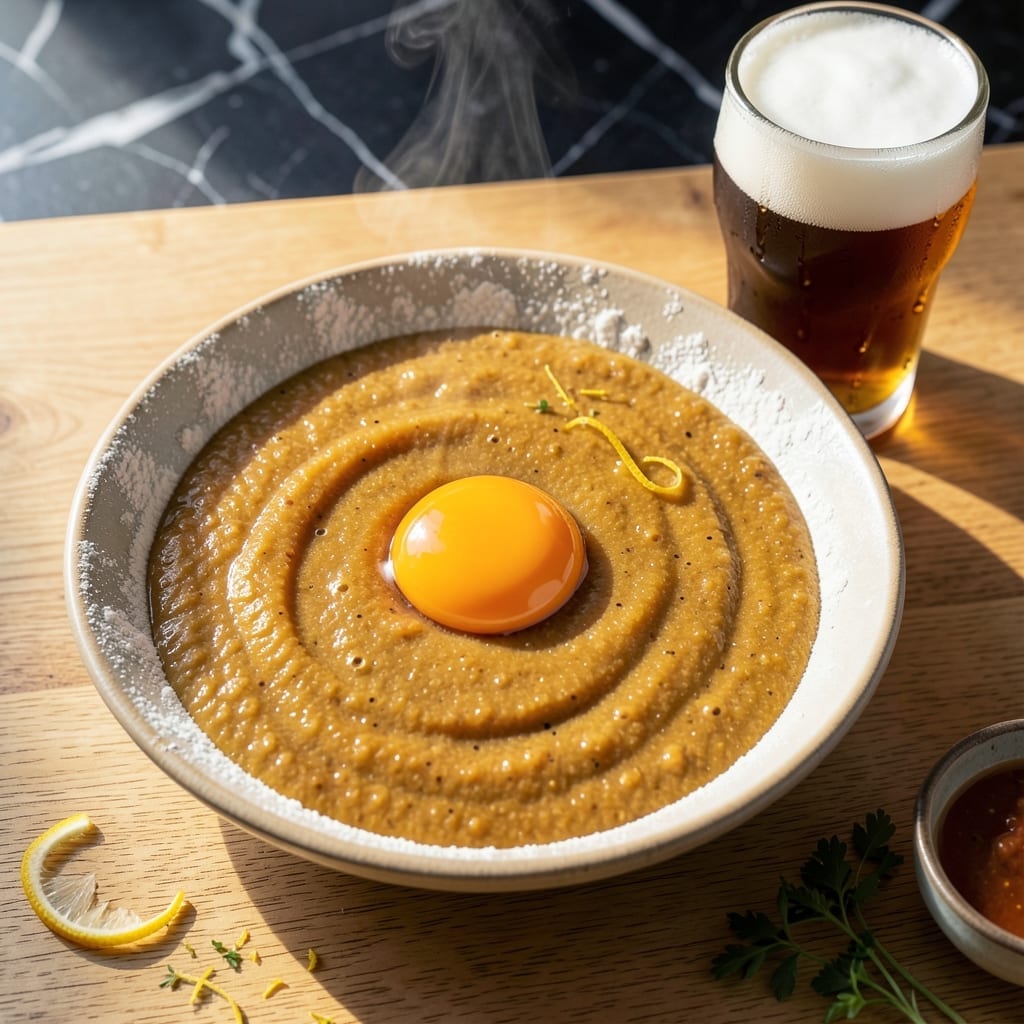
Achieving that perfect golden crust on fried fish starts with the right batter. This method delivers a crispy coating every time using simple ingredients and precise technique.
I developed this recipe after years of experimenting with ratios and frying temperatures. The egg in the batter creates a lighter, airier texture that adheres beautifully to the fish while frying to a delicate crunch.
The result is fish with a shatteringly crispy exterior and moist, flaky interior. The batter stays put during frying, with no falling-off bits in the oil.
Serve immediately for maximum crunch. Here’s how to make it.
Ingredients for Fish Batter Recipe with Egg
Simple, precise ingredients create that ultra crispy golden coating for perfect fried fish every time.
| Ingredient | Amount | Notes |
|---|---|---|
| All-Purpose Flour 🌾 | 1 ½ cups | Sifted for smooth batter |
| Cold Beer 🍺 | 1 cup | Light lager preferred |
| Large Eggs 🥚 | 2 whole | Room temperature, beaten |
| Baking Powder 🧂 | 1 tsp | For extra crispiness |
| Kosher Salt 🧂 | 1 tsp | Diamond Crystal preferred |
| Ground Black Pepper 🌶️ | ½ tsp | Freshly ground |
| Paprika 🌶️ | 1 tsp | Sweet or smoked variety |
| Garlic Powder 🧄 | ½ tsp | Enhances savory depth |
| Onion Powder 🧅 | ½ tsp | Balances flavor profile |
| White Fish Fillets 🐟 | 1 ½ lb | Cod or haddock recommended |
| Vegetable Oil 🫒 | 4 cups | For deep frying |
| Cornstarch 🌽 | ¼ cup | Optional for extra crunch |
[recipe_ingredient_scaler]
The beer is critical here—light lager provides the right carbonation for lift without overpowering flavor. Diamond Crystal kosher salt dissolves evenly in the batter, ensuring consistent seasoning. For the fish, fresh cod or haddock fillets from a reputable seafood counter yield the best texture. Avoid pre-frozen if possible, as it can release excess moisture during frying.
No beer on hand? Sparkling water works at a 1:1 ratio. For gluten-free batter, swap all-purpose flour for rice flour or a gluten-free blend. The baking powder can be omitted, but the crust won’t be as airy. If using a different fish, adjust frying time based on thickness—thinner fillets cook faster.
The batter is best used immediately—don’t let it sit more than 10 minutes before frying. Leftover cooked fish keeps in the fridge for 2 days but loses crispiness. Reheat in a 350°F oven to revive some texture, though it’s never quite the same as fresh.
Why You’ll Love This Recipe
- I’ll be real: flour, beer, eggs, and salt are already in my kitchen, so it’s a no-brainer every time.
- Five-Minute Mix: I just dump flour, cold beer, an egg, and baking powder in a bowl—no whisking for hours, no fancy steps.
- Crispy Beer Magic: The cold beer gives it that light, airy crunch, and the egg binds it just right for golden, flaky perfection.
- Weeknight Hero: Honestly, it’s my go-to for quick dinners or last-minute get-togethers—works for fish, shrimp, even veggies.
Step-by-Step Instructions for Fish Batter With Egg
Master the technique for a light, airy coating that stays crisp long after frying.
Step 1: Prepare the Dry Batter Base
In a large mixing bowl, whisk together the 1.5 cups all-purpose flour, 1 tsp baking powder, 1 tsp kosher salt, 0.5 tsp ground black pepper, 1 tsp paprika, 0.5 tsp garlic powder, and 0.5 tsp onion powder until evenly combined. The baking powder is crucial—it creates tiny air pockets that expand during frying, giving your coating that signature lightness.
For extra crunch, add the 0.25 cup cornstarch to the dry mix. I’ve found this simple addition transforms the texture from good to exceptional, creating a delicate, shatteringly crisp shell around the fish.
Step 2: Incorporate Wet Ingredients for a Smooth Batter
Create a well in the center of your dry ingredients. Pour in the 1 cup cold beer and 2 whole large eggs, then whisk vigorously until just smooth. The beer’s carbonation adds lift to the batter, while the eggs provide structure. Don’t overmix—small lumps are fine and will dissolve during resting.
Let the batter rest for 10-15 minutes at room temperature. This allows the flour to fully hydrate and the gluten to relax, resulting in a lighter, more tender coating. The batter should resemble a thick pancake batter—able to coat the back of a spoon but still fluid enough to drip easily.
Step 3: Heat the Oil to Optimal Frying Temperature
Pour the 4 cups vegetable oil into a deep, heavy-bottomed pot or Dutch oven, filling it no more than halfway to prevent overflow. Heat over medium-high heat until the oil reaches 350-375°F on a deep-fry thermometer. This temperature range is critical—too cool and the fish will absorb oil, too hot and the exterior will burn before the interior cooks.
To test without a thermometer, drop a pinch of batter into the oil. It should sizzle immediately and float to the surface within 3-5 seconds. Maintain this temperature throughout frying by adjusting the heat as needed.
Step 4: Coat and Fry the Fish Fillets
Pat the 1.5 lb white fish fillets completely dry with paper towels—moisture is the enemy of crispiness. Season lightly with additional kosher salt if desired, though the batter is already well-seasoned. Dip each fillet into the batter, allowing excess to drip off for 5 seconds before carefully lowering it into the hot oil.
Fry the fillets in batches, being careful not to overcrowd the pot, for 4-5 minutes per side until golden brown and crisp. The fish is done when it floats easily and the coating is uniformly golden. Use a slotted spoon to transfer to a wire rack or paper towel-lined plate to drain.
Step 5: Rest and Serve Immediately
Let the fried fish rest for 2-3 minutes before serving. This brief pause allows the coating to set completely, ensuring it stays crisp rather than turning soggy from residual steam. The interior should be flaky and moist, with a coating so light it practically shatters at the touch.
Serve immediately while hot and crisp. The contrast between the tender fish and the airy, crunchy batter is at its peak right out of the fryer. For best results, keep the remaining fillets warm in a 200°F oven while frying subsequent batches.
Pro Tips For Making Fish Batter Recipe With Egg
- Chill the Beer: Use ice-cold beer straight from the fridge—warm beer makes the batter dense and heavy instead of light and crispy.
- Whisk Eggs First: Beat the eggs until frothy before adding them to the flour; it adds air and makes the batter lighter, which I learned the hard way after a few gummy batches.
- Skip Overmixing: Stir just until the flour disappears—lumpy is fine. Overmixing develops gluten, and your fish will taste like a sad, chewy pancake.
- Rest 10 Minutes: Let the batter sit before dipping the fish; the baking powder activates fully, and the flour absorbs the liquid—my grandmother swore by this, and she was right.
Perfect Pairings for This fish batter recipe with egg
Classic Fish and Chips
The ultimate pairing for this crispy batter is thick-cut fries. I love serving them with double-fried Belgian fries for extra crunch. The contrast between the hot, crispy fish and the soft, salty fries is pure comfort food. 🍟
Tartar Sauce Essential
A creamy tartar sauce is non-negotiable in my book. Whisk together ½ cup mayonnaise, 2 tbsp diced dill pickles, 1 tbsp capers, and 1 tsp lemon juice. It cuts through the richness perfectly.
Light Beer Pairing
Since the batter uses light lager, I recommend serving the same beer on the side. A cold pilsner like Stella Artois complements the dish beautifully. The carbonation cleanses your palate between bites. 🍺
Fresh Lemon Wedges
Always serve with fresh lemon wedges. The bright acidity enhances the fish’s natural flavors. I squeeze a little over each piece right before eating. Just ½ lemon per serving adds that perfect finishing touch.
Coleslaw Side
A crisp vinegar-based slaw adds a refreshing crunch. I make mine with green cabbage, carrots, and a tangy apple cider vinegar dressing. It balances the meal’s richness without overpowering.
Malt Vinegar Option
For a British touch, offer malt vinegar for dipping. I keep a small bottle on the table for those who prefer it. Just a few drops sprinkled over the fish and chips transforms the experience.
Nutrition Facts
Frequently Asked Questions
Why use cold beer in the batter?
Cold beer creates a lighter, crispier coating by slowing gluten development. The carbonation adds air pockets for extra crunch. Warm beer makes the batter dense and heavy.
Can I substitute sparkling water for beer?
Yes, use an equal amount of ice-cold sparkling water. It provides similar carbonation for lift. The flavor will be more neutral, so add an extra ½ tsp salt to compensate.
What if the batter is too thick or thin?
Too thick? Add 1-2 tbsp cold beer until it drips easily. Too thin? Whisk in 1-2 tbsp flour. The ideal consistency coats the back of a spoon but still drips.
How do I prevent the coating from falling off?
Pat fish completely dry before dipping and let excess batter drip for 5 seconds. Maintain oil at 350-375°F—too cool causes absorption and sticking.

Trained in classic French technique but raised on slow-cooked ribs and spicy rubs, she blends culinary skill with smoke and soul.
- Recipe for Boneless Pork Chops in Cast Iron Skillet: Sear and Baste to Juicy Perfection - October 3, 2026
- Recipe for Boneless Cross Rib Roast: Slow-Roasted Beef with Herb Crust - October 3, 2026
- Hamburgers in Sauce Recipe Crock Pot: Slow-Cooked Savory Delight - October 3, 2026