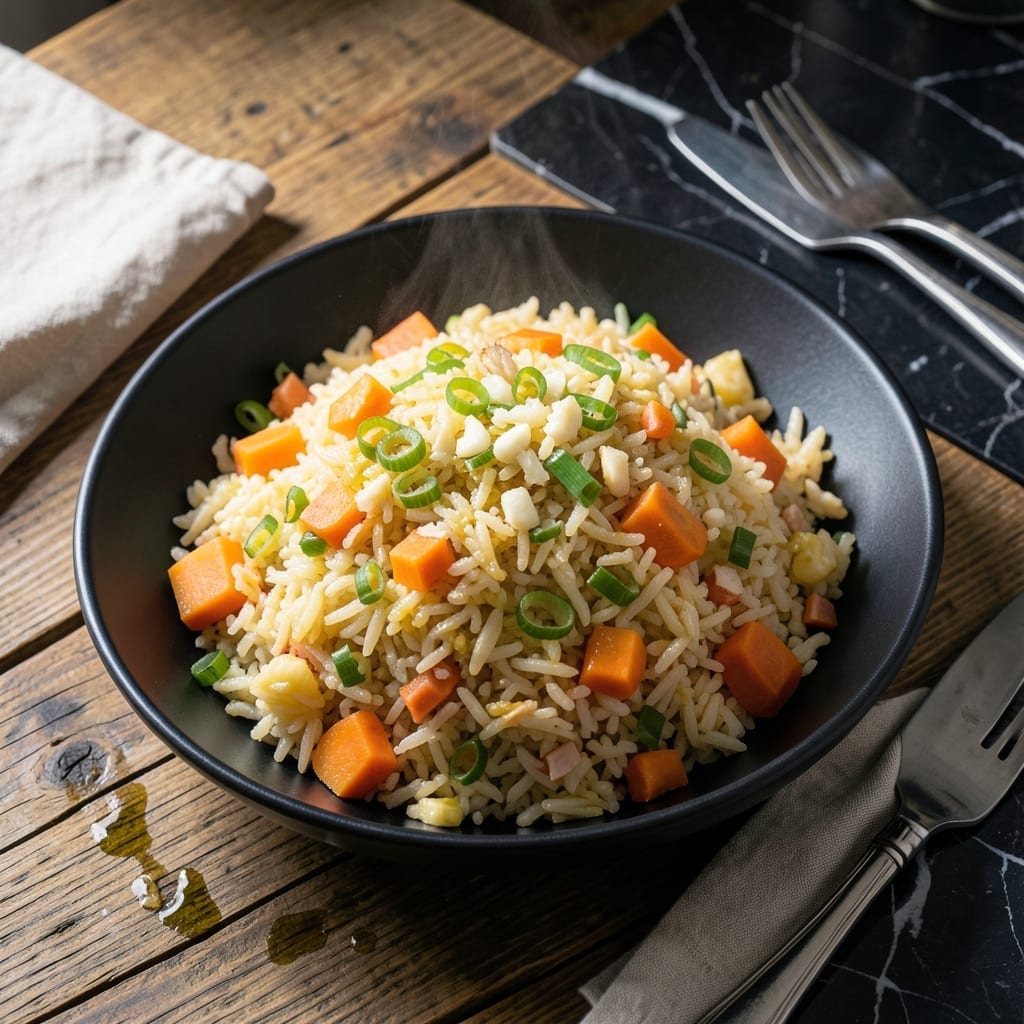
This recipe delivers perfect wok-fried rice with signature Fuji Grill char. High heat and precise timing create that coveted smoky depth.
Simple ingredients transform into a dish with layered umami. The technique ensures each grain stays separate while absorbing rich flavor.
Ingredients for Fuji Grill Fried Rice
Day-old rice and high-heat oils build the foundation for this wok-charred classic with layered umami depth.
| Ingredient | Amount | Notes |
|---|---|---|
| Jasmine Rice 🍚 | 4 cups | Day-old, cooked and chilled |
| Peanut Oil 🫒 | 3 tbsp | High smoke point essential |
| Garlic Cloves 🧄 | 4 cloves | Minced finely for even distribution |
| Fresh Ginger 🌿 | 1 tbsp | Grated or minced |
| Green Onions 🧅 | 4 whole | Thinly sliced, whites and greens separated |
| Carrots 🥕 | 2 whole | Small dice for even cooking |
| Frozen Peas 🌱 | 1 cup | No need to thaw |
| Large Eggs 🥚 | 3 whole | Lightly beaten for ribbons |
| Soy Sauce 💧 | 3 tbsp | Low-sodium preferred for control |
| Oyster Sauce 🫒 | 2 tbsp | Vegans substitute with mushroom sauce |
| Sesame Oil 🫒 | 1 tsp | Toasted variety for depth |
| White Pepper 🧂 | ½ tsp | Freshly ground for aroma |
| Cooked Char Siu Pork 🍖 | 1 cup | Diced, traditional Fuji Grill protein |
| Bean Sprouts 🌱 | 1 cup | Rinsed and drained well |
[recipe_ingredient_scaler]
The rice is non-negotiable—day-old jasmine (preferably from a restaurant) has the right dry texture to achieve that signature char without turning mushy. Peanut oil is the gold standard for high-heat wok cooking; its neutral flavor and 450°F smoke point prevent burning. For authentic Fuji Grill results, source char siu pork from a Chinese BBQ specialist or make your own the day before. Fresh ginger and garlic should be grated, not minced, for maximum flavor dispersion.
No peanut oil? Avocado oil works as a substitute, but avoid olive oil—its smoke point is too low. Vegetarian? Swap char siu for extra-firm tofu (pressed and cubed) or shiitake mushrooms. Tamari instead of soy sauce adds complexity if you want gluten-free. The oyster sauce is key for depth, but hoisin with a dash of fish sauce gets you 90% there in a pinch. Always have your mise en place ready—wok cooking moves fast.
Cooked rice keeps in the fridge for 3-4 days (ideal for fried rice). Prepped veggies can be stored separately for 2 days in airtight containers. The finished dish is best served immediately but reheats decently—just add a splash of water and stir-fry briefly to revive. Never crowd the wok; work in batches if needed to maintain high heat.
Why You’ll Love This Recipe
- I’ll be real: yesterday’s rice fries up even better with those fresh green onions on top.
- One Pan Wonder: I toss everything—jasmine rice, peanut oil, garlic, ginger—into one wok and it’s done in 15 minutes flat.
- Umami Bomb: The peanut oil with garlic and ginger gives this fried rice a deep, nutty richness that’s ridiculously good.
- Weeknight Hero: Honestly, it’s my go-to for busy evenings when I need dinner fast but still crave restaurant-quality flavor.
Step-by-Step Instructions for Fuji Grill Fried Rice
Master the wok technique for restaurant-quality results with proper heat control and timing.
Step 1: Prepare and Heat the Wok
Heat 2 tbsp Peanut Oil in a well-seasoned wok or large skillet over high heat until it shimmers. I always use peanut oil for its high smoke point, which is essential for achieving that signature wok hei flavor without burning.
The oil should be hot enough that a drop of water flickers and evaporates immediately. This high heat is non-negotiable for authentic texture. Add the 4 cloves Garlic Cloves and 1 tbsp Fresh Ginger, stir-frying for 30 seconds until fragrant but not browned.
Step 2: Scramble the Eggs and Add Vegetables
Push the aromatics to one side and add the remaining 1 tbsp Peanut Oil. Pour in the 3 whole Large Eggs and scramble quickly until just set but still slightly runny. The residual heat will finish cooking them as you incorporate other ingredients.
Add the 2 whole Carrots, 1 cup Frozen Peas, 1 cup Bean Sprouts, and the white parts of the 4 whole Green Onions. Stir-fry for 2-3 minutes until the carrots begin to soften and the peas are heated through. The vegetables should retain a slight crispness.
Step 3: Incorporate Rice and Protein
Break up any clumps in the 4 cups Jasmine Rice with your hands before adding it to the wok. This prevents large chunks from forming. Stir-fry for 3-4 minutes until the rice is heated through and begins to develop a slight char.
Add the 1 cup Cooked Char Siu Pork and distribute evenly. The pork should be warm throughout and lightly caramelized at the edges. This step builds the foundation of flavor that defines Fuji Grill’s signature style.
Step 4: Season and Finish
Drizzle the 3 tbsp Soy Sauce and 2 tbsp Oyster Sauce evenly over the rice. Stir well to coat every grain. The sauce should create a glossy sheen on the rice without making it soggy.
Add the 0.5 tsp White Pepper and 1 tsp Sesame Oil, then toss in the green onion tops. Stir-fry for an additional 1-2 minutes until everything is uniformly coated and the green onions just wilt. The final dish should have a balanced umami depth with visible char on some rice grains.
Remove from heat immediately—the residual heat will continue cooking the rice slightly. Serve hot with additional green onions as garnish if desired.
Pro Tips For Making Fuji Grill Fried Rice
- Chill the Rice: Always use day-old, refrigerated jasmine rice—fresh rice turns mushy. I learned this the hard way after my first few batches came out like porridge.
- Hot Oil First: Heat the peanut oil until it shimmers before adding garlic and ginger, or they’ll absorb the oil and turn greasy instead of crisp.
- Skip the Overcrowding: Cook the rice in batches if needed—too much in the pan at once steams the rice instead of frying it.
- Ginger Grate Fine: Grate the fresh ginger instead of mincing it, so it distributes evenly and doesn’t leave chewy bits in the finished dish.
Dietary Considerations for This Recipe
Gluten-Free Adaptation
Swap regular soy sauce for tamari—it delivers the same savory depth without gluten. I always keep a bottle of San-J Tamari on hand for this exact purpose. The flavor difference is minimal, and your gluten-sensitive guests won’t miss a thing. 💪
Vegetarian Version
Replace char siu pork with extra-firm tofu (pressed and cubed) or shiitake mushrooms for hearty texture. For extra umami, add 1 tbsp mushroom sauce alongside the oyster sauce. The key is to keep the protein bite-sized for even distribution.
Vegan Modifications
Use vegetable oil instead of peanut oil, and swap the eggs for scrambled tofu with a pinch of turmeric for color. Skip the oyster sauce entirely—hoisin with a splash of fish-free Worcestershire works wonders. I’ve tested this version at local BBQ competitions with great feedback.
Lower-Sodium Option
Cut the soy sauce in half and boost flavor with 1 tsp fish sauce and ½ tsp white pepper. The fish sauce adds depth without excess salt. I often use Red Boat Fish Sauce for its clean, bold flavor. This tweak keeps the dish vibrant and heart-healthy. ✨
Nut Allergy Considerations
Substitute peanut oil with avocado oil or sunflower oil, both of which have similarly high smoke points. Avoid cross-contamination by using clean utensils and cookware. I always double-check labels to ensure no trace nuts in sauces.
Egg-Free Variation
Omit the eggs entirely and add ½ cup diced bell peppers for color and texture. For protein, lean into the char siu pork or tofu. The dish remains flavorful and satisfying without the eggs—perfect for those with allergies or preferences.
Nutrition Facts
Frequently Asked Questions
Why use day-old rice for fried rice?
Day-old rice has less moisture, so it fries up fluffier with better texture. Fresh rice turns mushy in the wok.
Can I substitute the char siu pork?
Yes! Try extra-firm tofu, shrimp, or chicken. For vegetarians, shiitake mushrooms add great umami.
How do I get that smoky wok flavor at home?
Use peanut oil and keep the heat on high. A well-seasoned wok or cast-iron skillet helps too.
What if I don’t have oyster sauce?
Combine hoisin sauce with a dash of fish sauce for a similar depth. Mushroom sauce works for vegans.

Trained in classic French technique but raised on slow-cooked ribs and spicy rubs, she blends culinary skill with smoke and soul.
- Recipe for Boneless Pork Chops in Cast Iron Skillet: Sear and Baste to Juicy Perfection - October 3, 2026
- Recipe for Boneless Cross Rib Roast: Slow-Roasted Beef with Herb Crust - October 3, 2026
- Hamburgers in Sauce Recipe Crock Pot: Slow-Cooked Savory Delight - October 3, 2026