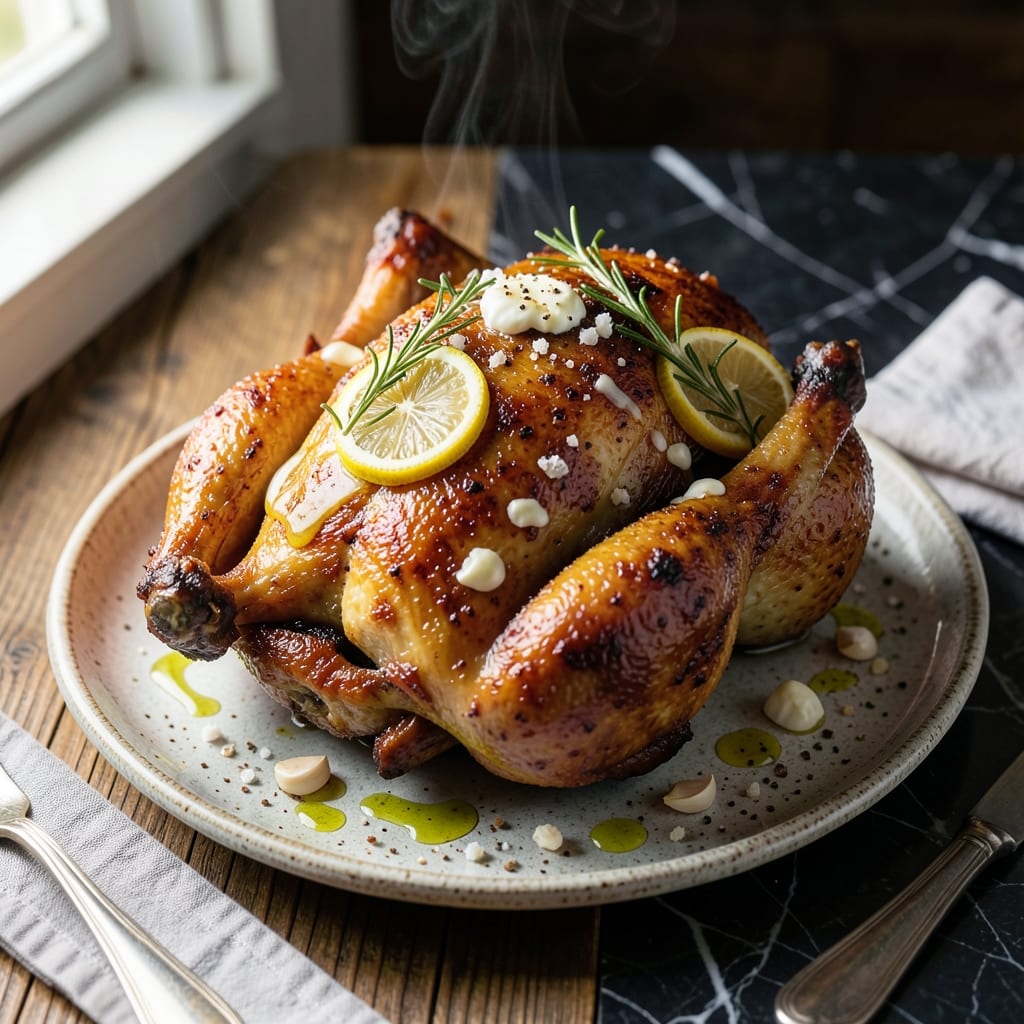
Achieving perfectly roasted chicken at home is simpler than you think. This oven method guarantees golden crisp skin and moist meat every time with minimal effort.
The key is proper seasoning and high heat. I’ve refined this technique to ensure the skin crisps beautifully while the meat stays juicy and flavorful throughout.
With just a few basic ingredients and a reliable oven, you’ll create a centerpiece dish that’s impressive yet approachable. The result is tender, succulent meat under a shatteringly crisp exterior.
Ideal for Sunday dinners or special occasions, this method delivers consistent results. Here’s how to make it happen.
Ingredients for Full Chicken Recipe Oven
A whole bird, fresh herbs, and a few pantry staples create this golden, crisp-skinned showstopper.
| Ingredient | Amount | Notes |
|---|---|---|
| Whole Chicken 🍗 | 4 lb | Pat dry inside and out |
| Unsalted Butter 🧈 | ½ cup | Softened for rubbing |
| Kosher Salt 🧂 | 1 ½ tbsp | Diamond Crystal preferred |
| Freshly Ground Black Pepper 🌶️ | 1 tsp | Coarse grind recommended |
| Garlic Cloves 🧄 | 6 cloves | Minced for seasoning |
| Fresh Rosemary 🌿 | 2 tbsp | Chopped, stems removed |
| Fresh Thyme 🌿 | 2 tbsp | Chopped, stems removed |
| Lemon 🍋 | 1 whole | Halved for cavity |
| Yellow Onion 🧅 | 1 whole | Quartered for cavity |
| Fresh Parsley 🌿 | ¼ cup | Chopped, for garnish |
| Olive Oil 🫒 | 1 tbsp | For initial coating |
| Chicken Stock 🥣 | ½ cup | Low-sodium preferred |
[recipe_ingredient_scaler]
The chicken itself is critical—opt for air-chilled, organic birds from Whole Foods or your local butcher for the best texture and flavor. Look for plump, pale skin with no tearing. The butter should be high-fat European-style for richer flavor. Plugrá or Kerrygold are excellent choices. Fresh herbs make a noticeable difference, so avoid the dried stuff here.
No fresh rosemary or thyme? Dried herbs work at one-third the amount, though the flavor won’t be as bright. Out of lemon? Orange or lime can substitute in the cavity. For the stock, Better Than Bouillon base mixed with water is a solid alternative to boxed. The garlic can be powdered in a pinch, but fresh is exponentially better for this application.
The bird can rest overnight in the fridge after seasoning (actually improves flavor). Roast within 2 days for optimal freshness. Leftovers keep 3-4 days refrigerated, or freeze carved meat for up to 3 months in airtight containers.
Why You’ll Love This Recipe
- I’ll be real: one roasted chicken means dinner tonight and sandwiches tomorrow.
- One Pan Magic: I just rub the chicken with butter, salt, pepper, and garlic, pop it in the oven, and walk away.
- Garlic Butter Bliss: That golden, herby crust from the butter and garlic? Ridiculously good with every bite.
- Feeds the Whole Crew: I’ll be real: one roasted chicken means dinner tonight and sandwiches tomorrow.
Step-by-Step Instructions for Roast Chicken with Herb Butter
Master the technique for crisp skin and succulent meat with these precise oven-roasting steps.
Step 1: Prep and Season the Chicken Thoroughly
Pat the 4 lb Whole Chicken completely dry inside and out with paper towels. This removes excess moisture that would steam the skin instead of crisping it. Season the cavity generously with 1.5 tbsp Kosher Salt and 1 tsp Freshly Ground Black Pepper.
Rub the entire surface with 1 tbsp Olive Oil, then evenly distribute 0.5 cup Unsalted Butter softened to room temperature. Work it under the skin of the breast and thighs for maximum flavor penetration and crispness.
Step 2: Stuff and Truss for Even Cooking
Place the 1 whole Lemon halved and the 1 whole Yellow Onion quartered into the cavity along with 2 tbsp Fresh Rosemary and 2 tbsp Fresh Thyme. The aromatics will infuse the meat as it roasts.
Truss the legs together with kitchen twine and tuck the wings under the body. This compact shape ensures even cooking and prevents the wings from burning. I also scatter the 6 cloves Garlic Cloves minced around the chicken in the roasting pan.
Step 3: Roast at High Heat for Crisp Skin
Preheat your oven to 425°F. Place the chicken breast-side up on a rack in a roasting pan. Roast for 20 minutes before reducing the temperature to 375°F.
Continue roasting for an additional 50-60 minutes or until the internal temperature reaches 165°F in the thickest part of the thigh. Baste the chicken with the pan juices every 20 minutes to ensure even browning and moisture retention.
Step 4: Rest and Prepare the Pan Sauce
Transfer the chicken to a cutting board and tent loosely with foil. Let it rest for 15 minutes—this allows the juices to redistribute for moist meat.
Meanwhile, place the roasting pan on the stovetop over medium heat. Add the 0.5 cup Chicken Stock and scrape up all the browned bits. Simmer for 3-4 minutes until slightly reduced, then strain into a small bowl.
Carve the chicken and drizzle with the pan sauce. Garnish with 0.25 cup Fresh Parsley chopped for a fresh finish. The skin should be deeply golden and crackling, with the meat beneath remaining tender and juicy.
Pro Tips For Making Full Chicken Recipe Oven
- Pat It Dry: Use paper towels to thoroughly dry the chicken skin before seasoning—this guarantees crispier skin, especially when roasting in the oven.
- Butter Under Skin: Gently loosen the skin and rub softened unsalted butter mixed with crushed garlic cloves directly onto the meat for maximum flavor.
- Rest Before Carving: Let the chicken rest for at least 15 minutes after removing from the oven to keep the juices from running all over your cutting board.
- Check Thigh Temp: I learned this the hard way—always use a meat thermometer and pull the chicken when the thickest part of the thigh hits 165°F, not just the breast.
Troubleshooting This Dish
Dry Skin Issues
If the skin isn’t crisping, your chicken may have been too wet before roasting. Always pat it completely dry inside and out with paper towels. I also let it rest uncovered in the fridge for 1 hour before cooking to help dry the surface further. 💡
Uneven Cooking
When the breast cooks faster than the thighs, it means your oven has hot spots. Rotate the pan 180 degrees halfway through cooking. Also, ensure the rack is centered in the oven for even heat distribution.
Blotchy Browning
Blotchy skin often results from uneven basting. I recommend basting every 20 minutes with the pan juices. If you notice pale spots, brush them with melted butter and return to the oven for 5-10 minutes.
Overcooked Meat
Meat that’s dry likely overcooked. Use a meat thermometer and pull the chicken at 165°F in the thickest part of the thigh. The temperature will rise another 5-10°F during resting. I always check multiple spots for accuracy. 🌡️
Weak Flavor
If the chicken tastes bland, you may have under-seasoned. Don’t be shy with the kosher salt—I use 1.5 tbsp for a 4 lb bird. Also, ensure the herbs and aromatics are fresh and generously applied under the skin.
Sticking to Pan
To prevent sticking, use a roasting rack to elevate the chicken. Make sure your pan is large enough to allow airflow. If using a nonstick pan, avoid metal utensils that could damage the coating during basting.
Nutrition Facts
Frequently Asked Questions
How do I know when it’s done cooking?
Use a meat thermometer inserted into the thickest part of the thigh. It should read 165°F. The juices should run clear, not pink.
Do I need to brine the chicken first?
Brining adds moisture but isn’t required. For extra juiciness, soak in 1/4 cup salt per 4 cups water for 4-12 hours before cooking.
Why did my skin turn out pale?
Pale skin usually means the oven wasn’t hot enough. Start at 425°F for the first 20 minutes, then reduce to 375°F.
Can I use dried herbs instead?
Yes, but use 1/3 the amount of fresh. Dried herbs are more concentrated. Fresh herbs give the best flavor though.

Trained in classic French technique but raised on slow-cooked ribs and spicy rubs, she blends culinary skill with smoke and soul.
- Meatloaf Recipe 1 Pound Beef: Moist Center With Savory Herb Crust - September 24, 2026
- Java Rice Recipe Filipino Style: Fragrant Garlic and Bay Leaf Infusion - September 24, 2026
- Meatloaf Recipe 1.5 Lbs Ground Beef: Classic Comfort With a Glaze - September 24, 2026