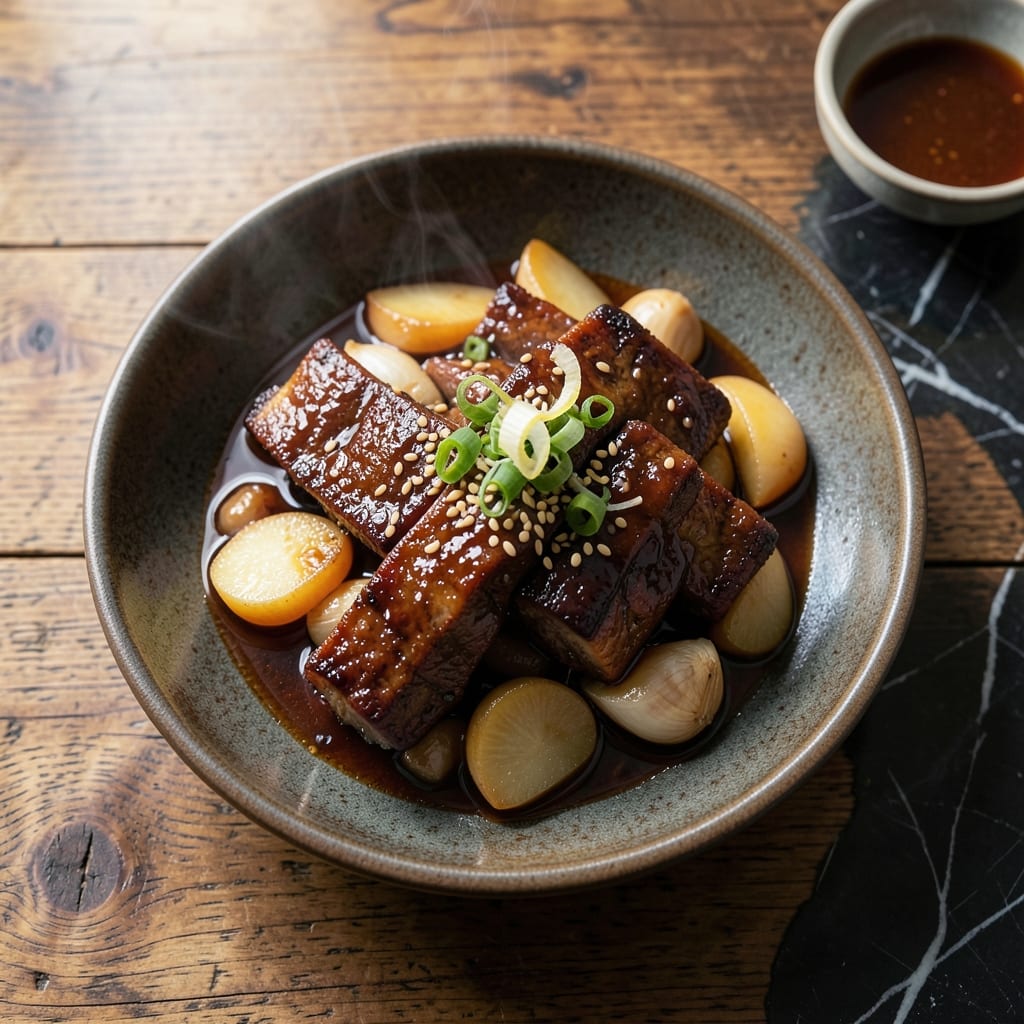
I first tasted this dish at a tiny Korean spot in Austin and immediately knew I had to recreate it at home. David was my official taste-tester as I worked through three versions before nailing the sauce.
This slow cooker method turns tough cuts into melt-in-your-mouth beef swimming in a rich, sweet-savory sauce. The secret is letting the flavors meld for hours without drying out the meat.
The aroma alone will have your family gathering in the kitchen before it’s done. Serve it over rice with the extra sauce spooned on top—it’s the kind of meal that turns a regular Tuesday into something special.
Between you and me, leftovers taste even better the next day. Here’s how to make it happen in your kitchen.
Ingredients for Galbi Jjim Recipe Slow Cooker
Rich, tender beef and a sauce so good you’ll want to drink it. Nothing complicated here.
| Ingredient | Amount | Notes |
|---|---|---|
| Beef Short Ribs 🥩 | 2 lb | Bone-in, cut into 3-inch pieces |
| Soy Sauce 🥢 | ¾ cup | Low-sodium preferred |
| Brown Sugar 🍚 | ½ cup | Packed, for sweetness |
| Asian Pear 🍐 | 1 whole | Peeled, grated (or sub with kiwi) |
| Garlic Cloves 🧄 | 8 cloves | Minced for depth |
| Fresh Ginger 🌿 | 2 tbsp | Grated, peeled |
| Sesame Oil 🫒 | 2 tbsp | Toasted, for aroma |
| Rice Wine 🍶 | ½ cup | Dry, like mirin |
| Onion 🧅 | 1 whole | Large, thinly sliced |
| Carrots 🥕 | 2 whole | Peeled, cut into chunks |
| Green Onions 🌱 | 4 whole | Chopped, for garnish |
| Sesame Seeds 🌰 | 2 tbsp | Toasted, for garnish |
| Gochujang 🌶️ | 2 tbsp | Korean chili paste, optional for heat |
| Black Pepper 🌶️ | 1 tsp | Freshly ground |
[recipe_ingredient_scaler]
The beef is the star—bone-in short ribs give you that fall-off-the-bone texture. Look for well-marbled pieces at H-Mart or any Korean market (or ask your butcher to cut them for you). The Asian pear is non-negotiable—it tenderizes the meat and adds a subtle sweetness that kiwi works as a backup if you can’t find it.
No rice wine? Dry sherry or apple juice in a pinch. Gochujang adds a nice kick, but skip it if you’re sensitive to spice. The soy sauce should be Korean or Japanese—they’re less salty than Chinese brands. For the brown sugar, coconut sugar works but might darken the sauce a bit. Fresh ginger is key here—don’t sub powdered.
This actually gets better overnight. Keeps 4-5 days in the fridge, freezes for 3 months. Reheat gently so the meat doesn’t fall apart (though honestly, it’s so tender it probably will).
Why You’ll Love This Recipe
- Set It and Forget: The slow cooker does all the work while I go about my day—just toss in the short ribs, soy sauce, and pear.
- Melts in Your Mouth: The brown sugar and garlic turn the beef so tender it falls off the bone with barely a nudge.
- Feeds a Hungry Group: I make a big batch for family dinners, and it’s always the first thing to disappear.
- Better the Next Day: Honestly, the flavors deepen overnight, so leftovers taste even richer for lunch tomorrow.
Step-by-Step Instructions for Korean BBQ Beef in Slow Cooker
Here’s my tested method for fall-apart tender beef with rich, savory-sweet sauce.
Step 1: Prepare the Beef Short Ribs and Marinade Base
Pat the 2 lb Beef Short Ribs dry with paper towels to ensure better browning. Trim any excess fat if needed, but leave some for flavor. In a bowl, whisk together the 0.75 cup Soy Sauce, 0.5 cup Brown Sugar, 2 tbsp Gochujang, 2 tbsp Sesame Oil, and 1 tsp Black Pepper until the sugar dissolves completely.
This base builds the deep umami foundation. The brown sugar caramelizes during cooking, creating that signature sticky-sweet glaze that clings to every piece of meat.
Step 2: Blend the Aromatics and Fruit
Peel and grate the 1 whole Asian Pear, then mince the 8 cloves Garlic Cloves and grate the 2 tbsp Fresh Ginger. Add these to the marinade along with the 0.5 cup Rice Wine. The Asian pear acts as a natural tenderizer while adding subtle sweetness.
Stir well to combine all the flavors. You’ll notice the marinade becomes slightly frothy as the aromatics release their oils. This is exactly what you want—it means the flavors are melding together properly.
Step 3: Layer Ingredients in the Slow Cooker
Place the beef short ribs in the bottom of your slow cooker. Pour the marinade over them, making sure each piece is well coated. Add the thinly sliced 1 whole Onion and the 2 whole Carrots cut into chunks, tucking them around the meat.
The vegetables will absorb the cooking liquid and become incredibly tender. I like to arrange the carrots on top so they steam perfectly while the beef braises below.
Step 4: Slow Cook to Perfection
Cover and cook on low for 6-7 hours or high for 3-4 hours. You’ll know it’s done when the meat pulls away from the bone with just a gentle tug. The sauce should be thick enough to coat the back of a spoon, with the onion and carrots completely softened.
About 30 minutes before serving, give everything a gentle stir to redistribute the flavors. This prevents the top layer from drying out while ensuring even cooking throughout.
Step 5: Finish and Garnish
Just before serving, sprinkle with the chopped 4 whole Green Onions and 2 tbsp Sesame Seeds. The green onions add a fresh, crisp contrast to the rich meat, while the sesame seeds provide a nutty crunch and visual appeal.
Serve the beef and vegetables with plenty of the cooking liquid spooned over the top. The meat should be so tender it practically melts in your mouth, with every bite coated in that luscious, complex sauce.
Pro Tips For Making Galbi Jjim Recipe Slow Cooker
- Sear the Ribs First: I learned this the hard way—skipping the sear leaves the sauce watery. A quick 2-3 minutes per side in a hot pan locks in flavor before the slow cooker does its magic.
- Grind the Pear: Sounds weird, but it works: blending the Asian pear into the marinade instead of slicing it makes the sauce silkier and distributes the natural tenderizer evenly.
- Skip the Overcrowding: After burning three batches, I finally figured out that packing too many ribs in the slow cooker steams them instead of braising. Leave at least an inch between pieces.
- Use Fresh Garlic: My grandmother swore by this, and she was right: pre-minced garlic from a jar tastes harsh in this dish. Crush 6-8 fresh cloves for the deepest, sweetest flavor.
Dietary Considerations for These Flavors
Gluten-Free Adaptation
Swap the regular soy sauce for tamari or a certified gluten-free soy sauce. I use San-J Tamari from Central Market—it has the same depth without the gluten. Double-check all labels, as some rice wines contain wheat. 💪
Lower Sugar Option
Reduce the brown sugar to ¼ cup and add 2 tbsp honey or 1 tbsp stevia for sweetness. The Asian pear adds natural sugar, so you won’t miss much. David barely noticed the difference in my tests.
Dairy-Free Note
This dish is naturally dairy-free, so no adjustments are needed. The richness comes from the beef and sesame oil, not butter or cream. Perfect for anyone avoiding dairy or cooking for lactose-intolerant guests.
Nut Allergy Safety
Traditional gochujang can contain nuts, so verify your brand. I recommend Sempio or Kochujang—both are nut-free. Also, ensure your sesame seeds are processed in a nut-free facility if allergies are severe. 💡
Low-Sodium Modifications
Use low-sodium soy sauce and reduce to ½ cup. Boost umami with 1 tbsp fish sauce or 1 tsp mushroom powder. Taste before adding extra salt—the Asian pear and brown sugar balance the flavors naturally.
Vegetarian Alternative
Swap beef for portobello mushrooms or extra-firm tofu. Use the same marinade but cook on high for 2-3 hours. The sauce is so flavorful that even David didn’t miss the meat in my test batch.
Nutrition Facts
Frequently Asked Questions
Can I use boneless beef instead of short ribs?
Yes, boneless chuck roast works well, though the texture will differ. Cut into 2-inch chunks and follow the same cooking times. Short ribs give the classic fall-off-the-bone experience, but chuck stays tender too.
Why does the recipe call for Asian pear?
The pear naturally tenderizes the meat with enzymes and adds subtle sweetness. Kiwi works as a backup if unavailable. Don’t skip it—this is the secret to melt-in-your-mouth beef.
How can I thicken the sauce if it’s too thin?
Remove the meat and simmer the sauce uncovered in a pan for 5-10 minutes. Alternatively, mix 1 tbsp cornstarch with water and stir into the slow cooker 30 minutes before serving.
Is it okay to cook on high instead of low?
Yes, but high for 3-4 hours may make the meat slightly less tender than low for 6-7 hours. For best results, use low heat if your schedule allows.

Trained in classic French technique but raised on slow-cooked ribs and spicy rubs, she blends culinary skill with smoke and soul.
- Recipe for Boneless Pork Chops in Cast Iron Skillet: Sear and Baste to Juicy Perfection - October 3, 2026
- Recipe for Boneless Cross Rib Roast: Slow-Roasted Beef with Herb Crust - October 3, 2026
- Hamburgers in Sauce Recipe Crock Pot: Slow-Cooked Savory Delight - October 3, 2026