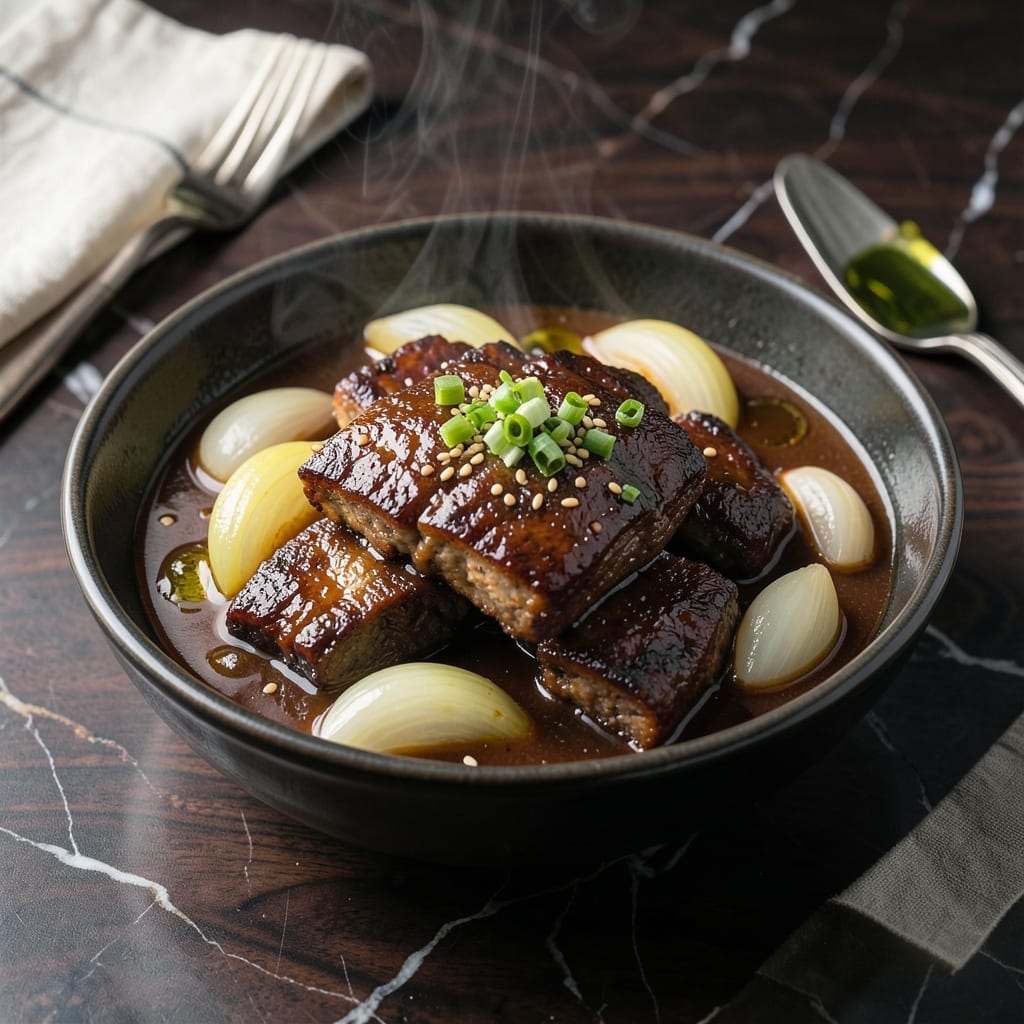
Traditional Korean beef rib stew gets a modern upgrade with this Instant Pot method that preserves all the rich, savory depth of the classic dish. I’ve streamlined the process to deliver tender, fall-off-the-bone ribs in under an hour without sacrificing flavor.
This recipe relies on a balance of soy, garlic, and subtle sweetness to create a deeply aromatic broth. The pressure cooker locks in the flavors, transforming tough cuts of beef into melt-in-your-mouth perfection. It’s a foolproof way to achieve authentic results at home.
What you’ll get is a hearty, comforting stew with ribs so tender they practically dissolve in the broth. The vegetables soak up the savory flavors, making every bite as satisfying as the last. It’s a dish that feels like a hug in a bowl.
Perfect for a cozy weeknight dinner or impressing guests. Here’s how to make it.
Ingredients for Galbi Tang Recipe Instant Pot
Rich, aromatic ingredients transform tough ribs into melt-in-your-mouth perfection in record time.
| Ingredient | Amount | Notes |
|---|---|---|
| Beef Short Ribs 🥩 | 2 lb | Bone-in, cut into 3-inch pieces |
| Water 💧 | 6 cups | For pressure cooking liquid |
| Soy Sauce 🫙 | ½ cup | Low-sodium preferred for balance |
| Brown Sugar 🍚 | 3 tbsp | For subtle sweetness |
| Garlic Cloves 🧄 | 8 cloves | Minced for aromatic base |
| Yellow Onion 🧅 | 1 whole | Large, sliced thick |
| Carrots 🥕 | 2 whole | Peeled, cut into chunks |
| Daikon Radish 🥬 | 1 whole | Peeled, sliced into rounds |
| Asian Pears 🍐 | 2 whole | Peeled, cored, sliced |
| Green Onions 🌱 | 4 whole | Chopped, for garnish |
| Sesame Oil 🫒 | 1 tbsp | Toasted, for finishing |
| Black Pepper 🌶️ | 1 tsp | Freshly ground for depth |
| Sesame Seeds 🌰 | 1 tbsp | Toasted, for garnish |
| Ginger Slices 🫚 | 6 slices | Fresh, thinly cut |
[recipe_ingredient_scaler]
The beef short ribs are the star here. Look for bone-in, well-marbled cuts at your butcher or Korean market—they’ll break down beautifully under pressure. I like to ask for them pre-cut into 3-inch pieces (saves time and mess). The daikon radish and Asian pears are non-negotiable for authentic flavor; H Mart or 99 Ranch always have them fresh. Avoid pre-packaged ribs with added solutions—they dilute the broth.
No Asian pears? Bosc pears or even a sweet apple can sub in a pinch (the texture changes slightly, but the sweetness is key). Short on time? Skip the daikon—it’s traditional, but the stew still shines. For the soy sauce, Jin or Pearl River Bridge are my go-tos. If your broth tastes flat, a splash of fish sauce (not vegan, but authentic) or extra soy at the end brings it back to life.
This stew tastes even better the next day. Store in the fridge for up to 4 days or freeze for 3 months. Reheat gently on the stove—microwaving can make the meat tough. The fat will solidify when cold; just skim it off before reheating (or leave it for extra richness).
Why You’ll Love This Recipe
- Set and Forget: The Instant Pot does all the work—just toss in the beef short ribs, soy sauce, and garlic, then walk away.
- Sweet-Savory Magic: Brown sugar caramelizes with the soy sauce and garlic to create a sauce so rich you’ll want to drink it straight from the bowl.
- Weeknight Hero: I make a big batch on Sunday and pack it for lunches all week—it reheats like a dream.
- Budget Stretcher: Short ribs feel fancy but cook down tender in the pressure cooker, so I can serve a crowd without breaking the bank.
Step-by-Step Instructions for Korean Beef Rib Stew
This method transforms tough ribs into fall-off-the-bone perfection under pressure.
Step 1: Sear the Beef Short Ribs
Set your Instant Pot to the Sauté function on Normal heat. Add the 2 lb Beef Short Ribs in batches, searing for 2-3 minutes per side until deeply browned. I always pat the ribs dry first—this ensures a proper sear instead of steaming.
Don’t crowd the pot, or the temperature will drop and the meat will stew rather than brown. You’ll know it’s ready to flip when the ribs release easily from the bottom. Transfer the seared ribs to a plate and set aside.
Step 2: Build the Flavor Base
After removing the ribs, add the 1 whole Yellow Onion, 2 whole Carrots, 1 whole Daikon Radish, 2 whole Asian Pears, 8 cloves Garlic Cloves, and 6 slices Ginger Slices to the pot. Sauté for 3-4 minutes until the onions soften and the aromatics become fragrant.
Pour in the 0.5 cup Soy Sauce and 3 tbsp Brown Sugar, then stir to combine. The brown sugar will caramelize slightly, creating a rich, sweet-savory foundation. Scrape up any browned bits from the bottom to prevent burning.
Step 3: Pressure Cook to Tenderness
Return the seared 2 lb Beef Short Ribs to the pot along with the 6 cups Water. Stir to combine, ensuring the ribs are mostly submerged. Secure the lid, set the valve to Sealing, and cook on High Pressure for 35 minutes. The liquid should reach at least halfway up the ribs for even cooking.
Once the cooking cycle ends, allow the pressure to release naturally for 10 minutes, then quick-release any remaining pressure. This gradual release prevents the meat from seizing up and keeps it tender. The ribs should be fork-tender and nearly falling off the bone.
Step 4: Finish and Garnish
Carefully remove the ribs and vegetables to a serving bowl. Skim any excess fat from the surface of the broth, then adjust the seasoning with 1 tsp Black Pepper if needed. Drizzle with 1 tbsp Sesame Oil for depth and a glossy finish.
Garnish with the 4 whole Green Onions (chopped) and 1 tbsp Sesame Seeds. The green onions add a fresh, sharp contrast to the rich broth, while the sesame seeds provide a nutty crunch. Serve hot with steamed rice to soak up the flavorful liquid.
Pro Tips For Making Galbi Tang Recipe Instant Pot
- Sear First, Always: I learned this the hard way—browning the short ribs in the Instant Pot before pressure cooking adds a depth of flavor that skipping this step just can’t match. Use the sauté function with a little oil and sear each side for 2-3 minutes until deeply caramelized.
- Trim the Fat: Sounds tedious, but trimming excess fat from the short ribs prevents a greasy broth. Leave just a thin layer for flavor, or you’ll be skimming off pools of oil later.
- Don’t Overfill It: After burning a batch, I finally realized the Instant Pot needs room—never fill it more than two-thirds full with the ribs and liquid. Overfilling risks uneven cooking and that dreaded “burn” error.
- Use a Quick Release: For galbi tang, a quick pressure release keeps the meat from overcooking and turning mushy. Let it sit for 5 minutes naturally, then release the rest manually—this gives tender ribs without falling apart in the broth.
Wine and Beer Pairings for This Recipe
Wine Pairings
A crisp, off-dry Riesling from Germany or Washington state balances the savory-sweet broth beautifully. The subtle fruitiness and acidity cut through the richness without overpowering the dish. I recommend Dr. Loosen Blue Slate for a reliable, food-friendly option. 🍷
Bold Red Options
For red wine lovers, a light-bodied Pinot Noir from Oregon’s Willamette Valley offers earthy notes that complement the beef. The 2020 Eyrie Vineyards Pinot Noir has the brightness to stand up to the stew’s depth without clashing with the soy and garlic. Serve slightly chilled.
Korean Beer Pairing
A cold Hite or OB Golden Lager from Korea provides a clean, crisp contrast to the rich stew. The light effervescence refreshes your palate between bites. For craft beer lovers, a Korean maize lager like Kluge offers a slightly sweeter profile that works well. 🍺
Sparkling Alternatives
If you prefer bubbles, a dry Prosecco or Cava adds a festive touch. The acidity and carbonation cleanse your palate, making each spoonful of stew taste as vibrant as the first. I love La Marca Prosecco for its consistent quality.
Non-Alcoholic Choice
For a non-alcoholic option, try Korean barley tea (boricha) served cold or hot. Its nutty, toasty flavor complements the stew’s savory notes. Alternatively, a ginger beer like Fever-Tree provides a spicy kick that pairs surprisingly well.
Nutrition Facts
Frequently Asked Questions
Can I use boneless ribs instead?
Yes, but bone-in ribs add richer flavor to the broth. Boneless will cook faster, so reduce pressure time to 25 minutes.
Why do I need to sear the ribs first?
Searing develops deep, caramelized flavors that pressure cooking alone can’t achieve. It also helps render some fat for a cleaner broth.
Can I skip the natural release?
No, the 10-minute natural release prevents the meat from seizing up. Quick-releasing can make the ribs tough and stringy.
What if my stew tastes bland?
Add a splash of fish sauce or more soy sauce to taste. The Asian pears should balance the saltiness, so don’t oversalt initially.

Trained in classic French technique but raised on slow-cooked ribs and spicy rubs, she blends culinary skill with smoke and soul.
- Energy Ball Recipe Peanut Butter: No-Bake Protein-Packed Bites - September 24, 2026
- Jerk Chicken Recipe Crock Pot: Slow-Cooked Caribbean Heat - September 24, 2026
- Japanese Curry Recipe Kenji: Chef-Tested Rich and Velvety Sauce - September 24, 2026