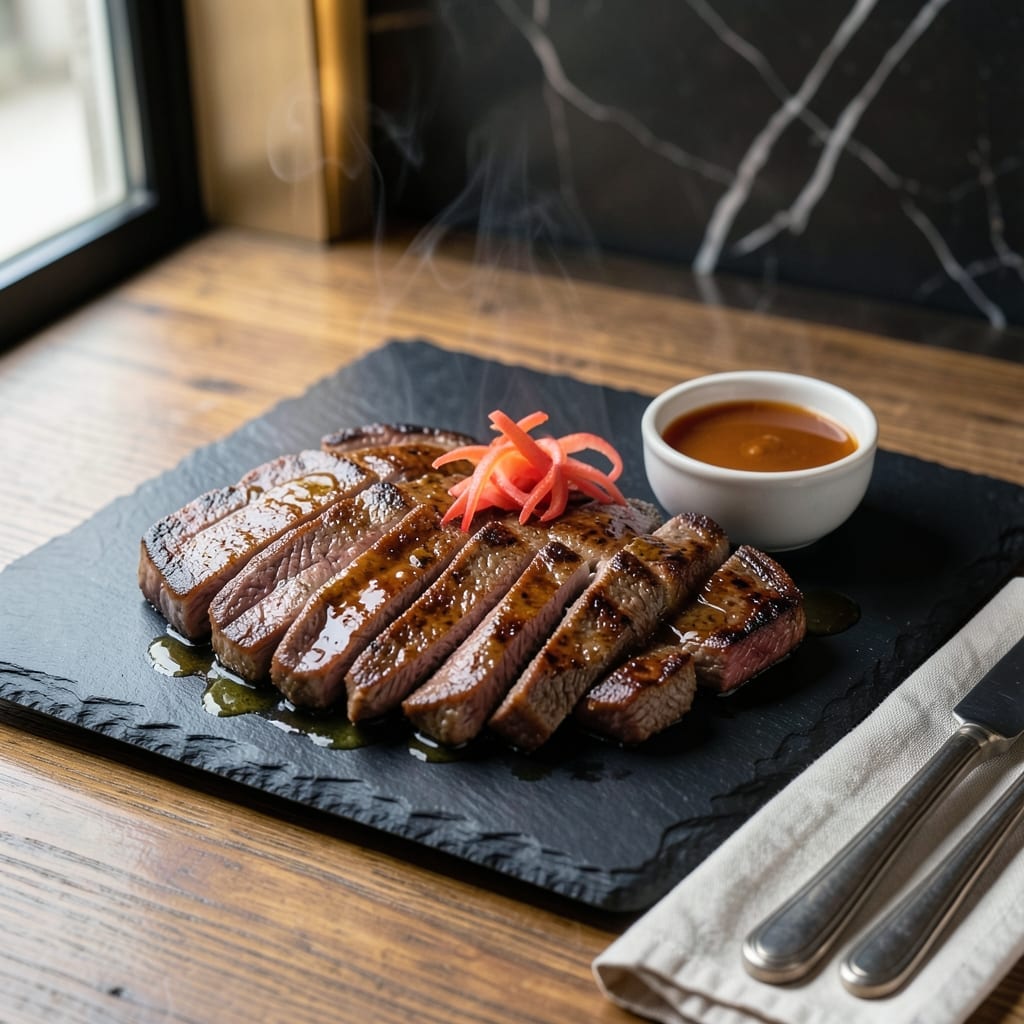
This teriyaki steak changed my weeknight cooking game completely. Between you and me, I used to dread making Japanese dishes at home until I found this method.
Thinly sliced beef soaks up a sweet-savory glaze that caramelizes beautifully in the pan. The secret is letting the meat marinate for 30 minutes before cooking—it makes all the difference.
You’ll end up with tender, juicy steak coated in a sticky, umami-rich sauce that’s better than takeout. My family asks for this at least once a week.
Serve over rice with steamed veggies for a complete meal. Let’s get started.
Ingredients for Japanese Steak Recipe Teriyaki
Thin beef, bold glaze, and a few pantry staples create this restaurant-worthy dish at home.
| Ingredient | Amount | Notes |
|---|---|---|
| Ribeye Steak 🥩 | 1 ½ lb | Thinly sliced against the grain |
| Soy Sauce 🥫 | ½ cup | Low-sodium preferred for balance |
| Mirin 🍶 | ¼ cup | Sweet rice wine essential |
| Sake 🍶 | ¼ cup | Dry variety for depth |
| Brown Sugar 🍚 | ¼ cup | Light or dark works fine |
| Fresh Ginger 🌿 | 1 tbsp | Grated for maximum flavor |
| Garlic Cloves 🧄 | 4 cloves | Minced for sauce base |
| Cornstarch 🌾 | 1 tbsp | For thickening the glaze |
| Sesame Oil 🫒 | 1 tsp | Toasted for nutty aroma |
| Vegetable Oil 🫒 | 2 tbsp | High smoke point for searing |
| Green Onions 🧅 | 4 whole | Thinly sliced for garnish |
| Sesame Seeds 🌰 | 1 tsp | Toasted for topping |
| Jasmine Rice 🍚 | 2 cups | Uncooked, for serving |
[recipe_ingredient_scaler]
The beef is everything here. Ribeye gives you that melt-in-your-mouth texture—flank steak works too but needs extra slicing against the grain. Whole Foods or a good butcher will have pre-sliced options (ask for sukiyaki cut). For the mirin and sake, Kikkoman is widely available at most supermarkets. Don’t skip the grating on the ginger—it distributes better in the marinade.
No mirin? Mix 2 tbsp sugar + 2 tbsp water + 1 tbsp rice vinegar for each 1/4 cup needed. Sake can be swapped with dry sherry in a pinch. The brown sugar can be honey (but that changes the flavor slightly). For gluten-free, use tamari instead of soy sauce. The cornstarch is key for that glossy finish—arrowroot powder works at the same ratio if that’s what you have.
Marinate the beef up to 24 hours for deeper flavor (but 30 minutes is plenty). Cooked steak keeps 3-4 days in the fridge, though it’s best fresh. The glaze thickens as it cools—reheat gently with a splash of water to loosen before serving.
Why You’ll Love This Recipe
- One Pan Magic: I sear the ribeye, then let it soak up the soy-mirin glaze—same pan, minimal cleanup.
- Umami Bomb: The sake and brown sugar caramelize into this sticky, savory-sweet crust that’s honestly ridiculous.
- Weeknight Hero: Between us, I’ve served this for date night and Tuesday dinner—equally impressive.
- Leftovers? Yes Please: Cold slices over rice the next day taste even better, and the ribeye stays tender.
Step-by-Step Instructions for Japanese Steak Teriyaki
This method ensures tender beef with a glossy, umami-packed glaze that clings to every bite.
Step 1: Slice and Marinate the Ribeye
Place the 1.5 lb ribeye steak in the freezer for 20-30 minutes to firm up slightly—this makes thin slicing easier. Using a sharp knife, slice against the grain into ¼-inch thick strips. This shortens the muscle fibers for maximum tenderness.
In a bowl, whisk together the 0.5 cup soy sauce, 0.25 cup mirin, 0.25 cup sake, 0.25 cup brown sugar, 1 tbsp grated fresh ginger, and minced 4 cloves garlic cloves. Add the sliced ribeye and let it marinate for 30 minutes at room temperature—no longer or the acidity will start to “cook” the meat.
Step 2: Create the Teriyaki Glaze
After marinating, remove the ribeye from the marinade and pat it dry with paper towels. Reserve the marinade in a small saucepan. Stir the 1 tbsp cornstarch into 2 tablespoons of cold water to create a slurry, then whisk this into the marinade.
Bring the mixture to a boil over medium-high heat, then reduce to a simmer. Cook for 5-7 minutes, stirring frequently, until it thickens to a syrup-like consistency that coats the back of a spoon. Remove from heat and stir in the 1 tsp sesame oil. This glaze will deepen in flavor as it reduces.
Step 3: Sear the Beef to Perfection
Heat the 2 tbsp vegetable oil in a large skillet or wok over high heat until it shimmers but doesn’t smoke. Working in batches to avoid crowding, add the ribeye strips in a single layer. Sear undisturbed for 1-2 minutes per side until deeply browned with crisp edges.
The beef will cook quickly due to its thinness. You’re looking for a rich caramelization on the surface while maintaining a juicy interior. Don’t overcrowd the pan or the temperature will drop, causing the beef to steam instead of sear.
Step 4: Glaze and Garnish
Return all the beef to the skillet and pour the teriyaki glaze over it. Toss to coat evenly and cook for an additional 30-60 seconds until the sauce clings to the beef and becomes glossy. The glaze should bubble and thicken slightly as it coats each piece.
Transfer to a serving platter. Garnish with thinly sliced 4 whole green onions and sprinkle with the 1 tsp sesame seeds. The contrast of the vibrant green and nutty seeds against the dark glaze makes for a stunning presentation.
Serve immediately over steamed 2 cups jasmine rice to soak up every drop of that incredible sauce. The rice provides the perfect neutral base for the bold teriyaki flavors.
Pro Tips For Making Japanese Steak Recipe Teriyaki
- Sear Before Sauce: Get a hard sear on the ribeye first—high heat for 2-3 minutes per side before adding the teriyaki glaze. I learned this the hard way after my steak boiled in the sauce instead of caramelizing.
- Dry the Steak: Pat the ribeye completely dry with paper towels before cooking. Sounds obvious, but I used to skip this and wondered why my steak never got that perfect crust.
- Reduce the Glaze: Simmer the soy sauce, mirin, sake, and brown sugar for 3-4 minutes until it thickens slightly. My first few attempts were watery because I didn’t let it cook down enough.
- Rest Before Slicing: Let the steak rest for 5-10 minutes under foil after cooking. I know, I know, it’s hard to wait, but slicing too soon lets all the juices escape.
Storing and Reheating This Dish
Refrigerator Storage
Let the steak cool completely before storing—I usually wait about 30 minutes. Transfer to an airtight container with the sauce. It’ll keep in the fridge at 40°F or below for up to 3-4 days. The flavors meld beautifully overnight. ❄️
Freezer Storage
For longer storage, freeze in a single layer on a tray first to prevent sticking. Then transfer to a freezer bag or airtight container. It’ll stay fresh for up to 3 months. I always label with the date—trust me, it’s easy to forget!
Stovetop Reheating
Reheat gently in a skillet over medium-low heat with a splash of water or beef broth. Cover and warm for 3-4 minutes, stirring occasionally. This keeps the beef tender and prevents the sauce from drying out. 🔥
Microwave Reheating
Place portions in a microwave-safe dish and cover with a damp paper towel. Heat on 50% power for 1-2 minutes, then stir and repeat in 30-second intervals until hot. The damp towel adds moisture to prevent drying.
Serving Leftovers
Reheated steak is delicious over fresh rice or noodles. I love repurposing leftovers in stir-fries or wraps. The teriyaki glaze pairs well with steamed veggies like broccoli or snap peas.
Nutrition Facts
Frequently Asked Questions
What’s the best cut for this dish?
Ribeye works perfectly for its tenderness and rich flavor. For a budget option, flank steak or sirloin are great alternatives. Always slice against the grain for maximum tenderness.
Can I marinate the beef overnight?
Yes, but keep it under 24 hours maximum. The acidity in the marinade can start to break down the meat texture if left too long. For best results, stick to 30 minutes at room temperature.
How do I prevent the sauce from burning?
Cook the glaze over medium-high heat and stir frequently. Once thickened, remove it from heat immediately. If it starts to darken too much, reduce the heat and add a splash of water.
What can I serve with this steak?
Steamed jasmine rice is classic, but it also pairs well with stir-fried veggies or noodles. The rich sauce complements simple sides that won’t overpower the dish.

Trained in classic French technique but raised on slow-cooked ribs and spicy rubs, she blends culinary skill with smoke and soul.
- Energy Ball Recipe Peanut Butter: No-Bake Protein-Packed Bites - September 24, 2026
- Jerk Chicken Recipe Crock Pot: Slow-Cooked Caribbean Heat - September 24, 2026
- Japanese Curry Recipe Kenji: Chef-Tested Rich and Velvety Sauce - September 24, 2026