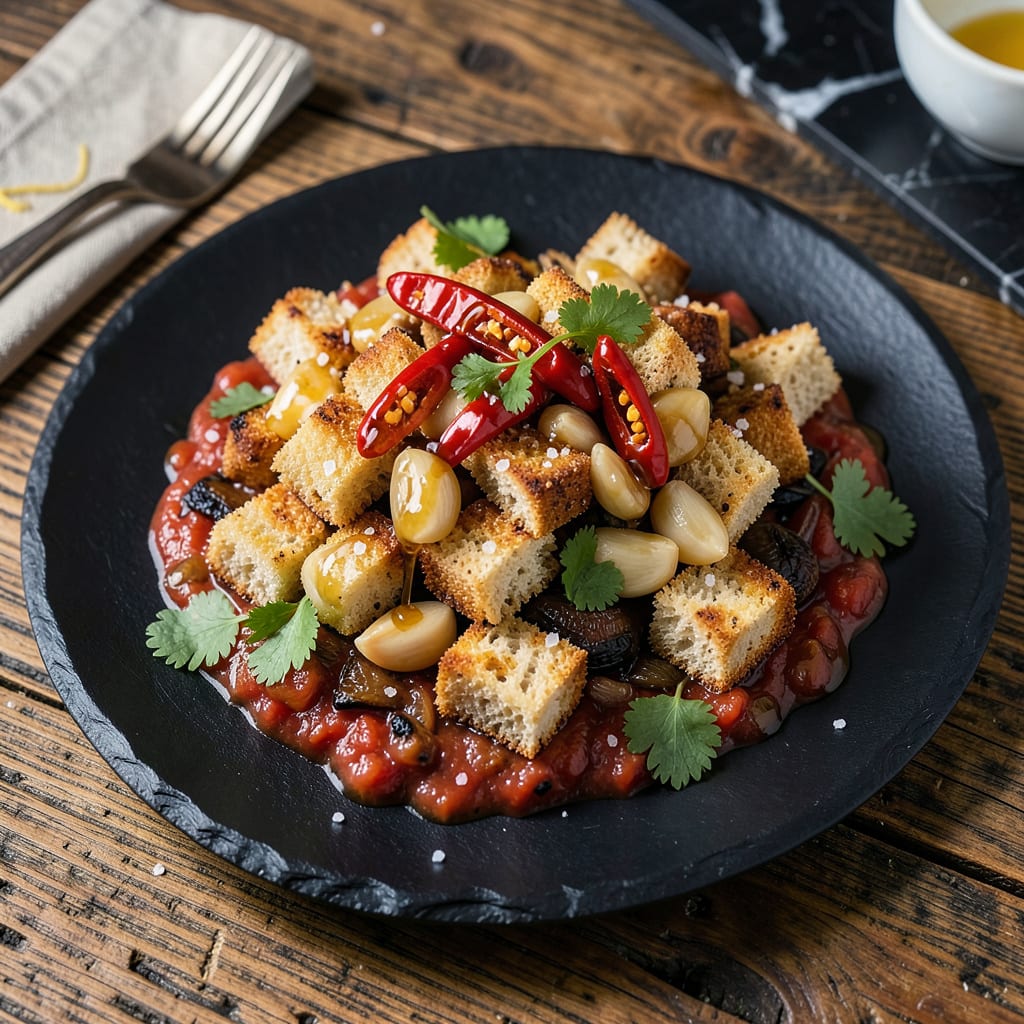
This bold garlic spicy sauce combines fresh garlic, chili peppers, vinegar, and oil for a fiery, aromatic kick. Ready in 10 minutes with pantry staples, it elevates stir-fries, dips, and marinades instantly.
I love how this sauce transforms ordinary dishes with its layered heat and depth. The garlic’s pungent sharpness mellows when cooked, while the chilies deliver a slow-building warmth that lingers. 🔥 What’s clever is how the vinegar cuts through the richness, balancing the oil’s body—this isn’t just heat, it’s a full flavor experience. I’ve found it works miracles on everything from crispy roasted potatoes to simple grilled chicken, proving that great flavor doesn’t require hours in the kitchen.
💡 In This Article
- How Garlic and Chili Create Explosive Flavor Balance
- 5 Ways to Use Garlic Spicy Sauce Beyond the Basics
How Garlic and Chili Create Explosive Flavor Balance
When garlic hits heat, its sulfur compounds transform into allicin—the pungent powerhouse that gives garlic its signature bite. Meanwhile, chili peppers release capsaicin, the compound that triggers heat receptors on your tongue. The magic happens when these two meet: allicin’s sharpness cuts through capsaicin’s burn, creating a layered flavor that’s both fiery and complex.
🔥 Fresh garlic delivers a brighter, more aggressive punch, while dried mellows into a deeper, toasted warmth.
Heat levels play a critical role in balancing this duo. Fresh chilies like Thai bird’s eye (50,000-100,000 Scoville units) bring immediate, sharp heat, while dried varieties (like arbol at 15,000-30,000 Scoville) offer a slower, smoldering burn. The oil in the sauce acts as a carrier, distributing both flavors evenly while coating your palate.
This is why the sauce clings so well to foods—it’s not just flavor, it’s texture too.
Acidity is the secret weapon that ties everything together. Vinegar or lemon juice doesn’t just add tang—it chemically interrupts the capsaicin’s burn, giving your taste buds a moment to reset. I’ve found a 1:3 acid-to-oil ratio works best: enough brightness to balance the heat without overpowering the garlic’s depth.
The acid also helps preserve the sauce, extending its shelf life to about 2 weeks refrigerated.
Fresh vs. dried ingredients change the game completely. Fresh garlic and chilies create a vibrant, almost grassy heat that’s perfect for quick dishes like stir-fries. Dried versions, however, develop deeper, caramelized notes when bloomed in oil—ideal for slow-cooked marinades or braises.
The choice depends on whether you want immediate impact or slow-building complexity in your dish.
Here’s what most people miss: the garlic’s sulfur compounds actually become more stable when paired with capsaicin. This means the sauce’s flavor holds up better under heat than either ingredient alone. 💫 Try sautéing it with shrimp—the garlic won’t turn bitter, and the chili heat will infuse beautifully into the protein.
That’s chemistry you can taste!
The oil you choose matters too. Neutral oils like grapeseed let the flavors shine, while toasted sesame oil adds its own nutty layer. I prefer a blend: 3 parts neutral oil to 1 part sesame for depth without overpowering.
This ratio gives the sauce versatility—equally at home in Asian-inspired dishes or as a bold dip for crusty bread.
Pro tip: Let the sauce rest for at least 30 minutes before using. This allows the flavors to meld and the heat to distribute evenly. You’ll notice the difference immediately—the garlic’s raw edge softens, and the chilies’ heat becomes more integrated.
✨ It’s the difference between good sauce and one that makes people pause mid-bite to ask, “What’s in this?”

Trained in classic French technique but raised on slow-cooked ribs and spicy rubs, she blends culinary skill with smoke and soul.
- Recipe for Boneless Pork Chops in Cast Iron Skillet: Sear and Baste to Juicy Perfection - October 3, 2026
- Recipe for Boneless Cross Rib Roast: Slow-Roasted Beef with Herb Crust - October 3, 2026
- Hamburgers in Sauce Recipe Crock Pot: Slow-Cooked Savory Delight - October 3, 2026