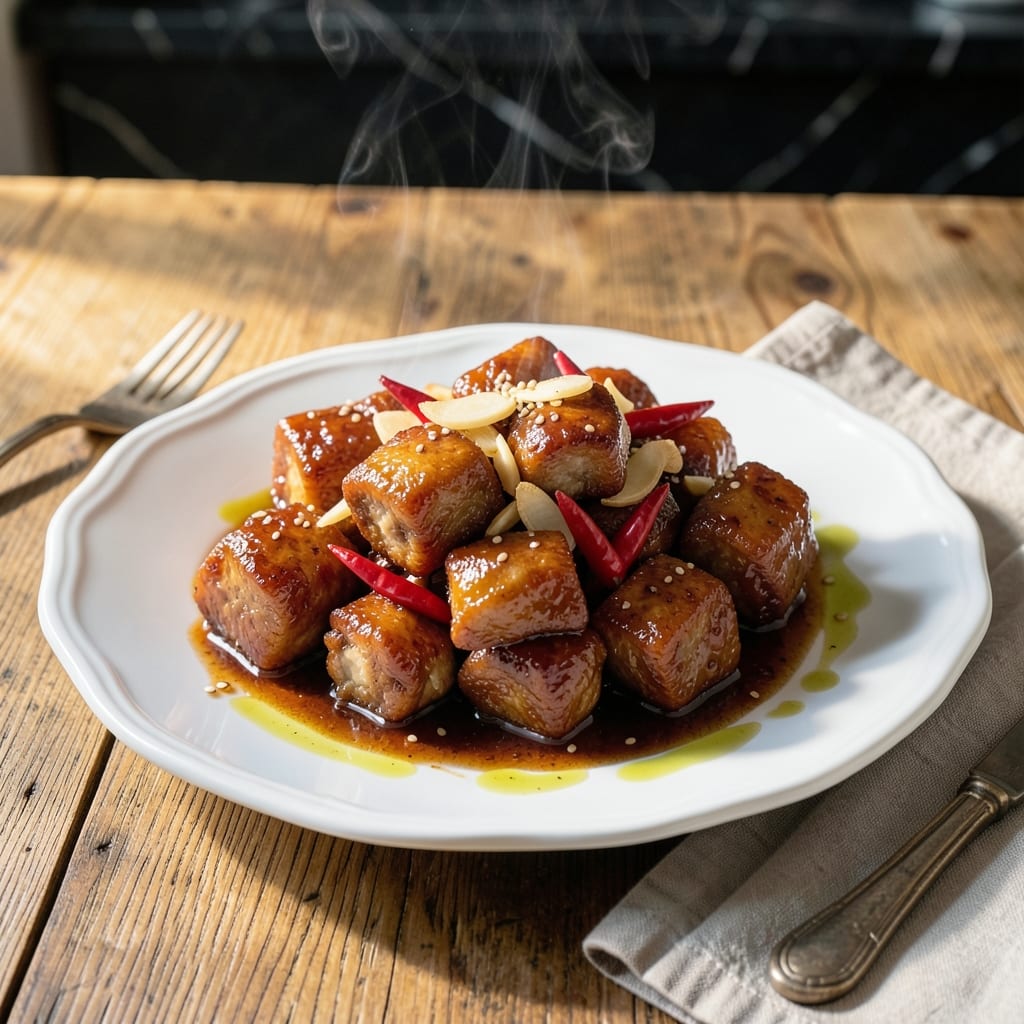
I developed this General Tso pork recipe after years of takeout disappointment, aiming for that perfect balance of sweet, spicy, and crispy. The secret lies in a double-frying technique that ensures the pork stays tender inside while achieving a shatteringly crispy exterior.
What sets this dish apart is the sauce—a carefully calibrated blend of soy, rice vinegar, and chili that clings to every piece without overwhelming it. I’ve tested this method in my small Boston kitchen, adjusting heat and timing to work in home woks.
The result is restaurant-quality pork with a glossy, sticky glaze and a satisfying crunch that holds up even after tossing. Serve it over steamed rice for a meal that feels indulgent but comes together in under 30 minutes.
This version skips the deep-fryer mess while delivering the same bold flavors. Here’s how to make it at home.
Ingredients for General Tso Pork
These ingredients create that perfect balance of sweet, spicy, and crispy in every bite.
| Ingredient | Amount | Notes |
|---|---|---|
| Pork Shoulder 🐖 | 1 ½ lb | Cut into 1-inch cubes |
| Soy Sauce 🥢 | ½ cup | Low-sodium preferred |
| Rice Vinegar 🍚 | 3 tbsp | Unseasoned variety |
| Brown Sugar 🍚 | 3 tbsp | Light or dark |
| Garlic Cloves 🧄 | 4 cloves | Minced finely |
| Fresh Ginger 🌿 | 1 tbsp | Grated or minced |
| Dried Red Chili Peppers 🌶️ | 4 whole | Or 1 tsp red pepper flakes |
| Cornstarch 🌾 | ½ cup | For coating pork |
| Large Egg 🥚 | 1 whole | Beaten for coating |
| Green Onions 🧅 | 4 pieces | Thinly sliced for garnish |
| Sesame Oil 🫒 | 2 tsp | Toasted for flavor |
| Vegetable Oil 🫒 | 2 cups | For frying, high smoke point |
| Water 💧 | ¼ cup | For sauce slurry |
| Hoisin Sauce 🥢 | 2 tbsp | Optional for depth |
[recipe_ingredient_scaler]
The pork matters most here. Pork shoulder gives the best texture—tender inside, crispy outside. Look for well-marbled pieces at Whole Foods or your local butcher. Cut it into even 1-inch cubes yourself (pre-cut often has too much connective tissue). For the soy sauce, Kikkoman low-sodium is my go-to. The rice vinegar should be unseasoned—Marukan is widely available and reliable.
No pork shoulder? Pork tenderloin works but can dry out—reduce cooking time by a third. Swap brown sugar for honey at a 1:1 ratio (trust me, it works). Out of fresh ginger? Ground ginger at one-third the amount. Can’t find dried chilies? Red pepper flakes at half the quantity get you close. The cornstarch is non-negotiable though—it’s what makes that coating so crispy.
Pork stays good in the fridge for 2-3 days before cooking. The sauce ingredients (except garlic and ginger) keep in the pantry for months. Leftovers reheat best in a skillet—microwave makes the coating soggy. Freeze cooked pork without sauce for up to 3 months.
Why You’ll Love This Recipe
- One Pan Wonder: I toss the pork shoulder in, let the soy sauce and brown sugar caramelize, and cleanup’s just a quick wipe.
- Sweet-Savory Magic: The brown sugar and rice vinegar hit that perfect balance—sticky, tangy, and deeply satisfying.
- Weeknight Hero: Between us, this is my go-to when I need dinner fast but still crave takeout flavors.
- Budget Stretcher: Pork shoulder’s cheap, and this recipe turns it into something crave-worthy that feeds four.
Step-by-Step Instructions for General Tso Pork
Here’s the method. Straightforward, tested, works every time.
Step 1: Coat the Pork for Maximum Crispiness
Cut the 1.5 lb pork shoulder into 1-inch cubes as specified. Pat the pieces dry with paper towels—this is crucial for the coating to adhere properly and create that signature crispy texture.
In a bowl, beat the 1 whole large egg lightly. Dip each piece of pork into the beaten egg, letting any excess drip off. Then roll the pork in the 0.5 cup cornstarch until fully coated. Press gently to ensure the cornstarch sticks to all sides. This double-coating method guarantees an extra-crispy exterior that holds up to the sauce.
Step 2: Fry the Pork to Golden Perfection
Heat the 2 cups vegetable oil in a large, heavy-bottomed pot or wok over medium-high heat until it reaches 350°F. To test the oil, drop in a small piece of coated pork—if it sizzles immediately and rises to the surface, it’s ready.
Working in batches to avoid crowding, carefully add the coated pork pieces to the hot oil. Fry for 3-4 minutes until golden brown and crispy on all sides. Use a slotted spoon to transfer the fried pork to a wire rack or paper towel-lined plate to drain. Maintain the oil temperature between batches—if it drops too low, the pork will absorb oil and become greasy.
Step 3: Create the Signature Sweet and Spicy Sauce
In a clean wok or large skillet, heat the 2 tsp sesame oil over medium heat. Add the 4 cloves minced garlic, 1 tbsp grated fresh ginger, and 4 whole dried red chili peppers. Stir-fry for 30 seconds until fragrant—be careful not to let the garlic burn, as it can turn bitter quickly.
Pour in the 0.5 cup soy sauce, 3 tbsp rice vinegar, and 3 tbsp brown sugar. Stir well to dissolve the sugar, then add the 0.25 cup water and 2 tbsp hoisin sauce. Bring the mixture to a simmer and let it cook for 2-3 minutes until it thickens slightly and becomes glossy. The sauce should coat the back of a spoon but still be pourable.
Step 4: Toss and Serve Immediately
Add the fried pork to the wok with the sauce. Toss gently to coat each piece evenly, ensuring every bite is covered in the sweet and spicy glaze. Cook for an additional 1-2 minutes to allow the pork to absorb some of the sauce and for the flavors to meld together.
Transfer the pork to a serving platter and garnish with the 4 pieces thinly sliced green onions. Serve immediately while hot—the contrast of the crispy pork and the sticky, glossy sauce is best enjoyed fresh. The green onions add a pop of color and a mild oniony crunch that complements the dish perfectly.
Pro Tips For Making General Tso Pork
- Velvet the Pork: Cut pork shoulder into 1-inch cubes, then marinate with 1 tsp soy sauce and 1 tsp cornstarch for 15 minutes—I learned this the hard way after my first batch turned out dry and chewy.
- Balance the Sauce: Mix 2 parts brown sugar to 1 part rice vinegar for that perfect sweet-tangy glaze. Sounds weird, but it works: too much vinegar and your dish will taste harsh.
- Skip the Overcrowding: Fry pork in batches with space between pieces, or it’ll steam instead of brown. After burning three batches, I finally figured out that patience here is non-negotiable.
- Toast the Garlic: Cook minced garlic in oil until just golden before adding sauces—about 30 seconds. My grandmother swore by this, and she was right: raw garlic ruins the flavor.
Creative Variations of These Flavors
Spicier Sichuan Version
Add 2 tbsp Sichuan peppercorns to the oil during frying for that signature numbing heat. I also increase the dried chilies to 6-8 whole and add 1 tbsp chili oil to the sauce. This version pays homage to the dish’s Chinese-American roots while cranking up the heat. 🌶️
Honey-Glazed Twist
Replace the brown sugar with ¼ cup honey for a smoother sweetness. I use local Boston honey from the farmers market when I can find it. The honey caramelizes beautifully during frying, creating a deeper golden color on the pork.
Vegetable Addition
For a heartier version, toss in 2 cups broccoli florets with the pork in the final step. The broccoli soaks up the sauce while adding texture. I blanch the florets first for 2 minutes to maintain their bright green color and crispness.
Air Fryer Method
For a lighter take, cook the coated pork in an air fryer at 400°F for 10-12 minutes, shaking halfway. You’ll need to work in batches to avoid overcrowding. The texture won’t be quite as crispy, but it’s a great option for weeknight cooking in my small kitchen. 💡
Extra Garlicky
Double the garlic to 8 cloves for a pungent kick. I mince it extra fine so it distributes evenly through the sauce. This is my go-to when I’m craving bold flavors that really pack a punch.
Low-Sodium Option
Use coconut aminos instead of soy sauce and reduce the amount to ⅓ cup. The flavor profile is slightly different but still delicious. I’ve tested this version for friends watching their sodium intake with great success.
Nutrition Facts
Frequently Asked Questions
Can I use chicken instead of pork?
Yes! Chicken thighs work best—cut into 1-inch pieces and follow the same method. Reduce frying time to 2-3 minutes per batch to prevent drying out.
How do I make it less spicy?
Remove the chili peppers entirely and reduce rice vinegar to 2 tablespoons. Add 1 teaspoon honey to balance the flavors. The dish will still be flavorful but milder.
Can I bake the pork instead of frying?
Preheat oven to 425°F. Bake coated pork on a rack for 20-25 minutes, flipping halfway. It won’t be as crispy but avoids deep-frying.

Trained in classic French technique but raised on slow-cooked ribs and spicy rubs, she blends culinary skill with smoke and soul.
- Recipe for Boneless Pork Chops in Cast Iron Skillet: Sear and Baste to Juicy Perfection - October 3, 2026
- Recipe for Boneless Cross Rib Roast: Slow-Roasted Beef with Herb Crust - October 3, 2026
- Hamburgers in Sauce Recipe Crock Pot: Slow-Cooked Savory Delight - October 3, 2026