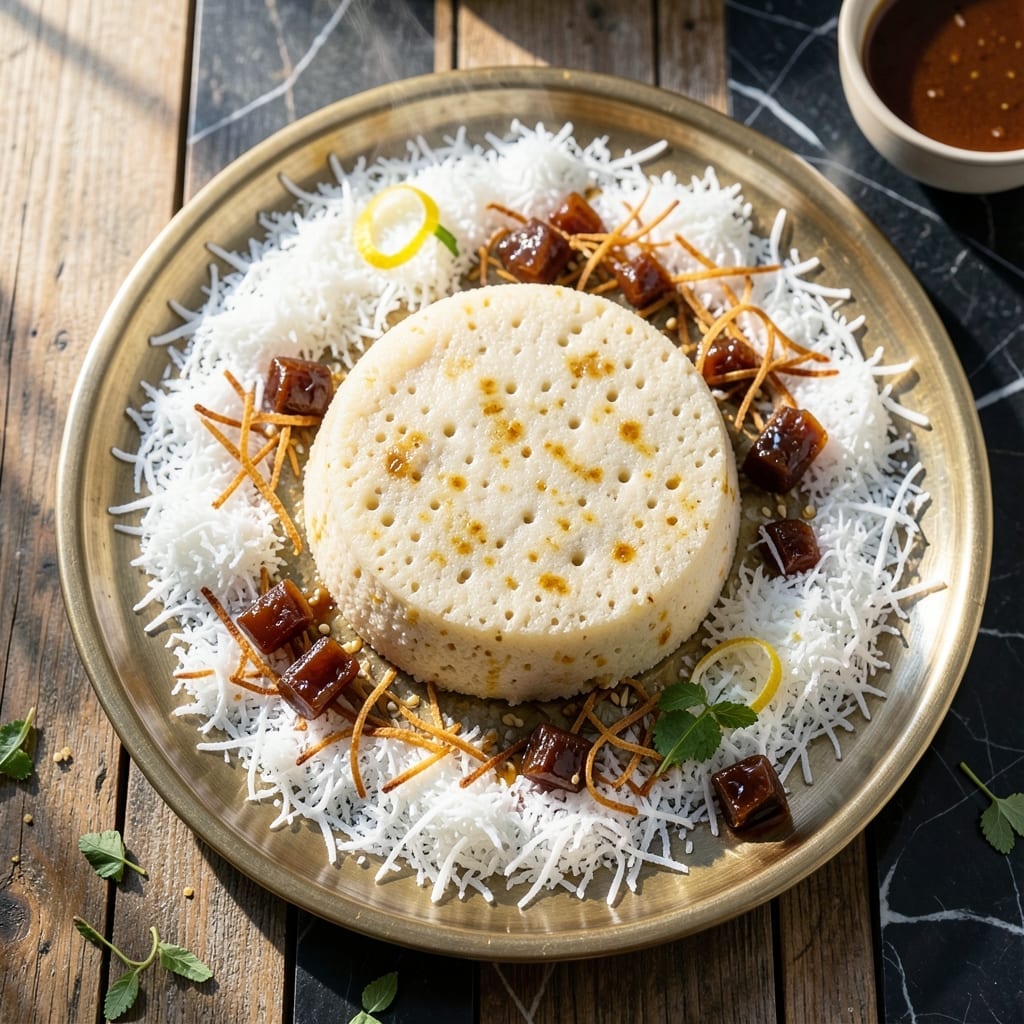
Ghavan brings authentic Goan flavors to your kitchen with its delicate balance of sweet and savory. This traditional recipe uses rice flour to create fluffy, fermented crepes that are both tender and slightly tangy.
I’ve perfected the method to ensure a light texture every time, with coconut adding a natural sweetness that complements the earthy rice base. Serve warm for the best experience.
Ingredients for Ghavan Recipe with Rice Flour
Traditional Goan ingredients create delicate, fermented crepes with natural sweetness and earthy depth.
| Ingredient | Amount | Notes |
|---|---|---|
| Rice Flour 🌾 | 2 cups | Fine grind for smooth batter |
| Grated Coconut 🥥 | 1 cup | Fresh or frozen, unsweetened |
| Semolina 🌾 | ¼ cup | Fine or medium grind |
| Jaggery 🍚 | ½ cup | Grated or powdered for sweetness |
| Water 💧 | 2 ½ cups | Warm for fermentation |
| Salt 🧂 | ½ tsp | Fine sea salt preferred |
| Turmeric Powder 🌿 | ¼ tsp | For color and earthy note |
| Fenugreek Seeds 🌿 | ½ tsp | Lightly crushed for fermentation aid |
| Coconut Milk 🥥 | ½ cup | Full-fat for richness |
| Cardamom Pods 🌿 | 4 pieces | Lightly crushed for aroma |
| Cumin Seeds 🌿 | ½ tsp | Toasted lightly for depth |
[recipe_ingredient_scaler]
Rice flour quality is critical—Bob’s Red Mill or Asian grocery store brands offer fine grinds. Coconut should be fresh (look for unsweetened at Whole Foods or Trader Joe’s) or high-quality frozen. Jaggery, a traditional unrefined sugar, can be found at Indian specialty stores—avoid substitutes as they alter the authentic flavor profile.
No jaggery? Coconut sugar at a 1:1 ratio works in a pinch but lacks complexity. Fresh coconut not available? Unsweetened desiccated coconut (rehydrated) is acceptable. For fermentation, ensure water is warm (not hot) to activate the fenugreek. Cardamom can be swapped for vanilla extract at half the amount, though the flavor will differ.
Batter ferments best at room temperature for 8-12 hours. Store unused batter in the fridge for up to 2 days—fermentation continues, deepening the tang. Cooked crepes keep in an airtight container for 3 days (reheat gently to restore fluffiness).
Why You’ll Love This Recipe
- No-Fuss Mixing: I just stir rice flour, semolina, and jaggery with water—no fancy techniques or hard-to-find ingredients.
- Sweet & Nutty: The jaggery gives a deep caramel flavor while the grated coconut adds a rich, toasty crunch.
- Breakfast or Snack: Honestly, I serve it for breakfast with tea or pack it for my kid’s school snack—it works both ways.
- Budget Stretcher: A handful of pantry staples makes a big batch, and leftovers taste just as good the next day.
Step-by-Step Instructions for Ghavan With Rice Flour
Master the fermentation and cooking process for perfectly textured crepes with balanced sweetness.
Step 1: Prepare the Batter for Fermentation
In a large mixing bowl, combine the 2 cups Rice Flour, 0.25 cup Semolina, 0.5 tsp Salt, 0.25 tsp Turmeric Powder, and 0.5 cup Jaggery. I use a whisk to break up any lumps in the rice flour and ensure even distribution of the dry ingredients.
Gradually add the 2.5 cups Water while whisking continuously to prevent clumping. The batter should be smooth with a consistency similar to heavy cream. Stir in the 1 cup Grated Coconut and 0.5 cup Coconut Milk, then add the 0.5 tsp Fenugreek Seeds, 4 pieces Cardamom Pods, and 0.5 tsp Cumin Seeds. These whole spices infuse the batter with aromatic complexity.
Step 2: Ferment the Batter
Cover the bowl with a clean kitchen towel and let the batter ferment at room temperature for 6-8 hours or overnight. I’ve found that placing it in a warm spot (like near the oven with the light on) accelerates fermentation without compromising flavor development.
You’ll know it’s ready when the batter has risen slightly and you see small bubbles forming on the surface. The fenugreek seeds will have softened, and the mixture will have a tangy aroma. This fermentation step is crucial—it develops the characteristic sour note that balances the sweetness of the jaggery and coconut.
Step 3: Adjust Batter Consistency
After fermentation, give the batter a good stir. It may have thickened slightly during the resting period. If it seems too thick, add a splash of water—just enough to return it to that heavy cream consistency. The batter should coat the back of a spoon but still drizzle easily.
At this stage, the flavors will have melded beautifully. You should notice the turmeric’s golden hue deepening and the spices becoming more pronounced. If the batter appears too thin, let it rest for another 30 minutes to thicken slightly before cooking.
Step 4: Cook the Ghavan
Heat a non-stick skillet over medium heat. Lightly grease it with a small amount of oil or ghee if needed, though with rice flour, you often won’t need much. Pour a ladleful of batter into the center of the pan and quickly spiral it outward to form a thin, even layer.
Cook undisturbed for 2-3 minutes until the edges begin to lift and the surface looks set with tiny holes. Here’s the thing—I press down gently on any thick spots with the back of my ladle to ensure even cooking. Flip and cook for another 1-2 minutes until golden brown spots appear. The ghavan should be soft and slightly spongy with a delicate lace-like pattern.
Step 5: Serve Warm
Transfer the cooked ghavan to a plate and cover with a clean towel to keep warm while you cook the remaining batter. I stack them with parchment paper between each layer to prevent sticking. The crepes should be pliable and slightly glossy from the coconut milk.
Serve immediately while still warm. The texture should be tender with a subtle chew from the semolina, and the flavor a perfect balance of sweet, tangy, and aromatic. These crepes are traditionally enjoyed as-is or with a drizzle of coconut milk for added richness.
Pro Tips For Making Ghavan Recipe With Rice Flour
- Toast the Semolina: Dry-roast the semolina in a pan for 2-3 minutes until golden before mixing—this removes raw taste and deepens the flavor. I learned this the hard way when my first batch tasted like flour paste.
- Dissolve Jaggery First: Melt the jaggery in warm water before adding to the batter to avoid grainy lumps. Sounds obvious, but I skipped this once and spent 10 minutes fishing out stubborn sugar crystals.
- Rest the Batter: Let the rice flour batter sit for at least 20 minutes after mixing. This gives the flour time to hydrate fully, and the ghavan turns out lighter, not dense.
- Use Fresh Coconut: Grated fresh coconut makes a real difference over desiccated—it releases more oil and aroma. My grandmother swore by this, and she was right.
Storing and Reheating This Recipe
Refrigerator Storage
Let your crepes cool completely before storing in an airtight container with parchment between layers to prevent sticking. They’ll keep in the fridge at 40°F or below for up to 3 days. The flavors actually deepen as they rest. ❄️
Freezer Storage
For longer storage, wrap each crepe individually in plastic wrap, then place in a freezer bag with all air removed. They freeze beautifully for up to 1 month without texture loss. I label mine with the date to track freshness.
Stovetop Reheating
My preferred method: warm a dry non-stick pan over low heat and place crepes in for 30-45 seconds per side. This restores their softness without drying them out. Add a splash of water and cover for extra moisture if needed.
Microwave Reheating
For quick reheating, place a stack on a microwave-safe plate covered with a damp paper towel. Heat on 50% power for 20-30 seconds, then flip and repeat. This prevents rubbery texture.
Serving After Storage
Reheated ghavan tastes best with a drizzle of warm coconut milk or a sprinkle of fresh grated coconut. I often serve mine with a side of mango chutney for a sweet-savory contrast. 💛
Nutrition Facts
Frequently Asked Questions
Can I skip the fermentation step?
No, fermentation is essential for authentic flavor and texture. The 6-8 hours allows the fenugreek to develop the characteristic tang that balances the sweetness. Skipping it results in flat-tasting crepes.
What if my batter doesn’t rise?
Check your water temperature—it should be warm, not hot. Also, ensure your fenugreek seeds are fresh. If it’s cold in your kitchen, place the bowl near a warm spot like an oven with the light on.
Can I use all-purpose flour instead of rice flour?
Rice flour gives the authentic texture and taste. All-purpose flour will make the crepes denser and less delicate. For best results, stick with fine rice flour.
How do I know when the ghavan is cooked?
Look for edges lifting and tiny holes forming on the surface after 2-3 minutes. Flip when the top looks set, then cook until golden brown spots appear.

Trained in classic French technique but raised on slow-cooked ribs and spicy rubs, she blends culinary skill with smoke and soul.
- Recipe for Boneless Pork Chops in Cast Iron Skillet: Sear and Baste to Juicy Perfection - October 3, 2026
- Recipe for Boneless Cross Rib Roast: Slow-Roasted Beef with Herb Crust - October 3, 2026
- Hamburgers in Sauce Recipe Crock Pot: Slow-Cooked Savory Delight - October 3, 2026