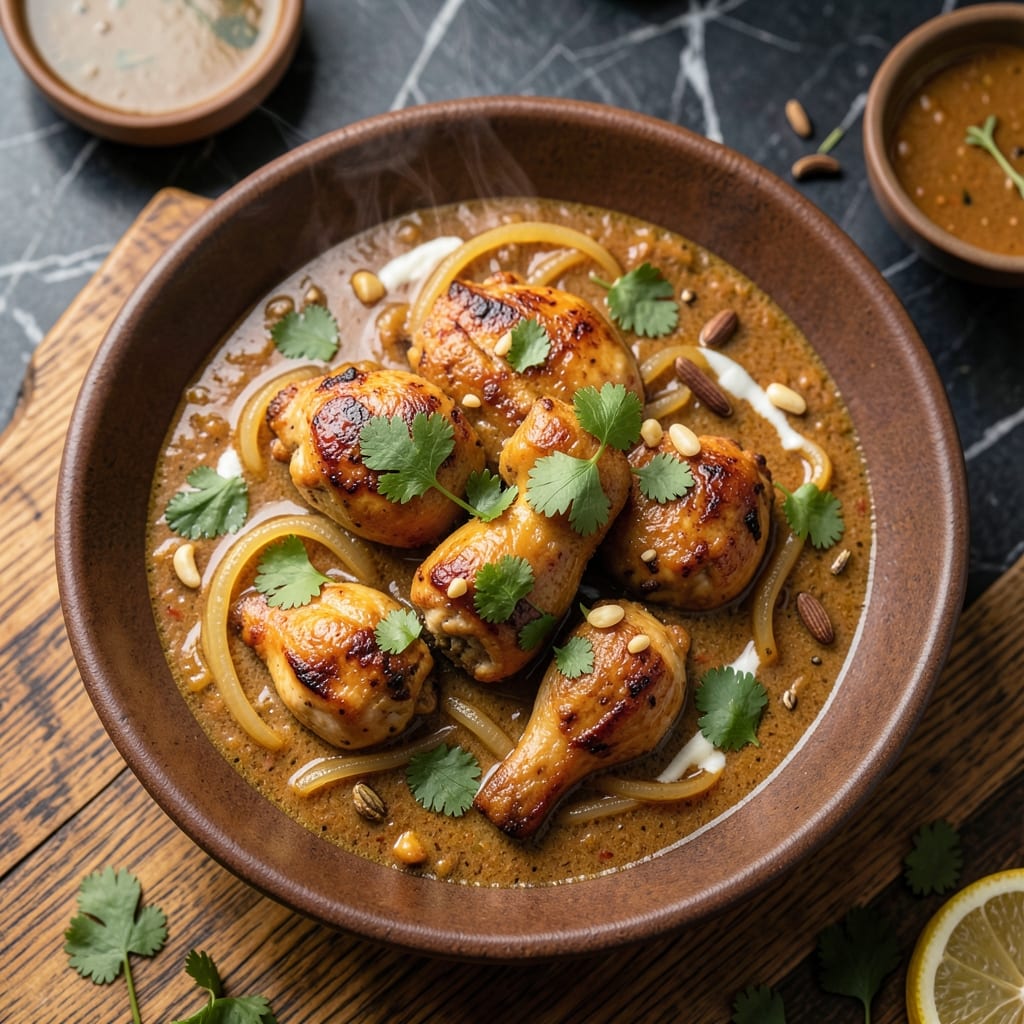
This ginger chicken curry brings authentic Indian flavors to your home kitchen with a rich coconut sauce and fragrant spices. I developed this recipe after studying my grandmother’s handwritten notes, translating her intuitive methods into precise steps anyone can follow.
The key is blooming whole spices in hot oil before adding fresh ginger, garlic, and onions. This builds layers of aromatic complexity that define Indian cooking. The chicken simmers in the spiced coconut sauce until perfectly tender.
You’ll end up with a dish that’s deeply flavorful yet balanced, with the warmth of ginger cutting through the creamy coconut base. Each bite delivers the authentic taste of Indian home cooking.
Serve with basmati rice or naan to soak up every drop of the fragrant sauce. This is restaurant-quality curry made simple.
Ingredients for Ginger Chicken Curry Recipe Indian
Rich coconut milk, fragrant spices, and tender chicken bring this authentic dish to life.
| Ingredient | Amount | Notes |
|---|---|---|
| Boneless Skinless Chicken Thighs 🍗 | 1 ½ lb | Cut into bite-sized pieces |
| Coconut Milk 🥥 | 1 can | Full-fat for creaminess |
| Yellow Onion 🧅 | 1 whole | Finely diced |
| Fresh Ginger Root 🌿 | 3 tbsp | Peeled and minced |
| Garlic Cloves 🧄 | 4 cloves | Minced finely |
| Fresh Cilantro 🌿 | ½ cup | Chopped, for garnish |
| Cumin Seeds 🌿 | 1 tsp | Whole, for blooming |
| Coriander Seeds 🌿 | 1 tsp | Lightly crushed |
| Cardamom Pods 🌿 | 4 pieces | Lightly crushed |
| Ground Turmeric 🌶️ | 1 tsp | For color and earthiness |
| Ground Cinnamon 🌿 | ¼ tsp | Adds warmth |
| Cayenne Pepper 🌶️ | ¼ tsp | Adjust to heat preference |
| Vegetable Oil 🫒 | 2 tbsp | For blooming spices |
| Tomato Paste 🍅 | 2 tbsp | For depth of flavor |
| Salt 🧂 | 1 ½ tsp | Kosher or sea salt preferred |
[recipe_ingredient_scaler]
The spices are the soul here. Whole cumin and coriander seeds bloom best in hot oil—Penzeys or your local Indian grocery will have the freshest. Cardamom pods should be green and plump (avoid dull, dry ones). For the chicken, thighs stay juicier than breasts during the long simmer. Grab full-fat coconut milk—lite versions won’t give you that luxurious texture.
No fresh ginger? Ground ginger at half the amount works, but fresh is non-negotiable for that zing. Out of cilantro? Fresh parsley is a decent stand-in. If you can’t find cardamom pods, ground cardamom at one-fourth the amount gets you close. The tomato paste can be from a can (just use the rest within 5 days or freeze in ice cube trays).
Bloomed spices keep their aroma for 1 week in an airtight container. The curry tastes even better the next day—store in the fridge for up to 4 days or freeze for 3 months (leave some headspace in the container).
Why You’ll Love This Recipe
- One Pot Wonder: I just throw everything in a single pan—chicken, coconut milk, and all those aromatics—and let the ginger and garlic work their magic.
- Flavor Bomb: The fresh ginger and garlic create this warm, zingy depth that makes the chicken irresistibly tender and the sauce ridiculously good.
- Meal Prep Hero: I make a big batch on Sunday and it tastes even better reheated for lunches all week. Honestly, it’s my secret weapon.
- Budget Friendly: Chicken thighs stay juicy and cheap, and a can of coconut milk stretches this into a hearty meal for four without breaking the bank.
Step-by-Step Instructions for Ginger Chicken Curry
Here’s the method that builds layers of flavor with every step.
Step 1: Bloom the Whole Spices and Aromatics
Heat the 2 tbsp vegetable oil in a heavy Dutch oven over medium heat. Add the 1 tsp cumin seeds, 1 tsp coriander seeds, and 4 pieces cardamom pods, stirring constantly for 45-60 seconds until they release their fragrance and the cumin turns a shade darker.
Immediately add the finely diced yellow onion and cook for 6-8 minutes until soft and golden. Stir in the minced 3 tbsp fresh ginger root and 4 cloves garlic cloves, cooking for 1-2 minutes until the raw smell dissipates. This aromatic base is the soul of your curry.
Step 2: Build the Curry Base with Spices
Add the 2 tbsp tomato paste to the pot and cook for 2 minutes, stirring constantly to prevent burning. This step deepens the color and develops the sweetness of the tomatoes. Watch for the paste to darken slightly and thicken.
Stir in the 1 tsp ground turmeric, 0.25 tsp ground cinnamon, and 0.25 tsp cayenne pepper. Cook for 30 seconds until the spices are fully incorporated and their raw edge is gone. The mixture should look thick and paste-like at this stage.
Step 3: Cook the Chicken and Develop Flavors
Add the bite-sized pieces of 1.5 lb boneless skinless chicken thighs to the pot, stirring to coat each piece with the spice mixture. Cook for 5 minutes over medium-high heat, allowing the chicken to sear lightly and absorb the flavors.
Season with 1.5 tsp salt and pour in the 1 can coconut milk. Stir well to combine, scraping up any browned bits from the bottom of the pot. Bring the mixture to a gentle simmer, then reduce heat to medium-low.
Step 4: Simmer to Perfection
Cover the pot and let the curry simmer for 25-30 minutes, stirring occasionally. The chicken should be tender and cooked through, and the sauce should thicken slightly. If the curry looks too thick, add a splash of water to reach your desired consistency.
Taste and adjust seasoning if needed. The coconut milk should mellow the spices into a rich, fragrant sauce that clings to the chicken. The flavors meld beautifully during this slow cook.
Step 5: Finish and Garnish
Once the chicken is fully cooked and the sauce has reached your preferred thickness, remove the pot from heat. Let the curry sit for 5 minutes to allow the flavors to settle. The sauce will continue to thicken slightly as it cools.
Stir in half of the chopped 0.5 cup fresh cilantro, reserving the rest for garnish. Serve hot, topped with the remaining cilantro. The bright green herb adds a fresh contrast to the rich, spiced curry.
Pro Tips For Making Ginger Chicken Curry Recipe Indian
- Brown the Chicken First: Sear those boneless thighs in batches until golden—about 3-4 minutes per side—before adding liquids. I learned this the hard way after my first few curries tasted bland because the chicken just poached.
- Grate the Ginger Fine: Use a microplane for the fresh ginger root to get a paste-like consistency. Sounds fussy, but it makes a real difference in how the flavor spreads through the coconut milk.
- Skip the Boiling: Once you add the coconut milk, keep it at a gentle simmer. After splitting two batches by letting it boil, I finally figured out that high heat makes the sauce separate.
- Bloom the Spices: Cook the onion, garlic, and ginger in oil for 2-3 minutes until fragrant before adding anything else. My grandmother swore by this, and she was right—it builds the base flavor you can’t fake.
Regional Styles of This ginger chicken curry recipe indian
Punjabi Dhaba Style
In Northern India, dhaba roadside eateries make this with mustard oil instead of vegetable oil, giving it a pungent kick. They also add 1 tsp kasuri methi (dried fenugreek leaves) at the end for that signature restaurant aroma. I love the earthy depth this version brings. 🗺️
Kerala Coconut Version
Down south, they double down on coconut by adding ½ cup fresh grated coconut to the sauce. The curry leaves—8-10 fresh leaves—are tempered in hot oil at the start. This makes the dish even creamier and more fragrant than the standard recipe.
Goan Portuguese Influence
Goa’s colonial history shows in their version with 1 tbsp vinegar added at the end for tang. They use Kokum instead of tomato paste for sourness. The result is a brighter, more complex curry that still keeps the ginger warmth.
Kashmiri Rogan Josh
This adaptation uses 2 tbsp yogurt in the sauce for extra richness and a deep red color from 1 tsp Kashmiri chili powder. The ginger is often balanced with 1 tsp fennel powder for a sweeter profile. It’s less coconut-forward but equally comforting.
Bengali Mustard Twist
Bengal’s version incorporates 1 tbsp yellow mustard seeds ground into a paste. They also add 1 tsp sugar to balance the heat. The mustard gives it a sharp, tangy character that pairs beautifully with the creamy coconut base.
The curry is traditionally finished with a drizzle of mustard oil for extra pungency. ✨
Nutrition Facts
Frequently Asked Questions
Can I use chicken breasts instead of thighs?
Yes, but thighs stay juicier during the 25-30 minute simmer. If using breasts, reduce cooking time to 15-20 minutes to prevent dryness.
What if I don’t have fresh ginger?
Use 1 tbsp ground ginger instead of 3 tbsp fresh. The flavor will be slightly different but still delicious.
How do I adjust the spice level?
Control heat by adding 0.25 tsp cayenne gradually. For milder flavor, skip it entirely or add 1 tbsp yogurt at the end.
Can I make this ahead of time?
The flavors deepen overnight. Store in an airtight container in the fridge for up to 4 days.

Trained in classic French technique but raised on slow-cooked ribs and spicy rubs, she blends culinary skill with smoke and soul.
- Recipe for Boneless Pork Chops in Cast Iron Skillet: Sear and Baste to Juicy Perfection - October 3, 2026
- Recipe for Boneless Cross Rib Roast: Slow-Roasted Beef with Herb Crust - October 3, 2026
- Hamburgers in Sauce Recipe Crock Pot: Slow-Cooked Savory Delight - October 3, 2026