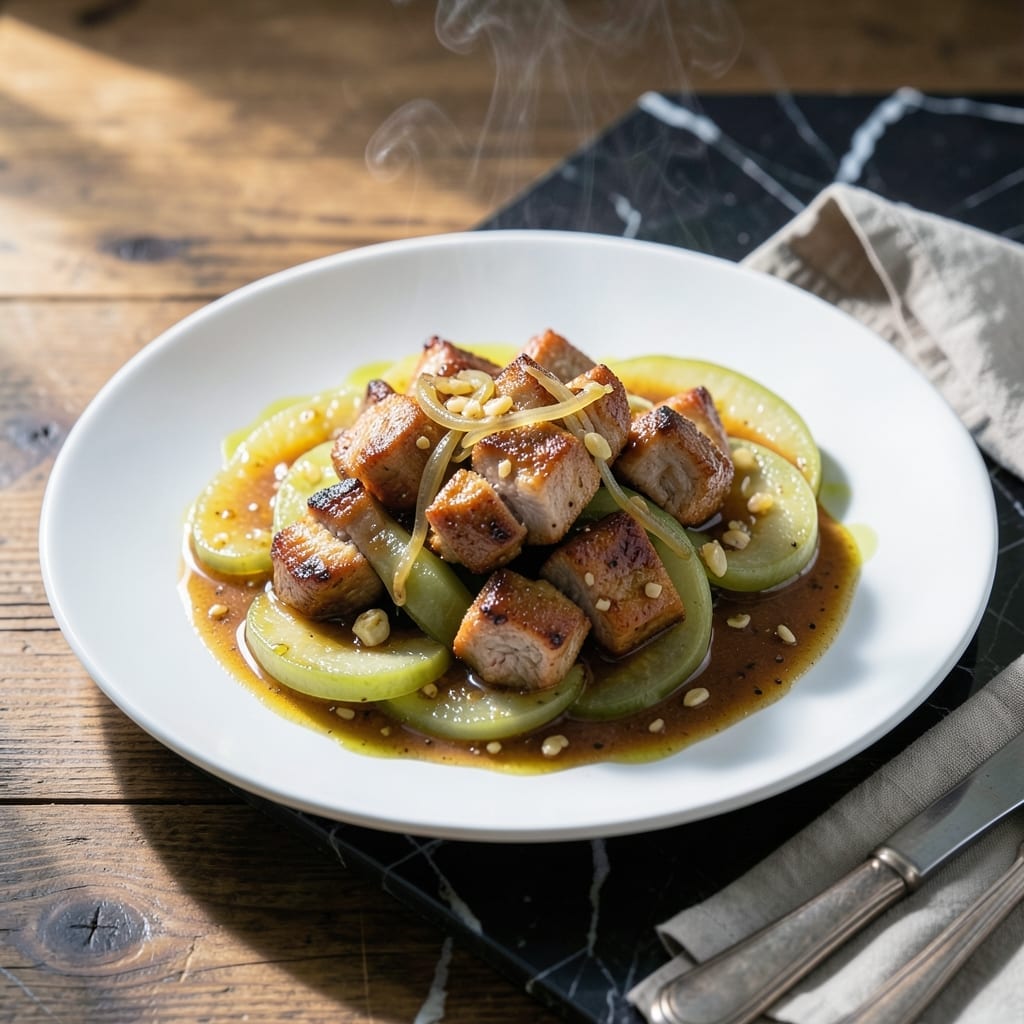
This Filipino stir-fry transforms humble chayote into a tender, flavorful dish that’s both comforting and quick. I discovered this method while exploring Pacific Northwest farmers markets, where fresh sayote inspired me to recreate a childhood favorite.
The technique is simple: sauté pork until browned, then add thinly sliced chayote to absorb the savory flavors. A splash of soy sauce and a pinch of pepper complete the dish with authentic taste. The chayote softens beautifully while retaining a slight crispness.
What emerges is a home-style meal with tender vegetables and rich pork in every bite. The stir-fry comes together in under 30 minutes, making it perfect for busy weeknights when you crave something hearty yet light.
Serve this over steamed rice to soak up every drop of the savory sauce. The simplicity of this dish lets the natural flavors shine through.
Ingredients for Ginisang Sayote Recipe with Pork
Fresh chayote, tender pork, and a handful of pantry staples make this quick stir-fry sing.
| Ingredient | Amount | Notes |
|---|---|---|
| Chayote Squash 🥒 | 2 whole | Thinly sliced, peeled if desired |
| Pork Shoulder 🍖 | 1 lb | Cut into small cubes |
| Garlic Cloves 🧄 | 4 cloves | Minced finely |
| Yellow Onion 🧅 | 1 whole | Thinly sliced |
| Soy Sauce 🫒 | 3 tbsp | Regular or low-sodium |
| Ground Black Pepper 🌶️ | ½ tsp | Freshly cracked preferred |
| Neutral Cooking Oil 🛢️ | 2 tbsp | Vegetable or canola |
| Tomatoes 🍅 | 2 whole | Ripe, diced |
| Fish Sauce 🐟 | 1 tbsp | Optional for umami depth |
| Bay Leaf 🌿 | 1 whole | Dried or fresh |
| Water 💧 | ¼ cup | For deglazing pan |
| Green Onions 🧅 | 3 whole | Thinly sliced for garnish |
| Steamed Rice 🍚 | 4 cups | Cooked, for serving |
[recipe_ingredient_scaler]
The chayote is the star here—look for firm, bright green specimens at Latin or Asian markets (or even your local Whole Foods in summer). Pork shoulder gives the best texture, but pork belly adds richer flavor if you’re feeling indulgent. I grab mine from Costco when they have it pre-cubed. Don’t skip peeling the chayote—it can be tough, but it’s worth the minute (the good stuff, not the pre-cut kind).
No pork? Chicken thighs work just as well—same cooking time, same juicy result. Out of fish sauce? Extra soy sauce plus a pinch of sugar mimics the depth. Green onions can be swapped for cilantro if that’s your jam. The tomatoes? Canned diced tomatoes save time in a pinch (frozen works too). And if you’re avoiding fish sauce entirely, a splash of oyster sauce does the trick.
Leftovers keep 3-4 days in the fridge—reheats beautifully with a splash of water. Freeze without the rice for up to 3 months. The chayote softens more over time, but the flavor just gets better (don’t skip this part).
Why You’ll Love This Recipe
- One Pan Meal: I love how the chayote and pork cook together in one pan with just garlic, onion, and soy sauce—minimal mess, maximum flavor.
- Umami Bomb: The pork shoulder soaks up the soy sauce and garlic, making every bite rich and savory against the mild sweetness of the sayote.
- Feeds the Family: Honestly, this stretches easily for four with leftovers that taste even better the next day.
- Budget Friendly: Pork shoulder and chayote are cheap cuts and veggies, so I can make a hearty meal without breaking the bank.
Step-by-Step Instructions for Ginisang Sayote With Pork
Here’s the method I swear by for perfectly tender chayote and pork every time.
Step 1: Sear the Pork Shoulder Until Browned
Heat the 2 tbsp Neutral Cooking Oil in a large skillet or wok over medium-high heat. Add the 1 lb Pork Shoulder cubes and sear undisturbed for 3-4 minutes until the bottoms develop a golden-brown crust.
Stir and continue cooking for another 2-3 minutes until the pork is evenly browned on all sides. This step builds a flavor foundation for the entire dish. The pork should release easily from the pan when properly seared.
Season lightly with a pinch of the 0.5 tsp Ground Black Pepper as it cooks. Remove the pork from the skillet and set aside—it will finish cooking later when returned to the dish.
Step 2: Sauté Aromatics Until Fragrant
In the same skillet, add the 4 cloves Garlic Cloves and 1 whole Yellow Onion. Sauté over medium heat for 2-3 minutes until the onion turns translucent and the garlic releases its aroma. Be careful not to let the garlic burn.
Add the 2 whole Tomatoes and cook for another 2 minutes, stirring occasionally, until they start to break down and soften. The mixture should be fragrant and slightly glistening from the rendered juices.
Stir in the 1 whole Bay Leaf to infuse its subtle earthiness into the base. This aromatic foundation is what gives the dish its depth of flavor.
Step 3: Combine and Simmer Until Tender
Return the browned 1 lb Pork Shoulder to the skillet. Add the 2 whole Chayote Squash, 3 tbsp Soy Sauce, and 1 tbsp Fish Sauce. Pour in the 0.25 cup Water and stir to combine all the ingredients.
Bring the mixture to a gentle simmer, then reduce the heat to medium-low. Cover and let it cook for 15-20 minutes, stirring occasionally, until the chayote is fork-tender and the pork is fully cooked through.
Check the chayote by piercing it with a fork—it should slide in easily but still hold its shape. If the mixture starts to look dry, add a splash of water to keep it saucy.
Step 4: Finish and Garnish for Serving
Once the chayote and pork are tender, uncover the skillet and let the sauce reduce slightly for 2-3 minutes. This concentrates the flavors and ensures every bite is packed with taste.
Discard the 1 whole Bay Leaf and taste the dish. Adjust the seasoning with additional Soy Sauce or Ground Black Pepper if needed. The sauce should be savory and slightly tangy from the tomatoes.
Transfer to a serving dish and garnish with the 3 whole Green Onions. Serve immediately over 4 cups Steamed Rice to soak up every bit of the delicious sauce.
Pro Tips For Making Ginisang Sayote Recipe With Pork
- Sauté Pork First: Brown the pork shoulder in hot oil before adding anything else—this builds a flavor base that makes the whole dish richer. I learned this the hard way after my first few batches tasted flat.
- Peel Chayote Thinly: Use a vegetable peeler to remove just the outer skin of the sayote, keeping as much flesh as possible. Sounds obvious, but thick peels waste half the squash and leave you with less texture.
- Avoid Overcrowding: Cook the pork in batches if needed—dumping it all in at once steams instead of browns, and you’ll end up with gray, sad meat. I skip this when I’m in a rush, but the dish is noticeably better when I don’t.
- Add Soy Sauce Late: Hold off on the soy sauce until the pork is fully browned and the onions are soft. Adding it too early can make the meat steam instead of sear, and the dish won’t have that deep, caramelized flavor.
Storing and Reheating This Recipe
Refrigerator Storage
Let your dish cool completely at room temperature for no more than 2 hours. Transfer to airtight containers—I use glass ones from New Seasons Market. Store at 40°F or below for up to 3-4 days. ❄️
Freezer Storage
For longer storage, freeze without rice in flat freezer bags for up to 3 months. Leave 1 inch headspace to prevent bursting. Squeeze out excess air to avoid freezer burn. The chayote will soften more but retains its flavor beautifully.
Stovetop Reheating
My preferred method: Heat in a skillet over medium-low heat with a splash of water or broth. Cover and warm for 5-7 minutes, stirring occasionally. This keeps the pork moist and revives the sauce.
Microwave Reheating
For quick meals, microwave covered portions on 70% power for 2-3 minutes. Stir, then continue in 1-minute bursts until reaching 165°F. Add a splash of water if it looks dry.
I often reheat leftovers this way for Lily’s lunchbox thermos. 💡
Nutrition Facts
Frequently Asked Questions
Can I use chicken instead of pork?
Yes! Swap the pork for 1 lb boneless chicken thighs and cook for the same time. Chicken cooks faster, so check doneness at 15 minutes to avoid overcooking.
Do I need to peel the chayote?
It’s optional but recommended for texture. The skin can be tough, especially on larger squash. Use a vegetable peeler for safety, as chayote can be slippery when raw.
Why is my dish watery?
Chayote releases moisture as it cooks. Uncover the pan for the last 5 minutes to let excess liquid evaporate. For a thicker sauce, simmer a little longer.
Can I make this ahead of time?
The flavors deepen after a day in the fridge. Store cooled leftovers in an airtight container for up to 3-4 days.

Trained in classic French technique but raised on slow-cooked ribs and spicy rubs, she blends culinary skill with smoke and soul.
- Recipe for Fried Pork Chops With Flour: Crispy Crust and Juicy Centers - October 3, 2026
- Octopus Recipe Pan Fried: Crispy Edges With Tender Bites - October 3, 2026
- Recipe For Fried Pork Chops In An Iron Skillet: Crispy Crust With Juicy Centers - October 3, 2026