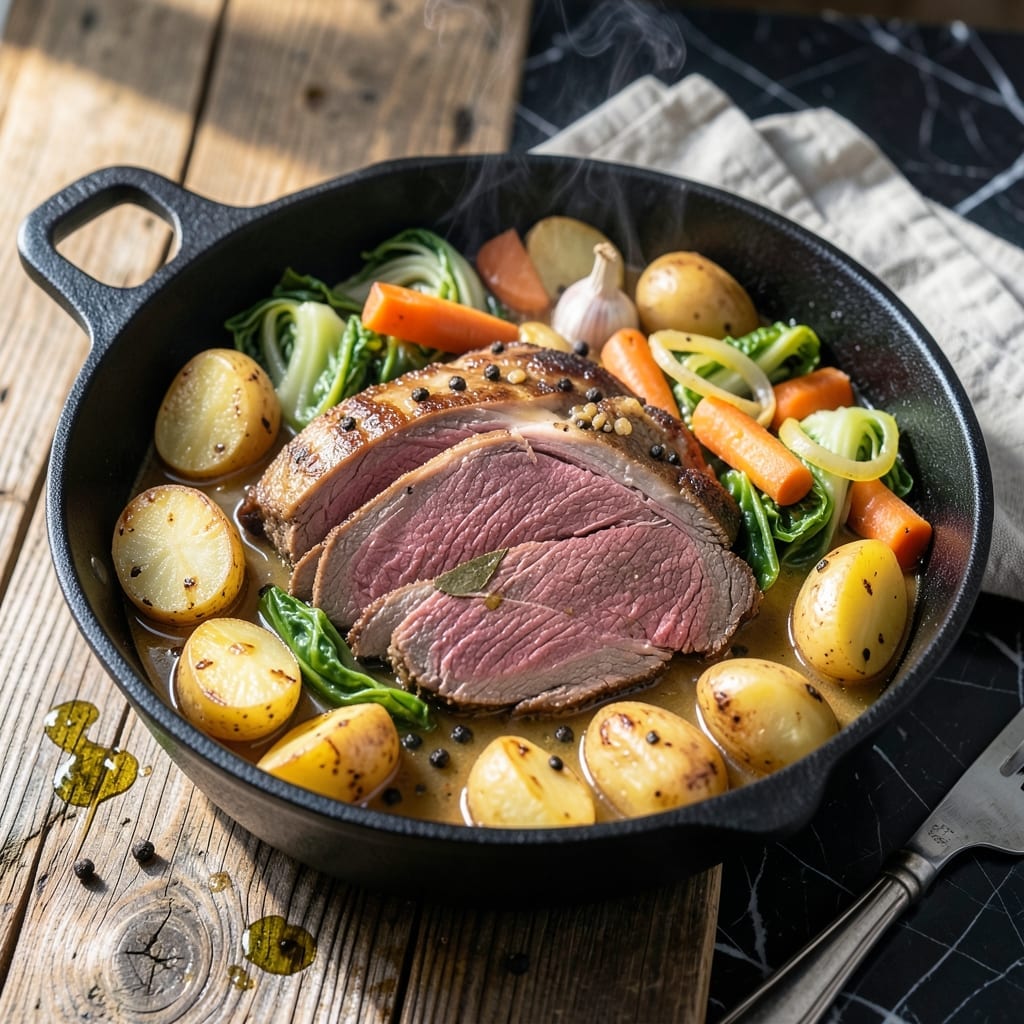
St. Patrick’s Day always brings me back to my grandmother’s kitchen, where the smell of slow-cooked beef and cabbage filled the air. This dish carries that same traditional warmth and comfort.
I’ve spent years perfecting this method to keep the beef tender and the vegetables perfectly cooked. The secret is in the low and slow simmer, letting the flavors meld together beautifully.
What you’ll get is fall-apart beef with cabbage that’s soft but still has a bit of bite. The carrots and potatoes soak up all that savory broth, making every forkful satisfying.
It’s the kind of meal that feels like a hug on a plate. Here’s how to bring this classic to your table.
Ingredients for Give Me a Recipe for Corned Beef and Cabbage
Traditional comfort in a pot with beef, cabbage, and root veggies simmered low and slow.
| Ingredient | Amount | Notes |
|---|---|---|
| Corned Beef Brisket 🥩 | 3 lb | Pre-brined with pickling spices |
| Green Cabbage 🥬 | 1 whole | Medium head, cut into wedges |
| Yukon Gold Potatoes 🥔 | 1 ½ lb | Peeled and quartered |
| Carrots 🥕 | 4 whole | Peeled and cut into chunks |
| Yellow Onion 🧅 | 1 whole | Peeled and quartered |
| Garlic Cloves 🧄 | 4 cloves | Smashed for broth |
| Bay Leaves 🌿 | 2 pieces | For simmering broth |
| Black Peppercorns 🌶️ | 1 tbsp | Whole, for depth |
| Mustard Seeds 🌿 | 1 tsp | Yellow or brown variety |
| Beef Broth 💧 | 4 cups | Low-sodium preferred |
| Water 💧 | 4 cups | To cover meat fully |
| Dijon Mustard 🟡 | 2 tbsp | For serving with beef |
| Apple Cider Vinegar 🍏 | 1 tbsp | Balances the richness |
[recipe_ingredient_scaler]
The corned beef is the star—look for pre-brined flat cut brisket at your grocery store (usually near the deli). I grab mine from Kroger or Costco when they stock it seasonally. Pick a piece with good marbling for the most tender result. The cabbage should be firm and heavy for its size, with crisp outer leaves (avoid the pre-shredded bags for this dish).
No corned beef? Regular beef brisket plus extra pickling spices works in a pinch—just brine it overnight first. Short on time? Pre-cooked corned beef (like from Hormel) cuts cooking to an hour. For the veggies, red potatoes hold up better than russets, and baby carrots can sub if you’re in a hurry (just halve them so they don’t turn to mush).
This tastes even better the next day—store leftovers in the broth for up to 5 days. Freezes beautifully for 3 months (slice the beef first for easy portions). The broth makes incredible soup later (trust me on this).
Why You’ll Love This Recipe
- Set It and Forget It: I just toss the brisket, potatoes, and carrots in the pot with some broth, then walk away for hours while the slow cooker does all the work.
- Fall-Apart Tender: The corned beef gets so melt-in-your-mouth tender, and the cabbage soaks up that rich, savory juice—honestly, it’s the kind of meal that makes you close your eyes on the first bite.
- St. Paddy’s or Sunday Supper: This is my go-to for St. Patrick’s Day, but I’ll be real: it’s just as good on a random Tuesday when I want comfort food that feels special.
- Leftovers for Days: Between us, it tastes even better the next day, and one brisket feeds my family for two meals—sandwiches included.
Step-by-Step Instructions for Corned Beef and Cabbage
Here’s the traditional method that delivers tender beef and perfectly cooked vegetables every time.
Step 1: Simmer the Corned Beef Brisket with Aromatics
Place the 3 lb corned beef brisket in a large pot or Dutch oven. Add the 4 cloves garlic cloves, 2 pieces bay leaves, 1 tbsp black peppercorns, and 1 tsp mustard seeds to the pot. Pour in the 4 cups beef broth and 4 cups water—this liquid should fully cover the meat.
Bring to a boil over high heat, then reduce to a simmer. Skim off any foam that rises to the surface during the first 10 minutes. Cover and let it simmer gently for 2.5 to 3 hours until the beef is fork-tender. This low-and-slow approach ensures the meat stays moist and absorbs all the spices.
Step 2: Add the Vegetables in Stages
Once the beef is tender, add the 1.5 lb Yukon Gold potatoes, 4 whole carrots, and 1 whole yellow onion to the pot. These hearty vegetables need about 20 minutes of simmering to become tender. I like to add them at this stage so they soak up some of the brisket’s flavor without turning mushy.
After 20 minutes, place the 1 whole green cabbage wedges on top of the other vegetables. The cabbage cooks faster, so adding it last prevents it from overcooking. Cover the pot and let everything simmer together for another 15 minutes until the cabbage is tender but still vibrant.
Step 3: Rest and Serve with Mustard Sauce
Carefully remove the corned beef brisket from the pot and transfer it to a cutting board. Let it rest for 10 minutes before slicing against the grain. This resting period allows the juices to redistribute, ensuring every slice is moist and flavorful.
While the beef rests, use a slotted spoon to transfer the vegetables to a serving platter. Slice the corned beef and arrange it alongside the vegetables. For serving, whisk together the 2 tbsp Dijon mustard and 1 tbsp apple cider vinegar—this tangy sauce cuts through the richness beautifully. Serve everything family-style and enjoy this traditional feast.
Pro Tips For Making Give Me A Recipe For Corned Beef And Cabbage
- Simmer, Don’t Boil: Keep the water at a gentle simmer—rolling boils turn corned beef tough. I learned this the hard way after my first batch came out like shoe leather.
- Rinse the Brisket: Always rinse the corned beef under cold water before cooking to remove excess salt from the brine. My grandmother swore by this, and she was right.
- Cut Cabbage Late: Add cabbage wedges only in the last 30 minutes—otherwise they’ll turn to mush. Sounds obvious now, but I ruined a few pots before figuring this out.
- Use the Brisket Fat: Don’t trim the fat cap off the brisket before cooking; it bastes the meat as it simmers. I was skeptical until I tried it, and the flavor difference was undeniable.
Essential Equipment for This Recipe
Large Dutch Oven
A heavy 5-7 quart Dutch oven is essential for even heat distribution. I use my Le Creuset for this dish—it maintains steady low heat perfectly for the 3-hour simmer. The tight-fitting lid traps moisture, keeping the beef tender. 🔥
Sharp Carving Knife
After cooking, you need a good 8-inch chef’s knife to slice against the grain. I prefer Wüsthof for its balance. A dull knife will tear the meat—keep it sharp for clean ¼-inch slices that showcase the brisket’s texture.
Slotted Spoon
A sturdy stainless steel slotted spoon helps remove vegetables without breaking them. I use mine from OXO—the long handle keeps hands safe from steam. It’s perfect for lifting cabbage wedges without losing them in the broth.
Instant-Read Thermometer
Though not traditional, I always check the beef’s internal temperature. Aim for 195°F for perfect tenderness. My ThermoWorks model gives accurate readings in 2 seconds, ensuring I never overcook this special cut.
Wooden Cutting Board
The same maple cutting board my Nonna gave me works beautifully. Wood is gentle on knife edges and provides a stable surface for slicing. Plus, it absorbs some of the beef’s juices, adding flavor to the next meal. 💛
Tongs for Handling
Use 12-inch locking tongs to maneuver the beef in and out of the pot. I recommend Cuisinox for their grip and durability. They prevent puncturing the meat, keeping all those precious juices inside where they belong.
Nutrition Facts
Frequently Asked Questions
What’s the best cut for tender results?
Use flat-cut brisket for the most tender texture. This cut has less fat but stays moist during the 3-hour simmer. Avoid point cut as it can dry out more easily.
Can I cook this in a slow cooker?
Yes! Place everything except cabbage in the slow cooker on low for 8 hours. Add cabbage wedges during the last 1.5 hours to prevent mushiness. This method works great for busy days.
Why does my beef turn out tough?
Tough beef usually means it didn’t cook long enough. The 195°F internal temperature is key. Also, avoid boiling—keep it at a gentle simmer to prevent tightening the fibers.
How do I store leftovers?
Store in the cooking broth in an airtight container for up to 5 days. The liquid keeps the meat moist. Reheat gently on the stove to preserve tenderness.

Trained in classic French technique but raised on slow-cooked ribs and spicy rubs, she blends culinary skill with smoke and soul.
- Recipe for Boneless Pork Chops in Cast Iron Skillet: Sear and Baste to Juicy Perfection - October 3, 2026
- Recipe for Boneless Cross Rib Roast: Slow-Roasted Beef with Herb Crust - October 3, 2026
- Hamburgers in Sauce Recipe Crock Pot: Slow-Cooked Savory Delight - October 3, 2026