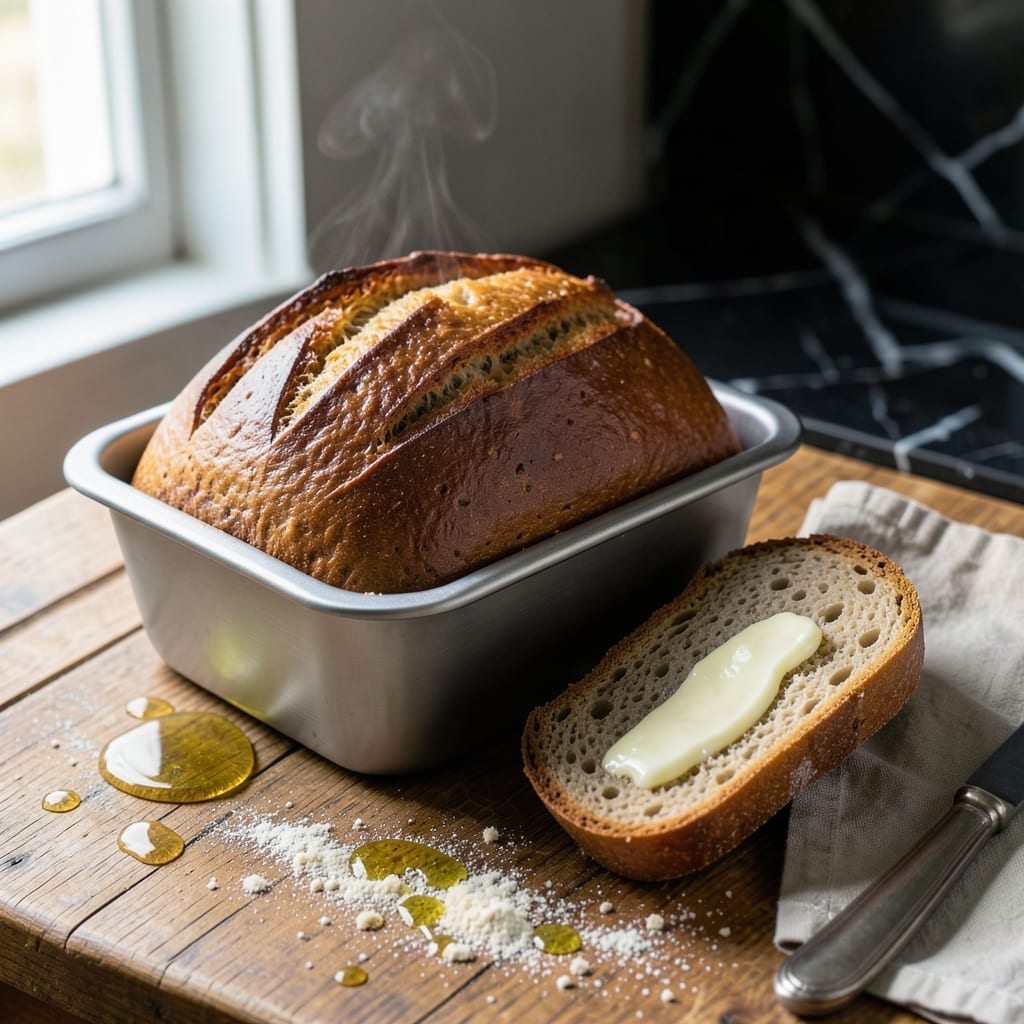
Baking gluten free bread at home doesn’t have to be complicated. This hands-off method uses your bread machine for perfect results every time.
With a simple mix of gluten free flour and a few pantry staples, you’ll achieve a soft, sandwich-ready loaf. No kneading, no guesswork—just set it and forget it.
Ingredients for Gluten Free Bread Recipe for Bread Machine
Simple pantry staples for a foolproof hands-off loaf no one will believe is gluten-free.
| Ingredient | Amount | Notes |
|---|---|---|
| Gluten-Free All-Purpose Flour Blend 🌾 | 3 cups | With xanthan gum included |
| Warm Water 💧 | 1 ¼ cups | 110°F, not hot |
| Large Eggs 🥚 | 3 whole | Room temperature preferred |
| Unsalted Butter 🧈 | 3 tbsp | Melted and cooled slightly |
| Granulated Sugar 🍚 | 2 tbsp | Helps activate yeast |
| Active Dry Yeast 🍞 | 2 ¼ tsp | Or one packet, proofed |
| Salt 🧂 | 1 ½ tsp | Fine sea salt preferred |
| Apple Cider Vinegar 🍏 | 1 tbsp | Balances flavors in GF baking |
| Xanthan Gum 🧪 | 1 tsp | Omit if blend contains it |
| Honey 🍯 | 2 tbsp | Adds moisture and sweetness |
| Milk 🥛 | ¼ cup | Whole milk for richness |
| Olive Oil 🫒 | 1 tbsp | For greasing pan |
[recipe_ingredient_scaler]
The flour blend is everything here. King Arthur Measure for Measure or Bob’s Red Mill 1-to-1 are my go-tos—both already include xanthan gum, so you can skip that extra step. Fresh yeast is key; check the expiration date on the packet. Warm water should feel like bathwater (not hot enough to kill the yeast). I grab my GF flour from Whole Foods bulk bins when I’m feeling fancy, but the bagged stuff works just fine.
No eggs? Flax eggs (1 tbsp ground flax + 3 tbsp water per egg) work in a pinch, but texture changes slightly. Swap honey for maple syrup if you prefer vegan. Out of apple cider vinegar? White vinegar at the same amount does the trick. Butter can be replaced with coconut oil (melted), but the flavor will be different. If your blend lacks xanthan gum, don’t skip it—1 tsp per cup of flour is the ratio.
Store flour in the freezer to keep it fresh (it goes rancid faster than regular flour). This loaf stays soft for 2-3 days wrapped tightly at room temp, or freeze slices for 1 month. Slice before freezing for easy grab-and-go toast.
Why You’ll Love This Recipe
- Set It and Forget: I toss everything in the bread machine and walk away—no kneading, no fuss, just perfect gluten-free bread in hours.
- Buttery Richness: The unsalted butter gives it that warm, golden flavor that makes every slice feel like a treat.
- Sandwich Savior: Honestly, this is my go-to for school lunches, toast, or even French toast the next morning.
- Budget Friendly: One batch makes a full loaf, and the ingredients are pantry staples I already keep on hand.
Step-by-Step Instructions for Gluten Free Bread Machine Loaf
This hands-off method delivers perfect texture without any guesswork.
Step 1: Activate the Yeast Properly
Begin by adding the 1.25 cups warm water to your bread machine pan. The water should feel slightly warm to the touch—about 110°F. Too hot will kill the yeast, too cold won’t activate it properly.
Sprinkle the 2.25 tsp active dry yeast evenly over the water surface. Don’t stir. Let it sit undisturbed for 5 minutes until the yeast becomes foamy and puffed. This proofing step ensures your loaf will rise properly.
While the yeast activates, add the 2 tbsp granulated sugar to the pan. The sugar feeds the yeast, creating that essential rise in gluten-free baking.
Step 2: Combine Wet Ingredients Thoroughly
Add the 3 whole large eggs, 3 tbsp melted unsalted butter, 2 tbsp honey, 0.25 cup milk, and 1 tbsp apple cider vinegar to the pan. The vinegar might seem odd, but it balances flavors and improves the crumb structure in gluten-free bread.
Use a spatula to gently mix these wet ingredients together, being careful not to disturb the yeast layer at the bottom. The mixture should look smooth and well combined before moving to the next step.
Step 3: Add Dry Ingredients and Xanthan Gum
In a separate bowl, whisk together the 3 cups gluten-free all-purpose flour blend, 1.5 tsp salt, and 1 tsp xanthan gum. If your flour blend already contains xanthan gum, omit this addition to avoid a gummy texture.
Sprinkle the dry ingredient mixture evenly over the wet ingredients in the bread machine pan. Don’t stir or mix at this point. The machine’s paddle will handle the combining during the kneading cycle.
Step 4: Set Machine and Monitor Initial Mix
Select the gluten-free setting on your bread machine. If your machine doesn’t have this specific setting, use the basic white bread cycle. Set the crust color to medium—gluten-free breads can darken quickly.
Start the machine and watch the first kneading cycle. The dough should come together into a smooth, slightly sticky ball within the first 5 minutes. If it appears too dry, add warm water 1 tbsp at a time. If too wet, add 1 tbsp of flour blend at a time.
Step 5: Bake and Cool Completely
Allow the machine to complete the full cycle, which typically takes 3-4 hours depending on your model. Resist the urge to open the lid during baking—the steam is crucial for proper rising.
Once done, immediately remove the pan from the machine and turn the loaf out onto a wire rack. Brush the top with a bit of the 1 tbsp olive oil for a soft crust. Let it cool completely for at least 1 hour before slicing. This cooling period lets the structure set, preventing a gummy texture.
Pro Tips For Making Gluten Free Bread Recipe For Bread Machine
- Preheat the Pan: I learned this the hard way—always warm the bread machine pan for 5 minutes before adding ingredients, otherwise the GF flour blend won’t activate properly.
- Room Temp Eggs: Sounds weird, but it works: take the eggs out 30 minutes early so they blend smoother into the batter—cold eggs leave little butter chunks.
- Skip Overmixing: After burning three loaves, I finally figured out that GF bread batter should look thick and sticky, not smooth like cake batter.
- Add Xanthan Gum: My grandmother swore by this, and she was right: if your GF flour blend lacks xanthan gum, add 1 teaspoon—it’s the thing that matters most for structure.
Perfect Pairings for This Recipe
Sandwich Pairings
This loaf makes incredible sandwiches. I love it with turkey breast, avocado slices, and swiss cheese for a light lunch. The soft texture holds up perfectly without falling apart. 🥪
Soup Companions
A warm slice pairs beautifully with soups. Try it alongside tomato basil or creamy potato for dipping. The slight sweetness from the honey balances savory broths perfectly.
Breakfast Ideas
Toast slices and top with almond butter and banana for a quick breakfast. I also love it as French toast – the texture soaks up the egg mixture wonderfully. 🍯
Cheese Board Addition
Serve warm slices with a cheese board featuring brie, sharp cheddar, and grapes. The subtle sweetness complements both mild and aged cheeses.
Salad Topper
Cube and toast leftover slices for croutons on Caesar or garden salads. They add a satisfying crunch without overpowering the greens.
Dessert Option
Make bread pudding with leftover slices. The honey in the recipe adds natural sweetness that pairs well with cinnamon and vanilla in the custard. 💛
Nutrition Facts
Frequently Asked Questions
Do I need a special bread machine setting?
Use the gluten-free setting if available. Otherwise, the basic white bread cycle works, but set crust color to medium to prevent over-browning.
Why does my dough look too wet or dry?
GF flours absorb liquids differently. Add 1 tbsp water if too dry or 1 tbsp flour if too wet during the first kneading cycle.
Can I skip the xanthan gum?
Only if your flour blend already includes it. Otherwise, 1 tsp per cup of flour is essential for structure and rise.
How do I store leftovers?
Wrap tightly at room temp for 2-3 days or freeze slices for up to 1 month. Toast frozen slices directly.

Trained in classic French technique but raised on slow-cooked ribs and spicy rubs, she blends culinary skill with smoke and soul.
- Octopus Recipe Pan Fried: Crispy Edges With Tender Bites - October 3, 2026
- Recipe For Fried Pork Chops In An Iron Skillet: Crispy Crust With Juicy Centers - October 3, 2026
- Recipe for Fully Cooked Spiral Ham: Sweet Glaze and Effortless Elegance - October 3, 2026