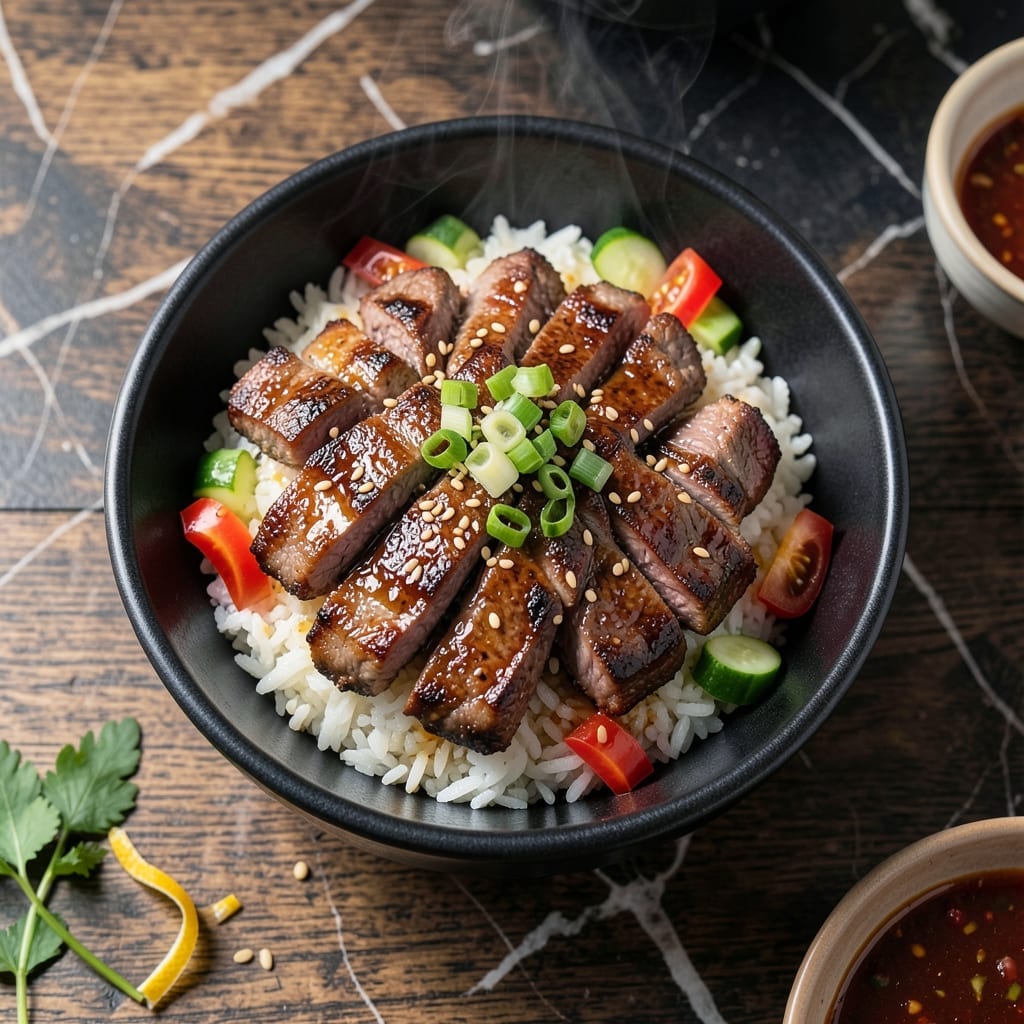
This gluten-free Korean BBQ delivers bold, authentic flavors without compromise. The gochujang marinade brings heat, sweetness, and depth to every bite.
I developed this method to ensure tender, perfectly charred protein with a sauce that clings beautifully. The result is restaurant-quality BBQ that’s safe for gluten-sensitive diners.
Ingredients for Gluten Free Korean Bbq
Authentic Korean flavors meet gluten-free excellence with these carefully selected ingredients.
| Ingredient | Amount | Notes |
|---|---|---|
| Ribeye Steak 🥩 | 2 lb | Thinly sliced for marinating |
| Gochujang 🌶️ | ½ cup | Korean red pepper paste |
| Tamari Sauce 🥢 | ¼ cup | Gluten-free soy alternative |
| Brown Sugar 🍚 | 3 tbsp | Light or dark variety |
| Sesame Oil 🫒 | 2 tbsp | Toasted for authentic flavor |
| Rice Vinegar 🍯 | 2 tbsp | Balances sweetness and heat |
| Fresh Garlic Cloves 🧄 | 6 cloves | Minced for marinade intensity |
| Fresh Ginger 🌿 | 2 tbsp | Peeled and grated fine |
| Toasted Sesame Seeds 🌰 | 2 tbsp | For garnish and texture |
| Green Onions 🧅 | 4 whole | Thinly sliced for topping |
| Korean Pear 🍐 | ½ whole | Pureed for natural sweetness |
| Vegetable Oil 💧 | 1 tbsp | High smoke point for grilling |
| Black Pepper 🌶️ | 1 tsp | Freshly ground preferred |
[recipe_ingredient_scaler]
The gochujang is non-negotiable for authentic flavor. Look for Sempio or Kochukaru brands at H Mart or Korean markets—avoid versions with wheat fillers. Tamari must be labeled gluten-free (San-J is a reliable choice). For the ribeye, well-marbled cuts from Whole Foods or Costco yield the most tender results. The pear adds natural sweetness and enzymes to tenderize the meat.
No Korean pear? Substitute with Bosc pear or grated apple—both contain tenderizing enzymes. Gochujang can be swapped with half the amount of sriracha plus 1 tbsp miso (ensure gluten-free), though the flavor profile shifts. Tamari alternatives include coconut aminos (use one-third less due to saltiness). Sesame oil is essential, but toasted and untoasted can be used interchangeably.
Marinate the steak for 4-12 hours—overnight delivers maximum flavor penetration. Store leftover marinade separately (never reuse meat-contaminated sauce) in the fridge for up to 3 days. Sesame seeds keep for 1 month in a cool, dark place. Fresh ginger and garlic are best used within 1 week.
Why You’ll Love This Recipe
- One Pan Wonder: I mix the gochujang, tamari, and brown sugar in the same bowl I’ll serve from—no extra dishes, just bold flavor.
- Sweet-Spicy Craving: Ribeye soaks up that gochujang and sesame oil combo like a sponge, every bite sticky and smoky.
- Meal Prep Hero: Honestly, this tastes even better the next day in lettuce wraps or over rice for lunch.
- Budget Stretcher: One pound of ribeye feeds my family of four when sliced thin, and the sauce costs pennies per serving.
Step-by-Step Instructions for Gochujang-Marinated Grill Delight
Master the technique that transforms simple ingredients into restaurant-quality Korean BBQ at home.
Step 1: Prepare the Marinade with Authentic Flavors
In a large bowl, combine the 0.5 cup Gochujang, 0.25 cup Tamari Sauce, 3 tbsp Brown Sugar, 2 tbsp Sesame Oil, and 2 tbsp Rice Vinegar. Whisk vigorously until the mixture becomes smooth and glossy—this ensures all flavors distribute evenly throughout the marinade.
Add the 6 cloves Fresh Garlic Cloves (minced) and 2 tbsp Fresh Ginger (grated) to the bowl. Stir well to incorporate. For natural sweetness and tenderness, mix in the pureed 0.5 whole Korean Pear. The marinade should have a thick, vibrant red color with a balanced aroma of sweet, spicy, and umami notes.
Step 2: Marinate the Ribeye for Maximum Flavor Penetration
Place the 2 lb Ribeye Steak (thinly sliced) in a single layer in a shallow dish or resealable bag. Pour the prepared marinade over the meat, ensuring each piece is fully coated. Use your hands to massage the marinade into the steak for 1-2 minutes—this helps the flavors penetrate deeply.
Cover or seal and refrigerate for at least 4 hours, or ideally overnight. The longer marinating time allows the Tamari Sauce and Gochujang to tenderize the meat while infusing it with bold, complex flavors. Turn the steak occasionally to ensure even marination.
Step 3: Grill the Marinated Steak to Perfection
Preheat your grill to medium-high heat (about 400°F). Lightly oil the grates with 1 tbsp Vegetable Oil to prevent sticking. Remove the steak from the marinade (reserving excess marinade if desired) and sprinkle both sides with 1 tsp Black Pepper.
Grill the steak for 3-4 minutes per side until it develops a rich, caramelized crust and reaches your desired doneness. Look for charred edges and a slightly sticky glaze from the marinade. Avoid moving the steak too much—let it sear undisturbed to achieve those beautiful grill marks.
Step 4: Rest and Garnish for Serving
Transfer the grilled steak to a cutting board and let it rest for 5 minutes. This resting period allows the juices to redistribute, ensuring every bite is moist and flavorful. Slice the steak thinly against the grain for optimal tenderness.
Arrange the sliced steak on a platter and garnish generously with the 2 tbsp Toasted Sesame Seeds and thinly sliced 4 whole Green Onions. The sesame seeds add a nutty crunch, while the green onions provide a fresh, sharp contrast to the rich, savory meat. Serve immediately with your choice of sides.
Pro Tips For Making Gluten Free Korean Bbq
- Sear Fast, Rest Long: Use high heat to get a good crust on the ribeye in just 2-3 minutes per side, then let it rest for 5-10 minutes under foil—this keeps it juicy and lets the flavors sink in.
- Check Your Tamari: I learned this the hard way: not all tamari is gluten-free, so double-check the label to avoid cross-contamination with wheat.
- Balance the Gochujang: Gochujang can overpower, so mix it with the brown sugar and tamari first—about 2 tablespoons gochujang to 1 tablespoon each of the others—to mellow the heat.
- Warm the Sesame Oil: Sounds weird, but it works: heat the sesame oil for 10 seconds in the pan before adding the steak to deepen its nutty flavor without burning.
Creative Variations of These Flavors
Spicy Sriracha Twist
For extra heat, replace 1 tbsp gochujang with sriracha and add 1 tbsp gluten-free miso paste. This fusion keeps the Korean essence while kicking up the spice. I love this when I want a bolder, more aggressive flavor profile. 🌶️
Citrus Infusion
Add zest of 1 orange and 2 tbsp fresh orange juice to the marinade. The citrus brightens the dish beautifully. It’s my go-to when I’m foraging wild herbs and want a fresh twist.
Chicken Alternative
Swap 2 lb ribeye for 2 lb boneless chicken thighs. Reduce grilling time to 4-5 minutes per side. Chicken soaks up the marinade wonderfully and stays juicy. I often use this for quick weeknight meals.
Vegetarian Option
Use 1 lb portobello mushrooms sliced thickly. Marinate and grill as directed. The meaty texture of portobellos holds up perfectly to the bold flavors. 💫
Sweet & Smoky
Add 1 tbsp smoked paprika and 1 tbsp honey to the marinade. This creates a beautiful sweet-smoky balance. I discovered this combo during a coastal ride when I stopped at a roadside BBQ stand.
Quick Weeknight Version
Use pre-sliced beef for shabu-shabu from your local butcher. Marinate for just 2 hours and cook in a hot skillet. It’s my secret for getting authentic flavors on busy evenings.
Nutrition Facts

Trained in classic French technique but raised on slow-cooked ribs and spicy rubs, she blends culinary skill with smoke and soul.
- Recipe for Boneless Pork Chops in Cast Iron Skillet: Sear and Baste to Juicy Perfection - October 3, 2026
- Recipe for Boneless Cross Rib Roast: Slow-Roasted Beef with Herb Crust - October 3, 2026
- Hamburgers in Sauce Recipe Crock Pot: Slow-Cooked Savory Delight - October 3, 2026