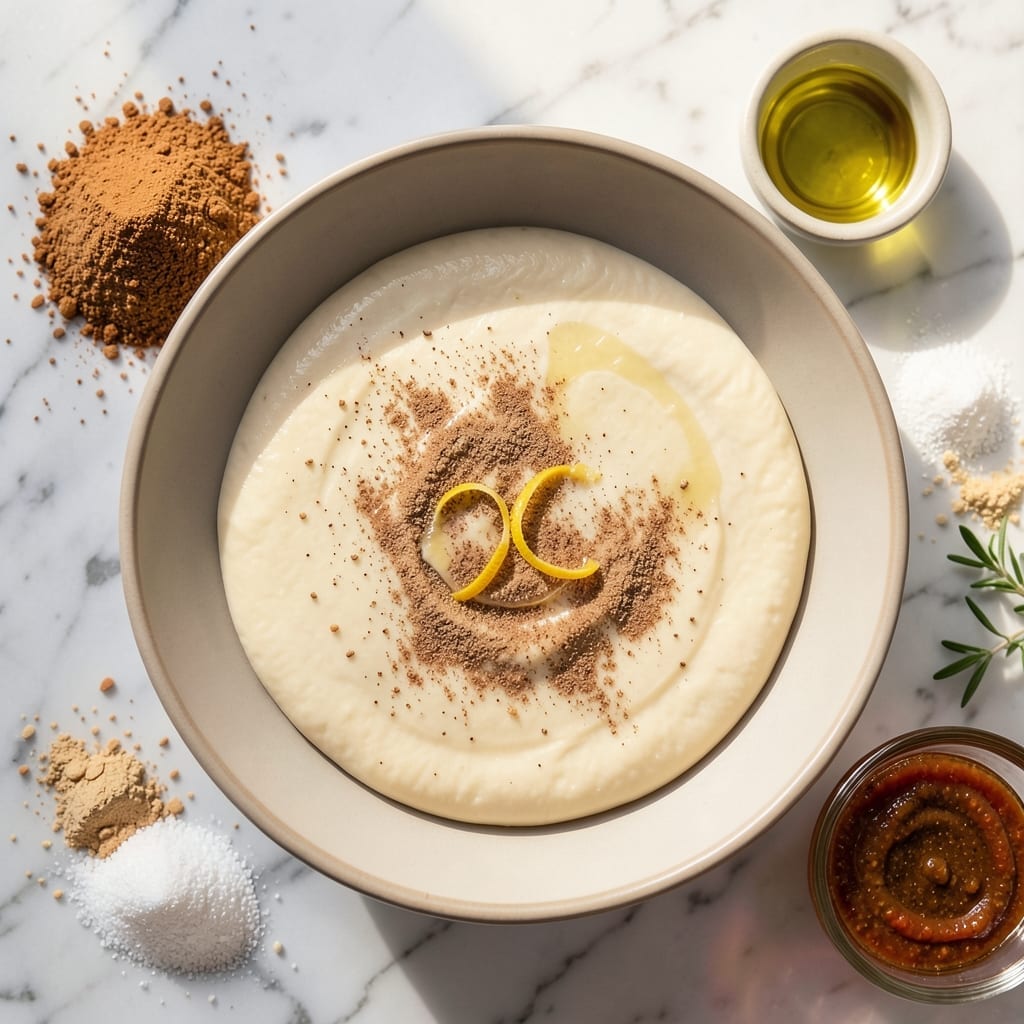
Making gluten-free pasta dough without xanthan gum is absolutely possible with the right technique and ingredients.
This recipe relies on a blend of gluten-free flours, eggs, and olive oil to create an elastic texture that holds up when rolled and cooked. The key is proper hydration and resting time to develop the dough’s structure naturally.
You’ll find the pasta maintains its shape during boiling and delivers the satisfying bite you expect from traditional pasta. The process is straightforward, with no special equipment required beyond a rolling pin.
What emerges is tender, flexible dough that rolls out smoothly and cooks up perfectly al dente. The flavor is clean, allowing your sauce to shine.
Ingredients for Gluten Free Pasta Dough Recipe Without Xanthan Gum
A simple blend of gluten-free flours and plant-based binders creates this elastic, tender dough without xanthan gum.
| Ingredient | Amount | Notes |
|---|---|---|
| Brown Rice Flour 🌾 | 1 ½ cups | Finely milled for smooth texture |
| Tapioca Starch 🌾 | ½ cup | Provides elasticity and chew |
| Almond Flour 🌰 | ½ cup | Blanched for mild flavor |
| Flaxseed Meal 🌿 | 2 tbsp | Mixed with water for egg replacement |
| Water 💧 | 6 tbsp | For flax egg mixture |
| Extra-Virgin Olive Oil 🫒 | 2 tbsp | High-quality for rich flavor |
| Sea Salt 🧂 | ½ tsp | Fine grain for even distribution |
| Psyllium Husk Powder 🌿 | 1 tsp | Binds without xanthan gum |
| Xanthan Gum-Free Baking Blend 🌾 | ½ cup | Optional for extra structure |
| Lemon Juice 🍋 | 1 tsp | Freshly squeezed for brightness |
[recipe_ingredient_scaler]
The flour blend is critical for texture. Bob’s Red Mill brown rice flour and tapioca starch are reliable and widely available at Whole Foods or natural food stores. For almond flour, blanched varieties (like from Blue Diamond) yield the smoothest results. Psyllium husk powder acts as the binder—Anthony’s or NOW Foods brands are consistent in quality. Always check labels to ensure no cross-contamination with gluten.
No flaxseed meal? Chia seeds ground finely work at a 1:1 ratio. Out of psyllium husk? Ground chia or guar gum at half the amount can substitute, though texture may vary slightly. For the baking blend, King Arthur’s Measure for Measure is a solid xanthan-free option. The olive oil can be swapped for avocado oil if preferred, but avoid strongly flavored oils like coconut.
Store flour blends in airtight containers in a cool, dark place for up to 3 months. The dough itself is best used fresh but can be refrigerated for 24 hours wrapped tightly in plastic. For longer storage, freeze the rolled pasta sheets on a tray before transferring to a bag—they’ll keep for 1 month.
Why You’ll Love This Recipe
- No Fuss Mixing: I just dump the dry ingredients in a bowl, add water, and knead—no weird stabilizers or resting time required.
- Rich, Nutty Depth: The almond flour and flaxseed meal give it this warm, toasty flavor that store-bought gluten-free pasta just can’t match.
- Meal Prep Hero: I roll out a big batch on Sunday, cut into shapes, and freeze for quick dinners all week.
- Pantry Staples Only: Brown rice flour and tapioca starch are already in my cupboard, so I’m never stuck without pasta dough.
Step-by-Step Instructions for Gluten Free Pasta Dough Without Xanthan Gum
Master this technique for a smooth, elastic dough that handles like traditional pasta.
Step 1: Prepare the Flaxseed Egg Mixture
In a small bowl, whisk together the 2 tbsp Flaxseed Meal and 6 tbsp Water until fully combined. Let this mixture sit for 5 minutes to thicken into a gel-like consistency that mimics the binding properties of eggs.
This step is crucial for structure. The flaxseed meal absorbs the water and creates a viscous mixture that will help hold your dough together. Stir once more before using to ensure even distribution.
Step 2: Combine Dry Ingredients for Optimal Texture
In a large mixing bowl, sift together the 1.5 cups Brown Rice Flour, 0.5 cup Tapioca Starch, 0.5 cup Almond Flour, 0.5 cup Xanthan Gum-Free Baking Blend, 0.5 tsp Sea Salt, and 1 tsp Psyllium Husk Powder. The psyllium husk is your secret weapon here—it provides the elasticity that xanthan gum typically would.
Whisk the dry ingredients thoroughly to break up any clumps and ensure even distribution. The almond flour adds richness and helps create a more tender texture, while the tapioca starch contributes chewiness.
Step 3: Create the Dough with Liquid Ingredients
Make a well in the center of your dry ingredients. Pour in the prepared flaxseed mixture, 2 tbsp Extra-Virgin Olive Oil, and 1 tsp Lemon Juice. The lemon juice adds a subtle brightness and helps activate the psyllium husk for better binding.
Use a fork to gradually incorporate the dry ingredients into the wet mixture. Once the dough starts to come together, switch to using your hands. Knead the dough in the bowl for 3-4 minutes until it forms a smooth, slightly tacky ball. If it feels too dry, add water 1 tsp at a time until it reaches the right consistency.
Step 4: Rest the Dough for Optimal Workability
Shape the dough into a disk and wrap it tightly in plastic wrap. Let it rest at room temperature for 30 minutes. This resting period allows the psyllium husk to fully hydrate and the flours to absorb the liquids, making the dough much easier to work with.
After resting, the dough should be smooth and pliable. If it’s still sticky, dust your work surface and the dough lightly with additional brown rice flour. Avoid adding too much extra flour, as this can make the pasta dense.
Step 5: Roll and Cut the Pasta
Divide the dough into 4 equal portions for easier handling. On a lightly floured surface, roll out one portion at a time to your desired thickness—about 1/16 inch for most pasta shapes. Use a pasta machine for even thickness if you have one.
Cut the rolled dough into your preferred pasta shape. For fresh pasta, cook immediately in boiling salted water for 2-3 minutes or until it floats to the surface. The pasta should be tender with a slight bite. Fresh gluten-free pasta cooks faster than dried, so keep an eye on it.
Pro Tips For Making Gluten Free Pasta Dough Recipe Without Xanthan Gum
- Rest the Dough: Let it sit covered for 20-30 minutes after mixing—this gives the flaxseed meal time to absorb moisture and bind the dough, which compensates for the lack of xanthan gum.
- Warm the Water: Use slightly warm water (around 110°F) to help activate the flaxseed meal’s natural gums, which improves elasticity in the absence of xanthan.
- Avoid Over-Flouring: Skip dusting the surface with extra flour when rolling—this dough is delicate, and too much brown rice flour will make it dry and crumbly. Use a light touch.
- Roll It Thin: Gluten-free pasta cooks faster, so roll the dough as thin as possible (about 1/16 inch) to prevent a gummy texture and ensure even cooking.
Troubleshooting This Dish
Dough Too Crumbly
If your dough falls apart when rolling, it likely needs more hydration. Add 1 tsp water at a time, kneading thoroughly between additions. The psyllium husk needs moisture to create its binding effect. I’ve found 3-4 extra teaspoons often does the trick. 💡
Dough Too Sticky
When it sticks to your hands or surface, resist adding more flour immediately. Instead, let it rest 5-10 more minutes—the psyllium continues absorbing liquid. If still sticky after resting, dust with brown rice flour in small amounts.
Pasta Falls Apart When Cooking
This usually means the dough wasn’t rested long enough or the water wasn’t boiling vigorously. Ensure your water is at a full, rolling boil with 1 tbsp salt per quart before adding pasta. Also verify your psyllium husk powder is fresh—old product loses binding power.
Pasta Tastes Gritty
Grittiness often comes from under-mixing or coarse flour. Use finely milled brown rice flour and sift all dry ingredients before combining. Knead the dough thoroughly for at least 4 minutes to distribute everything evenly. 🌾
Dough Won’t Roll Smoothly
If it cracks when rolling, the dough may be too dry or not rested enough. Try letting it rest 10 more minutes wrapped in plastic. When rolling, work from the center outward in all directions, rotating the dough frequently.
Pasta Lacks Flavor
Boost flavor by toasting your almond flour for 2-3 minutes before mixing. Add ½ tsp garlic powder or dried herbs to the dry ingredients. The olive oil quality matters too—I prefer California olive oil for its robust taste.
Nutrition Facts
Frequently Asked Questions
Why use psyllium husk instead of xanthan gum?
Psyllium husk absorbs liquid and creates a gel-like structure that mimics gluten, giving your pasta elasticity. It’s a natural, whole-food alternative that works just as effectively without artificial additives.
Can I make this dough without eggs?
Yes! The recipe already uses a flaxseed meal mixture as an egg substitute. This keeps it vegan while providing the necessary binding for a cohesive dough.
How can I prevent my pasta from sticking together?
Dust your work surface and pasta sheets with brown rice flour before cutting. Cook pasta in plenty of boiling water and stir gently during the first 30 seconds to keep pieces separate.
What’s the best way to store fresh pasta?
Fresh pasta is best used immediately, but you can refrigerate it for up to 24 hours in an airtight container. For longer storage, freeze the pasta sheets on a tray first, then transfer to a bag for up to 1 month.

Trained in classic French technique but raised on slow-cooked ribs and spicy rubs, she blends culinary skill with smoke and soul.
- Recipe for Boneless Pork Chops in Cast Iron Skillet: Sear and Baste to Juicy Perfection - October 3, 2026
- Recipe for Boneless Cross Rib Roast: Slow-Roasted Beef with Herb Crust - October 3, 2026
- Hamburgers in Sauce Recipe Crock Pot: Slow-Cooked Savory Delight - October 3, 2026