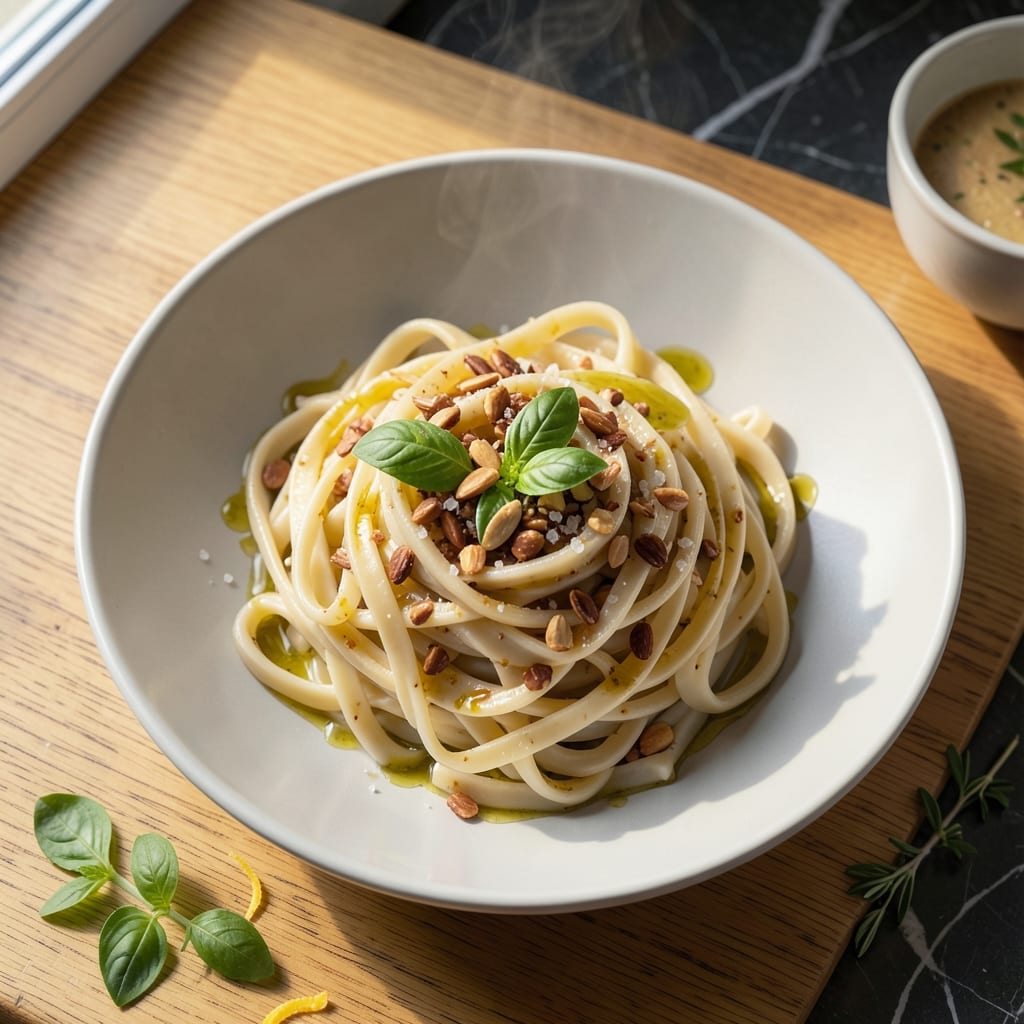
I developed this recipe after years of gluten-free pasta failures that left me with crumbly, tasteless noodles. My grandmother’s handwritten notes inspired me to try almond flour, and the difference was immediate.
The nutty flavor of almond flour creates pasta that’s rich and satisfying, not just a substitute. After testing ratios and drying methods, I perfected a texture that holds up to boiling and sauces beautifully.
What you’ll get is pasta with a delicate al dente bite and natural sweetness that pairs well with both simple and complex sauces. The dough comes together quickly with just a few simple ingredients.
This method delivers perfect results every time, whether you’re new to gluten-free cooking or a seasoned pro.
Ingredients for Gluten Free Pasta Recipe Almond Flour
Super fine almond flour plus a few pantry helpers make this dough come alive.
| Ingredient | Amount | Notes |
|---|---|---|
| Almond Flour 🌰 | 2 ½ cups | Super fine, blanched variety |
| Tapioca Starch 🌾 | ½ cup | For elasticity and chew |
| Large Eggs 🥚 | 3 whole | Room temperature for binding |
| Olive Oil 🫒 | 1 tbsp | Extra-virgin for richness |
| Sea Salt 🧂 | ½ tsp | Fine grain for even distribution |
| Xanthan Gum 🧪 | ¼ tsp | Optional, improves texture stability |
| Water 💧 | 1 tbsp | As needed for dough consistency |
| Vanilla Extract 🌿 | ½ tsp | Pure extract for subtle sweetness |
| Lemon Zest 🍋 | ½ tsp | Freshly grated for brightness |
| All-Purpose Gluten-Free Flour 🌾 | ½ cup | Rice blend for structure |
[recipe_ingredient_scaler]
The almond flour is make or break here. Bob’s Red Mill super fine blanched is my go-to—it’s consistently ground and creates that silky texture. Costco also carries a great bulk option if you’re making this often. Tapioca starch adds that chewy bite you miss in other gluten-free pastas (and it’s cheap at any grocery store). The eggs need to be fresh—older ones don’t bind as well.
No tapioca starch? Arrowroot powder at the same amount works almost identically. Skip the xanthan gum if you don’t have it—the pasta will still hold, just be gentler when rolling. Vanilla might seem odd, but a splash at the end balances the nutty flavor. If you’re avoiding eggs entirely, aquafaba (3 tbsp per egg) can work, but the texture changes slightly.
Dough balls freeze beautifully for 1 month (thaw before rolling). Cooked pasta keeps in the fridge for 3 days—toss with olive oil to prevent sticking. Fresh is best, but leftovers reheat nicely in sauces.
Why You’ll Love This Recipe
- No Fuss Dough: I mix the almond flour and tapioca starch with eggs and oil, roll it out—no resting time needed.
- Rich Nutty Taste: The almond flour gives it this warm, buttery depth that regular pasta just can’t match.
- Freezer Friendly: I double the batch and freeze half for those nights I’m too tired to cook from scratch.
- Budget Stretcher: Almond flour isn’t cheap, but a little goes a long way here—one batch feeds us twice.
Step-by-Step Instructions for Gluten Free Pasta with Almond Flour
Follow my tested method for pasta that holds its shape and delivers that perfect al dente bite.
Step 1: Combine Dry Ingredients for Structure
In a large mixing bowl, whisk together the 2.5 cups Almond Flour, 0.5 cup Tapioca Starch, 0.5 cup All-Purpose Gluten-Free Flour, 0.5 tsp Sea Salt, and 0.25 tsp Xanthan Gum. This blend creates the foundation for your dough, with the tapioca starch adding elasticity and the xanthan gum providing stability.
I always sift the almond flour first to break up any lumps—this ensures a smooth, uniform texture in your final pasta. The mixture should look like fine sand with no visible clumps. This step is crucial for preventing grainy pasta.
Step 2: Incorporate Wet Ingredients for Binding
Create a well in the center of your dry ingredients. Add the 3 whole Large Eggs, 1 tbsp Olive Oil, 0.5 tsp Vanilla Extract, 0.5 tsp Lemon Zest, and 1 tbsp Water. The vanilla and lemon zest add subtle depth of flavor that complements the nuttiness of the almond flour beautifully.
Using a fork, gradually incorporate the dry ingredients into the wet, starting from the center and working your way outward. The dough will begin to come together into a shaggy mass. If it feels too dry, add water 1 teaspoon at a time—but don’t overdo it, as almond flour dough should be slightly stiffer than wheat-based pasta dough.
Step 3: Knead and Rest the Dough
Turn the dough out onto a clean surface dusted lightly with additional almond flour. Knead for 5-7 minutes until smooth and elastic. Unlike wheat dough, this won’t become completely smooth, but it should hold together when pressed.
Here’s the thing—almond flour dough is more delicate than traditional pasta dough. If it starts to crack while kneading, wet your hands slightly and continue. Once kneaded, wrap the dough in plastic wrap and let it rest at room temperature for 30 minutes. This rest period allows the flours to fully hydrate.
Step 4: Roll and Cut the Pasta
Divide the rested dough into 4 equal portions. Working with one portion at a time (keep the others covered), roll the dough through a pasta machine starting at the widest setting. Fold the sheet in thirds after each pass and repeat 3-4 times at each setting before moving to the next thinner setting.
Continue this process, reducing the thickness one notch at a time, until you reach your desired thickness (I prefer setting #4 or #5 for most shapes). For fettuccine or tagliatelle, cut the sheets into ¼-inch wide strips. Dust the cut pasta lightly with almond flour to prevent sticking.
Step 5: Cook and Serve Immediately
Bring a large pot of salted water to a rolling boil. Add the fresh pasta and cook for 1-2 minutes—almond flour pasta cooks much faster than wheat pasta. You’ll know it’s done when the pasta floats to the surface and is tender but still has a slight bite.
Drain immediately and toss with your favorite sauce. I recommend serving it with a simple olive oil and garlic sauce or a light cream sauce to complement the nutty flavor. The pasta will continue to absorb sauce as it sits, so serve it right away for the best texture.
Pro Tips For Making Gluten Free Pasta Recipe Almond Flour
- Chill the Dough: After mixing, let the dough rest in the fridge for at least 30 minutes—this prevents the almond flour from absorbing too much moisture and makes rolling easier.
- Use Room-Temp Eggs: Cold eggs can cause the olive oil to clump; I learned this the hard way after my first three batches turned out uneven.
- Roll It Thin: Gluten-free pasta needs to be rolled thinner than wheat pasta (aim for 1/16 inch) to avoid a dense, gummy texture when cooked.
- Boil in Salted Water: Sounds obvious, but I was skeptical until I tried it—heavily salted water (like the sea) keeps the pasta from tasting bland, especially with almond flour’s mild flavor.
Common Mistakes When Making This Recipe
Overworking the Dough
Almond flour dough is more delicate than traditional pasta dough. Knead just until smooth—about 5-7 minutes—then stop. Overworking develops too much starch, making your pasta gummy. I learned this the hard way with my first three batches. 💡
Skipping the Rest
Let the dough rest for a full 30 minutes after kneading. This hydration time prevents cracking when rolling. I tried rushing it once and ended up with a brittle mess that fell apart in the pot.
Wrong Flour Texture
Use only super fine blanched almond flour. Coarse or unblanched varieties create grainy pasta. I swear by Bob’s Red Mill for consistent results. The difference between fine and coarse is night and day.
Improper Rolling
Roll the dough thin enough—aim for setting #4 or #5 on your pasta machine. Too thick and it won’t cook through properly. Always dust with almond flour between passes to prevent sticking to the rollers.
Overcooking the Pasta
Almond flour pasta cooks in just 1-2 minutes. Watch for when it floats to the surface—that’s your cue it’s done. Overcooking turns it mushy. I set a timer and taste-test at 90 seconds to be safe.
Ignoring Dough Consistency
If your dough feels too dry, add water 1 tsp at a time. Too wet? Add a bit more almond flour. The perfect consistency should hold together when pressed but not stick to your fingers. This balance is key for even cooking. ✨
Nutrition Facts
Frequently Asked Questions
Can I make this without a pasta machine?
Yes! Roll the dough thinly with a rolling pin between two sheets of parchment paper. Aim for 1-2mm thickness and cut into desired shapes. It takes more effort but works in a pinch.
Why does my dough keep cracking?
This usually means it’s too dry. Add water 1 tsp at a time until it holds together. Also, ensure you let it rest for the full 30 minutes before rolling.
Can I use a different nut flour?
Hazelnut or cashew flour can work in a 1:1 substitution, but the flavor and texture will vary. Almond flour gives the best neutral taste and consistent results.
How do I store leftover cooked pasta?
Toss with a bit of olive oil and refrigerate in an airtight container for up to 3 days. Reheat gently in sauce to restore texture.

Trained in classic French technique but raised on slow-cooked ribs and spicy rubs, she blends culinary skill with smoke and soul.
- Recipe for Boneless Pork Chops in Cast Iron Skillet: Sear and Baste to Juicy Perfection - October 3, 2026
- Recipe for Boneless Cross Rib Roast: Slow-Roasted Beef with Herb Crust - October 3, 2026
- Hamburgers in Sauce Recipe Crock Pot: Slow-Cooked Savory Delight - October 3, 2026